Is It True That J.W.W. Birch's Remains Have Been Removed From His Grave in Pasir Salak?
We are all aware of the major event that occurred on November 2, 1875, namely the assassination of J.W.W. Birch, the first British Resident of Perak. Due to his perceived attempts to alter the 'status quo' of the Malay chiefs of Perak and his disrespect for Malay customs and practices, he was assassinated on the banks of the Perak River in Pasir Salak while bathing at his houseboat. During the attack on the morning of 2 Syawal, his interpreter, Mat Arshad, who had been ordered to post the proclamation of the appointment of the British Resident by the Governor of the Straits Settlements, became the first victim killed by the followers of Dato' Maharajalela. Following the subsequent Malay uprising, Sikh sepoy Hend Sheer Singh and boat helmsman Din Larut were also killed in the attack.
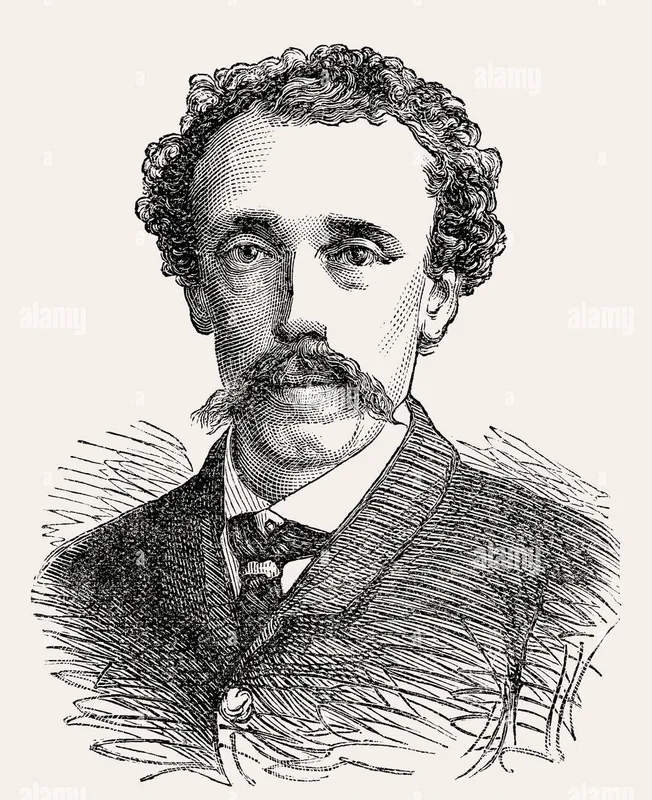
J.W.W. Birch
After being stabbed, the injured Mat Arshad ran into the water to board J.W.W. Birch's dragon boat but was struck again on the head by Seputum. At this time, J.W.W. Birch was at the bathhouse. Seeing the Malay uprising, J.W.W. Birch's guard, Khalil Khan, who was standing in front of the bathhouse holding a pistol, did not fire but instead jumped into the river to save himself along with another sepoy. While shouting that J.W.W. Birch was bathing and asking his followers to follow him to the bathhouse, Pandak Indut thrust a spear toward J.W.W. Birch. This was followed by Che Ali (Kulup Ali), Ngah Jabor, and Pajang Bur. Dato Maharaja Lela and Dato Sagor also threw spears toward the bathhouse. At the same time, other Malays rioted and attacked the remaining sepoys in the area. As a result of the spear thrusts, J.W.W. Birch fell into the river. Seputum then ran to the riverbank. Ngah Jabor shouted for Seputum to strike J.W.W. Birch. When J.W.W. Birch resurfaced behind the bathhouse, he was stabbed by Si Tuah with a spear given by Dato Maharaja Lela and then struck twice by Seputum. J.W.W. Birch then sank and was swept away by the river current.
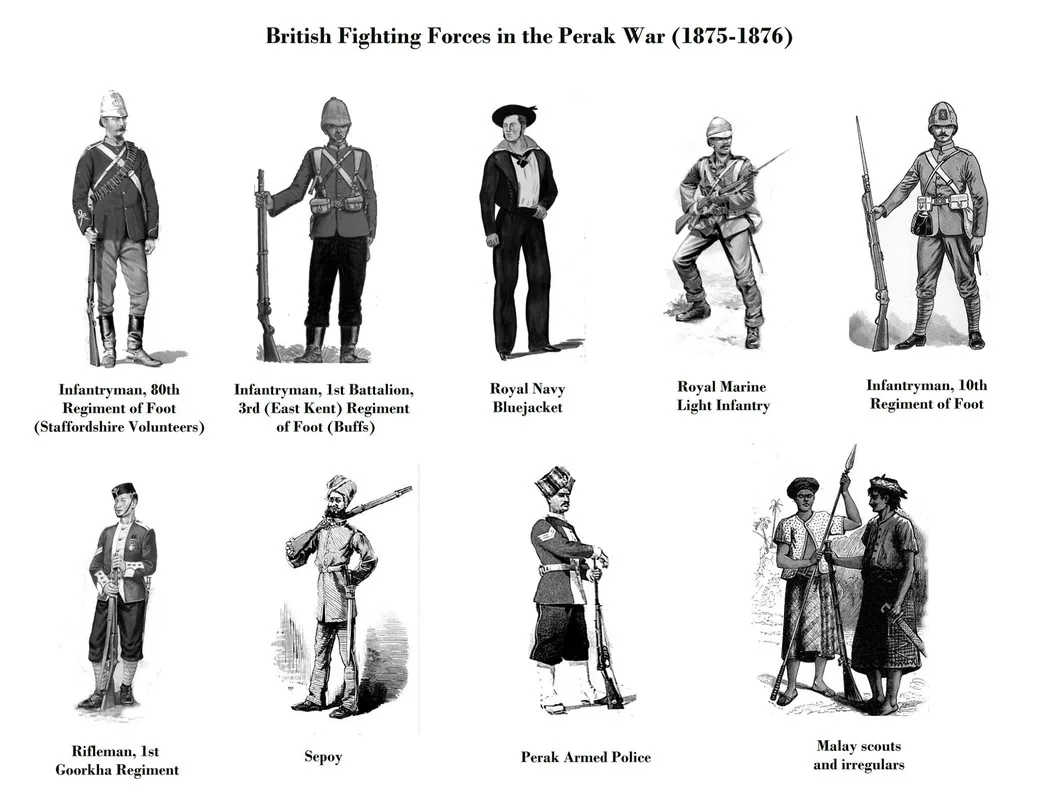
British soldiers during the Perak War
Meanwhile, Si Gondah shouted 'amuk' (amok) and proceeded to stab those in the boat. He was joined by Panjang Bur, Si Tuah, Che Ali, Tuk Lela Putera, Pandak Indut, Ngah Jabor, and Seputum. As a result, a sepoy named Hend Sheer Singh and the boat helmsman Din Larut were killed, while Dollah and a sepoy named Karit Singh were injured. Birch's follower, Hamid, and several of his friends were not injured in the attack. He and his friends then attempted to save the clerk, Mat Arshad, by taking him by boat to the British Residency in Bandar Bharu. Meanwhile, as the sepoy troop attempted to retreat, they fired shots at the Malays gathered on the banks of the Perak River. As a result of the gunfire, two of Dato Maharaja Lela's followers, Si Anji and Si Awang, were killed. The Malays then returned fire at the retreating sepoy group, causing one sepoy to be injured in the mouth and several others, in fear, to jump into the river.

Sepoy soldiers
Hamid took a sepoy's rifle and fired several shots at two Malays standing on the riverbank. One of them fell and was dragged away by his friend to take cover. The Malays fired at Hamid's boat, which was also carrying the clerk Mat Arshad, but missed their target. In the boat, they tried their best to save Mat Arshad. Mat Arshad was in critical condition with head, stomach, and shoulder wounds from stabs and slashes. As the boat passed Kuala Trus, the clerk Mat Arshad passed away. Frank Swettenham was in the Hulu Perak area when this attack occurred. A group of 16 Malays led by Panglima Perang Semaun had been ordered by Sultan Ismail to hunt down and kill Frank Swettenham if they found him. However, the group failed to locate Swettenham because it was already night.

Frank Swettenham
Swettenham finally arrived at the British Residency in Bandar Bharu on the morning of November 5, 1875. Upon his arrival, he received a letter from Captain Innes stating that a relief force consisting of 60 soldiers and 30 police officers would depart to strengthen the position at Bandar Bharu. He also immediately sent a letter to the Governor of the Straits Settlements, who then contacted the Governor-General of British India. Finally, the Governor-General of British India agreed to send 1,500 troops to assist the British in Perak. J.W.W. Birch's body was found on the same day (November 2, 1875, the day of the attack in Pasir Salak) by Daing Patundo, the son of Raja Daing who was friendly with the British, about 182.9 meters (200 yards) from the scene. The body was then taken to the British Residency in Bandar Bharu. J.W.W. Birch's body was examined by Inspector Lagis Bin Suboh, who reported several injuries on his body, such as spear wounds, his left leg slashed by a machete, and his fingers severed. Slash marks were also found on his head and hands.
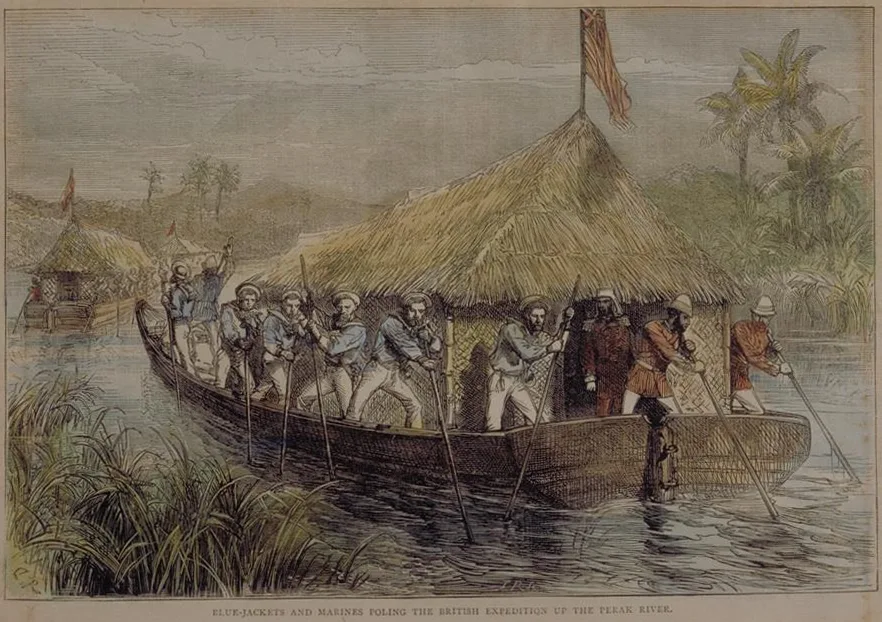
British soldiers on the Perak River
J.W.W. Birch's body was buried in the British Residency area in Bandar Bharu on the night of November 6, 1875, after British reinforcements arrived at the residency. He was laid to rest with full military honors. After the Perak War broke out with the arrival of British troops from India and Hong Kong, several British soldiers who were killed were also buried next to J.W.W. Birch's grave. The remains of the clerk, Mat Arshad, were buried about 100 meters from J.W.W. Birch's grave. In 1887, 12 years after J.W.W. Birch was buried in the area, the 8th British Resident of Perak, Sir Ernest Woodford Birch (who was also the eldest son of the late J.W.W. Birch), commissioned Mr. J. H. Bodestyne to build 5 granite cross tombstones for the grave of J.W.W. Birch and the soldiers buried there. An iron fence was also built surrounding the graves.

The Straits Times, 22 December 1887, Page 5
The tombstones in this cemetery were made by a famous Christian tombstone maker in Singapore at that time, and their structure has remained unchanged to this day since they were installed at the graves of J.W.W. Birch and the British soldiers in 1887.
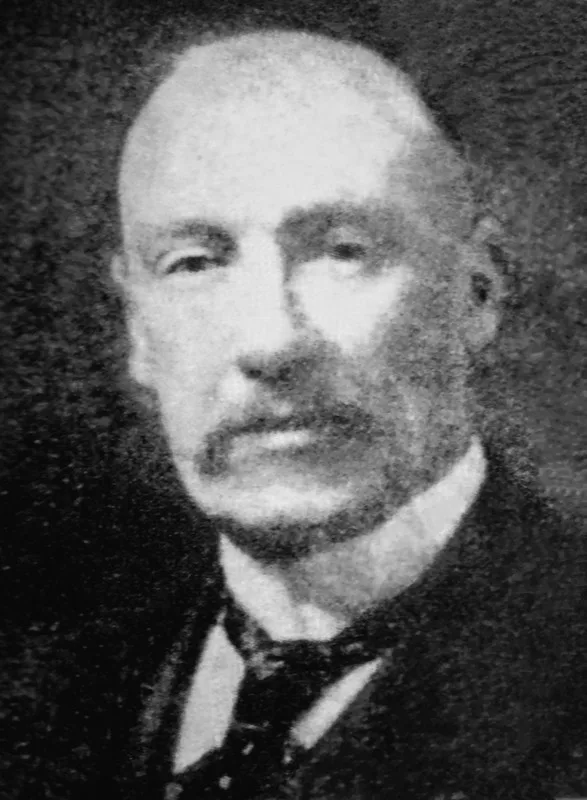
Sir Ernest Woodford Birch
A famous Malaysian historian and author, N.A. Halim, stated in his book that the Birch cemetery area had been under British supervision since 1875. They were responsible for maintaining and cleaning the cemetery area. According to records of the caretakers paid by the British to maintain the cemetery, they are as follows: Mohd Taha Bin Ahmad (1875-1897), Mohd Shahid Bin Mohd Taha (1897-1937), Haji Mahidin Bin Mohd Shahid (1937-1959), Hassan Bin Haji Mahidin (1959), and so on. From this list, it is clear that the role of Birch's grave caretaker was inherited by one family. In fact, until the late 1980s, it was said that the heirs who maintained this grave still received their salaries paid by the British Commissioner in Malaysia at the Public Bank in Teluk Anson (Teluk Intan). Around 2018, the Orang Perak team conducted an expedition to relocate the grave of Mat Arshad, which had been lost (the last record showing the grave was found was in the 1970s during a visit by researcher N.A. Halim). In that effort, the Orang Perak team contacted several parties, including the Pasir Salak Historical Complex and other history experts. Finally, Mat Arshad's grave was successfully tracked down during the expedition.

Birch's cemetery area
As a result of an interview with the Pasir Salak Historical Complex regarding the local residents' claims that J.W.W. Birch's remains were no longer there and had been taken back to England, the Pasir Salak Historical Complex denied these claims because there is no evidence or record stating that such a thing happened. A handful of local residents claim that Birch's remains were removed and only his clothes were left there. Some even claim that the British brought a helicopter to move Birch's remains. Oral stories like these are quite popular among the community, but there has been no effort to verify whether they are true or not. We are aware that the British were quite meticulous in keeping records, especially if it involved their officers. Indeed, there have been reburials of British officers, and there are records stating so. For example, when the late Captain Syers (who is a main character in the film Mat Kilau) was previously buried in Pekan, Pahang, he was later moved to Kuala Lumpur in 1899. It was even stated that his reburial was attended by 6,000 people, including British leaders in Malaya such as Sir Frank Swettenham, Mr. Rodger, Sir Ernest Birch, and several others. Captain Syers was killed after being gored by a wild buffalo he was hunting.

Captain H.C. Syers
Then we can see records stating the funeral ceremony of the former Governor of North Borneo, who also served as the British Resident of Perak, Sir Ernest Woodford Birch. He was the eldest son of J.W.W. Birch and passed away on January 17, 1930, at his residence in Bexhill-on-Sea, United Kingdom. The late official's body underwent a ceremony at St Barnabas Church, Bexhill-on-Sea, before being buried in his family plot at Bexhill Cemetery. This shows that if it were true that J.W.W. Birch's remains were taken out of Perak to the United Kingdom, his remains would certainly have been buried in his family plot in Bexhill. Furthermore, it is unlikely that Ernest Birch, while serving as Resident, would have spent a large sum of money to beautify J.W.W. Birch's cemetery area if his remains were no longer there. Also, if the grave had been exhumed, the tombstones installed in 1877 would certainly have been destroyed. One more solid point: the original construction of the cemetery's tombstones would surely have been destroyed for the purpose of relocation, yet they remain to this day in their original state since they were built in 1887. The same applies to the British embassy's efforts to pay locals to maintain the area. So, in conclusion, based on the searches and records available, it is believed that the remains of J.W.W. Birch and the British soldiers buried in the British Residency area in Bandar Bharu remain there to this day. References:
- Pasir Salak Pusat Gerakan Menentang British, Prof Abdullah Zakaria
- Tempat-Tempat Bersejarah Perak, N.A. Halim
- Kaiserscross.com
- Straits Times Archive
Further Reading: