3 Perak Figures Helped Draft the 1959 Brunei Constitution: A Rarely Told History
The 1959 Brunei State Constitution is a landmark document that marked the beginning of the modern era of governance under the Malay Islamic Monarchy system. Drafted to streamline the government structure and separate powers between the Sultan, the people, and external advisors, this document became the foundation for Brunei's stability to this day.
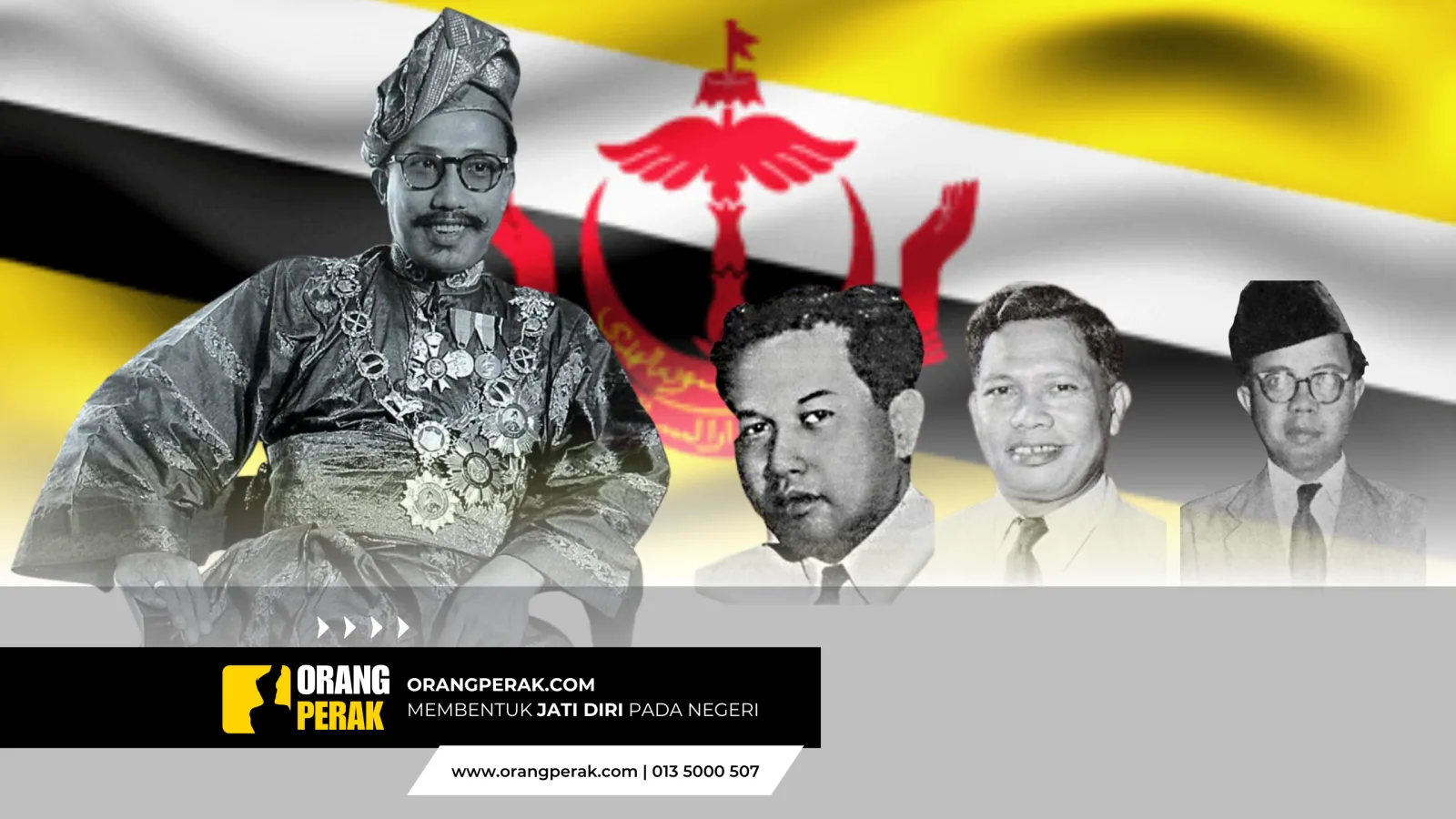
What many do not know is that three prominent figures from the state of Perak, Malaysia, played a very important role in the formation process of the 1959 Brunei Constitution. They were not merely present as observers or monitors, but were officially appointed as key advisors to the Sultan of Brunei in matters concerning the drafting of the country's highest legal document. Their roles involved providing technical and legal advice, participating in international negotiations, and producing the draft constitution that would later become the foundation for Brunei's modern system of government to this day.
Who Were the Three Perak Figures?
1. Dato Panglima Bukit Gantang Haji Abdul Wahab bin Dato’ Muda Abdul Aziz
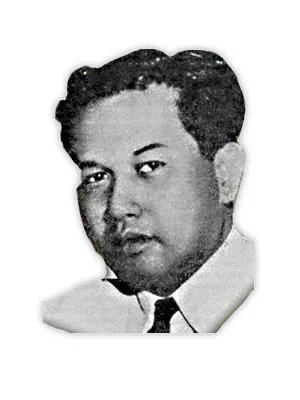
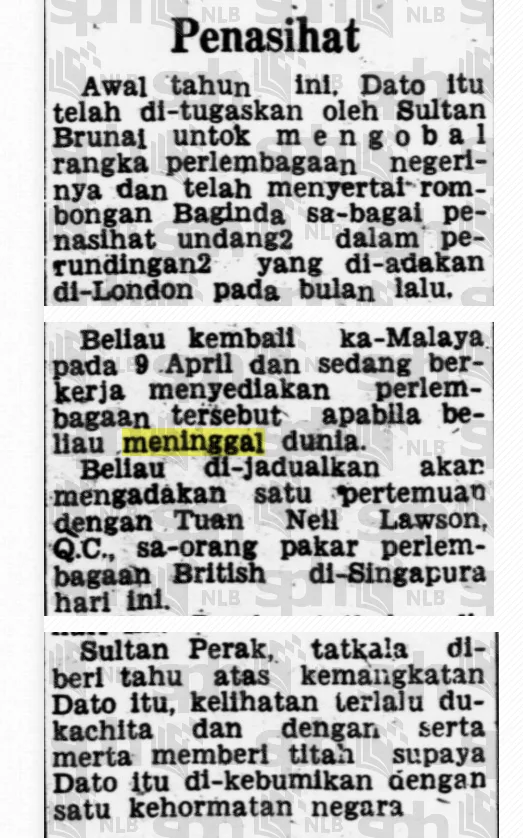
This figure from Bukit Gantang, Perak, the late Dato Panglima Bukit Gantang Haji Abdul Wahab bin Dato’ Muda Abdul Aziz, was a highly respected legal advisor among Malay leaders at the time. He was known not only for his expertise in the legal field but also for his integrity and commitment to the sovereignty of Malay institutions. In early 1959, the Sultan of Brunei, Sultan Omar Ali Saifuddien III, personally sent him to London to represent Brunei in important negotiations regarding the drafting of the country's new Constitution. This action proved the Sultan of Brunei's high trust in the wisdom and experience of this Perak figure in matters of constitutional affairs and state governance.
During official negotiations with the British government held in London, the late Dato Abdul Wahab joined the Sultan's delegation as the chief legal advisor. His role was crucial in ensuring that the voice and aspirations of the Brunei Sultanate were protected in the final draft of the constitution, which would determine the country's future. After returning to Malaya on April 9, 1959, he continued his heavy task of preparing the final draft of the constitution based on the results of those negotiations. However, as the process neared completion, he passed away suddenly, leaving a significant void among respected Malay legal figures.
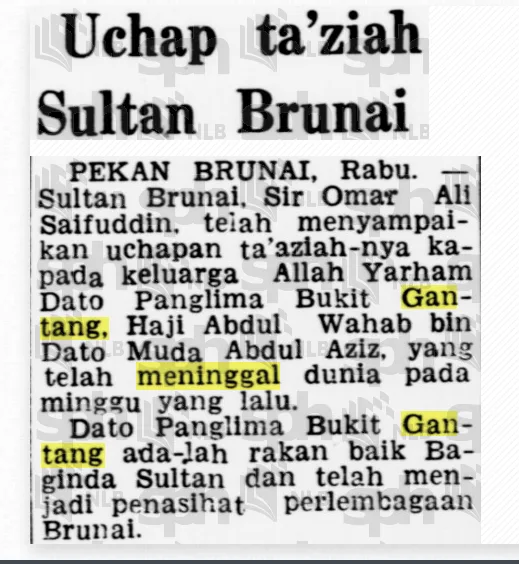
His passing received serious attention not only in Perak but also in Brunei Darussalam. Sultan Omar Ali Saifuddien III officially conveyed his condolences to the family of the deceased, a gesture rarely extended to foreign figures, which demonstrated the great service and respect accorded to him. In his home state, the Sultan of Perak decreed that his remains be buried with full state honors and customs, as a sign of the highest appreciation for his contributions to the Malay world and the struggle for the sovereignty of Islamic nations in this region. His story deserves to be remembered as an example of the excellence of Perak figures on the stage of Nusantara history.
2. Dato' Kurnia Jasa Tan Sri Dato' Osman bin Talib
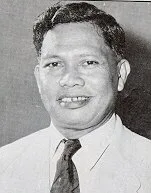
Dato' Kurnia Jasa Tan Sri Dato' Osman bin Talib, a native of Gopeng, Perak, was an outstanding figure in the field of public administration and finance, recognized at the national level. He was known as an influential individual involved in shaping the country's economic structure during the early era of Malayan independence. At that time, he held an important position as Deputy Chairman of the Central Electricity Board of Malaya, and at the same time contributed to the development of financial policy through his service at Bank Negara Tanah Melayu. His experience and expertise in management and economic policy made him one of the key figures among Malay administrators at the time.
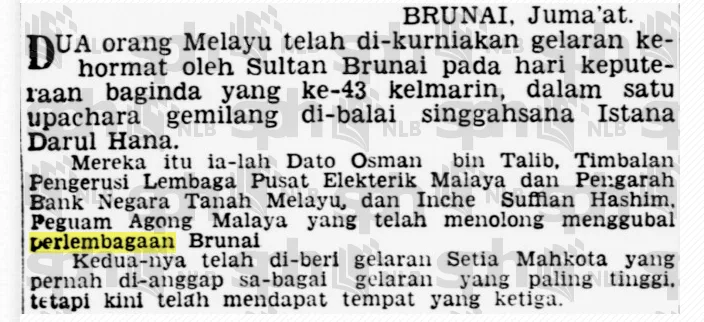
His role in Brunei's history is also recorded as he was appointed to assist in the drafting process of the 1959 Brunei Constitution, alongside several other figures from Malaya. Although he was not a legal expert, his contributions in the aspects of administration and government structure had a major impact on the form of the constitution that was drafted. This proves that the expertise of Malay technocrats from outside Brunei was also recognized in building the foundation of the country's modern government system. As a sign of appreciation for his great services and contributions, Sultan Omar Ali Saifuddien III awarded him the honorary title of “Setia Mahkota” in conjunction with his birthday, a high recognition from the Brunei government.
Although his name is not often mentioned in mainstream historical discourse, the services of Dato' Osman bin Talib remain etched in the historical records of bilateral relations between Malaya and Brunei. His involvement in drafting the Brunei Constitution not only showed recognition of the abilities of Malay figures from Perak but also served as proof that regional cooperation between Malay nations had long existed before the formation of ASEAN. His story is another example of how a son of Perak contributed significantly to nation-building in this region and deserves its rightful place in the annals of Nusantara history.
3. Tun Mohamed Suffian Hashim
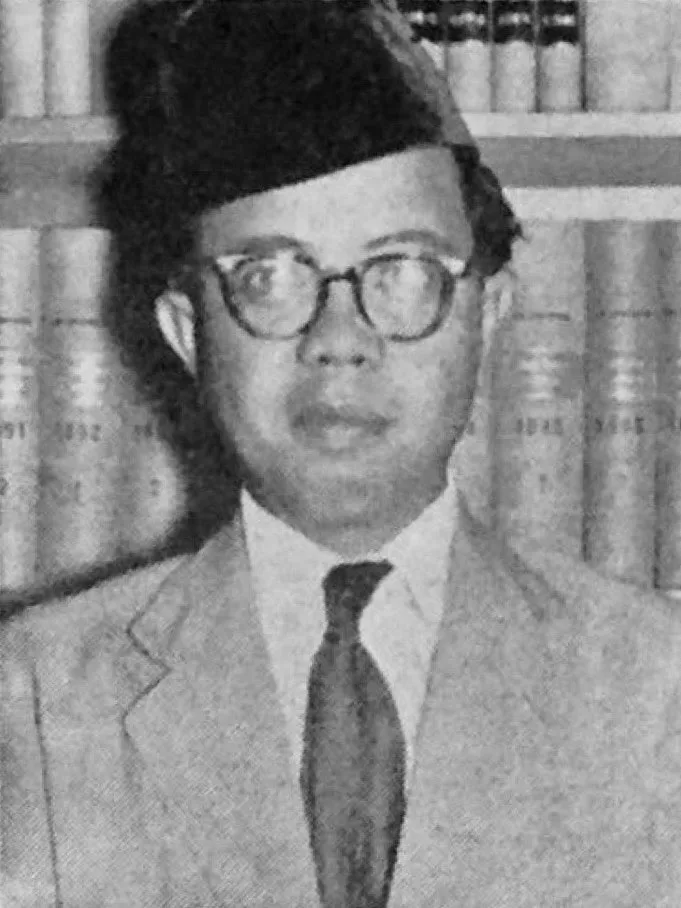
Tun Mohamed Suffian bin Mohamed Hashim was born in 1917 in Kota Lama Kiri, Kuala Kangsar, Perak, a district famous for its scholarly traditions and Sultanate institutions deeply rooted in Malayan history. From an early age, he showed excellence in academics and law. He pursued law studies at the University of Cambridge and later became one of the most respected legal figures in Malaysian history. His brilliant career in the judiciary reached its peak when he was appointed as the Lord President of the Federal Court of Malaysia, making his name synonymous with integrity and wisdom in the country's justice system.
In 1959, when Brunei was in the process of building the foundation of a modern government system, Tun Suffian, who was then the Attorney General of Malaya, was requested by Sultan Omar Ali Saifuddien III to assist in the preparation of the Brunei Constitution. As an expert in constitutional law, he contributed to the technical aspects, legal structure, and principles of justice that became the core of Brunei's highest legal document. His role was crucial in ensuring a balance between the absolute power of the Monarch and the interests of the people, in line with the Malay Islamic Monarchy principles that became the main foundation of the country.
For his contributions and expertise, the Sultan of Brunei awarded him an honorary title as a sign of appreciation for his great services in the constitution-making process. This recognition made Tun Mohamed Suffian Hashim one of the Perak figures who is not only admired in Malaysia but also at the regional level as an architect of Malay legal thought. His contribution to the history of Brunei's government is proof that legal thinking from Malaya also shaped the political landscape of a neighboring country that shares cultural roots and a Sultanate system.
Recognition From the Sultan of Brunei
All three of these figures received direct recognition from Sultan Omar Ali Saifuddien III, the Sultan of Brunei, who was known for his vision of leadership and concern for the development of the country's government institutions. He openly acknowledged the great services contributed by these three sons of Perak in the process of shaping Brunei's modern government structure through the 1959 Constitution. This recognition was not merely symbolic but reflected a close and respectful relationship between the leaders of Brunei and Malay figures from Malaya.
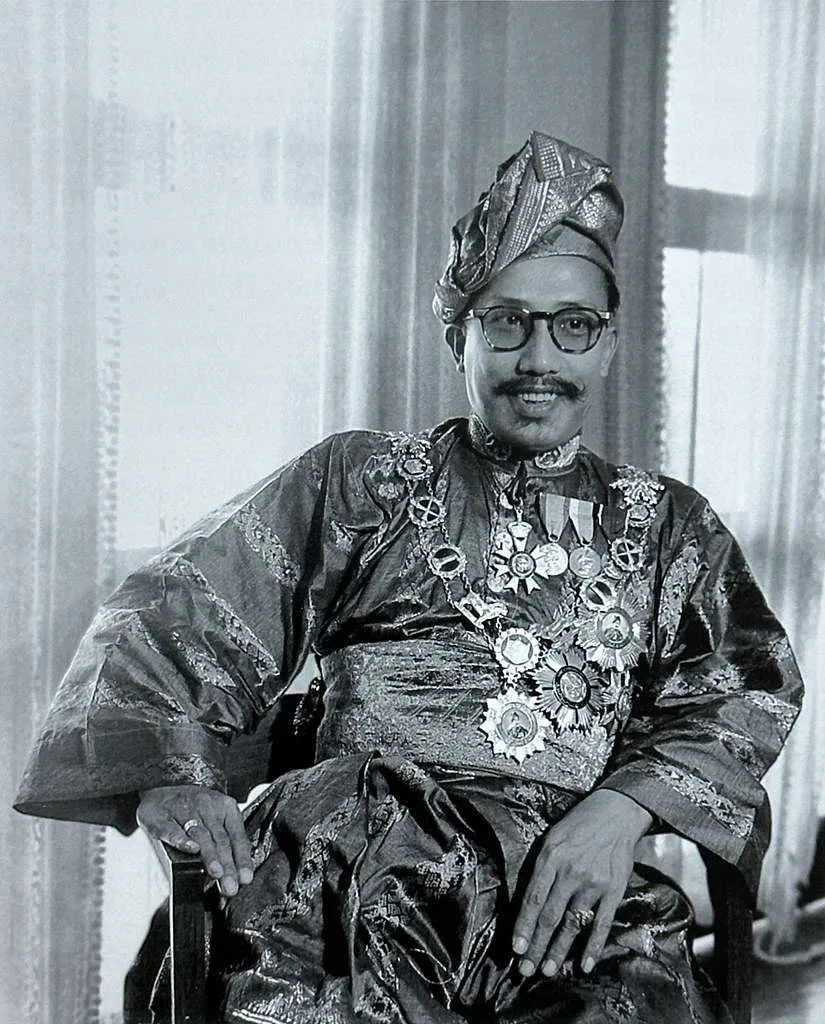
Two of them, Dato Osman bin Talib and Tun Mohamed Suffian Hashim, were awarded Brunei's highest honorary title, the “Setia Mahkota,” as a sign of appreciation for their contributions in the aspects of administration and law. This award was presented in conjunction with the Sultan's birthday celebrations, marking how important their roles were in the political landscape of Brunei at that time. As for the late Dato Panglima Bukit Gantang Abdul Wahab, although he did not have the chance to complete his task due to his sudden passing, the Sultan still expressed his highest respect through an official condolence message as well as symbolic recognition from the royal institutions of Brunei and Perak.
This entire event proves that the Sultan of Brunei placed high trust in the expertise of figures from the state of Perak, not only in the legal field but also in matters of administration and state institution building. It also reflects the appreciation for the spirit of kinship that has long existed between Brunei and Malaya, and how this cross-border cooperation yielded significant results in the history of government in this region.
Authentic Historical Evidence
Old newspaper clippings serve as authentic evidence supporting the involvement of these three Perak figures in the 1959 Brunei Constitution drafting process. These archival documents not only officially state their names but also record the form of recognition and respect given by the Brunei Palace to them.
Among the important clippings are reports regarding the awarding of the “Setia Mahkota” honorary title to Dato Osman bin Talib and Tun Mohamed Suffian Hashim by the Sultan of Brunei. This award was officially reported in local newspapers in conjunction with the birthday celebrations of Sultan Omar Ali Saifuddien III, proving that their services were not just ordinary technical support, but were recognized as a major contribution to the formation of the country's government system.
Additionally, there are also full reports regarding the sudden passing of the late Dato Panglima Bukit Gantang Abdul Wahab bin Abdul Aziz, who was then preparing the final draft of the constitution. Newspapers from 1959 recorded official condolences from the Sultan of Brunei as well as reactions of grief from the Sultan of Perak, who decreed that the deceased be buried with state honors. All of this reinforces the fact that these three figures were not just involved, but played a significant role in the history of Brunei's government.
All the information, documents, and newspaper clippings that have been found are solid and undeniable proof that three figures from the state of Perak played a very important role in the formation of the 1959 Brunei Constitution. They were not only present as advisors but directly helped build the foundation of the modern government of a sovereign nation that still practices a monarchy system to this day.
Their roles, although great and meaningful, have yet to receive proper exposure in mainstream history textbooks, both in Malaysia and in Brunei. Names like Tun Mohamed Suffian, Dato Panglima Bukit Gantang, and Dato Osman Talib are rarely mentioned in the context of diplomatic relations and regional government institution development, even though their services shaped a history that remains relevant today.
This is why history like this needs to be unearthed and shared with the new generation, so they know that figures from states like Perak have contributed not only to their own homeland but also to the stability and progress of kindred nations in the Nusantara region.
References:
- Berita Harian, 17 April 1959, Page 3
- Berita Harian, 23 April 1959, Page 3
- Berita Harian, 26 September 1959, Page 2