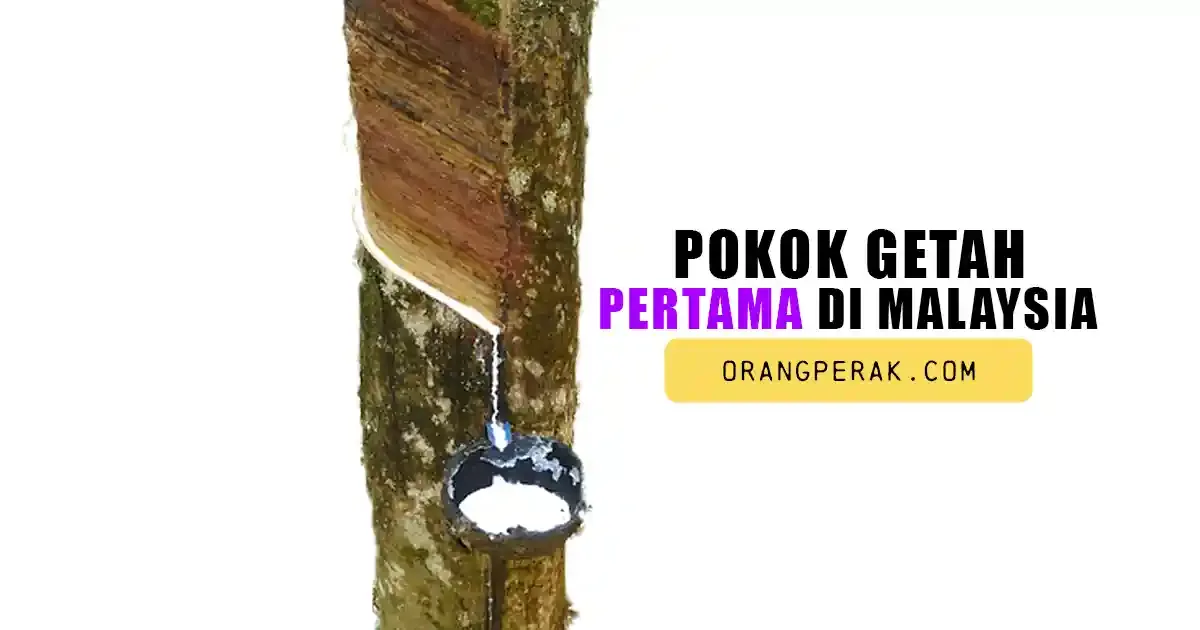
The First Rubber Tree in Malaysia
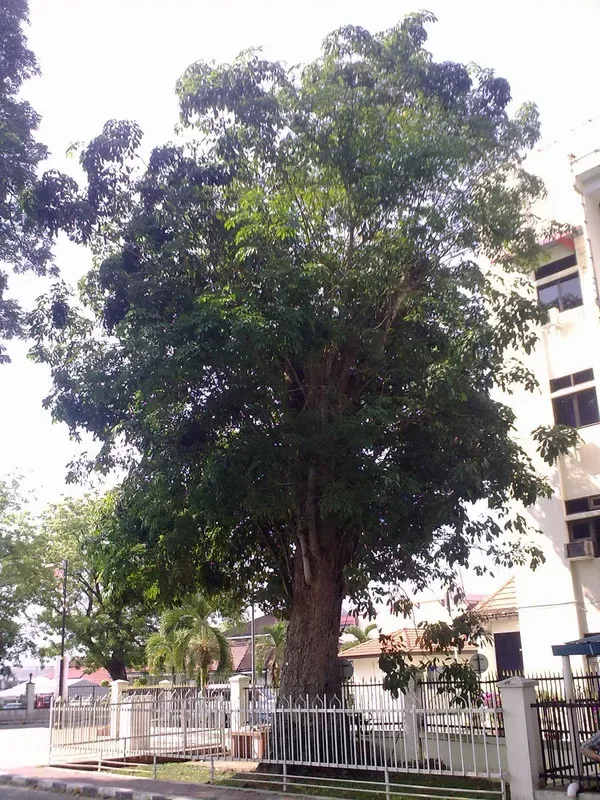
It is an undeniable fact that the first rubber tree in Malaysia was planted in Kuala Kangsar. Here is the story of how rubber trees first arrived in the Malay Peninsula.
History of the First Rubber Tree in Malaysia
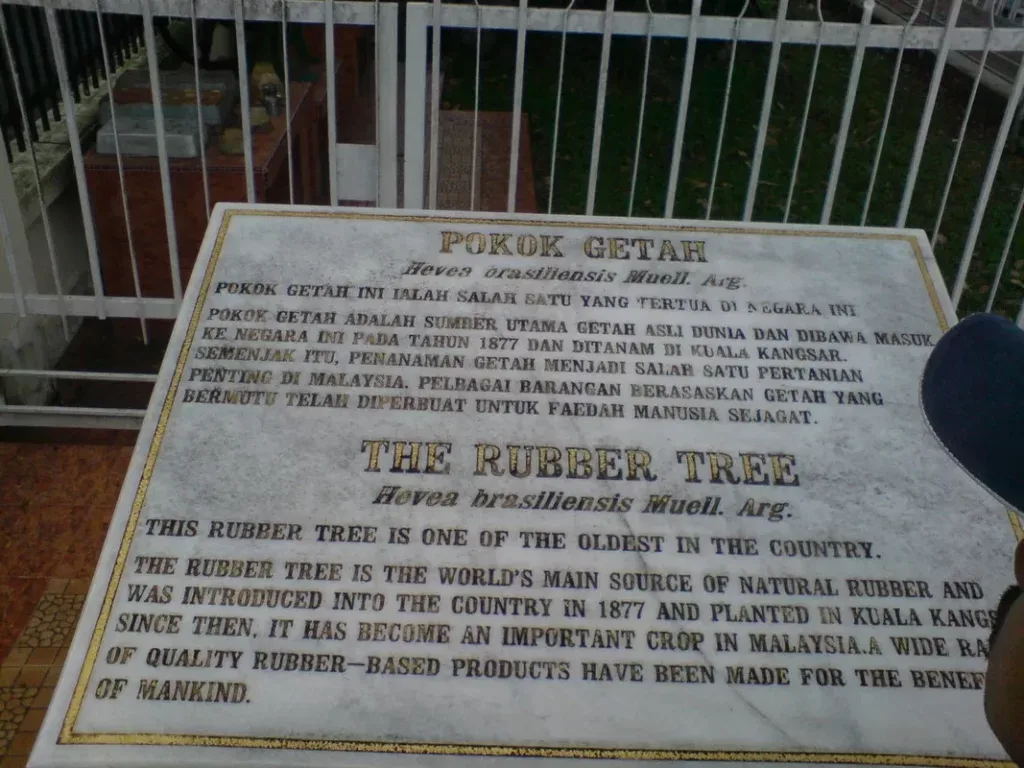
In 1877, the first rubber tree in Malaysia (Hevea Brasiliensis) was planted in Kuala Kangsar, Perak by H.J. Murton, who was the superintendent of the Singapore Botanical Gardens.
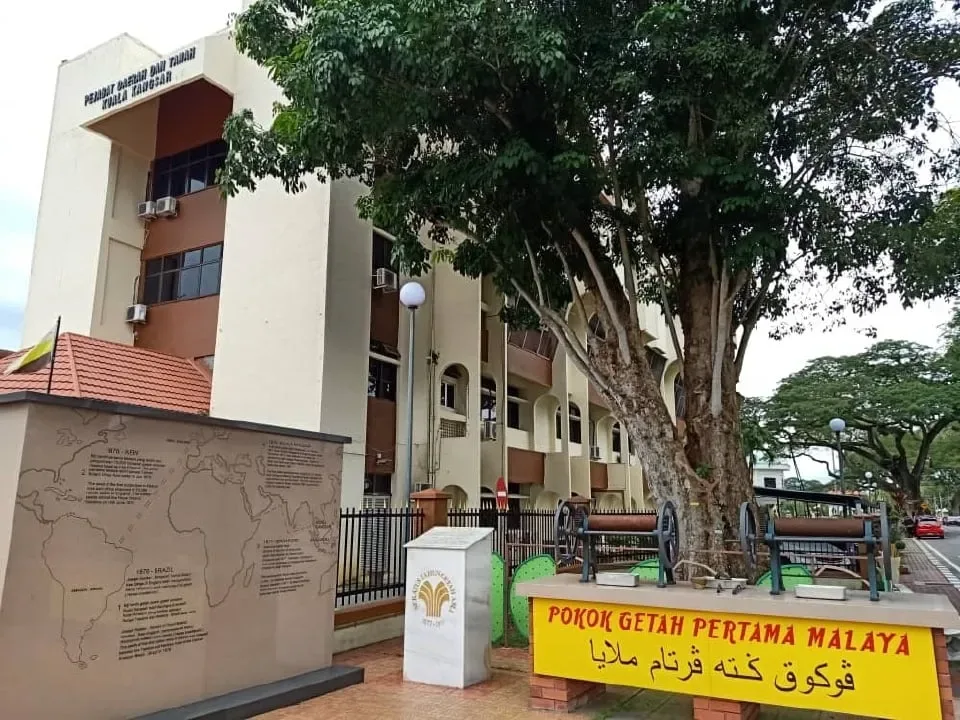
A total of 9 Hevea Brasiliensis rubber seeds were planted in the garden of Sir Hugh Low, who was the British Resident of Perak at the time.
How Rubber Arrived in the Country
How did rubber reach our country? The first supply of seeds to reach Southeast Asia consisted of only 50 seeds from Sri Lanka sent to Singapore. However, due to delays at the wharf, this shipment failed.
A second supply of 22 rubber seeds was sent from Kew Gardens, England to Singapore in 1877. Some were planted in the Singapore Botanical Gardens, while the rest were planted in Kuala Kangsar, Perak.
After more than a century, the rubber tree, once considered unattractive and worthless, has become one of the most important economic resources in our country.
Rubber Plantations Established
In 1898, rubber plantations began to be established in the Malay Peninsula, and the first rubber estate was developed in Melaka in 1902 or 1903. Subsequently, the area under rubber cultivation continued to expand, reaching its peak of 2.06 million hectares in 1979. The highest production ever achieved by the country was 1.66 million metric tonnes in 1988.

An interesting fact for you: the rubber tree originated in Brazil and was discovered by Christopher Columbus, a Spanish explorer.
He was the first person to find rubber in Brazil in 1473 and brought it back to Europe to study its uses. The first rubber tree in Malaysia, planted in Kuala Kangsar, still stands tall today and indirectly holds the record as the oldest rubber tree in Malaysia (the first rubber tree in Malaysia).