Malaysia's First Dredge Began in Perak
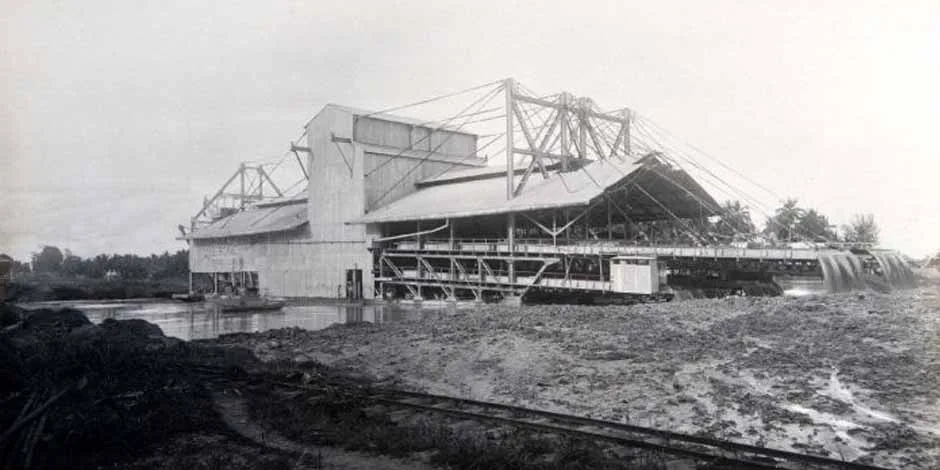
The first dredge was introduced in Malaysia in 1913 by Malayan Tin Dredging Limited in Batu Gajah, Perak. The last new dredge built in Malaysia was in 1985. For your information, the oldest dredge at that time reached nearly 70 years of age. Dredges are not built like sea-going ships or large boats; they simply float on water using several pontoons joined together during assembly. The conditions of mining pools do not allow dredges to be fitted with propellers like ships at sea.
Initially, the tin ore separation treatment system in dredges used the sluice box method, but later, around the 1960s and beyond, many modern dredges built in Malaysia used the Circular Jigs method, which was faster and more effective at separating tin ore. The early generation of dredges operated using coal-powered steam, but after the Second World War, dredges in Malaysia gradually began to operate entirely on electric power.
One example is the Tanjung Tualang 5 (TT5) dredge, built in 1938, which underwent an upgrade from coal-powered steam engines to full electrification in 1963. Older dredges required a large workforce. Between 30 to 40 crew members were needed per shift, depending on the size of the vessel. However, modern dredges built around the 70s to 80s only required about 15 people per shift, thereby reducing the burden on operating companies.
Dredges move around the mining pool using several cables from winches installed at every corner and the front of the dredge, where the cables from each winch are tied to the banks or anchored to the bottom. The winches rotate to pull the cables slowly until the dredge moves bit by bit. Most importantly, the cable from the front bow of the ship must be secured; if it is not tied or anchored to the bottom of the mining pool, the dredge will drift backward. This is caused by the pressure generated from the contact of the buckets with the mining floor during excavation.