Dabus Dance, The Warrior Dance of Perak
The Dabus dance is believed to have been known in the state of Perak for 200 years, established in three locations: Kampung Tanjung Bidara located in Bagan Datoh, Hilir Perak district; Pulau Tiga in the Perak Tengah district; and Kampung Pasir Panjang Laut located in Sitiawan, Manjung district.
Like many other historical accounts with multiple versions, there are several differing opinions regarding the history of how Dabus was introduced to Perak.
History of the Dabus Dance
According to Mr. Nordin bin Ahmad, a researcher of Perak's history, Megat Terawis and his companions were ordered to retrieve Puteri Limau Purut from Aceh and bring the art of Dabus back with them to Perak.
Meanwhile, Tuan Haji Salleh bin Ngah Jaafar stated that Dabus was first introduced in Perak, specifically in Kampung Tanjung Bidara, Pulau Tiga, and Kampung Gajah, by Tok Pawang Bakar, a native of the village who had traveled to Aceh.
Tok Pawang Bakar then taught the art of Dabus to Tok Tanda Cu Biduan, who later passed it down to his son, Alang Dolah. From there, more people learned it, and it has remained established to this day.
The introduction of Dabus in Kampung Pasir Panjang Laut, Sitiawan, followed a different path. According to Tuan Haji Abdul Malik, Dabus was introduced by a merchant from Baghdad named Ahmad Mahyuddin in 1785.
In this case, Dabus was brought directly by a merchant because the village was located on the coast, where trade at the time was conducted via the Straits of Malacca.
Regardless of the opinion or version of how Dabus came to Perak, what is certain is that this art originated from the Arab world and was adapted to local customs once it was introduced in a particular area.
A Cultural Dance That Is Fading Away
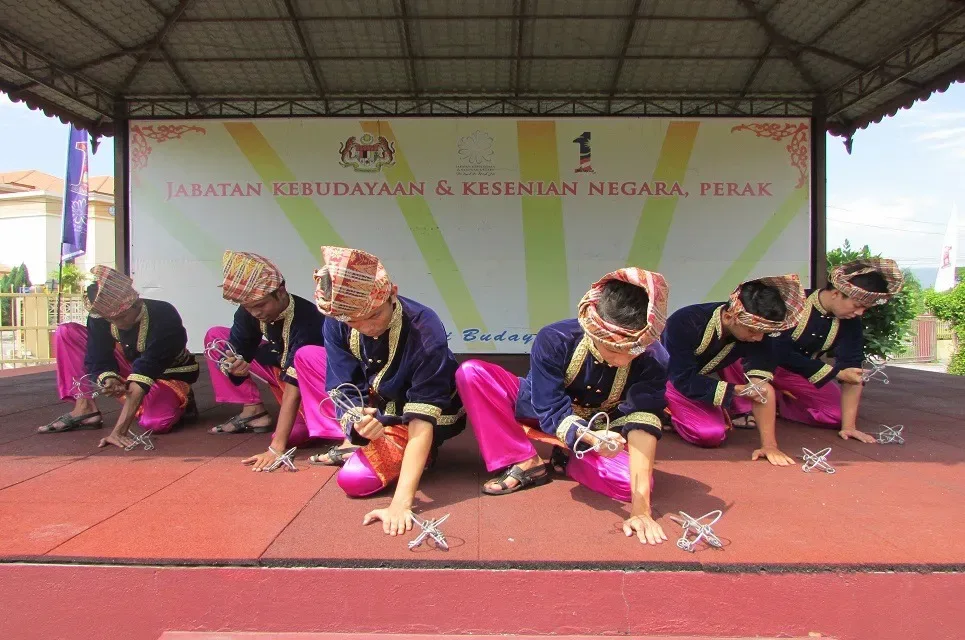
The Dabus dance is a warrior dance of Perak that is slowly fading away with time. Initially, it was performed only by men wearing traditional Malay warrior attire from Perak. A group of 8 to 12 people would dance to the accompaniment of rebana drums.

It is believed that this dance was performed to demonstrate the bravery of Perak warriors to guests at the palace. At the end of the performance, the dancers would pierce their arms using the anak dabus (Dabus spike). Once finished, the Dabus leader would recite prayers and cleanse the wounds with healing water.
Weapons in the Dabus Dance
Initially, besides using the anak dabus, dancers used various other sharp weapons to enhance the spectacle of the performance. These included daggers, keris, small axes, and rolling stones.
In 1826, the Perak government leased the Pulau Pangkor area to the British, while the Manjung district, formerly known as the Dinding district, was also handed over to the Western colonialists in 1874.
While using the waters there for trade purposes, the British government in Penang faced threats from a group of pirates terrorizing the Straits of Malacca, led by a commander known as Daeng Mentanu.
The British requested the help of the Dabus practitioners in Manjung to fight the pirates. It is said that 100 Dabus warriors succeeded in eliminating the pirates.