Who Is the Statue at the Taiping Museum?
The Perak Museum, better known as the Taiping Museum, is known to be the oldest museum in the country. Many artifacts of high historical value are housed here as a lesson to better understand the past, especially regarding the history of the state of Perak.
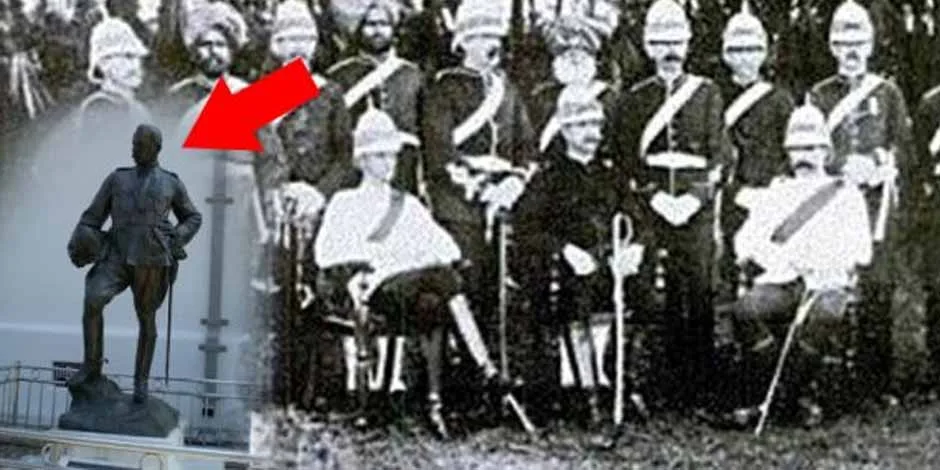
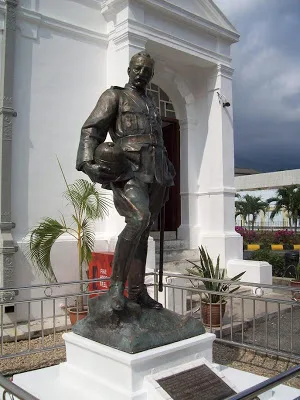
In the outdoor exhibition area, there are several displays such as ancient graves, a fighter jet, train carriages, and a statue commemorating a British officer who served in the state of Perak. This time, orangperak.com would like to introduce to all readers the individual to whom that bronze statue is dedicated and his life history, especially regarding his service in the state of Perak. The statue was built to resemble Lt. Col. Robert Sandilands Frowd Walker (also known as R. S. F. Walker), a British officer who was an important figure during the British colonial administration in Malaya back in the day (May 13, 1850 – May 16, 1917). R.S.F. Walker was born in Chestercastle, Chester on May 13, 1850, the son of John and Camilla Walker. He received his early education at Brentwood School, Essex before joining the Royal Military College, Sandhurst. While at Sandhurst, he was known as an active sportsman and often represented the military college in sports events in 1869 and 1870 in competitions against the Royal Military Academy, Woolwich. He played for the Sandhurst cricket team in 1869, including a match against the Royal Military Academy, Woolwich in May. The following year, he became the captain of the cricket team. Upon graduating from Sandhurst in 1870, he was awarded the Sword of Honour by the Duke of Cambridge, who was the Commander-in-Chief of the British Armed Forces. He used this sword throughout his military career, and it is believed that this is the sword depicted on his statue located outside the Perak Museum in Taiping.
In 1870, at the age of 20, he joined the 28th (North Gloucestershire) Regiment of Foot. On October 28, 1871, he was gazetted as an Ensign and later as a Lieutenant, and was sent to serve in Gibraltar and Malta. In 1874, he was transferred to Perak, after which he was sent to Hong Kong and then Singapore, where in 1878, he served as an aide to Sir William Robinson, Governor of the Straits Settlements. In early 1879, he entered the service of the Federated Malay States administration as Acting Commissioner of the Perak Armed Police and also as Acting Assistant Resident. By 1884, he was the Commander of the 1st Perak Sikhs with the rank of Major. Five years later, he was awarded the honorary rank of Lieutenant Colonel in the Perak Police Force. Then in 1902, he became the Commander of the Malay States Guides. He served as Assistant Resident of Perak in 1882, Secretary to the Government of Perak in 1889, Acting Resident of Selangor in 1899, and Acting Resident of Perak in 1900. In 1879, R.S.F. Walker took over as commander of the Perak Armed Police from Major Paul Swinburne and transformed the force into a paramilitary unit composed almost entirely of Sikhs and Pathans. In 1884, Walker succeeded in his petition for the Perak Armed Police to be known as the "1st Battalion, Perak Sikhs". At this time, the police force had a strength of 650 members, and most of them were sent to Parit Buntar and Telok Anson (Teluk Intan). Other members served as guards at the British Residency in Taiping and maintained order throughout the state of Perak. This force was heavily involved in managing local uprisings and intervening in affairs involving illegal Chinese secret societies. On November 29, 1887, due to existing tensions between the Ghee Hin and Hai San secret societies, a fight at a brothel in Papan, Ipoh turned violent, which eventually became known as the Papan Riots. This event became the most serious clash between Chinese secret societies that had ever occurred in the Kinta district. The riots were eventually brought under control by Walker and the Perak Sikhs police force, but they recurred in September 1889. This time, Walker and the Perak Sikhs police force took the initiative by demonstrating the strength of the police force, acting on reports provided by the acting magistrate, visiting mining areas in Kinta, and inspecting the kongsi houses that served as residences for secret society members. With the appearance of the police force, which was feared and known as "Mungkali Kwai" (Sikh Devils), it helped prevent incidents of violence from recurring. Walker's efforts in curbing the riots were appreciated by the Governor: "He has distinguished himself well, often working from day until midnight, and he succeeded in resolving disputes between Chinese Towkays and coolie groups with patience, judgment, and appropriate action."
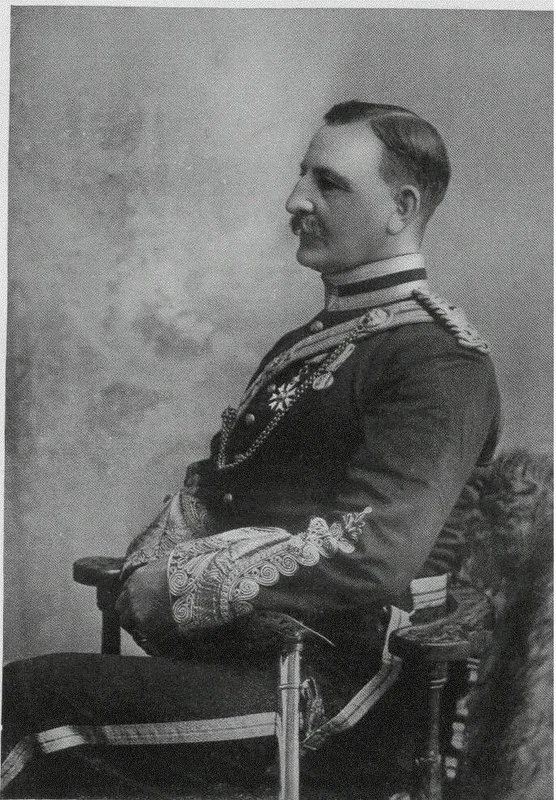
During the mining boom in the early 1890s, Kinta was hit by a wave of crime, much of which was influenced by gambling activities and alcohol consumption. As a result of his efforts to hunt down secret societies, organized crime decreased, but the district then had to face groups of robbers. Walker stated his complaint to his superiors that he was unable to control a district with a police force of only 196 men. In early 1892, a large group of police from the Perak Sikhs was sent to Pahang to deal with the Malay uprising there. Then, after successfully handling the chaotic situation in Pahang, Walker returned to focus his efforts on controlling the situation in Perak. Following a drastic increase in criminal activity in Ipoh in the first half of that year, Walker visited all the major towns, inspected mining areas, and met with tin mine owners who wanted protection from the police. Walker then sent a telegram to headquarters in Taiping for additional assistance, and within two months, his force in Ipoh was increased by 100 men. Several new police stations were opened with financial assistance from mine owners, and patrols on Jalan Tambun were increased, which successfully reduced robberies and attacks occurring on that road. Regarding the increase in crime in northern Kinta, Walker mentioned, "It is no wonder that crime is increasing; it will indeed increase, with the population of the mining areas consisting of the Chinese, a race that knows no rest, who only think of obtaining money in easy ways, who are willing to rob their own good friends if they lose their savings at the gambling table." To help prevent crime from becoming rampant, Walker suggested that the Kinta district police headquarters be moved from Batu Gajah to Ipoh. Walker's proposal was accepted by the government, and the police headquarters was moved to Ipoh in 1894; at the same time, the Perak Chinese Protectorate headquarters was also moved from Taiping to Ipoh. By the commissioning of the Federated Malay States in 1896, the Perak and Selangor Sikh Police Forces were merged into the Malay States Guides, with Lt. Colonel Walker becoming the first commander. Regarding R.S.F. Walker's personality, he had a reputation as a very disciplined and fierce person. He was known among the local Malay population as the "Harimau Kumbang" (Black Panther) and was described as someone who was the best in discipline and difficult to work with. In the book "Personalities of Old Malaya", written by Cyril Baxendale in 1930, he touched on an incident involving R.S.F. Walker and Chief Inspector John Symes. During a visit by Frank Swettenham (who was the British Resident of Perak at the time) to a police barracks, Swettenham admired the rows of trees that adorned the parade ground at the barracks. When he was told by John Symes that Walker had ordered the trees to be cut down, Swettenham insisted that the trees be left alone. Then, on the next official visit, which was also attended by Walker, Swettenham was shocked to see that the trees had been cut down. He then questioned Symes about who ordered the trees to be cut down. Symes replied, "The Colonel's orders, sir," replied Symes. "Inspector Symes, did you tell Colonel Walker that the Resident had ordered you not to cut down the trees?" asked Swettenham. "Yes, sir," replied Symes. "What did Colonel Walker say?" Swettenham asked. For a few moments, in a hesitant state, Symes suddenly saluted and said, "Damn the British Resident, sir!" In the field of sports, Walker remained active in various sporting activities throughout his life. Together with Sir Frank Swettenham, Governor of the Straits Settlements, and Mr. E. W. Birch, British Resident in Perak, he introduced cricket to the state of Perak and the surrounding areas. Walker was also responsible for introducing football to the state, and he established a football team in Taiping as well as donating a trophy known as the "Ship Challenge Trophy".
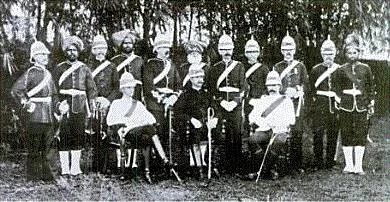
He helped establish the Perak Club in 1881, which had fields for cricket, football, hockey, and tennis. Referred to as the "Father of Cricket and Football in the Malay Peninsula", this club managed inter-state matches in Malaya. The Perak Club was the senior and primary club in the Federated Malay States. Walker was also a collector of items such as weapons, goods, brass, and silver from the Malays, and his collection is said to be the best from the archipelago region and is now displayed at the Pitt Rivers Museum at the University of Oxford. While in Perak, Walker made several contributions to the local community, and some of them remain to this day. The field located in the center of Ipoh city was originally a parade ground, and it was opened by Walker in 1890. In Taiping and Pokok Assam, there used to be roads named after Walker, but they were later renamed "Jalan Maharajalela" and "Jalan Temenggong". The Taiping Lake Gardens were also created as a result of his inspiration. In recognition by the British government, Walker was appointed as a Companion of the Order of St Michael and St George in 1901. He was also a fellow of the Royal Geographical Society, the Royal Zoological Society, the Royal Colonial Society, and the Royal Colonial Institute. For his efforts in resolving problems among laborers, he was presented with a sword by the Chinese community. Walker retired in 1910 due to health problems. After his retirement, a bronze statue sculpted by Charles Leonard Hartwell as a tribute to him was erected in Taiping, and the statue is now located outside the Taiping museum. According to the inscription on the statue, "This statue was erected by public subscription of the Sultans of Perak and Johore and many personal friends of the principal Chinese Towkays and of the officers and men of the Regiment of Malay State Guides to be a memorial of ROBERT SANDILANDS FROWD WALKER Companion of the Most Distinguished Order of St. Michael and St. George who retired in 1910 after 31 years in Perak and the Federated Malay States. For his hospitality and encouragement of all branches of sport and his success in raising the Regiment of Malay States Guides to the highest excellence this statue will serve as a continued remembrance."
After returning to England, Walker lived at Scott's Lodge, Knockholt, Kent. He had long battled health problems and finally passed away due to a heart attack on May 16, 1917, just a few days before his 67th birthday.