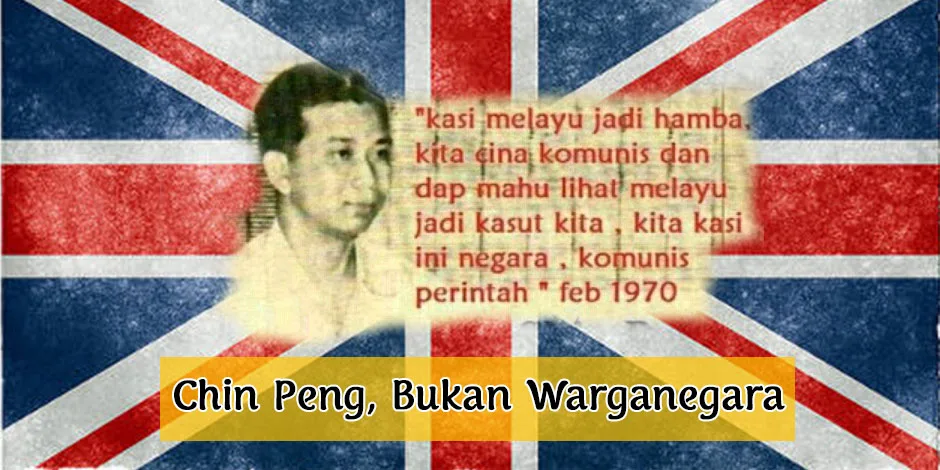
Was Chin Peng, Born in Sitiawan, Actually a British Subject?
Before the arrival of the British and other colonial powers in the Malay Peninsula, there were already Malay kingdoms that held full sovereignty over their states, governments, and people. However, when the British began to establish themselves and interfere in the administration of the State of Perak, they enacted acts by introducing a Western administrative system that was supposedly parallel to the traditional Malay administrative system at the time.
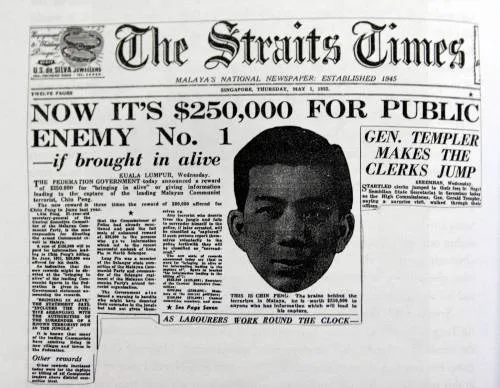
The basic goal and objective of the British at that time was to form a new concept of a nation, no longer based on Malay identity, but rather 'Malayan'. Under this policy, the British firmly rejected all traditional Malay political elements, replacing them with British legal and structural elements to serve their own interests in Tanah Melayu. As a common fact that many people are unaware of—specifically regarding the history of citizenship at that time—it is one of the most obvious factors that diminished the political power of the Malays. This was noted by historical expert Prof Emeritus Tan Sri Datuk Dr Khoo Kay Kim, who stated the facts and citizenship status of Ong Boon Hua.
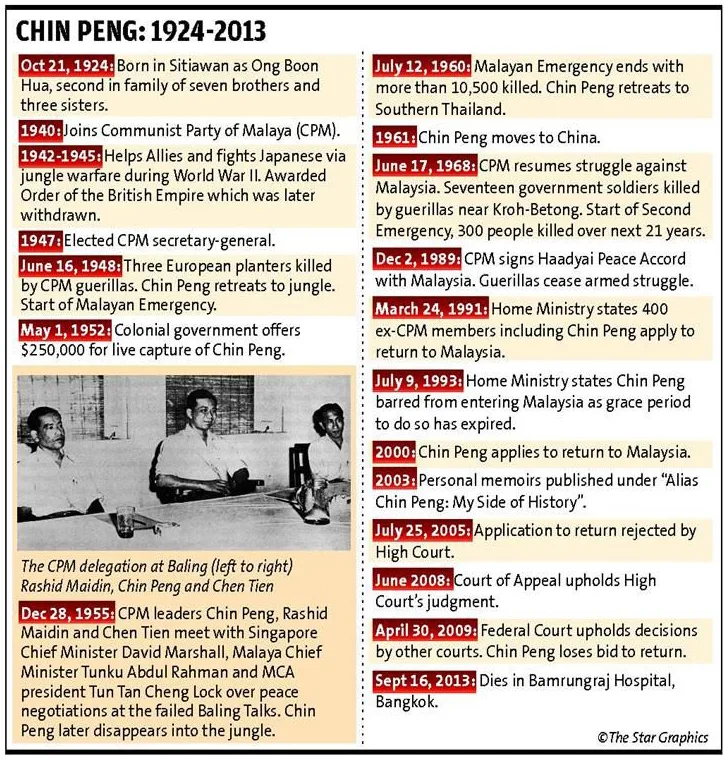
- Chin Peng was born on October 21, 1924, in Sitiawan, Dinding District, in the State of Perak.
- Appointed as the Secretary-General of the Communist Party of Malaya (CPM) at the age of 23, replacing the previous Secretary-General, Lai Tek, whom he had killed in Thailand.
- The CPM under his leadership became increasingly militant, attacking rubber plantations and British-owned warehouses.
- An estimated 1,883 security personnel were killed and 2,560 were injured.
- Many soldiers who were left disabled from fighting the communists are still alive today.
- Among civilians, 2,473 were killed, 1,385 were injured, and 810 were captured by the communists.
- Communist guerrilla deaths totaled 6,710, with 3,989 captured.
- In 1955, the CPM requested negotiations (known as the Baling Talks), but they failed because Chin Peng refused to accept the condition of dissolving the CPM, and the government refused to recognize the CPM as a legitimate political party.
- The weakening CPM was pushed deeper into the jungle, sometimes even forced out of Malaysia, particularly along the Malaysia-Thailand border.
- The 1989 Hatyai Peace Agreement was a peace treaty between the CPM, the Malaysian government, and the Thai government. CPM members were accepted as Malaysian citizens and allowed to return to their homeland.
Based on the statement by Prof Emeritus Tan Sri Datuk Dr Khoo Kay Kim, Chin Peng did not hold Malaysian citizenship; rather, the former Secretary-General of the Communist Party of Malaya (CPM) was a British subject.
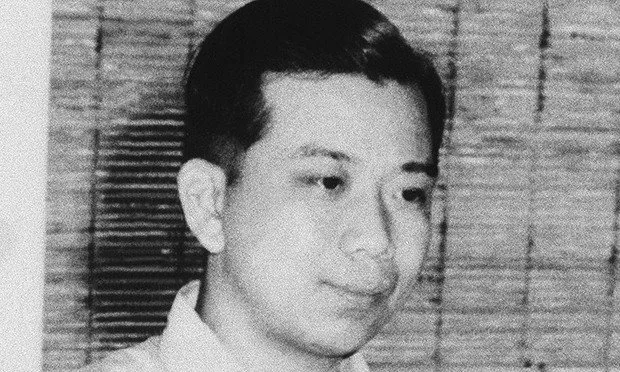
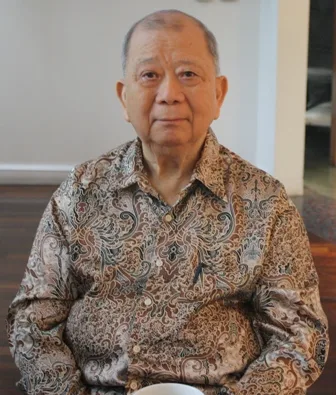
This is based on the historical facts of his birth. Chin Peng was born in Sitiawan in 1923, which at the time was part of the Dinding District, and the Dinding District was then part of the Straits Settlements, a British colony. Therefore, anyone born within a British Crown Colony was a British subject. Since 1826, Dinding had been part of the Straits Settlements and was returned to the Sultanate of Perak in the early 1930s. This was different for other Straits Settlements like Penang, Malacca, and Singapore, which remained under British Crown rule from 1867 until 1941. "So this fact is very clear: Chin Peng was a British subject, not a Malaysian citizen." This was the statement given to the media on May 28, 2009, when asked to comment on the views of certain parties supporting the former CPM leader's desire to return to live in Malaysia. At the time, Penang Gerakan Chairman Datuk Dr Teng Hock Nan had asked the government to allow Chin Peng to return to the country on humanitarian grounds, arguing that he was no longer a threat to national security.
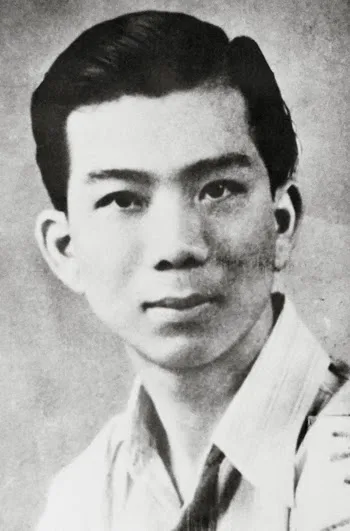
However, Teng's wish met with strong opposition from various parties, especially associations of former police and military personnel whose relatives and comrades-in-arms were directly involved and became victims of communist cruelty, particularly during the Emergency era between 1948 and 1960. Ultimately, Chin Peng's attempt to return and reside in this country failed due to the country's facts and legal system, and was rejected by the courts to avoid causing dissatisfaction, especially among the families of those who died during the Emergency. A brief comparison regarding the acts and administrative systems before the British colonization of Tanah Melayu: The *Misa Melayu* is one of the chronicles produced by the Malay Kingdom of Perak that is very different from other Malay chronicles because not only is the author's name clearly recorded, but the events written are not entirely inclined toward myths or legends. The history aligns with historical documents from the early 19th century (1836), several decades before British intervention in Perak. In the *Misa Melayu*, the structure and hierarchy of the Malay government are clearly recorded, along with all the systems supporting it in terms of politics, economy, and social life. In the political system, it is clear that the Perak government was led by a King who was confirmed through an installation system full of Malay customs and regalia. The King was the center of all government activities, assisted by dignitaries appointed by him. However, the nature of the Malay people of Perak at that time was to strongly support the institution of the Monarchy. The King of Perak was a sovereign King; he had his own subjects, and his subjects were known and held the status of 'Subjects of the King'.
In the concept of the 'Subjects of the King', loyalty to the reigning King was the foundation, covering all layers of society, especially the Malays and the Orang Asli living along the rivers that formed the state's borders. The unwavering loyalty of the King's subjects became the main characteristic of citizenship in the State of Perak, or more precisely, the concept was: 'THE KING IS THE LAW FOR THE SUBJECTS'. At that time, foreign relations existed, such as with the Dutch, and trade was conducted with the influx of foreigners. Outsiders were still considered different from the King's subjects. For example, in the tin trade relations between Holland (the Dutch) and the Sultanate of Perak, it was found that Sultan Iskandar had placed them in a special place called Pangkalan Halban, with their leader known as the Kapitan Holland. The relationship between them occurred as one power with another, and as outsiders, they were required to abide by Perak's cultural regulations.
For example, Pir Muhamad, an interpreter for the Dutch Company, tried to become a subject of Sultan Iskandar. However, his loyalty was rejected by Sultan Iskandar, who saw him as an outsider who did not respect the customs of the Malay King. The same applied to the difference between the King's subjects and outsiders from other regions. This was very clear in Perak Malay society. For example, during the construction of the fort and town of Pulau Chempaka Sari, Raja Chulan distinguished them from the subjects of Perak by saying to them: Only those who accepted the sovereignty of the reigning King without question, accepted any order from the King to provide comfort to the Malay King, and could be mobilized at any time to do whatever was required, were accepted as the King's subjects. This means that this traditional Malay-characterized system did not just accept outsiders as the King's subjects easily. If checked within the traditional Malay political system, the special power of the Malay King was also delegated to titled dignitaries and their supporters, with a system of Malay Dignitaries of 4, 8, 16, and 32. They were the ones who actually exercised administrative power, whether in advising the king or handling specific administrative departments, governing territories, districts, or sub-districts of the State of Perak. The concept of an Absolute King did not exist in the traditional political system. The introduction of this Western administrative system was actually a process of taking over the power of the Malay Dignitaries, which had previously been delegated by the Sultan, and placing it under British control. The group of Malay Dignitaries who occupied the second hierarchy of traditional Malay society was replaced by British officers brought directly from England. Starting from the Resident, British Advisors, Financial Advisor Judges, and department heads at the state and Federal levels, down to military and police officers, all were filled by British officers. The Malay Dignitaries were retired, and in their place, the children of Malay dignitaries were educated with British education systems and values at the Malay College Kuala Kangsar so that they could become pro-colonial administrative figures as second-class administrators. At the same time, these children of Malay Dignitaries would not oppose the British but instead cooperate with them.
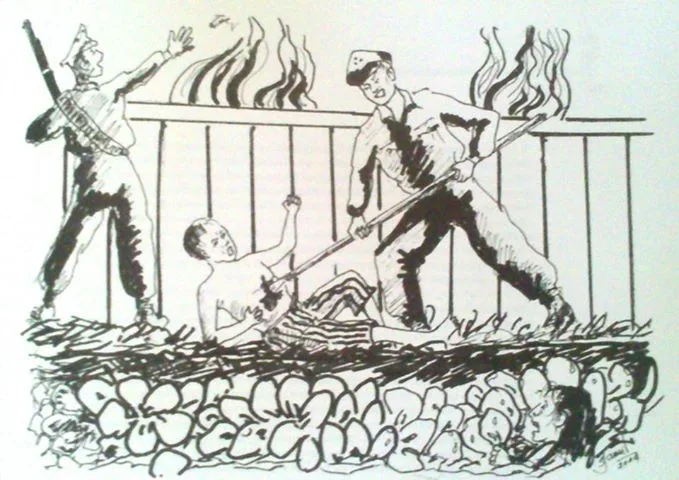
The 'Subjects of the King', which formed the core of citizenship in the Malay States and the Malay Peninsula before the arrival of the British, was changed little by little based on a 'Malayan' character. This effort was very clear with the introduction of the Malayan Union government in 1946. However, Malay protests were able to restore the pre-1941 position, although there were provisions to make non-Malays Federal Citizens, especially for the former Straits Settlements of Malacca and Penang. The total was 10 percent. The 1952 Constitutional Agreement (Amendment) Bill formed 'State Nationality', which brought in non-Malays as Subjects of the Malay King through the Operation of Law. The 1957 Merdeka Constitutional Bill used the *jus soli* policy in a very open manner, with looser Malay language proficiency requirements. In the true sense, the 'Subjects of the King' was lost forever. It only took the British 10 years at that time to plan and outline their goal, which today has resulted in equal citizenship for all races born in and interested in residing in MALAYSIA today.
Batik cloth from across the sea, Worn by the Malay child, How can one show affection, If they only take and know not how to give.
Fast, fast, the boat goes fast, Fast it reaches Surabaya, Forget the cloth, forget the shirt, Do not ever forget your origins.
The merchant child to Kuala Muar, Loving the local people to bond, The Book of God says the truth, Only then will the Imam and the congregation follow.
Merbuk rice, Aceh rice, To be sold in the middle of the market, If there is dust, it can be cleaned, Rather than left to be mere decoration.
-tokchangkatlanggor-