The Sultan of Perak's Ability to Curb the Influence of Malay Secret Societies in the Early 20th Century
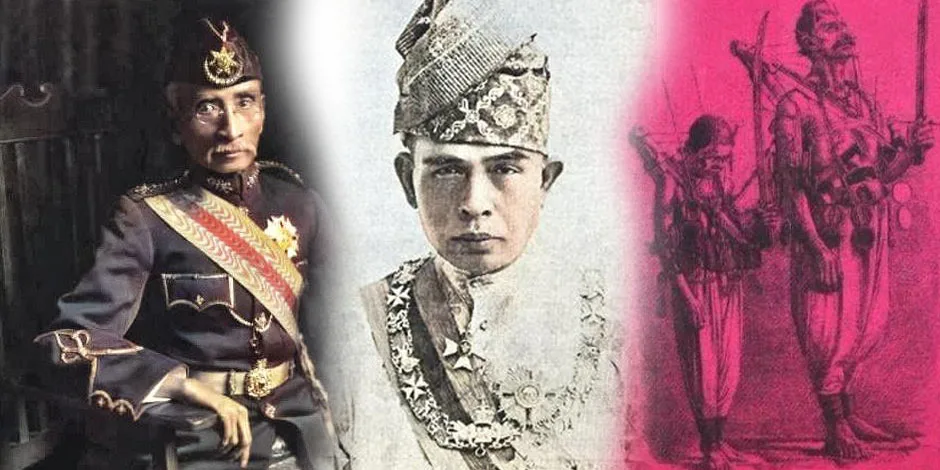
Sultan Idris I, who ruled the state of Perak from 1887 to 1918, was deeply concerned about the influence of secret societies or illicit groups among the Malay community at that time (1900). This was because the influence of the White Flag and Red Flag groups, which originated from Penang, also involved low-ranking government officials such as police officers, village heads (penghulu), school teachers, clerks, and descendants of the Perak State Dignitaries. After various introduced laws failed to curb the influence of these secret societies, on March 24, 1903, Sultan Idris I introduced a proclamation which stated: "Whereas we, Paduka Seri Sultan Idris Murshid - Aatham Shah, G.C.M.G, son of the late Iskandar Shah, along with the advice of Mr. G.P. Rodger, C.M.G, British Resident of Perak, have made it known to all people within the territories of this entire state, that we are using our utmost authority to prohibit. No one shall conspire to form a secret society, or participate in any leadership intending to establish a Secret Society, whether White Flag or Red Flag, or any color indicating such groups; we do not permit it at all. If any person commits this act or joins in the conspiracy, once we are clearly informed of the matter, it is certain that we will banish them from this state or imprison them for a prolonged period, and fines shall also be imposed for such offenses."
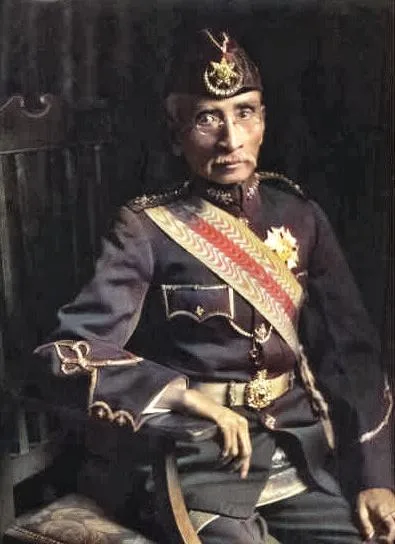
In addition to issuing a proclamation prohibiting participation in illicit groups or secret societies, the Sultan also introduced an Enactment in 1904, which mandated that every Muslim male aged 16 and above, living within a three-mile radius of a mosque, must attend every Friday prayer and listen to the sermon delivered by the Imam or religious scholar (regarding the prohibition of joining secret societies) after performing the prayer. Failure to attend prayers and sermons without a valid reason accepted by the kadi or the mosque committee would result in a fine of 50 cents per offense in the penghulu's court. Sultan Iskandar Shah, who ruled Perak from 1918 to 1938, continued the efforts of Sultan Idris I to curb the influence of secret societies. He once raised the issue of Malay involvement in secret societies during a 1931 State Council meeting. He also chaired an investigative committee on Malay secret societies, which included the British Resident, the Raja Muda, and the Raja di Hilir.
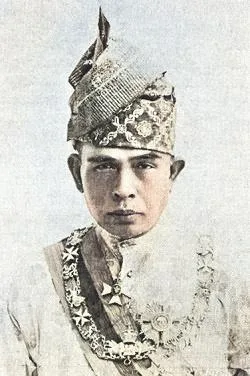
He also declared that he would grant amnesty (legally) to anyone who repented and promised not to join illicit groups again in his presence. Therefore, Sultan Iskandar visited village after village to advise the public to abandon secret society activities. The Sultan's efforts succeeded in reducing the influence of secret societies, as it was reported that 1,000 to 2,000 Malays swore to leave the secret societies in his presence. The famous secret societies in Perak at that time were the White Flag and the Red Flag. Both originated from Penang and were founded by people of Indian Muslim descent. It is believed they existed since the 1830s but only possessed a solid organizational structure in the 1850s. The leader of the White Flag in the 1850s was Dato' Che' Me, and the leader of the Red Flag in 1867 was Che' Long. Areas influenced by the White Flag and Red Flag groups involved the entire state of Perak from north to south, including Kerian, Lubuk Merbau, Beruas, Setiawan, Pasir Panjang, Bota, Lambor Kanan, Pulau Tiga, and Batang Padang. The influence of these illicit groups or secret societies was strongest in Kuala Kangsar. These illicit groups also hid behind the establishment of football clubs. The White Flag group, for instance, recruited members through the Jelutong Muslim Football Club in Sungai Siput Utara and Kuala Kangsar. Meanwhile, the Darul Makmur Football Club expanded its influence in Manong, Teluk Anson (Teluk Intan), and Bagan Datoh. Membership in the White Flag and Red Flag groups in Perak usually consisted of Malays. Except in some places, such as in Beruas in 1921, where Chinese people also joined. The oath-taking ceremonies of the White Flag and Red Flag were also mixed with Chinese rituals, as recorded in December 1925, where Malays in Pasir Salak from the White Flag performed a "chicken slaughtering" ceremony, where they put blood from their fingers into a cup, and then the cup was broken. They would then hold the Quran while the oath was recited, to distinguish it from Chinese secret society rituals. Apart from these two secret societies originating from Penang, there was the Sungai Perak Secret Society, which was the most influential secret society in the Federated Malay States.
The influence of the Sungai Perak Secret Society was very strong in Malay villages along the Perak River from Gerik to Teluk Anson. In 1931, one of its leaders named Hashim was arrested, and four of its leaders were banished to Labuan. Meanwhile, in 1933, 23 of its members were imprisoned, six were banished to other districts, and 85 were released on bail by the court. Source:
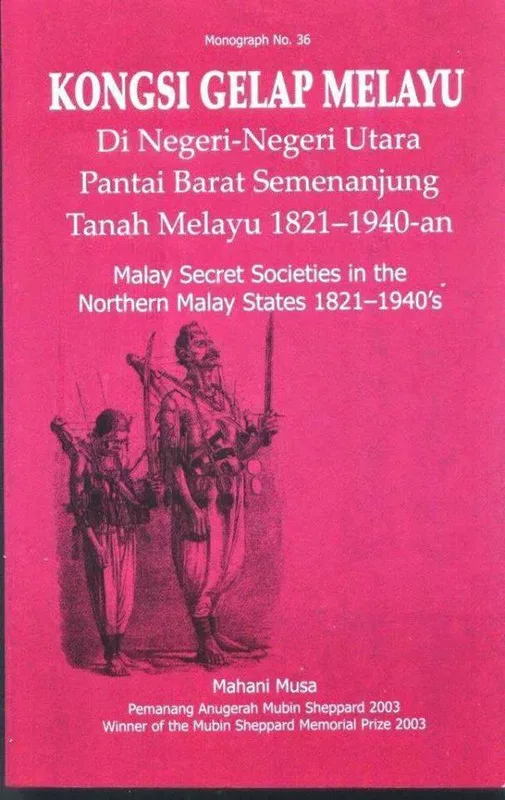
- Mahani Musa, Malay Secret Societies in the Northern States of the West Coast of the Malay Peninsula 1821-1940s
- MBRAS Monograph No. 36
- 2003- M.A Fawzi Basri, Cempakasari, History of the Perak Sultanate