The Origins of the Orang Kalur: Musicians of the Perak Malay Sultanate Nobat
The state of Perak is renowned as the successor to the great legacy of ancient Malay kingdoms such as the Srivijaya Empire and the Melaka Sultanate.
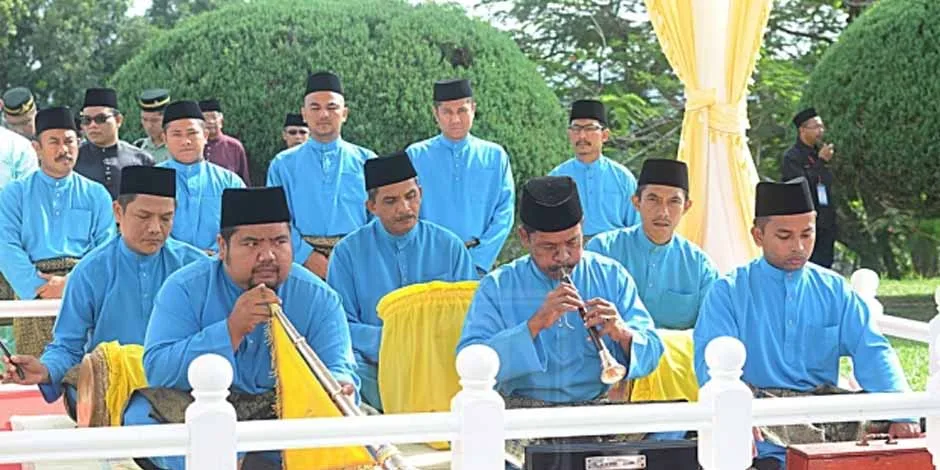
Among the ancient traditions preserved to this day as a symbol of the sovereignty of the Perak Sultanate is the nobat, played by the descendants of the Orang Kalur for generations. This time, we explore the history and origins of the Orang Kalur as royal nobat musicians. In Malay civilization, the nobat is a symbol of the high status and sovereignty of a Sultan. It is also considered regalia and one of the most important treasures of a state.

Currently, only five Malay states possess a nobat: Kedah, Perak, Selangor, and Terengganu in Peninsular Malaysia, and the nation of Brunei in Borneo. No Sultan in these states is officially installed without the playing of the nobat during the coronation. The Yang di-Pertuan Agong is also installed with the accompaniment of the nobat. The nobat instruments consist of the nengkara, a pair of gendang (drums), the nafiri, and the serunai. Kedah and Brunei include an additional gong, while Terengganu uses the kopak-kopak. For centuries, the nobat has remained mysterious and rarely exposed due to Malay taboos, being played only for ceremonies involving the Sultan. No nobat can be sounded without the Sultan's order or permission. The name given to the descendants of the royal Perak nobat musicians is Orang Kalur. In the tradition of the Perak Sultanate, only descendants of the Orang Kalur are permitted to play and handle these nobat musical instruments. It is believed that if anyone not of Orang Kalur descent plays or touches the nobat instruments, they will suffer misfortune or calamity. Besides the nobat musicians, the Tok Seri Nara Diraja is also of Orang Kalur descent, and is even said to be the most "eminent" Orang Kalur. According to Raja Kobat, the Seri Nara Diraja of Perak is not related to the Seri Nara Diraja of Melaka but is a descendant of the Seri Bija Diraja. Also known as the "people of the cow's vomit" (orang muntah lembu), the Orang Kalur have undergone various transformations that have seen changes in their functions and status within the history of the Malay sultanate institution. There are various opinions regarding the meaning of the word "kalur" and the origins of their lineage. W. Linehan suggests that "kalur" might derive from the word "susur galur," meaning "returning to the origin," or from the Cham word "kalau," meaning "island." Based on this assumption, "orang kalur" means "island people." The late Toh Seri Nara DiRaja Nong Chik Bin Mat Sah, through an interview with Raja Kobat, stated that the Orang Kalur are descendants of Sang Kala, the elder brother of Sang Sapurba. Raja Kobat believes that the word "kala" later changed to "kalo" due to the pronunciation or dialect of the Minangkabau people who settled in Perak. Interestingly, the Sanskrit word "kala" also means forms of art, skills, traits, or nobility. In Hindu tradition, there is a list of kala or specific skills, including playing music, sorcery, sword-making, and carving. According to myths told in the Sejarah Melayu (Malay Annals), the Orang Kalur originated from the descendants of a man named Bat or Batala. Bat is said to have emerged from the foam vomited by a white cow ridden by Nila Pahlawan, Kerisyna Pendita, and Nila Utama, the sons of Raja Suran who appeared at Bukit Siguntang, Palembang. "Then, by the will of Allah the Almighty, the cow ridden by the king vomited foam, and from that foam emerged a male human named Bat, and his headgear was very large." Although it is clear that the author of the Sejarah Melayu was a Muslim and it was written during the era of the Islamic Malay sultanate, there are still influences of Hindu beliefs and myths mixed into the work. The cow is an animal considered sacred by Hindus, especially if it is white. According to Hindu belief, this white cow is known as Nandi, the mount and loyal follower of Lord Siva. This white bull symbolizes masculine strength as well as a symbol of truth and justice associated with Lord Siva. The cow also plays a role in the birth of the first human, and everything obtained from the cow is considered sacred, including milk.
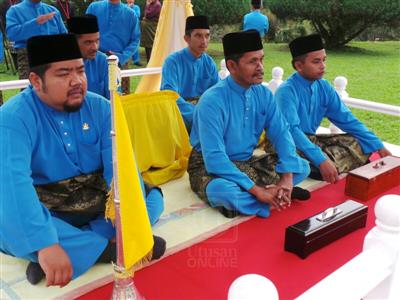
When the Sejarah Melayu recounts the birth of Bat emerging from the cow's vomit, it is a symbol that Bat was a holy person with a very important role. He was the first person to read the ciri (royal proclamation) and had the power to title Sang Sapurba as Taramberi Teribuana, and also served as a marriage officiant. Thus, the king was titled by Bat as Sang Sapurba Taramberi Teribuana. From Bat came the descendants who were the original readers of the ancient ciri. Bat then married Nila Pahlawan and Kerisyna Pandita to Wan Empuk and Wan Malini. In reality, Bat or Batala belonged to the Brahmin class, who were the priests and administrators of Hindu temples during the Srivijaya era and other Hindu kingdoms in the Malay archipelago. The role of the Brahmin class was very important in maintaining the dignity and "supernatural power" of the king. They also served as royal advisors, judges, guardians of customs, and poets (readers of the ciri). When a new kingdom was established, a king's rule would not be legitimate until he was installed by a poet or reader of the ciri. In royal coronation ceremonies during the Hindu Srivijaya era, the head Brahmin priest was tasked as the "whisperer of the ruler's secrets," and this custom is maintained to this day in the Perak palace. The person entitled to read the ciri and whisper the "ruler's secret" into the ear of the Sultan of Perak during the coronation ceremony is the Tok Seri Nara Diraja. Among these Brahmins, there were also a few who served as musicians in temples and royal palaces.

When the Srivijaya kingdom in Palembang weakened and lost its sovereignty due to pressure from the Majapahit kingdom based in Java, a prince named Parameswara moved to Singapore. After ruling Singapore for five years, Parameswara moved again, this time to Melaka, where he established a new kingdom. As a prince, he was accompanied by dignitaries, warriors, and those responsible for maintaining royal customs. The approach to the political system, administration, and customs was already formed when he opened Melaka. This is explained in the Sejarah Melayu, although it does not mention the function of the "people of the cow's vomit" and their connection to royal customs. During the reign of Sultan Muhammad Shah (1414-1444), the third Sultan of Melaka, a new position was created involving the Orang Kalur. According to the Sejarah Melayu: "The Seri Bija Diraja was of Malay origin, named Tun Hamzah, originally from the 'Muntah Lembu' (cow's vomit) lineage; people called him Datuk Bungkuk." The Seri Bija Diraja was the fourth most important state dignitary after the Bendahara, Penghulu Bendahari (Seri Nara Diraja), and Temenggung, before the existence of the Laksamana position. Like the Seri Nara Diraja, the extent of the Seri Bija Diraja's involvement in the coronation ceremonies of the Melaka kings is unknown, as a continuation of the role played by Batala in Palembang. However, the appointment of Tun Hamzah as a Melaka dignitary placed the status of the Orang Kalur at a high level. Until the fall of the Melaka kingdom in 1511, this Seri Bija Diraja position was filled by at least three people from one family: Tun Hamzah, his son Tun Kerutup, and his grandson Sang Setia Tetayan. After Melaka was captured by the Portuguese, Sultan Mahmud Shah moved to Kampar, Sumatra, and passed away there in 1528. Two of his sons returned to the Malay Peninsula and established the Johor-Riau and Perak kingdoms. The first Sultan of Perak, Sultan Muzaffar Shah, was installed at Tanah Abang and continued the traditions of the Melaka sultanate there. As the eldest son of the Sultan of the last renowned Malay empire, Sultan Muzaffar certainly did not take the throne in Perak without his followers and the traditions he inherited from Melaka. This included the state dignitaries and royal regalia such as the state sword, the royal seal, and the nobat, along with its musicians.

Today, the Seri Nara Diraja is one of the positions retained from the Melaka sultanate, although its function is somewhat different. Although there is no Seri Bija Diraja position in Perak, its lineage remains through the Seri Nara Diraja. The nobat musicians have also continued to be passed down from the Melaka sultanate to Perak, although the fate of the nobat musical instruments after Melaka was captured by the Portuguese remains unknown.