The History of the 'Tengku' Title Used by Commoners
Once upon a time, there was a title "TENGKU" that was commonly used by those of royal descent, but it was also used by commoners within the State of Perak.
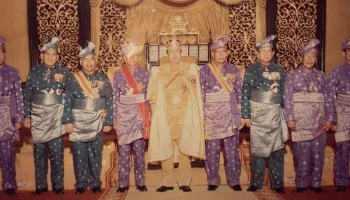
The "COMMONERS" referred to here are the Four Great Chiefs (Orang Besar Empat) from among the commoners appointed by the Sultans or Rajas of Perak at that time. In the past, it should be noted that there were considered to be only three social classes at that time, namely:
- Royal Descent - Meaning lineage originating from the rulers of a country, territory, or district through an unbroken male line of descent within the royal kinship. Typically, these rulers or their descendants use honorifics before their names such as Maharaja, Sultan, Raja, Haluan, Tengku, Tuan, Tun, Tunku, Tuanku, Engku, Ku, or equivalent titles.
- Nobility - Meaning lineage originating from individuals honored by the Ruler and society, or descendants of a Princess who married honored individuals, such as those of Arab descent or descendants of the Prophet Muhammad SAW (Ahlul Bait) who became tribal leaders or heads, using honorifics before their names such as Sharif, Habib, Sheikh, Sayyid, Saab, Sidi, Badshah, Sahib, Mirza, Wan, Nik, Makhdom, or other equivalents.
- Commoner Descent – Meaning lineage originating from mixed marriages or those not belonging to the two categories mentioned above. However, it is said that some commoners used their own family names as a mark of their origins at that time, which continues to this day.
Returning to the original topic of this article, in the State of Perak, there are four great chiefs known as the "Four Great Chiefs" (Orang Besar Empat), and the full titles of these positions are as follows:
- Orang Kaya Bendahara Sri Maharaja DiRaja
- Orang Kaya Besar Maharaja DiRaja
- Orang Kaya Temenggung Paduka Raja
- Orang Kaya Menteri Paduka Tuan
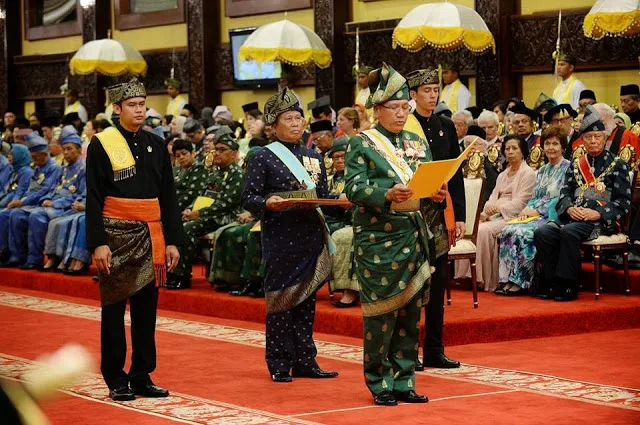
Usually, in official speech, these four Great Chiefs of Perak were preceded by the word "TENGKU" at that time when their titles were mentioned. For example, the form of address for the Orang Kaya Bendahara was Tengku Bendahara, the Orang Kaya Besar was called Tengku Kaya Besar, the Orang Kaya Temenggung was called Tengku Temenggung, and the Orang Kaya Menteri was called Tengku Menteri. Unofficial address was usually just Tengku. The use of "TENGKU" for these four Great Chiefs of Perak often became a point of curiosity and confusion for the public from time to time and was very difficult to answer. In reality, the public generally knows that this title is only appropriate for those of royal blood, i.e., from the royal family. Undeniably, in the past, these four positions were once held by those of royal and noble descent, but that is not a justification, requirement, or answer for a title that is considered misplaced and not rightfully belonging to the wearer. It is highly likely that this occurred due to public confusion at the time, or perhaps it happened due to certain interests between the commoner Great Chiefs and the State Rulers themselves at that time.
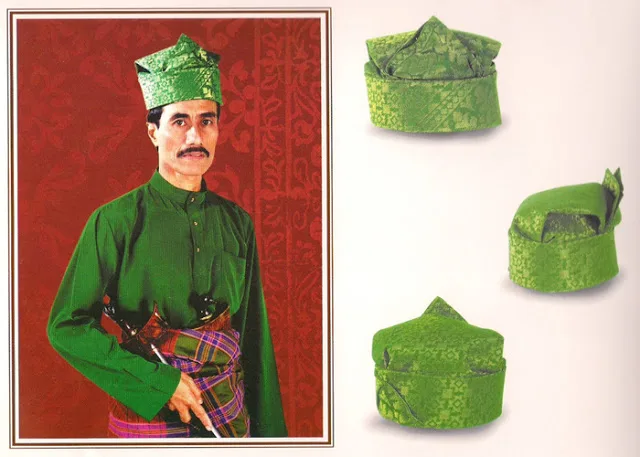
However, to answer the controversial question from the past, there are several historical facts related to the existence of these titles that can be briefly reviewed as follows:
THE 'TENGKU' TITLE FOR THE ORANG KAYA BENDAHARA
According to historical records of the State of Perak, in 1958, a prince of Sultan Mahmud (the last Sultan of Kota Melaka) was invited to come to Perak, starting his administration in Tanah Abang (previously known as Buluh Apa). During his reign, Tun Mahmud was the first to hold the position of Bendahara, carrying the full title BENDAHARA SERI MAHARAJA TUN MAHMUD, and the position of Bendahara was first held by someone of royal blood. After Tun Mahmud was recalled to Johor by Sultan Alauddin Riayat Syah, Raja Muzaffar appointed Megat Terawis to the position of Bendahara, with the full title of Orang Kaya Besar Bendahara Sri Maharaja DiRaja.
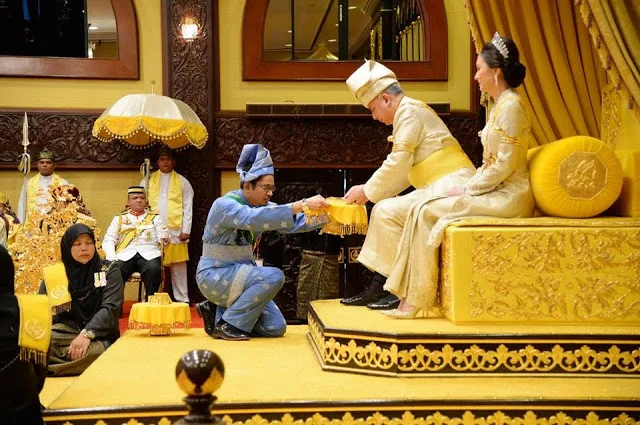
During the reign of Sultan Iskandar Zulkarnain, Bendahara Megat Abu Kassim was removed by the Sultan, who then appointed a nobleman, Sayyid Abu Bakar, but he did not hold the position for long. Finally, Sultan Iskandar Zulkarnain returned to the original custom in selecting the Bendahara for the State of Perak. He appointed his younger brother as the Bendahara of Perak, namely Raja Alauddin. Since then, the position of Bendahara became a mandatory requirement to be filled only by those of royal descent. Since Raja Alauddin was appointed, the title and address of Orang Kaya Bendahara Sri Maharaja DiRaja, which had been held by commoners and nobles for generations, was changed to the title Raja Bendahara. Historically, the position of Bendahara was of great standing. The main duty of the Bendahara was to "govern and provide welfare for the land encompassed by the king," meaning to physically administer the kingdom. This is where the uniqueness of the Bendahara institution lies, with its function being "half-king, half-official," where the status of the Bendahara was equivalent to a Raja, yet he remained a loyal Malay servant to the Sultan who ruled the State. Raja Bendaharas of royal descent were also the 3rd heirs entitled to become Sultan if the Crown Prince and the Raja Muda passed away beforehand. It is no wonder that during the time of Sultan Iskandar Zulkarnain, he changed the selection system of the Bendahara from commoners back to the royal family because this duty was only suitable for those of royal kinship. For nearly 200 years, the position of Raja Bendahara was followed as part of the administrative system of the State of Perak until the death of Raja Abdul Rashid in 1959, the last Raja Bendahara at that time, when the position fell back into the hands of commoners.
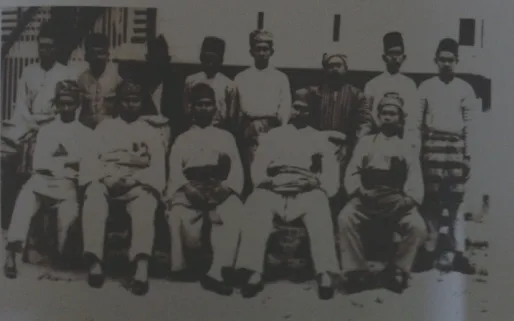
The first Bendahara appointed after nearly 200 years of it being held by royal family members was Dato Muhammad Yusuf bin Syikh Abdul Rahman, using the full title Orang Kaya Bendahara Sri Maharaja DiRaja, returning to the address of Tengku Bendahara. It is said that the "TENGKU" address for the current Orang Kaya Bendahara is a continuation that was commonly used by the public during the times when the rank of Bendahara Perak was held by the Perak Royal family. When the position of Bendahara fell back to commoners, the use of the "TENGKU" address continued without anyone questioning or trying to correct the address, which was very contrary to the customs and traditions of the Perak Rulers at that time.
THE 'TENGKU' TITLE FOR THE ORANG KAYA BESAR
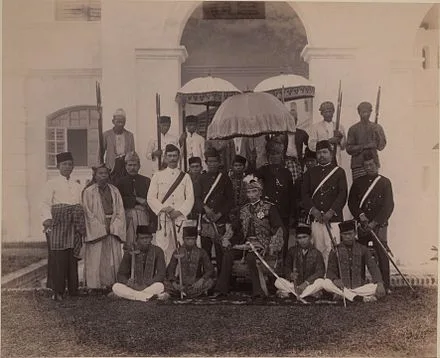
According to historical facts, this position was known by the title Toh Seri Narawangsa and was held by someone of royal descent, Toh Seri Narawangsa Tun Besar Tuha. Later, it was held by a person named Megat Makan Lambat, carrying the title Orang Kaya Besar Maharaja Diraja. However, it is said that there are facts showing several people from the Syed family were also appointed as Orang Kaya Besar Maharaja DiRaja, such as Syed Mahmud, Syed Jaafar, and Syed Hamid. During the time this Syed family held the position of Orang Kaya Besar Maharaja DiRaja, it became their priority to refer to themselves as "HAMBA TENGKU" or "HAMBA ENGKU/PAK ENGKU" to commoners, and this made the commoners around them at that time accustomed to calling this Syed family by the title "TENGKU" or "ENGKU/PAK ENGKU".
THE 'TENGKU' TITLE FOR THE ORANG KAYA TEMENGGUNG PADUKA RAJA
In 1818, when the Kedah Armed Forces came to attack Bukit Gantang and were opposed by the Armed Forces led by Raja Alang Iddin, it was said that they could not defeat Raja Alang Iddin's forces. The Kedah forces retreated and advanced to attack Kota Lama, where the Armed Forces led by Dato Panjang Talib were responsible for defending the area. Finally, peace was achieved due to the wisdom of Dato Panjang Talib. In recognition of Dato Panjang Talib's service to the State of Perak, Sultan Abdul Malik Mansur Shah (1805-1825) bestowed the position of Temenggung with the title Dato Temenggung Paduka Raja Panjang Talib. However, the position and title were rejected and given to his younger brother, Pandak Usup. Pandak Usup then held the position and used the title Dato Temenggung Paduka Raja Pandak Usup. This position was also initially held by those of royal descent, from the lineage of Maharaja Lela Pancung Tak Bertanya.
In 1887, Raja Idris was appointed Sultan of Perak. The Orang Kaya Temenggung at that time was Dato Temenggung Paduka Raja Husain, and because this Orang Kaya Temenggung had rendered great service to the Sultan and the State of Perak, the Sultan was very pleased to bestow a hereditary title with the name Raja or Tengku. However, it is the nature of the blood flowing in the bodies of this Malay Maharaja Lela lineage not to boast about names, titles, and ranks, holding firmly to obedience and loyalty to Allah, Religion, King, Nation, and Country, so the offer was politely declined in a customary manner. However, so as not to cause disappointment or the Sultan's wrath over the rejection of the offer, Dato Temenggung Paduka Raja Husain suggested the prefix "WAN," taken from the word "PAHLAWAN" (hero), with the reason that if "RAJA" or "TENGKU" were used at the beginning of their names, one day his descendants and the public would be confused and unable to distinguish between the Raja of Temenggung descent and the Raja of true royal blood. Even though the Temenggung of Perak did not use the title "RAJA" or "TENGKU," the people, i.e., the commoners at that time, still called and addressed them as "RAJA" or "TENGKU" because the commoners at that time considered the Temenggung lineage worthy and entitled to be called as such because they were also of royal descent.
THE 'TENGKU' TITLE FOR THE ORANG KAYA MENTERI
The same applies to the story when Ngah Ibrahim was in power in Larut; he was given the position and title Mentri Paduka Tuan, and this position was also initially held by those of royal kinship. Orang Kaya Mentri Ngah Ibrahim was also someone who did not boast about names, ranks, and titles. However, for the commoners and especially for foreign traders, they still called him by the title "RAJA" or "TENGKU" because Ngah Ibrahim was indeed a Raja in Larut. That is a brief overview of the historical events that occurred. Here we can see that the use of "TENGKU" was misplaced. However, it cannot be confirmed today whether it still continues as it was or otherwise.
As a small addition to this article, when touching on the subject of titles for descendants, it is certain that every lineage or ethnicity is closely related to language, custom, and culture. For example, Malay Bugis descent, Malay Mandailing descent, Malay Aceh descent, and others of the same stock. However, have any of us today, when discussing the origins of our family lineage and ethnicity, asked ourselves if we know and recognize the language, culture, and customs within our family lineage that we practice to this day? For every individual who has the answer, be grateful, and for those who do not have the answer to that question, learn and seek the true identity of our lineage and ethnicity so as not to be classified as part of the 'follow-the-crowd' institution.
Adapted from the writing of N.A Halim - Orang Besar 4 Negeri Perak
The Javanese seek thread, Seeking thread on the hill, Deceitful nature seems easy, Eventually, it becomes a disease.
Bread kneaded at the mamak stall, Served with dal and curry, People lie because of greed, In the end, it causes a stomach ache.
Stomach bloated, full of food, Starting to feel lethargic and sleepy, Feet tired, body weary, Following the whims of desire.
-tokchangkatlanggor-