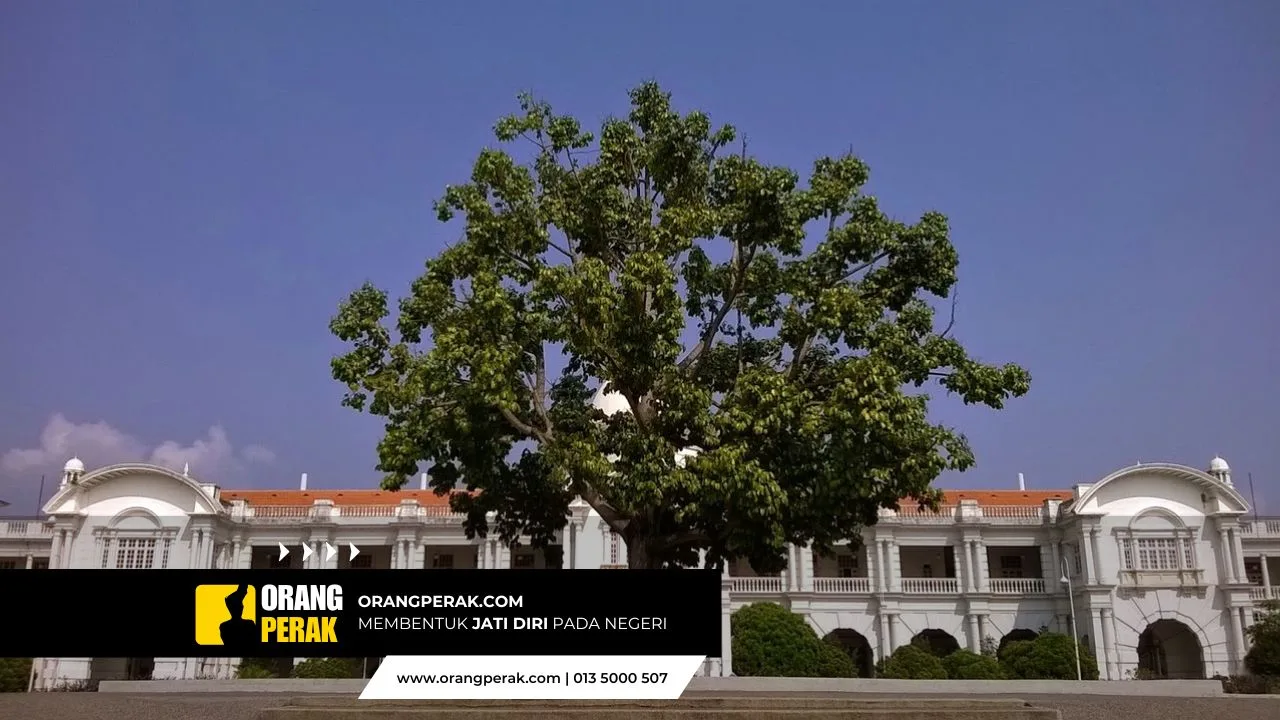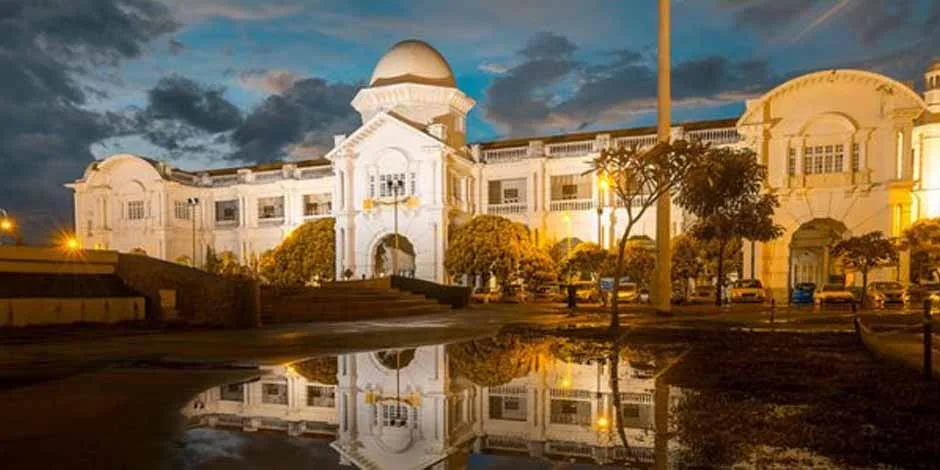
The History of the Railway Station Dubbed the Taj Mahal of Ipoh
Perak was one of the first states to come under British administrative influence. Furthermore, Perak's abundant natural resources made it one of the wealthiest and most important states for the British in the Malay Peninsula.
Because of this, the British administration built many beautiful buildings to symbolize the high status of Perak. In this article, orangperak.com will touch upon the history of the construction of the Ipoh Railway Station, which is so beautiful that it earned the nickname the Taj Mahal of Ipoh. The history of the Malayan railway began in Perak in 1885, when the first track was completed from Taiping to Port Weld (now known as Kuala Sepetang).
The name used by the railway administration at that time was the Perak State Railway. In 1901, after the Federated Malay States administration was established and the Perak railway system was connected to other states, the Perak State Railway was integrated with other state railway administrations and named the Federated Malay States Railway. In 1946, its name was changed to Keretapi Tanah Melayu following the establishment of the Federation of Malaya. Once again, on August 1, 1992, Keretapi Tanah Melayu was corporatized by the government and has been known as Keretapi Tanah Melayu Berhad (KTMB) to this day.
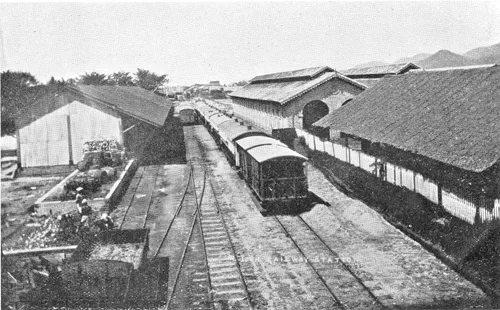
In 1894, a new railway line crossing the Kinta Valley was opened between Batu Gajah, along with two nearly identical stations in both towns in 1896. A total of 36 railway carriages were built for the Perak Railway at the Ipoh workshop, with only the iron wheels and axles imported from England. The first Ipoh station was built in 1894 along with the track for the Perak Railway throughout the town of Ipoh to provide services to the town. Like many early stations built under the Perak Railway, the 1894 station construction was basic, consisting of a single-story wooden structure with a large tiled roof and an open layout.
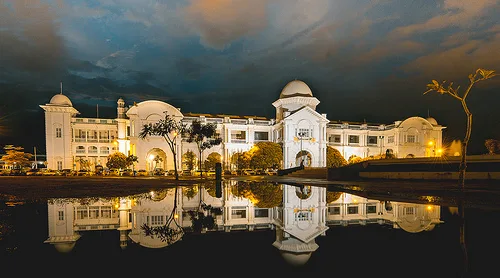
Construction of the second Ipoh railway station to replace the old one began in 1914 and was only completed in 1917 due to a shortage of building materials and rising prices and construction costs during the First World War. The new Ipoh Railway Station, which was built together with a hotel, features 'classical' architectural elements with a British 'Raj' style, complete with domes and small Moorish-style towers. It was designed by the British government architect A.B. Hubback, who was the British architectural assistant to the Director of Public Works in 1917. He was responsible for designing public buildings in British Malaya in various Western colonial vernacular styles as well as the "Neo-Moorish / Mughal / Indo-Saracenic / Neo-Saracenic" styles, which were influenced by British colonial architecture in India.
This white building was originally built as a hospital but was eventually converted into a railway station. Unlike the Kuala Lumpur railway station, the exterior of the Ipoh station is more Western in design, drawing on Edwardian-era Baroque architectural elements using many columns, and features a large dome. In 1917, the original Ipoh station had three platforms; one side platform and two island platforms connected by an underground tunnel. This new two-story station building was built with much larger space for railway administrative offices as well as the Majestic Hotel. The Majestic Hotel was a luxury hotel at the time that also provided a restaurant and bar. Originally, the hotel only offered 17 rooms that had access to a veranda on the second floor. Later, the hotel was upgraded by increasing the number of rooms to 21 in 1936. After more than 100 years, the overall layout of the station has not changed much since its construction.
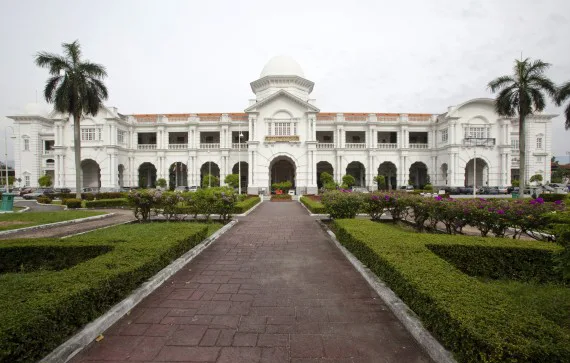
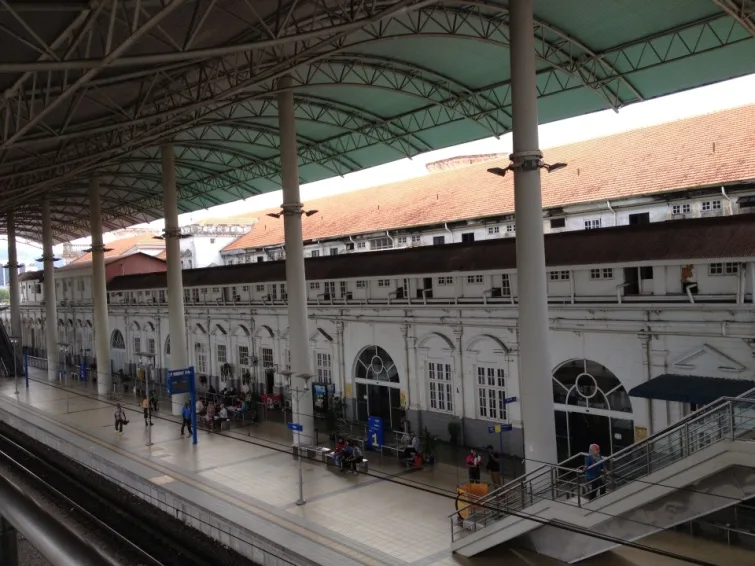
The Ipoh Railway Station has a beautiful Moorish design, leading some to call it the Taj Mahal of Ipoh. The nickname became a topic of conversation among the local community when they saw that the design of the railway station building resembled the Taj Mahal in India, even if not entirely. It is a landmark for the city of Ipoh due to the uniqueness of its appearance. It is surrounded by various types of local flowers as an attraction for tourists. Due to the reconstruction of the electric track as part of the KTM double-track and electrification project between Ipoh and Rawang, the Ipoh station underwent significant renovations throughout the 2000s. The most dramatic change was the extensive reconstruction of the platform area, which consists of new platforms leveled with the height of train carriage entrances, as well as housing for the newly laid double tracks. The overhead lines were upgraded, and the original underground tunnel between the platforms and the canopy was replaced with a pedestrian bridge and a curved steel-framed train shed, although the original wooden platform benches were retained in the process. Although some interior repairs on the ground floor of the main building were also carried out, the original elements of the station's construction, including the Majestic Hotel, were preserved. This upgrade was completed in October 2007.
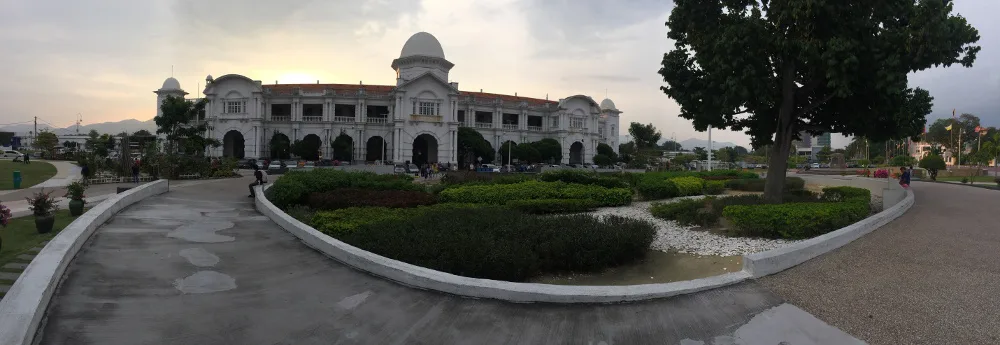
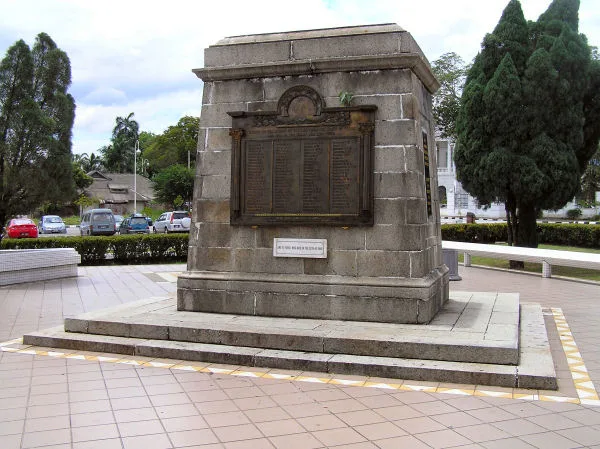
In front of the station lies a square known as Station Square Ipoh. This square is also famous for the monument erected in the center. Announced in 1927, the brick monument was built to honor the people from Perak who died in the Great War. The monument was later modified with new plaques to pay tribute to soldiers from Perak who were involved in World War II, the Emergency period, the Indonesian Confrontation, and the emergency period. As a result of the location of this cenotaph, the square has become a long-standing local venue for Commonwealth Remembrance Day and Anzac Day.