The History of Sikh Migration Through the State of Perak
In Malaysia, the Sikh community is an Indian ethnic sub-group estimated at around 70,000 people, originating from the Northern India region. The Sikh religion, founded by Sri Guru Nanak Dev Ji (1469-1539), also spread and expanded into the Southeast Asian region.
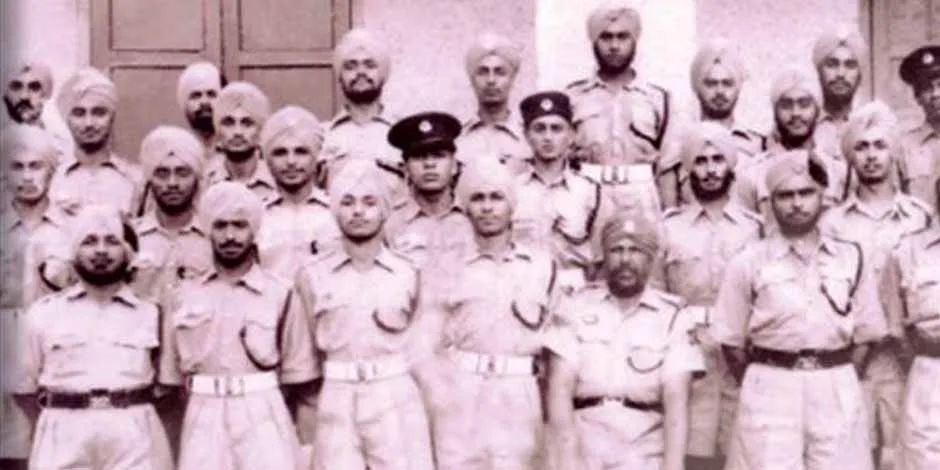
Malaysia and Singapore were two countries that became focal points for early Sikh minority settlements during British colonial rule in Malaya. There were four main factors behind the migration of Sikhs from Punjab to Malaysia. The transfer of Sikh political prisoners from India to the Straits Settlements was the primary factor in the beginning of the Sikh diaspora process in Malaya. Many Sikhs may be uncomfortable with this first factor, perhaps because they are less familiar with historical studies. It is believed that two Sikh political prisoners arrived in the Straits Settlements in 1850. They were named Nihal Singh (commonly known as Bhai Maharaj Singh) and Kharak Singh, who were exiled for life for their involvement in the war against British colonialists in the 1840s. Bhai Maharaj Singh passed away on July 5, 1856, at Outram Road Prison, Singapore. Their arrival was followed by other Sikh prisoners. On May 8, 1873, prisoners from India were transferred to the Andaman Islands. Meanwhile, Sikh prisoners who had completed their sentences did not return to India. Instead, they settled in the Straits Settlements. In 1865, another migration process began, but in a different form: the involvement of Sikhs in security force occupations within the British Empire. The British government provided not only opportunities to serve as soldiers but also the chance to migrate throughout the British Empire. Malaya was one of the centers for the arrival of Sikh soldiers, with others including countries such as Fiji, Hong Kong, New Zealand, Australia, and Canada. The role of Captain James Speedy in Perak, who brought 95 Sikhs, Pathans, and Punjabi-Muslims to resolve Chinese secret society disputes in the 1870s regarding tin mining issues in Larut, also marked an early beginning for the entry of the Sikh community into Malaya. On September 29, 1873, Captain Speedy and his troops successfully resolved the Chinese disputes in Larut. Subsequently, Captain Speedy was appointed Assistant Resident in Perak and was ordered to recruit as many of the Minister's (Ngah Ibrahim) soldiers as possible to become Residency guards, which served as the nucleus for the proposed Perak Police Force. Further recruitment was carried out by the British Government in the 1880s to serve in Jelebu and Sungai Ujong. In early 1877, the first armed police force was established, known as the Perak Armed Police (PAP), based in Taiping, Perak. The Police Commissioner for this force was Lieutenant Paul Swinburne, a capable police officer who could speak Hindi and Malay. This was the factor that led the Governor of the Straits Settlements, William Jervois, to choose Lieutenant Swinburne as the Police Commissioner of the PAP based in Taiping. By the end of 1877, there were approximately 300 Sikhs serving in the PAP force. Sikhs brought in from Punjab since late 1873 also brought their religion, which was inseparable from their lives. In the early stages of Sikh migration to Perak, the Sikh religion became an important element that united the Sikhs within the PAP force. On May 15, 1884, the Perak Armed Police Force, which had military characteristics and was composed largely of Sikhs who considered themselves more as soldiers than police officers, was renamed the First Battalion Perak Sikhs (FBPS). The position of Commissioner was changed to Commandant. They were now considered part of the armed forces, with annual inspections by the Straits Settlements Commanding Officer. The Perak Sikh troops consisted of three units: Infantry, Artillery, and the Army, which performed duties as both soldiers and police. The ratio of Sikh to Malay members in this force was 3:1. Between 1884 and 1896, the Perak Sikh Force successfully combated crime and provided membership assistance to any place experiencing problems in Malaya, including participating in the war in Pahang from 1889 to 1894. In 1896, the Malay States Guides (MSG) was established by Colonel R.S.F. Walker, replacing the FBPS force. It was established after the Malay states of Perak, Selangor, Pahang, and Negeri Sembilan were unified in their administration under the Federation in 1896, and its main headquarters remained in Taiping, Perak. The majority of its members consisted of Sikhs, Pathans, and Hindus. The MSG was an important security force in Malaya aimed at handling any issues should chaos arise between the British Government and any other power. The strength of the MSG consisted of six infantry companies and two artillery companies, with a total membership of 900 people. This regiment could be mobilized and used to help reinforce garrisons in the Straits Settlements if war occurred. Part of this regiment was sent to Singapore during the First World War. They were also sent to serve in Aden for five years and participated in the war against Turkish forces! The MSG was disbanded at the end of 1919. Many of its members were absorbed into the Federated Malay States (FMS) Police Force, while others ventured into different fields of work.
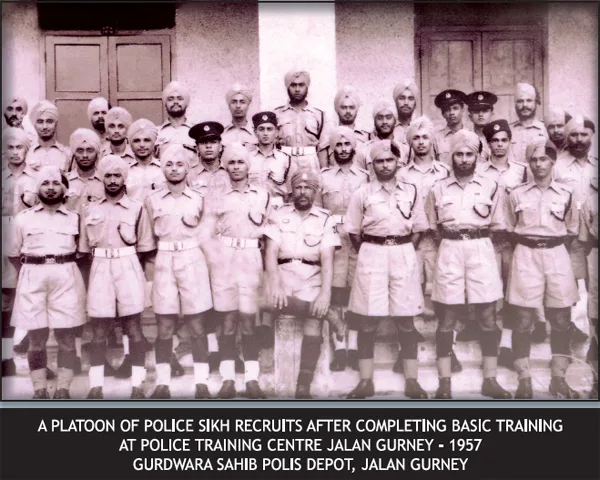
The earliest Sikh community settlements in Malaya were in police barracks and tin mining areas. The Sikh community that joined the MSG established gurdwaras as places of worship to fulfill the spiritual needs and unity of the Sikh believers. Early gurdwaras in Malaysia were built according to the needs of specific occupational groups. The first gurdwara in Malaya was established by Sikh police officers near police barracks. For example, in the state of Selangor, the first gurdwara was established in 1890 by Sikh police officers, while in 1898 another gurdwara was built in Klang, and another at the High Street Police Headquarters in 1904. There were also several other police gurdwaras built in Malaya, such as the Penang Police Gurdwara, Ipoh Police Gurdwara, Depot Police Gurdwara, and the Parliament Gurdwara Sahib in Kuala Lumpur. The British government allowed Sikhs to build gurdwaras as centers for Sikh community unity. In short, the involvement of Sikh members in the MSG force indirectly contributed significantly to social fields such as education, religion, and the politics of the Sikh community in Malaya. Sikh community migration was initially also influenced by personal factors, where British officers serving in Punjab and other United Colonies wished to obtain the services of Sikh personnel in Malaya. Once migration began, other Sikhs were also attracted and interested in the locations and various job sectors in Malaya, venturing into security fields such as police, security services in various government departments, and technical positions at railway stations. The courage of the Sikhs was proven as they not only served in India but also served in British military forces in China, Burma, and other British colonies. Their success in China could be seen after the Treaty of Tientsin was signed, where several Sikh units were given "battle honors." Among the units that received this recognition were The First Sikh Cavalry and two infantry regiments from Punjab. Because of this, Sikhs monopolized job fields in security forces from the 1870s until the Second World War in Malaya. Their involvement in the security field in Malaya indirectly received recognition from the Malaysian government. The proof is that on November 11 every year, a parade is held to commemorate the services of heroes who fell in the First World War (1914-1918), the Second World War (1935-1942), and during the Emergency (1948-1960). There are approximately 232 names of people buried at the National Monument (Tugu Negara), and 33 of them are Sikhs. Sikhs have come to Sabah since the establishment of the police force in 1882 when the British North Borneo Chartered Company established the British North Borneo Armed Constabulary (BNBAC), which was composed of a majority of Sikh and Punjabi Muslim descendants. In 1906, their arrival saw the construction of a gurdwara within the Armed Constabulary Headquarters barracks area in Batu Tiga, Jesselton (now Kota Kinabalu). Besides policing, Sikhs were identified as serving as prison warders under the control of the BNBAC Commandant. Thus, political and socio-economic pressures occurring in Asian countries also caused large-scale migration of the Indian and Chinese communities from their countries of origin to Malaya. The Sikh community was not spared from this problem, which forced them to migrate to Malaya; for example, the dense population from time to time caused the country to face critical economic problems because there was insufficient land to support the people's needs, and fights often occurred between families over the division of ancestral land. The income earned from the land was insufficient, compounded by disasters such as floods and droughts, which made the people's lives increasingly difficult. This situation caused many Sikhs to be willing to leave their homeland to migrate to Malaya with the hope of saving money to bring back home. After the end of the Second World War, vast job opportunities and liberal immigration policies also encouraged Sikh migration to Malaya. This factor contributed to the natural increase among the Sikhs already residing in the country. Overall, the original purpose of the Sikhs' arrival in Malaya was temporary, namely to collect as much money as possible to bring back home. But over time, their perspective on life began to change, where they wanted a better life than in Punjab. Although the Sikh community has long resided in Malaysia, they still maintain good family relationships with relatives in India. The contribution of Sikhs in security forces in Malaya and now the Royal Malaysia Police (PDRM) is very important for the Malaysian society to study. This is because the uniqueness of them maintaining their Sikh identity while serving in security forces is a historical asset inherited from long ago. Author: Dr. Sarjit S. Gill (UPM) Source:
gspj.net