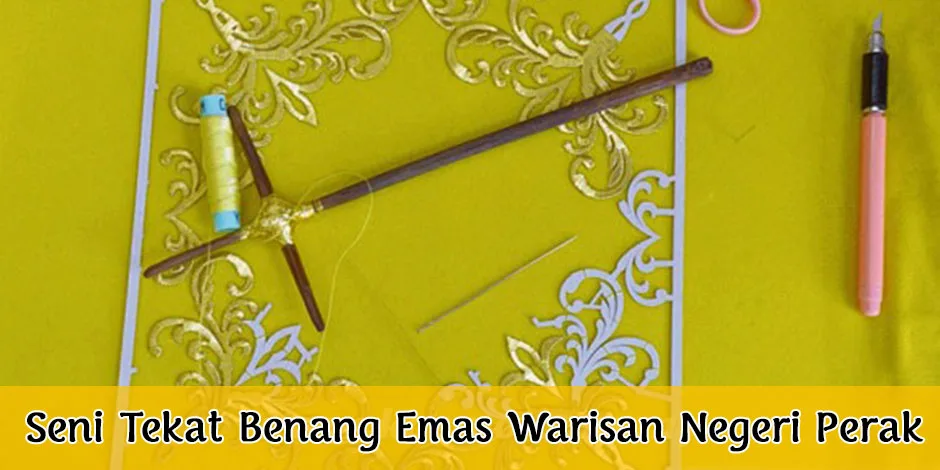
The Gold Thread Embroidery Art: A Heritage of Perak
The art of tekat, also known as bersujia, was once highly popular for creating attire for the Sultans of Perak.
The word 'tekat' refers to the verb of embroidering thread onto a base fabric. In this traditional Perak embroidery art, gold thread is used on a velvet base fabric. As you may know, the embroidery process requires a frame (pemidang) to stretch the velvet, a mold (mempulur) to shape the motifs, and gold thread to form the floral patterns. This is the uniqueness that sets it apart from other forms of embroidery. The art of tekat is typically the result of highly creative craftsmanship by women, and it is said that completing a single piece of tekat art takes a considerable amount of time.
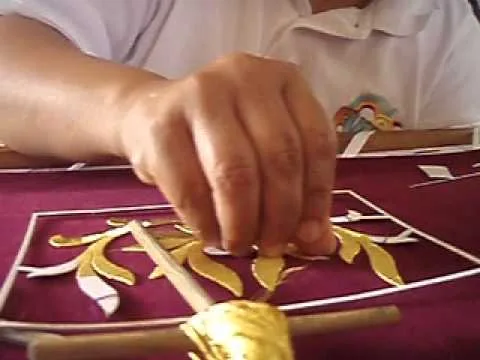
The origins of this embroidery art are often linked to the attire and equipment of the royal family or the palace. The early development of tekat can be traced back to the early 15th century, during the golden age of the Melaka Sultanate. The influence of this embroidery can also be seen among the Chinese community of the Baba Nyonya heritage in Melaka. You can still see it today on their traditional clothing.
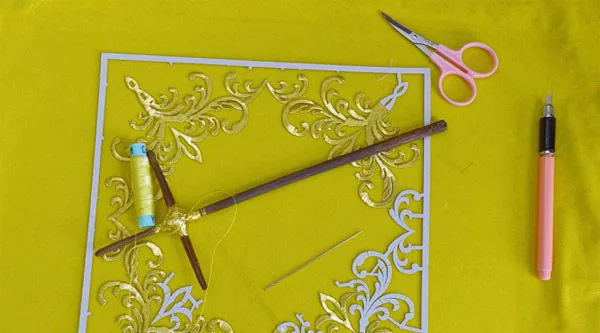
In Perak's history, the art of tekat was adopted as the official attire for Sultan Abdullah Muhammad Shah II, the 26th Sultan of Perak. Initially, the use of tekat-embroidered clothing was strictly forbidden for commoners, even for the wealthy or those with titles, unless granted by the Sultan's consent. At that time, the skill of creating tekat was also monopolized by the royal family.
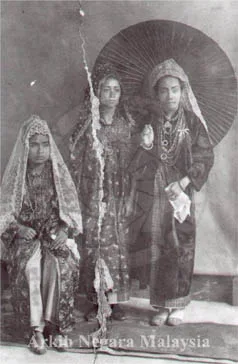
Raja Nuteh Aishah
For our loyal readers at orangperak.com, it is worth noting that the consort of Sultan Idris I (the 28th Sultan of Perak), Raja Nuteh Aishah—who was also the daughter of Sultan Yusuf Sharifuddin (the 27th Sultan of Perak)—was a highly skilled embroiderer. Her work was frequently presented as gifts and used by Sultan Idris I himself, as well as other members of the royal family.
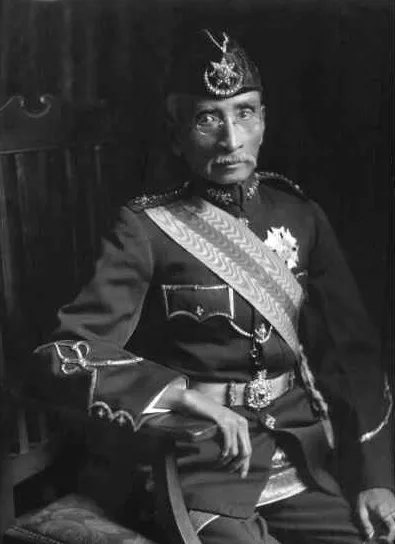
Sultan Idris I
Typically, the precious embroidery work of Raja Nuteh Aishah was reserved for specific and special occasions. These included royal weddings, royal engagements, and ceremonies such as the completion of the Quran (khatam Al-Quran), circumcisions, and ear-piercing ceremonies. It was common at the time for the areas famous for this embroidery art to be the Royal Town of Kuala Kangsar, Sayong, Kota Lama, and Kota Lama Kiri (now known as Kampung Belanja and Kampung Sadong).