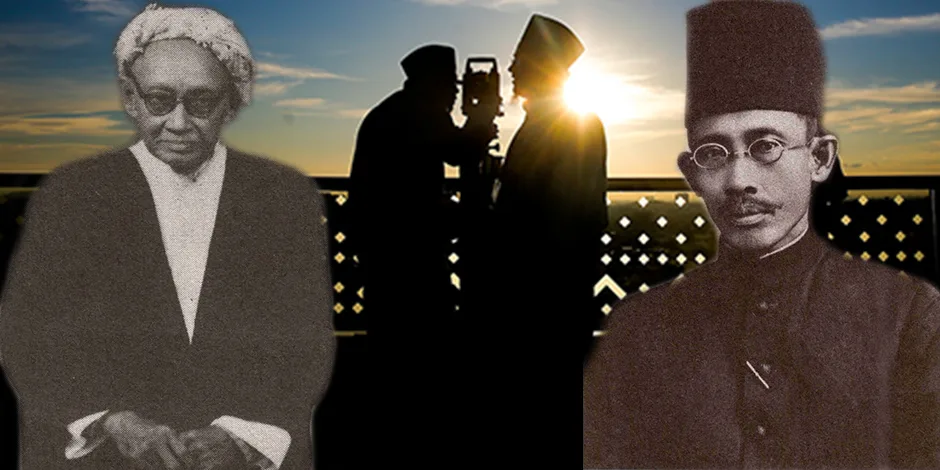
Sheikh Muhammad Tahir Jalaludin, Renowned Astronomer of the Malay World
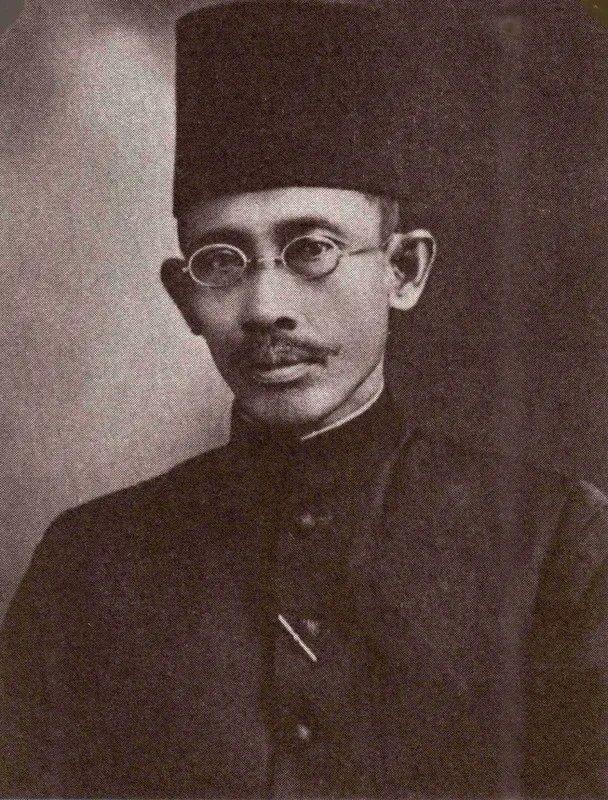
Sheikh Tahir Jalaluddin was actually a Minangkabau Malay who migrated to and settled in Tanah Melayu. Appended to his name were often the titles “Al-Azhari, Al-Falaki Assyahir,” which signify that he was a graduate of Al-Azhar University in Egypt and a famous expert in Falak (Islamic astronomy). The full name of Sheikh Tahir Jalaluddin was Muhamad Tahir bin Syeikh Muhammad. He was born on Tuesday, the 4th of Ramadan, in the year 1286 Hijrah, corresponding to December 7, 1869, in Empat Angkat (Ampek Angkek), Bukit Tinggi, West Sumatra. His father, Syeikh Muhamad, was a well-known scholar in Sumatra. Within the Minangkabau community, Syeikh Muhammad was better known as Tuanku Muhammad or Tuanku Tjangking.
Both of his parents passed away when Sheikh Tahir was only two years old. Because he was still a child when left by his parents, he was raised by his maternal aunt. By the time he was about eleven years old, his aunt sent him to study in Mecca. In Mecca, he lived with his cousin, Sheikh Ahmad Khatib, who was the leader of the Shafi'i school of thought at Masjid al-Haram. Sheikh Tahir arrived in Mecca in 1297H (1880 AD) with his cousin's grandfather, Haji Abdul Rahman. In Mecca, he lived with Sheikh Ahmad Khatib under the care of al-Syeikh Muhammad Salleh Kardabi Fidullah al-Kurdi. The basic education he received there included reciting and learning the tajwid of the Qur’an from Tuan Syeikh Abdul Haq. Other religious subjects were learned from Syed Umar Syah, Syeikh Muhammad al-Khayyat, Syed Barkasyah, and his own cousin, Syeikh Ahmad Khatib.
During his twelve years in Mecca, Sheikh Tahir had the opportunity to study religious sciences in depth. Many of the teachings of his cousin, Syeikh Ahmad Khatib, influenced Sheikh Tahir’s perspective, especially regarding religious practices among Muslims that were said to be mixed with innovations (bida’ah). Syeikh Ahmad Khatib was also a certified teacher for the Jawi community in Mecca at that time. His association with Syeikh Ahmad Khatib encouraged Sheikh Tahir to study religious sciences even more deeply from other teachers in Mecca, as previously mentioned. With this, his religious stature became comparable to that of his teacher, becoming a source of pride for the Malay communities in Indonesia and Tanah Melayu. After seven years in Mecca, in 1304H (1884 AD), he returned to his homeland, Minangkabau. The following year, he returned to Mecca to continue his studies.
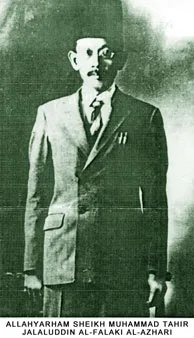
He married for the first time in 1306 H (1886 AD) to a woman named Aisyah binti Syeikh Muhammad bin Syeikh Ismail Al-Khalid Kabul. From their marriage, they had two children, but both passed away in Mecca while Sheikh Tahir was still there. Since living in Mecca in 1297 H (1880 AD), he began to delve into the study of the Qur’an. Subsequently, he studied Nahu (grammar), Bayan (rhetoric), Ma’ani (semantics), Badi’a (stylistics), Tauhid (theology), Fiqh (jurisprudence), Usul Fiqh (principles of jurisprudence), Hadith (prophetic traditions), Tafsir (exegesis), Hisab (arithmetic), Hisab Bidasab (measurement calculations), Hai-ah (astronomy), and Falak (the study of the orbits of the sun, moon, and stars). Based on the knowledge he acquired, it is not surprising that he was highly skilled in matters related to the Islamic religion.
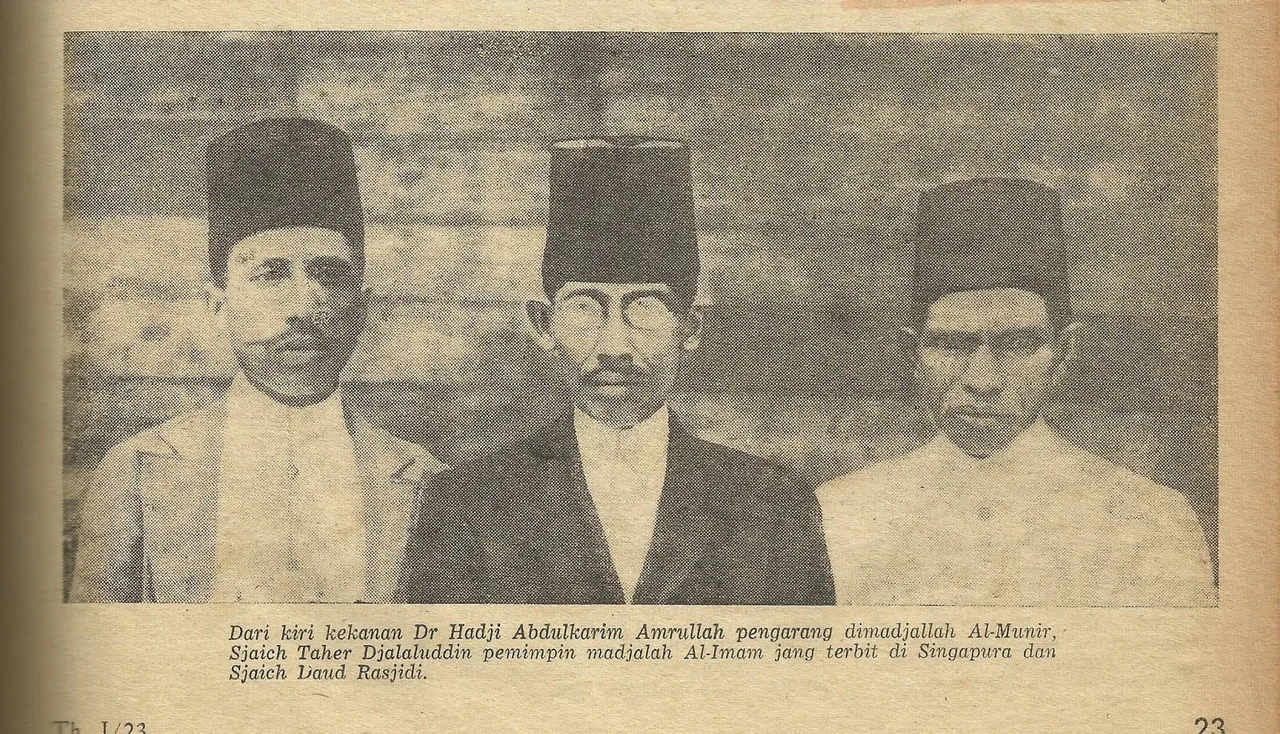
Sheikh Tahir is said to have arrived in Tanah Melayu around 1899. That same year, he married a Perak woman of Rawa descent named Aishah binti Haji Mustafa binti Datuk Menteri on September 28, 1899. He was known as someone who was not easily content with staying in one place. Even while living in Tanah Melayu, he frequently sailed to Indonesia and the Middle East to visit relatives, give religious lectures, and so on. In Perak, after marrying Aishah binti Datuk Menteri, he began working to support his family. It could be said that he was a man who preferred to be independent. In 1900 AD, he opened a textile shop in Ipoh. This business venture was initiated by his father-in-law, who was considered quite 'well-off'.
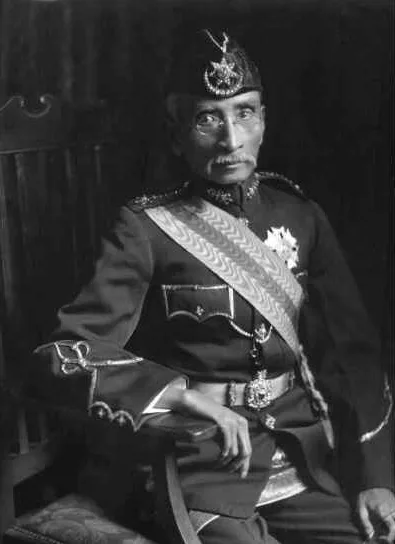
However, the textile business only lasted for a year. After that, he sailed again to the Indonesian archipelago in 1901, passing through Java, Bali, Beliling, Ampanan, Sumbawa, Bima, and Makassar. During his travels, it is likely that he shared his thoughts on religious sciences in the places he visited. In the same year, he moved to Johor Baharu. In Johor Baharu, he was invited by the Honorable Tengku Omar bin Ahmad, the Chief Justice of Johor, to teach judges at the Johor court. Among the judges who received his tutelage were Ungku Ismail bin Ahmad, Ungku Abdul Rahman bin Abdul Majid, and other Malay judges. His duty of teaching the judges lasted for about three years. During his tenure, Sultan Idris (1887-1916), the Sultan of Perak, invited him to London to attend the coronation of King George on June 22, 1911.
On July 3, 1912, he resigned from his position as a teacher to the judges in Johor Baharu, and starting in 1914, he served as a teacher at the Johor Baharu Religious School and became the Inspector of Religious Schools in Johor (Nazir). It turned out that while holding this position, he felt dissatisfied with the education system and the administrative methods of the religious schools at that time. In his letter to the President of the Johor State Education Department, he expressed his regret because he “could not implement more beneficial and useful study regulations for the children studying there.” He eventually resigned in 1916. Two years after returning to Perak in 1920, he was asked by his fellow activist, Syed Syeikh bin Ahmad Al-Hadi, to become a teacher at the Madrasah Al-Masyhur Al-Islammiyah in Penang, alongside his friend Syeikh Abdullah Maghribi. His service at the Madrasah was short-lived because he fell ill. At Al-Masyhur, he was tasked with teaching Falak to the students. By 1923, he departed for Medan and Deli for medical treatment and to visit his homeland, Minangkabau, for six months.

As a scholar with a good standing in the eyes of society, he was highly respected. The positions he held while in Perak and Johor prove that his energy and knowledge were highly regarded. His knowledge was widely utilized for the benefit of his community. He was often trusted to help resolve religious legal issues based on his vast knowledge, both in Falak and other religious matters. As an expert in Falak, he was frequently presented with questions regarding how to use Hisab (calculation) to determine the dates for fasting and Eid. Many of these questions came from residents in Tanah Melayu and Indonesia. His views on the sighting of the new moon for Ramadan or the occurrence of solar eclipses were often published in local newspapers.
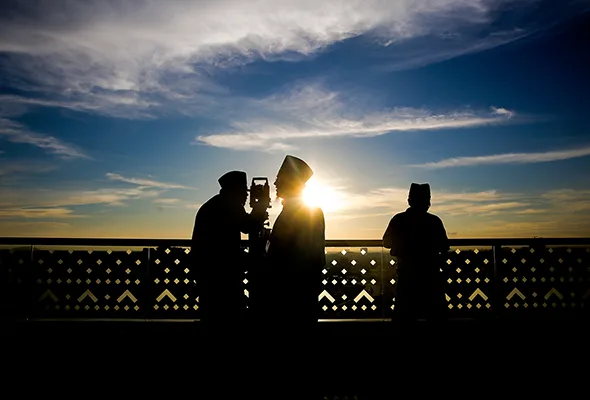
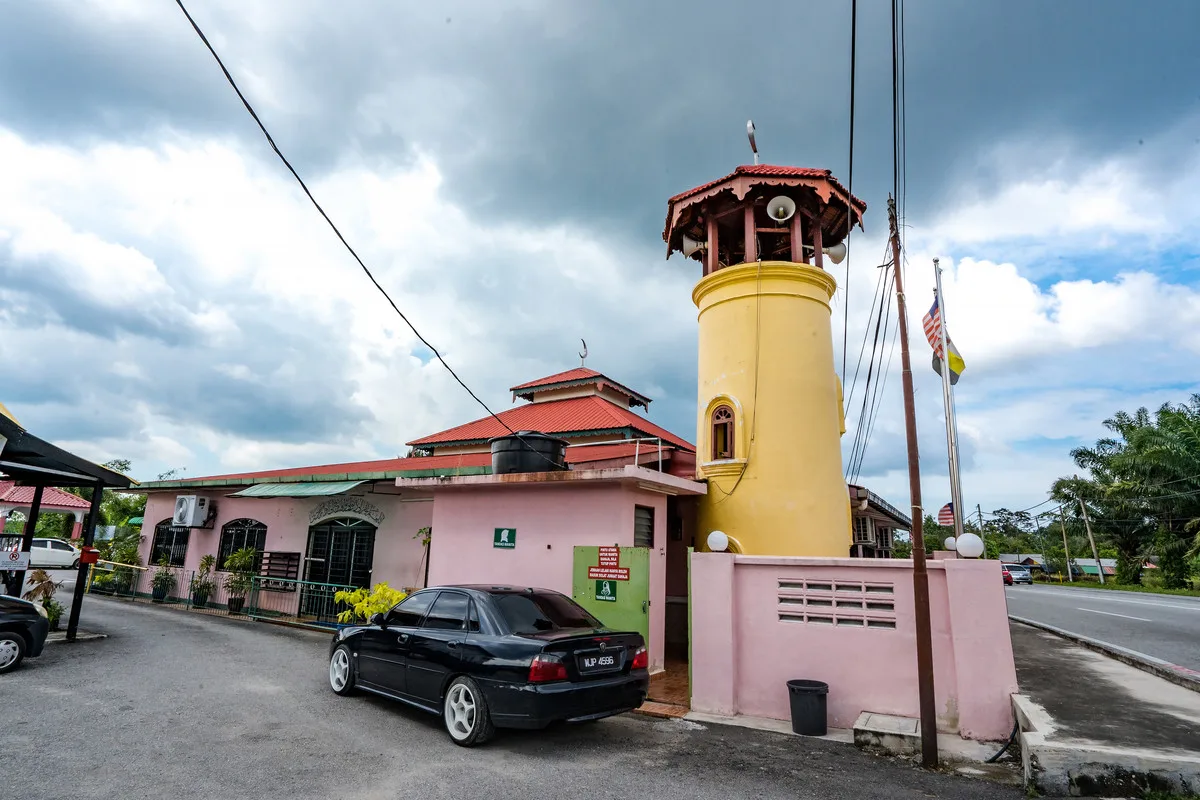
In addition, he was very concerned about charitable deeds in his community. For example, he emphasized the importance of every mosque having a correct and precise qibla direction towards the Kaaba in Mecca. He believed that prayer without facing the correct qibla direction was invalid. Therefore, he felt responsible for correcting the qibla of mosques because of his expertise in Falak. Given the importance of the qibla as a condition for the validity of Muslim prayers, Sheikh Tahir was once appointed by the Sultan of Perak, Sultan Idris, to serve as the qibla inspector for the entire state of Perak. He once expressed his frustration because there were many mosque mihrabs that were not aligned with the qibla. For instance, when he served as a qibla inspector for mosques in Perak in 1900, he reported that many mosques in Tanah Melayu were not facing the correct qibla, as was the case with the mosque in Teluk Anson, Perak.
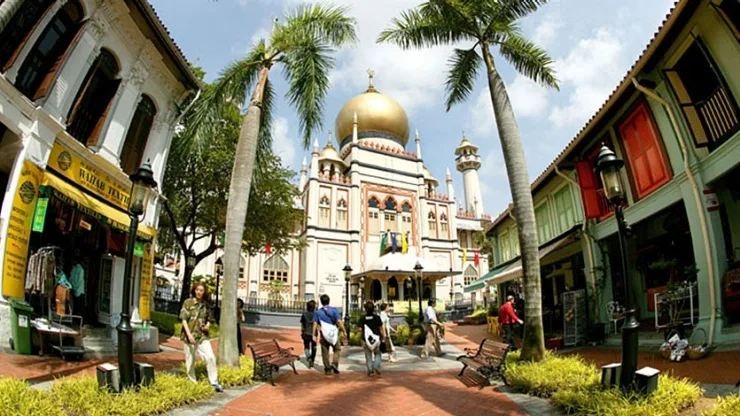
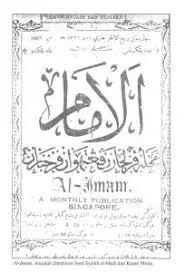
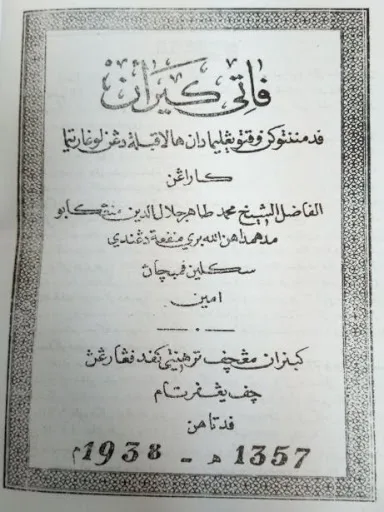
Furthermore, it was found that mosques in Penang, Kuala Lumpur, and the Sultan Mosque in Kampung Gelam, Singapore, also did not follow the correct qibla direction. Following the confusion regarding the qibla direction of mosques, Sheikh Tahir took the initiative to publish two books. *Buku Pati Kiraan pada menentukan waktu yang Lima dan hal Kiblat dengan Logarithma* (Calculation Guide for Determining the Five Prayer Times and Qibla using Logarithms) was published in Singapore through al-Ahmadiah Press in 1938. Subsequently, in 1951, the book *Natijah al-Ummi* (Calculation opinions on the Hijri and Gregorian calendars, and the Shafi'i school qibla direction) was published. His expertise in Falak led to him being called Sheikh Tahir Jalaluddin Al-Falaki. Regarding the importance of Falak, he once stated: “Falak is a noble science for measuring and weighing the movement of the moon and the sun.” His statement was seen as consistent with the saying of the Prophet, “The best of Allah’s servants are those who observe the sun and the moon and the shadows to establish prayer.” Based on the Prophet's saying, Sheikh Tahir emphasized the importance of studying Falak. The importance of Falak for Muslims is closely related to the qibla in prayer, determining prayer times, and setting the dates for fasting in Ramadan and Eid.
Sheikh Tahir’s skill in Falak showed his deep interest in mathematics. He also criticized those who did not want to appreciate the importance of mathematics in determining the dates for fasting and Eid. According to Sheikh Tahir, the use of Hisab to determine fasting and Eid dates is important, especially when bad weather makes it impossible to sight the new moon. According to him, those who refuse to use the Hisab method to determine fasting and Eid dates are like ignorant people. Their ignorance causes them to merely follow others' opinions, leading to fasting a day earlier than it should be in the month of Ramadan. Regarding the qibla, he stated that Muslims are obligated to learn the qibla direction and are obligated to spread that knowledge. On this matter, he said: “One cannot ‘ijtihad’ (exercise independent reasoning) regarding the qibla unless one has clear vision and knows the indicators of the qibla such as the stars, the sun, and the moon, and at the very least the wind, and at the strongest the poles; and one cannot rely solely on speculation without signs and evidence.”
He also believed that the blind are exempted from learning the indicators of the qibla, as are those with sight who are unable to learn them. Nevertheless, they must follow the guidance of those who are knowledgeable about the qibla indicators. His statements published in newspapers regarding the many mosques in Tanah Melayu and Sumatra that did not follow the correct qibla direction eventually raised public awareness. As a result, people in Tanah Melayu also acknowledged that many mosques in Kedah, Perlis, Penang, Melaka, and elsewhere did not follow the correct qibla direction. Regarding this situation, a reader once commented: “The state of our religion is in disarray. The only thing that has become a topic of discussion in our religious community is the issue of the mosque qibla, and this issue has become a hot topic in our religious community.”
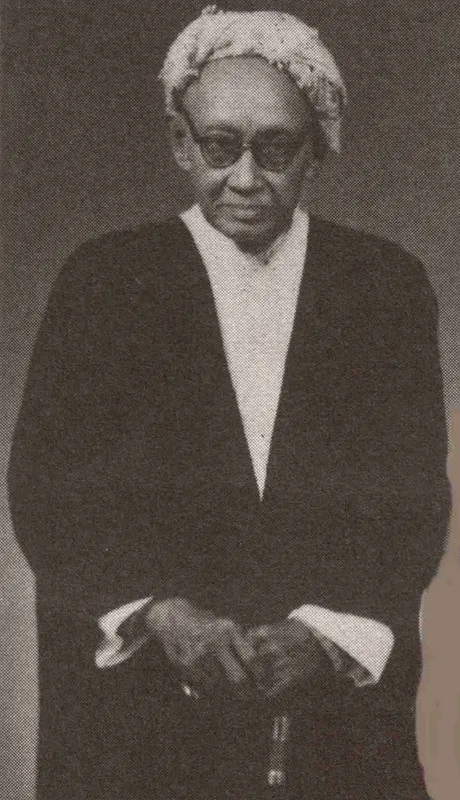
Although the impact of this qibla issue opened the public's eyes to the many errors in qibla direction occurring in mosques in Tanah Melayu, this exposure caused dissatisfaction among certain parties. For example, Sheikh Tahir was once tried by a court in Penang because he conducted an investigation into the qibla placement at a mosque in Penang. His opinion was also opposed by a newspaper reader who considered the qibla issue not important enough to be sensationalized, suggesting it was sufficient to pray facing left or right of the qibla. Seeing that many still did not understand Falak and its importance in religious matters, he continued to spread his knowledge even when he was old and frail. His persistence in contributing his energy to spread this knowledge was clearly visible. For instance, when he was 79 years old, he traveled to Bangkok, Thailand, to teach qibla direction calculations.
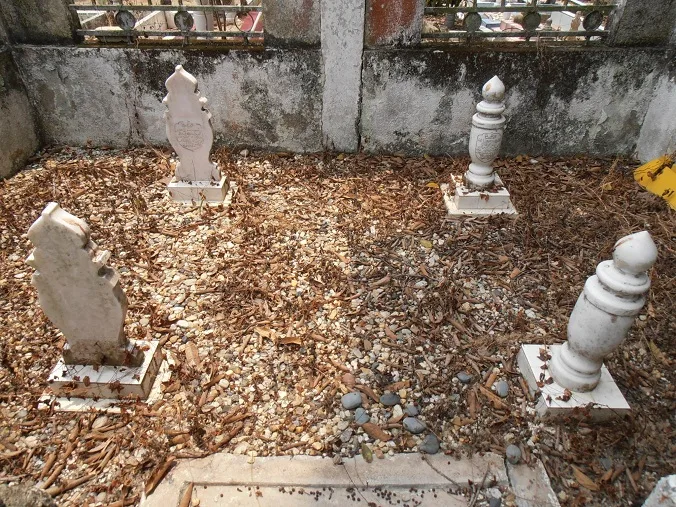
Approaching the age of 83, Sheikh Tahir was invited by the Johor Religious Department to teach Falak to the department's staff. This was done for six months, commuting from Kuala Kangsar to Johor Baharu. Sheikh Muhammad Tahir produced works covering several fields. The most important from the perspective of Falak Syar'i is the book *Natijatul'Umur* (published in 1357 H./ 1936 AD), which contains calculations for the Hijri calendar and its correspondence with the Gregorian calendar, qibla direction, and prayer times for all time; and the book *Jadual Pati Kiraan*, a guide for determining prayer times and qibla direction along with logarithms for calculating them (published in 1362 H./ 1941 AD). Sheikh Muhammad Tahir Jalaluddin Al-Falaki Al-Azhari passed away on the morning of Friday, 21 Rabiulawal 1377 (corresponding to October 26, 1956) at the age of 87, and was buried at the Jalan Baru Cemetery, Kuala Kangsar, Perak.
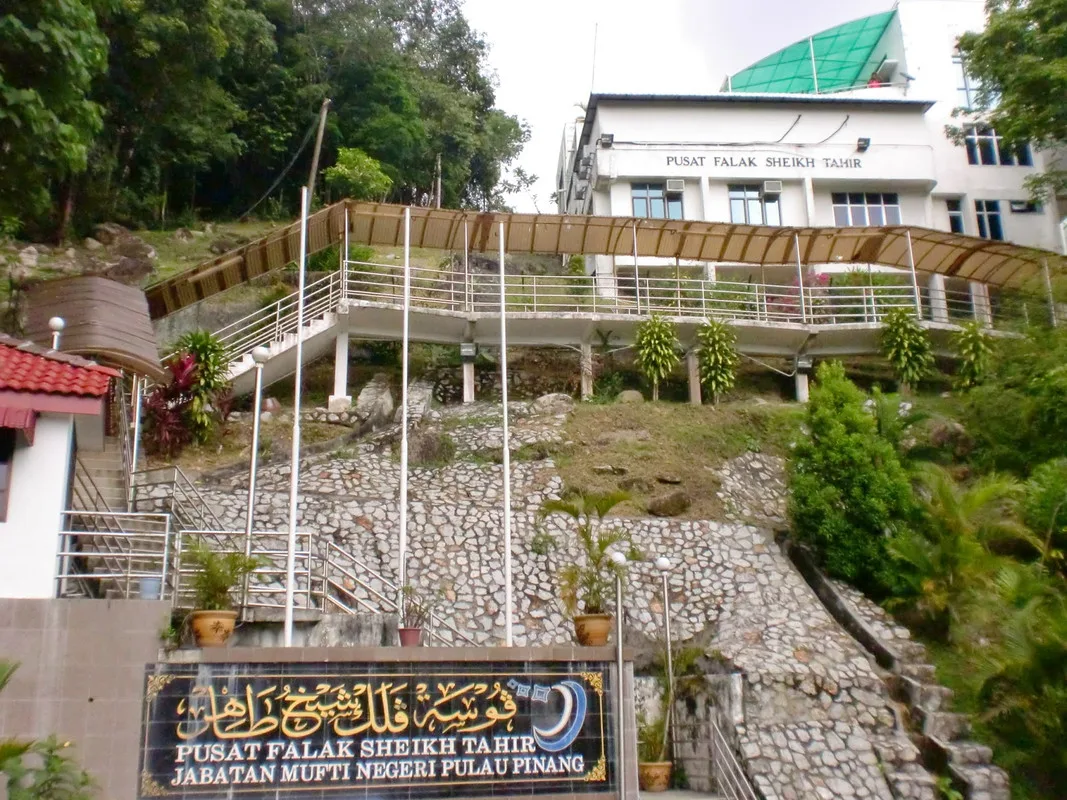
The Department of Museums Malaysia has declared his burial site a historical tomb to commemorate his contributions. Currently, the Penang State Government has named an observatory center at Pantai Acheh, Penang, as the Sheikh Tahir Falak Center, to commemorate his role and stature in the field of Falak. References:
- Working paper by Mohd Sarim Hj. Mustajab, Center for Knowledge and Language Promotion, Universiti Malaysia Sabah
- Historical Places of Perak, N.A. Halim
- Penang Mufti Office Website