Commemorating the 2009 Perak State Assembly 'Under the Tree' Session
Commemorating the 2009 Perak State Assembly 'Under the Tree' Session
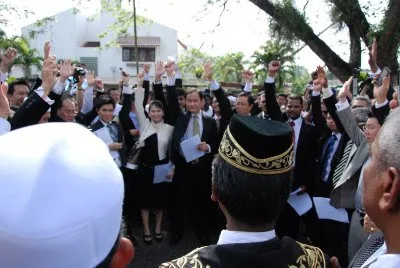
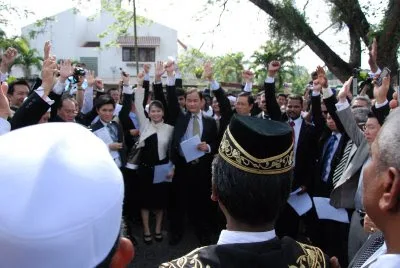
On March 3, 2009, a unique and historic event took place in Ipoh, Perak, that captured widespread attention. The Perak State Legislative Assembly (DUN) session, which was supposed to be held in the official assembly building, had to be conducted under a rain tree.
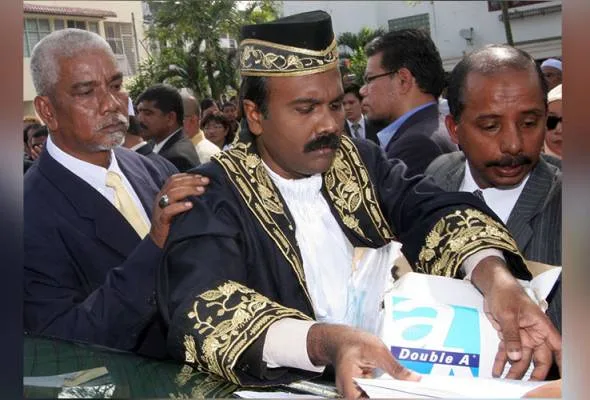
This extraordinary session was called by the Speaker of the Assembly, V. Sivakumar, to discuss a motion regarding the transition of power in the Perak state government. This incident not only became the focus of local and international media but was also considered a humorous yet meaningful chapter in Malaysian political history.
The 'Under the Tree' Session: A Symbolic Act or a Necessity?
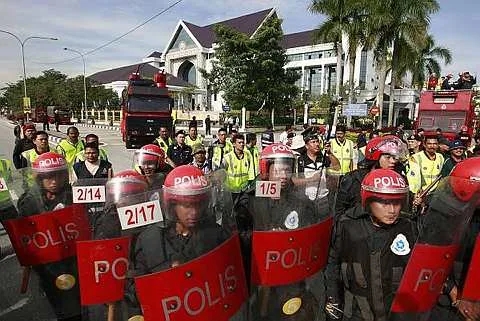
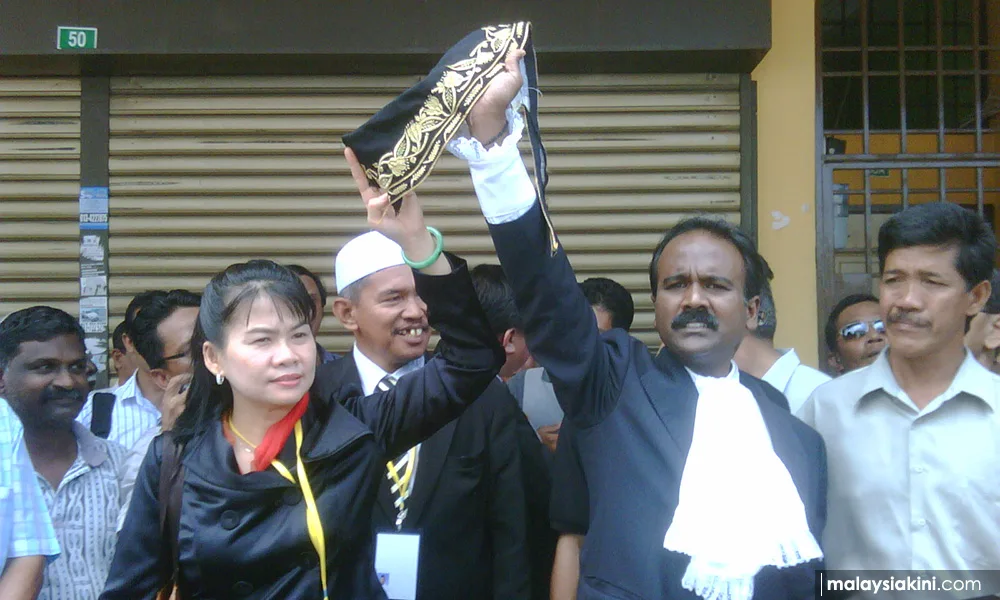
This session under the tree took place after Pakatan Rakyat State Assembly members (ADUNs) were barred from entering the Perak Darul Ridzuan State Assembly building. With great fervor, Sivakumar, dressed in his Speaker's robes and wearing a songkok, presided over the session in front of approximately 2,000 people in attendance.
This action was seen as a symbolic protest against the obstacles placed before them. The session was attended only by 28 Pakatan Rakyat assembly members, while Barisan Nasional (BN) members were absent.
Political analysts viewed this action as a strategy to attract public attention and sympathy. Dr. Azeem Fazwan Ahmad Faruk, a Political Science lecturer from Universiti Sains Malaysia (USM), argued that Sivakumar and the attending assembly members should have waited for the court's decision regarding the lawsuit filed by Datuk Seri Mohammad Nizar Jamaluddin against the appointment of Datuk Dr. Zambry Abdul Kadir as the Menteri Besar of Perak before holding any assembly session.
The Party-Hopping Crisis and Power Transition
The political crisis in Perak began when three Pakatan Rakyat assembly members, from Changkat Jering, Behrang, and Jelapang, were reported missing. They later appeared at a media briefing alongside the then-Deputy Prime Minister, Datuk Seri Najib Tun Razak.
These three assembly members declared themselves as Independent members and pledged support to Barisan Nasional (BN). With this declaration, the Pakatan Rakyat state government led by Mohammad Nizar lost its majority in the Assembly.
Datuk Seri Najib Tun Razak, who was tasked with handling this political turmoil, sought an audience with the Sultan of Perak, Sultan Azlan Shah, to request his consent to appoint a new Menteri Besar. Sultan Azlan Shah did not immediately accept the recommendation, choosing instead to investigate and personally question the three assembly members.
From their admissions, it was clear that they now supported BN. However, the media failed to interview them to get their independent views on why they were willing to 'jump ship'.
With this admission, the Pakatan Rakyat state government was toppled. Mohammad Nizar was summoned to appear before the Sultan of Perak to resign or be considered to have resigned automatically based on the Perak Constitution, which requires the Menteri Besar to be appointed from among those holding a majority. The phrase "patik sembah derhaka…" (I humbly commit treason), which was widely reported by mainstream media, became symbolic of the fall of the Pakatan Rakyat government in Perak.
The Tree of Democracy: A Symbol of Struggle or Controversy?
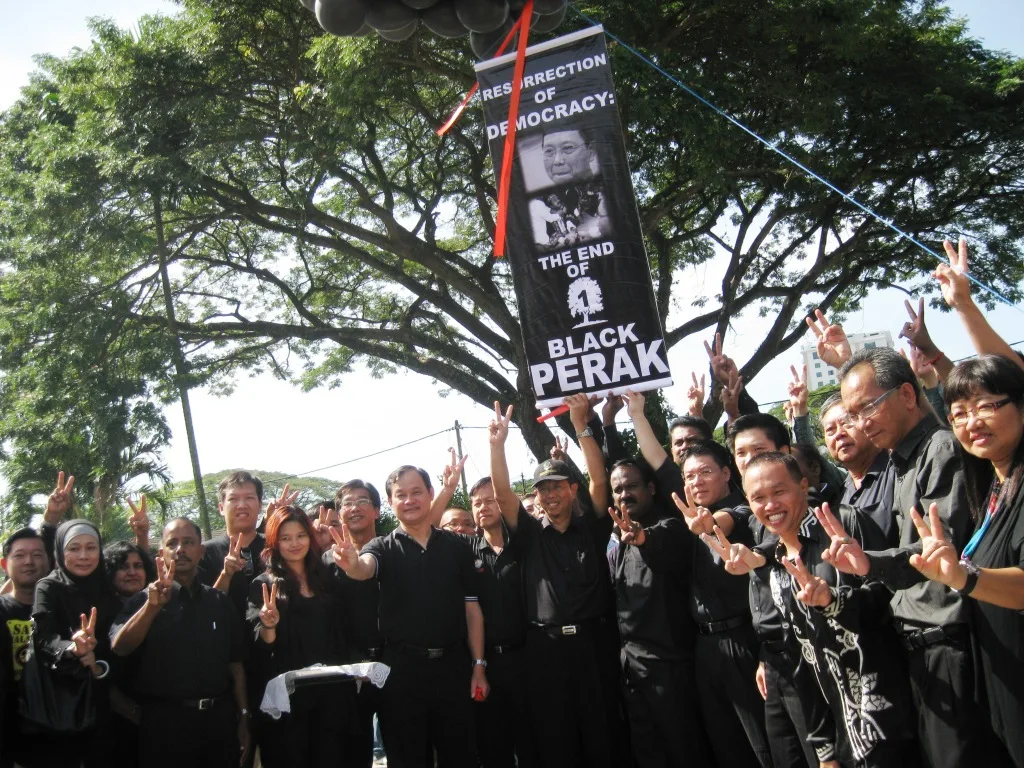
The session under the tree was not only an important chapter in Malaysian political history but also became a symbol of the struggle for democracy. Some parties viewed this event as a historic moment in the modern and sophisticated world. They took the opportunity to heat up the situation by building a small plaque under the tree and decorating it beautifully. This plaque had no religious elements but was purely a political act. Mohammad Nizar was also present during its inauguration.
The tree was later named the "Tree of Democracy" and a monument was erected to mark the moment. The monument read, "This tree has witnessed the history of the development of the parliamentary democracy system in the state of Perak Darul Ridzuan and is a symbol of the struggle for democracy to form a government of the people, by the people, and for the people." This monument was hoped to be a symbol of the struggle for the beloved state of Perak.
However, this action was not well-received by all parties. Many in the Malay community protested, considering it to be against Islamic faith and potentially leading to elements of superstition and myth. They argued that the tree should not be venerated, worshipped, or adorned with fragrant flowers. Such practices were said to resemble animism, which favors strange, peculiar, supernatural, and magical things.
Plaque and Monument Controversy
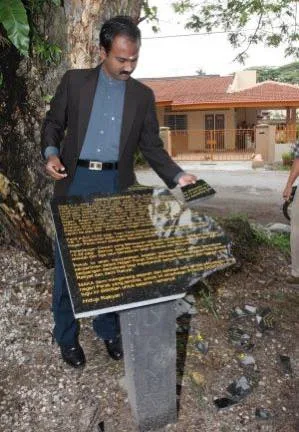
The plaque erected under the Tree of Democracy was later destroyed by the Ipoh City Council (MBI) because it did not have approval or a permit. PKR then held an auction for the fragments of the broken plaque to raise funds to build a new plaque or monument. They managed to collect RM40,000.
On April 28, 2009, MBI once again thwarted efforts to rebuild the 'Tree of Democracy' memorial plaque. Any monument erected must obtain permission from MBI, ostensibly to prevent road safety from being compromised. Two workers who were preparing a monument 2 meters long and 0.6 meters wide fled when the authorities arrived.
Kepayang Assemblyman, Loke Chee Yan, stated that Pakatan Rakyat did indeed intend to erect a monument under the Tree of Democracy and should have submitted an application to MBI. However, MBI's swift action in destroying the plaque showed how sensitive this issue was.
Conclusion
The event of the session under the tree on March 3, 2009, was not only an important chapter in Malaysian political history, but it also sparked various controversies and debates. The Tree of Democracy became a symbol of struggle for some, while for others, it was considered an inappropriate act that contradicted religious values.
This event reminds us of the importance of democracy and justice in a system of government, and how fragile political stability is if not well-maintained.