World's Oldest Hand Axe Found in Lenggong
In 2009, one of the greatest discoveries in our nation's history was made in Lenggong, Perak. It is the oldest artifact discovery in the world.
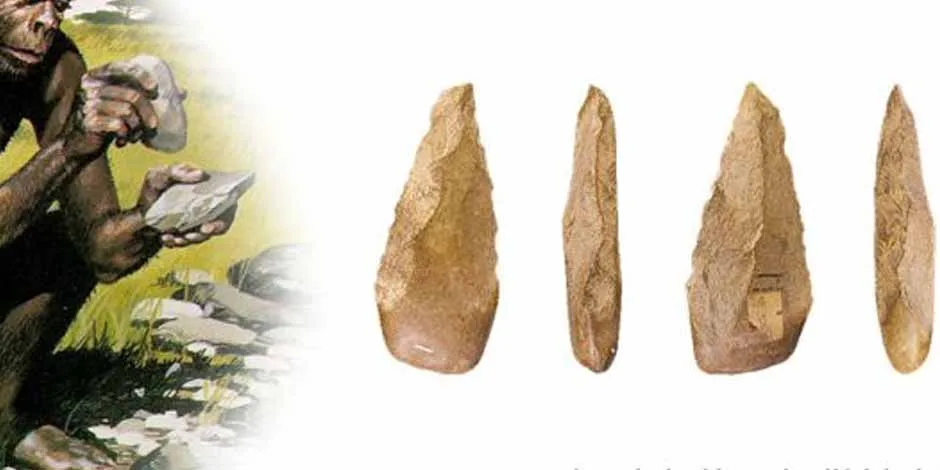
This clearly proves that the Lenggong area was one of the earliest human settlements since ancient times. This discovery indirectly makes Perak even more special, with its own unique identity and diverse stories. The artifact discovered is a hand axe, estimated to be over 1.83 million years old. It was found in Bukit Bunuh in 2009, and this artifact is a stone tool used by humans for chopping, cutting, hunting, and various other daily tasks. For our loyal readers at orangperak.com, please note that the discovery site, Bukit Bunuh, has been recognized as an important archaeological site in Malaysia.
Excavation efforts at this site actually began in the 1980s. Discoveries increased starting in 2001 when thousands of stones of various types, such as suevite, quartzite, quartz, and metamorphic rocks, began to surface due to modern agricultural activities. The discovery of evidence within this 4-square-kilometer Paleolithic complex in Bukit Bunuh has made it one of the most important Paleolithic sites in the world. The impact of the hand axe discovery in Bukit Bunuh, Lenggong, has refuted several long-held theories. Among them is the theory that the earliest humans lived in Africa, based on older artifacts found there, suggesting that humans gradually migrated across the world starting from Africa. This theory has been fully refuted by the discovery of this hand axe, as its age is older than the ancient human artifacts previously found in Africa.
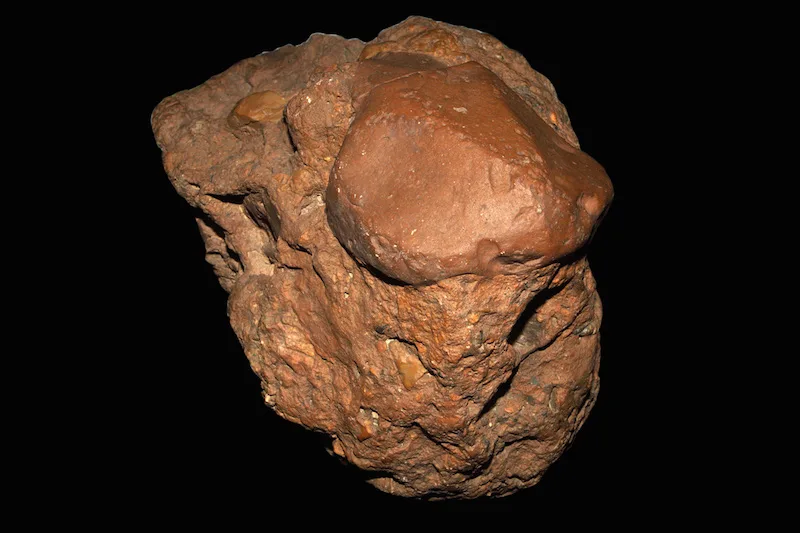
Hand axe in suevite rock found in Lenggong
It can be said that Lenggong is one of the only Paleolithic sites in the world that functioned as a stone tool workshop and was used continuously from time to time for over 1.83 million years. According to Hallam L. Movius, an American archaeologist in 1948, the Asian region did not possess hand axe stone tools and had a backward level of technology. However, the results of studies conducted show that the hand axe stone tools from Bukit Bunuh possessed high manufacturing technology at the time, as it required the selection of suitable materials and flaking on both surfaces in stages. Therefore, Hallam L. Movius's statement can be indirectly refuted, and this perspective could change the world history that has been touted for so long. The manufacturing technology of the hand axe found in Bukit Bunuh is advanced and comparable to hand axes found in other regions in terms of how tools were made millions of years ago. Hand axes are identified through specific flaking and chipping criteria on their surfaces. In our current era, hand axes serve as a benchmark to determine the level of knowledge of ancient societies. Hand axes have also been found in Liang Bua, Indonesia, and Arubo, Philippines. However, the discovery of hand axes in Southeast Asia is still not fully accepted by Western researchers due to factors regarding the perceived uneven development of humans in the Asian region.

References and adaptation from Lembah Mansuli, Lahad Datu, Sabah in 'Prasejarah Asia Tenggara' (Southeast Asian Prehistory) written by Jeffrey Abdullah.