World War II Bunkers in Kampar
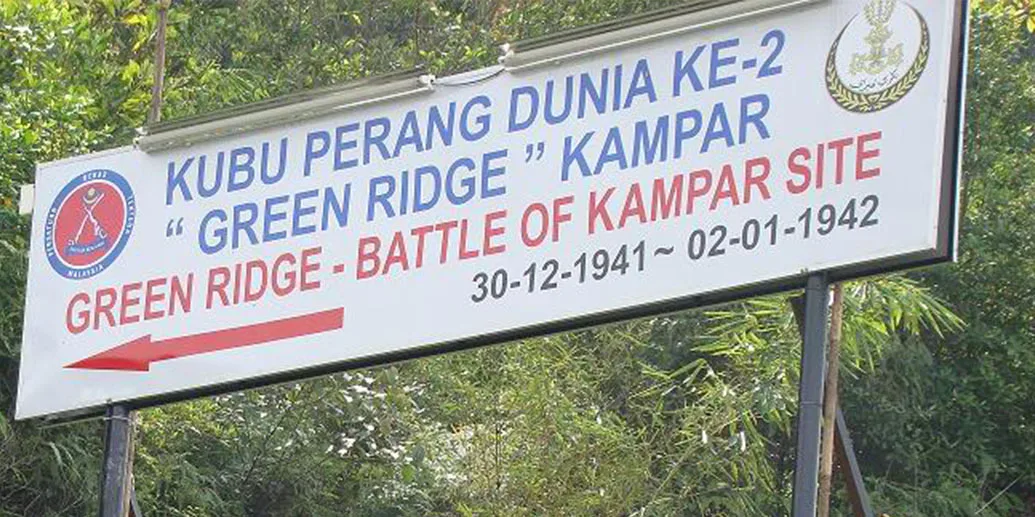
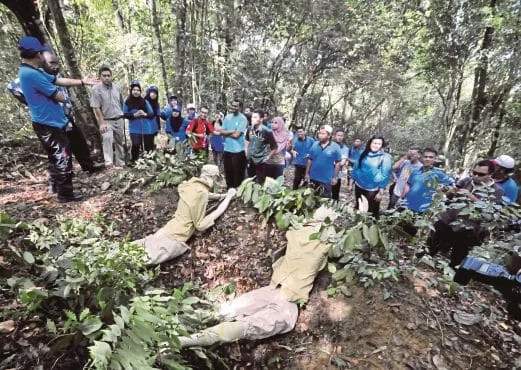
Kampar, Perak was a site of a World War II battle. Green Ridge, the site of the Battle of Kampar, has been gazetted as a heritage site so that the historical remnants from the Second World War can be preserved and developed as a tourist area. It is estimated that there are over 10 war bunkers in need of restoration within the approximately 1.2-hectare area.
The Battle of Kampar, which took place from 30 December 1941 to 2 January 1942, occurred in what was then a tin-mining town in the state of Perak, Malaysia. Following the British military's failure to halt the Japanese advance in Jitra and Gurun during the Japanese occupation campaign in Malaya, the British established a defensive line in Kampar in an effort to block their progress.
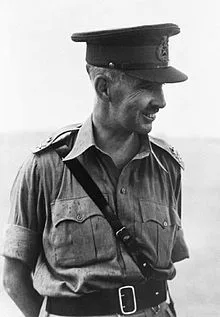
The town of Kampar was chosen by Lieutenant General Arthur E. Percival, commander of British forces in Malaya, due to its position at the foot of the 1,206-meter-high Gunung Bujang Melaka, with ridges overlooking the town. On 23 December 1941, Percival's battalion occupied three low ridges north of Kampar: Green Ridge, Thompson Ridge, and Cemetery Ridge, which overlooked the main road and railway line. Additionally, the flat terrain to the west of Kampar provided a strategic position for defensive artillery, giving the British an artillery advantage over the Japanese.
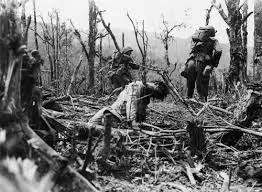
It was on those hills that a fierce four-day and four-night battle took place on 30 December 1941, between 4,000 Japanese soldiers and 1,500 British troops, who were also supported by Indian, Sikh, and Gurkha soldiers. The battle resulted in the deaths of 500 Japanese soldiers and 150 British soldiers. Those who perished were buried in a single location in the same area, known as Green Ridge.
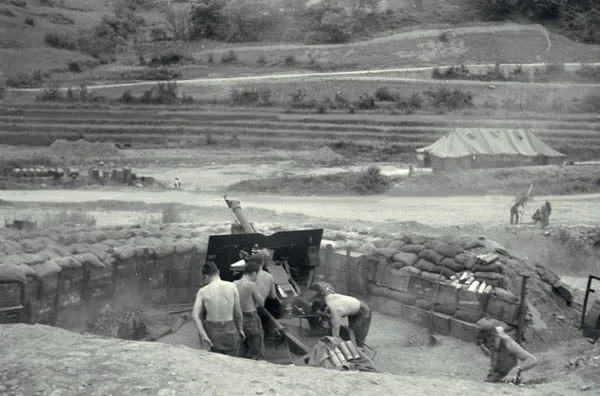
The battle in Kampar was one of the fiercest during the Malayan Campaign, but on 2 January 1942, the British were outflanked and their route to Singapore was cut off behind them. Under the cover of artillery fire, the British troops began to retreat along the main road to positions prepared in Trolak, about five miles north of Slim River. There, they were surprised and decimated by Japanese tanks in the Battle of Slim River.