Why Are Most Sultanic Mausoleums Located on the Right Bank of the Perak River?
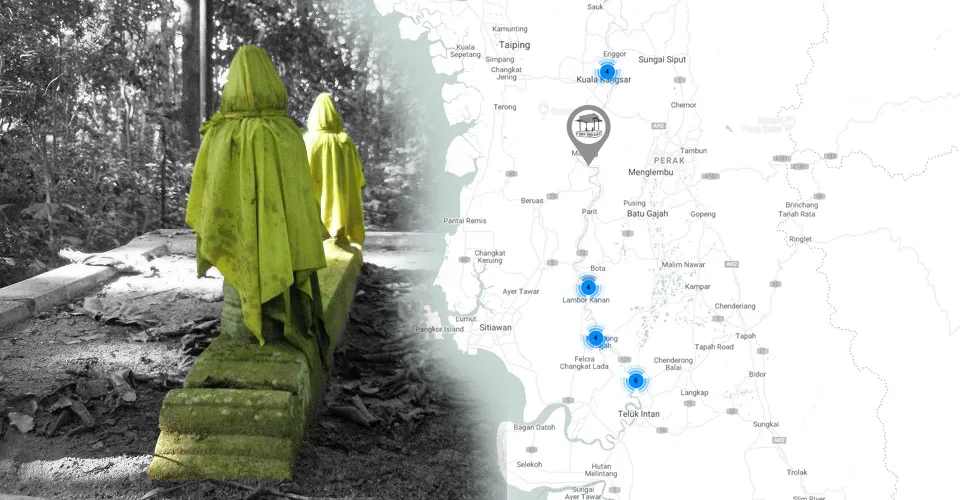
The location of the Perak Sultanic mausoleums along the river, specifically on the right bank of the Perak River, has raised questions about the actual reason for this placement.
The question of why the Perak Sultanic mausoleums are located along the Perak River is certainly easy to answer, but the reason for their placement on the right bank is more complex. This is because, in the past, the river was a vital communication route. Communication began with the Perak River as the primary means of transport, until small land paths were eventually built to connect one place to another. With the existence of this river route, it certainly had a major impact on the economy, indirectly serving as a path for outsiders to come and trade. So, what about the question of why most Perak Sultanic mausoleums are located on the right bank of the Perak River? There are several theories regarding this matter recorded in old journals and passed down through generations by local residents. According to Malay beliefs, there is a strong emphasis on the concept of left and right, such as using the right hand for eating, stepping with the right foot first when entering a mosque, and so on.
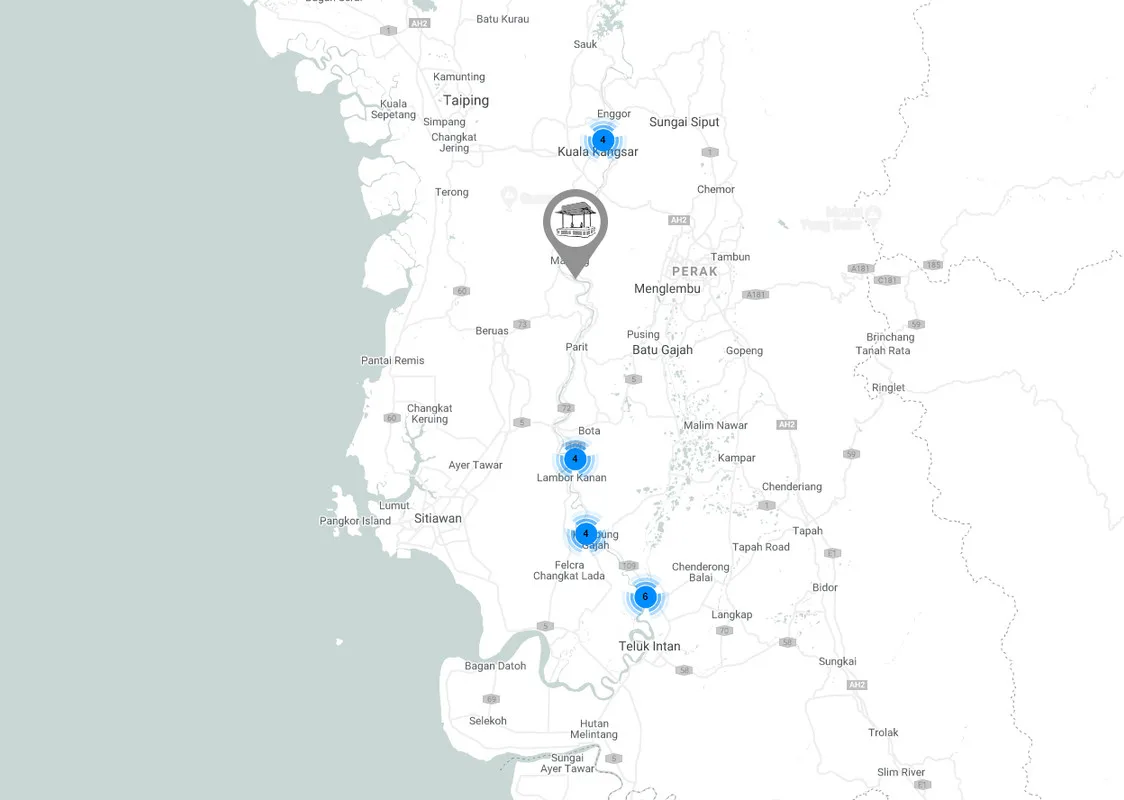
The use of the right side is ostensibly for good things, while the left is considered less favorable. However, the argument regarding this concept of favoring the right over the left is actually highly questionable in its validity. This can be refuted by those who travel from upstream to downstream, as the Perak Sultanic mausoleums would then appear to be on the left side of the river. However, early settlements in the past usually began from the downstream areas. Only then were new settlements gradually explored further inland towards the upstream areas. New settlements were opened inland because the river mouth areas of the original settlements became too shallow and could no longer function effectively as ports. Another reason for opening new settlements was the desire to expand agricultural areas to provide food supplies that increased every year. Additionally, new settlements were opened further upstream to avoid enemy attacks, which would almost certainly originate from the downstream or the mouth of the Perak River. Returning to the question of why most Perak Sultanic mausoleums are located on the right bank of the Perak River: the story of the agreement between Tok Temong and Sultan Muzaffar Shah when he was installed as the first Sultan of Perak might be considered as an answer. It is said that on the day of Sultan Muzaffar Shah's installation as the first Sultan of Perak, Tok Temong requested only one promise and consent from him: that his descendants would rule on the right bank of the Perak River (when traveling upstream), while Tok Temong's descendants would remain ruling on the left bank. You can refer to the article
who is Tok Temong in Perak history
which we published previously to explain the matter in more depth. Perhaps this is a strong reason for why most Perak Sultanic mausoleums are on the right bank of the river, as the agreement was made on the day of the first Sultan's installation and received his consent. So, what about the rest of the Perak Sultanic mausoleums in the modern era that are located in the town of Kuala Kangsar? They are clearly on the left bank of the river, which contradicts that agreement. There is no definitive answer to explain this because the story above is based only on oral traditions, and there is no solid evidence or comprehensive research conducted by historians. Consequently, since when did the Sultans of Perak start being buried on the left bank of the river? It all began during the reign of Sultan Idris I (the 28th Sultan of Perak).
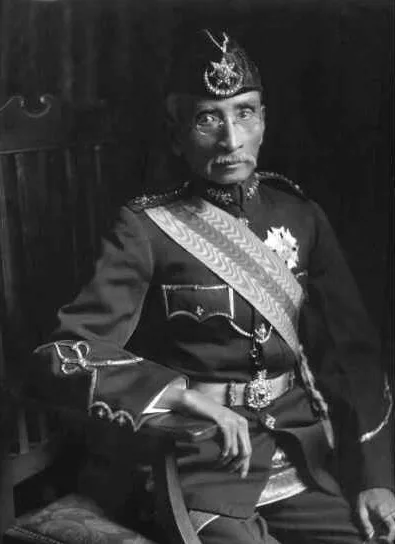
It is said that one day, an elephant belonging to Raja Idris (while he was still Raja Muda) named Kulub Chandan ran away and got lost in the forest. Raja Idris and his followers went searching for it as far as the foot of Gunung Bubu. Upon arriving at the foot of Gunung Bubu, Raja Idris encountered an old man with a long beard wearing a white robe. Suddenly, the old man approached, paid his respects, and said: "Your Highness is destined to become the Sultan of Perak, and when you are installed as Sultan later, do not reside in Sayong anymore; instead, you must build a palace on the hill by the edge of the Batang Hari Perak. As for the elephant named Kulup Chandan, you must release it seven days after your installation." Following this event, after Sultan Idris I was installed as the Sultan of Perak, he was the first to break tradition by building a palace and residing on the left bank of the Perak River.
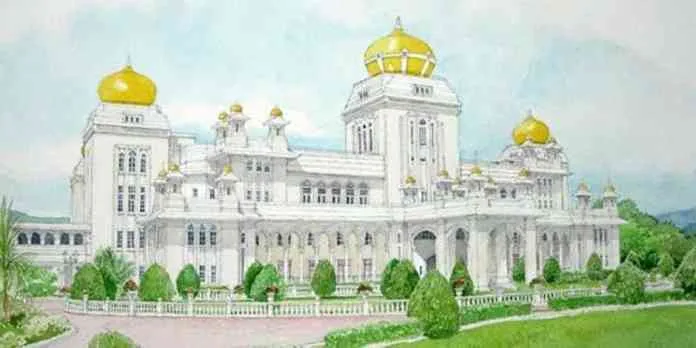
This account is based on folklore passed down from generation to generation. The truth of this story is unknown as no factual records have been found. Some also claim that this story was recounted by Sultan Idris after having a dream. God knows best. References:
- Sejarah Perak 1977, A. Halim Nasir
- MHJ 2:2 1955, N.J. Ryan
- JSBRAS No 48 1907, Jeragan Abdul Shukor