Ulama and Independence Fighters from Gunung Semanggol
The state of Perak has produced many great individuals who upheld religion and the nation. From Pasir Salak, famous for its resistance against the British, to the Sultan Idris Training College which fostered a nationalist spirit, and finally the religious figure from Gunung Semanggol whom orangperak.com will highlight in this article.
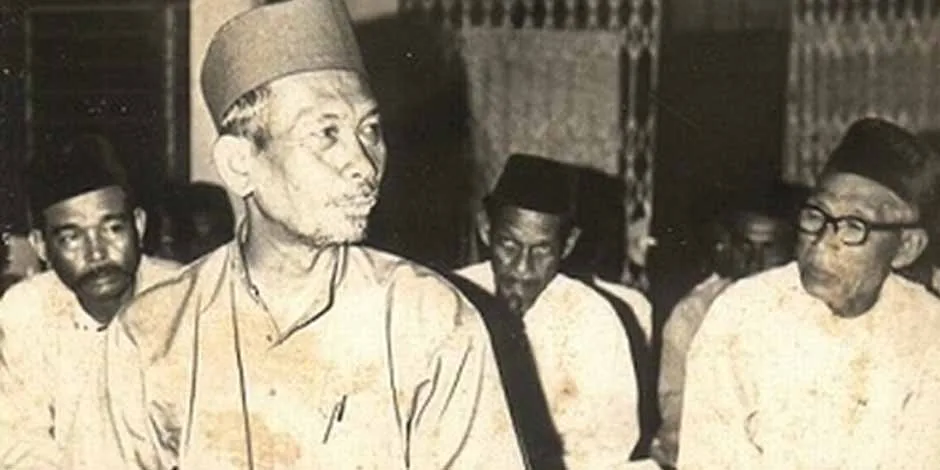
That figure is none other than Syeikh Abu Bakar Al-Baqir. He was a prominent scholar who brought the true teachings of Islam without additions, and is also known as the founder of HAMIM and a pioneer of the Pan-Malaysian Islamic Party (PAS), which is well-known today. Tuan Guru Syeikh Abu Bakar Al-Baqir was born in 1907 in Kampung Gunung Semanggol, Bagan Serai, Perak, not far from Padang Rengas. Born of Javanese descent, his grandfather hailed from the Kendal district in Central Java. His grandfather, Haji Abdul Jabbar, was among the first to arrive and settle in Gunung Semanggol in 1850.
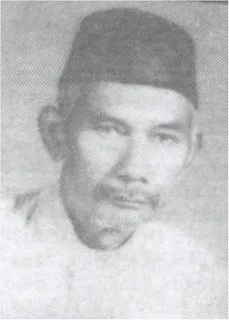
His father, Mohd Said, educated his three sons—Muhyuddin Mohd Said, Abu Bakar Mohd Said, and Abdullah Mohd Said—in Islamic teachings and knowledge. The same applied to his daughters, Aisyah Mohd Said, Saudah Mohd Said, and Hafsah Mohd Said, who were also raised with Islamic education. Syeikh Abu Bakar al-Baqir was known as someone who was very diligent in everything he did, especially in matters involving the development of Islam. With strong support from Haji Abd Rahman and local Muslim figures, particularly Tuan Imam Lebai Sirat and Haji Abdul Manaf, the Headman of Kampung Gunung Semanggol, he established a religious school with a new curriculum called Madrasah Al-Ihya Al Shariff in 1934, replacing the existing pondok school that had been developed and managed by Haji Abd Rahman. Five types of subjects were taught at the Madrasah: Core Sciences (Tauhid, Tasawuf, Fiqh, Tafsir, Hadith), Instrumental Sciences (Arabic Grammar, Morphology, Rhetoric), Complementary Sciences (Islamic History, Logic, Mathematics, Geography, Medicine, English, Malay Literature, Civics, General History, Public Speaking, Calligraphy), and Vocational Skills (for male students only). By 1939, the Madrasah offered Thanawi and ‘Ali classes, and its name was changed to Maahad al-Ehya As Sharif. The outbreak of the Second World War hindered the progress of the Maahad, but after the war ended, Syeikh Abu Bakar began drafting a national education policy, incorporating academic subjects into the Maahad similar to formal government schools. As a result, many graduates of this Maahad also obtained SPM qualifications and secured places at local and foreign universities. Although Maahad Al Ehya As Sharif has existed for over 50 years, not many of the younger generation are familiar with it. Syeikh Abu Bakar Al-Baqir, who founded the Madrasah, was once described as a scholar who constantly kept his tongue moist with dhikr (remembrance of God). Syeikh Abu Bakar Al-Baqir was not just a local educational figure; he was also appointed as the Chairman of the Welfare and Education Body of the Supreme Islamic Council of Malaya (MATA). From there, he began drafting a national education policy. During a conference at MAEAS on November 15, 1947, assisted by Abdul Al-Rabb Al-Tamimi, he successfully formed the People's Education Board (Lepir). One of the objectives of Lepir was to standardize the curriculum for religious schools in Malaya. To achieve this goal, a people's school education center was established and managed by Syeikh Haji Zubir Haji Ahmad, who was later succeeded by Abdul Al-Rabb. In terms of economic activities, Syeikh Abu Bakar Al-Baqir led the Al-Ehya Al-Syarif Association, which was registered under the Companies Act in 1940. The association undertook three types of projects: a rice mill, a petrol pump station, and an electric power station. The electric power station, built in 1956, began providing services to residents in the areas of Gunung Semanggol, Bukit Putus, Bukit Gunung Semanggol, and Kubu Gajah. The fee charged to users was RM1.00 per month per house for a decade. Afterward, the power station was taken over by the National Electricity Board (now known as Tenaga Nasional Berhad). He was appointed as the President of the association until his passing in 1974. His struggle also extended to the political arena. He had good relations with figures of the Young Malay Union (KMM) at the time, such as Ibrahim Yaakub and Dr. Burhanuddin al-Hilmi (who passed away on September 25, 1969).
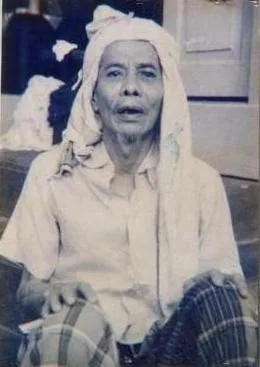
Through the Supreme Islamic Council of Malaya, a conference was held at the al-Ihya al-Syarif building, attended by approximately 2,000 Muslim scholars, intellectuals, and delegates from Singapore and Indonesia. On March 22-24, 1947, the Pan-Malayan Malay Economic Center, or PEPERMAS, was born. To fulfill the desire of the Malays for a political organization aimed at achieving independence, another conference was held at al-Ihya al-Syarif on March 13-14, 1948, attended by approximately 5,000 people. Among those present was Dr. Burhanuddin al-Hilmi. This conference decided to establish a political party based on Islam named Hizbul Muslimin or HAMIM. The party was established on March 14, 1948. The name was proposed by Abu Bakar al-Baqir, and he also led the Islamic party. Following this, tours were conducted throughout Malaya to explain the party's goals to the Muslim public and to form branches wherever possible. In a short time, the party had branches in Johor, Pahang, Negeri Sembilan, Kelantan, Terengganu, Selangor, Melaka, Perlis, Kedah, and Penang. Due to his vocal stance in demanding independence, the party was feared by the authorities, especially the British colonialists. Consequently, accusations and slanders were hurled at him. It was also accused of being a "red" (communist) party. The influence of Gunung Semanggol in shaping the thinking of Muslims in Malaya was truly significant. The British authorities' fear of the growth of Islamic political aspirations peaked on July 29, 1948, at 12 noon, when three main leaders of HAMIM were arrested. They were Syeikh Abu Bakar al-Baqir, Ustaz Abd. Rabb al-Tamimi, and Ustaz Abd. Rauf Nur. Syeikh Abu Bakar was released from detention in October 1952.
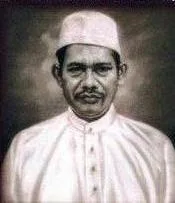
Following these arrests, HAMIM became paralyzed and eventually collapsed. However, the spirit of his struggle to uphold Islam in the Malay land was inherited by a new party, the Pan-Malayan Islamic Party, now the Pan-Malaysian Islamic Party (PAS). Syeikh Abu Bakar al-Baqir passed away on July 13, 1974. However, his former efforts are still being continued today. Ma'ahad al-Ihya al-Syarif still stands firmly. In terms of finances, although very modest, it is not disappointing. They own plantations such as rubber and oil palm estates, as well as paddy fields. The rubber plantation covers approximately 40 acres, the oil palm plantation covers 60 acres, and there are 12 acres of paddy fields. They also own a shop in Sri Manjong which is rented out for RM350.00 per month. Additionally, the school receives assistance from the Perak State Islamic Council as well as other sources. However, its function as a center for the Muslim struggle has ceased since the loss of Syeikh Abu Bakar al-Baqir. Nevertheless, it laid the foundation for an independent Malaya. To some extent, it succeeded in transforming the feelings, thinking, and mentality of Muslims, especially in Perak. From a nation with a colonized soul full of inferiority complexes, it was elevated to a nation that knows its self-worth and feels capable of making major changes. His four-year detention, although slightly disrupting the operations of Maahad Ehya Al-Syarif, was eventually reorganized into an educational institution that prioritizes religious education without sidelining formal education. The power of the HAMIM party as a pressure group was evident. It accelerated the colonialists' handover of power to the Federation of Malaya. How the spirit of independence was instilled in its students is recounted by the figure Pengasuh. The spirit of independence was also channeled through education.
Teachers from Indonesia were very helpful in fostering that spirit of independence. Every morning, the song Indonesia Raya (the National Anthem of the Republic of Indonesia) was sung. National figures were also invited to speak here, including Datuk Asri Muda. Syeikh Abu Bakar Al-Baqir was a scholar who brought many reforms in the effort to spread Islam in Malaya. He succeeded in opening minds, sparking spirit, and influencing many Muslims toward the efforts he undertook. For that reason, he is a highly respected scholar. In fact, he was also awarded the Teacher's Figure Award in 1975. In 2016, the Sultan of Perak graciously awarded the Darjah Datuk Paduka Mahkota Perak (DPMP) in recognition of the services he rendered to religion and the nation.