Tracing the Tomb of the 25th Sultan of Perak in Johor
Historically, there are three tombs of Perak Sultans located outside the state of Perak. Two of these tombs are in Aceh and one is in Johor. Recently, a representative from orangperak.com visited the tomb of the Sultan of Perak located in Johor and interviewed the caretaker of the royal tomb there.
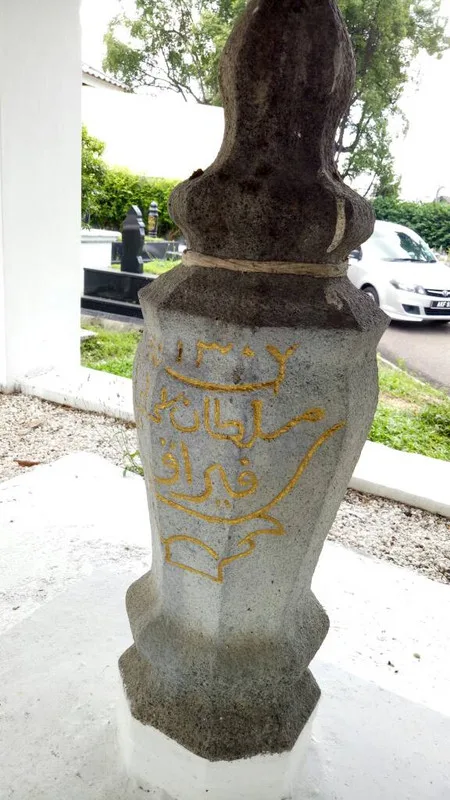
The Sultan of Perak in question is Sultan Ismail, who after his passing was given the title Marhum Mangkat Di Skudai. In this article, readers will be taken to understand the life story of Sultan Ismail and why he was buried at the Mahmoodiah Royal Mausoleum, Johor Bahru, Johor.
Raja (later Sultan) Ismail was the grandson of the 18th Sultan of Perak, Paduka Seri Sultan Ahmaddin Shah. His mother was Raja Nandak binti Almarhum Sultan Ahmaddin Shah. His father was Saiyid Shaikh Al-Khairat, who was a royal relative of the Siak Sultanate.
Raja Ismail was appointed as Raja Bendahara in 1857 by Sultan Jaafar Muazzam Shah and remained in that position until the reign of Sultan Ali Al-Mukammal Inayat Shah because Raja Abdullah ibni Almarhum Sultan Jaafar had been appointed as Raja Muda, bypassing him.
When Sultan Ali passed away in 1871, Raja Bendahara Ismail, following existing customs, acted as the temporary regent and invited the Raja Muda Abdullah, who was then residing in Batak Rabit, to travel to Sayong to be installed as the new Sultan of Perak before the remains of the late Sultan Ali could be buried.
It is said that at that time, Raja Muda Abdullah felt anxious about the safety of his journey to Sayong because Raja Yusuf ibni Almarhum Sultan Abdullah Muhammad I, who was his rival for the throne, was prepared to ambush Raja Abdullah's entourage in Senggang.
The state dignitaries waited for 40 days, and finally, Raja Bendahara Ismail was installed as the new Sultan on June 28, 1871, with strong support, especially from the Orang Kaya-Kaya Menteri Larut Ngah Ibrahim, who was also a rival to Raja Abdullah. Only after the installation ceremony was completed was the late Sultan Ali buried.
During his reign, the power struggle in Perak continued among the dignitaries and heirs to the throne. Raja Muda Abdullah and Raja Yusuf continued to contest the claim to the Perak throne. It is believed that during this conflict, Raja Tepus was appointed as the acting Raja Muda.
Raja Muda Abdullah later appealed to Sir Harry Ord, who was then the Governor of the Straits Settlements, stating that he was the suitable candidate for the Perak throne and that the installation of Sultan Ismail was invalid and not in accordance with state custom.
Although the British initially held to a policy of not interfering in Malay affairs, the tone of the British changed when Sir Andrew Clarke became the Governor of the Straits Settlements, governing from Singapore.
This subsequently led to discussions on Pangkor Island between Sir Andrew Clarke, Raja Muda Abdullah, and most of the state dignitaries, ending with the signing of the Pangkor Treaty on January 20, 1874.
Among the terms agreed upon in the treaty was that Sultan Ismail would be removed from the throne and replaced by Raja Muda Abdullah, and Sultan Ismail, having been removed from the position of Sultan, was given the title of Sultan Muda. Additionally, a monthly allowance of $1,000 was to be paid to Sultan Muda Ismail by the Perak State Government.
The period between 1874 and 1875 saw various disturbances in Perak with the appointment of J.W.W. Birch as the British Resident, culminating in the assassination of J.W.W. Birch in Pasir Salak. British troops were sent to Perak, marking the beginning of the Perak War.
Dato’ Maharaja Lela was found guilty by the British in the plot to assassinate Birch. When Dato' Maharaja Lela retreated after fighting the British troops pursuing him, Sultan Muda Ismail, who was in Belanja, also joined him in retreating to avoid being captured by the British troops, taking with him the regalia of the State of Perak.
He fled from the British troops with his followers by riding elephants from Belanja towards Kedah, felling large trees on the road to Belanja to delay the British troops' pursuit.
In mid-January 1876, Sultan Muda Ismail entered the state of Kedah with his followers and sought protection from Sultan Ahmad Tajuddin III Mukarram Shah.
The Sultan of Kedah, feeling conflicted about protecting someone hunted by the British, went to Penang to inform Lt. Colonel Anson of the matter and was advised to allow Sultan Ismail to enter the Kedah border and then surrender him in Penang.
On March 17, 1876, Sultan Ismail was taken to Kuala Kedah, and subsequently, on March 20, 1876, he and 18 of his followers were taken to Penang to meet Lt. Colonel Anson. The women and children who were in Sultan Ismail's entourage, along with 27 elephants, were all left in Kedah.
Regarding the surrender of Sultan Ismail and his followers, Lt. Colonel Anson himself wrote, "On March 23 (1876), Raja Ismail was brought to my office in Penang, and he surrendered to me all the Regalia of the State of Perak."
I found him to be a fine gentleman and pleasant. I felt great pity for him. Because the Regalia was in his hands, it showed that he was the true Sultan (of Perak).
It was a great mistake to appoint (Raja) Abdullah, who was of no use." (Haji Buyong bin Adil (1981) Sejarah Perak. Dewan Bahasa Dan Pustaka (Kuala Lumpur, p. 141).
Sultan Ismail, along with the Perak State Regalia and several of his followers, were immediately sent by Lt. Colonel Anson to Singapore on the warship H.M.S. Ringdove. The Ringdove arrived in Singapore on March 26, 1876.
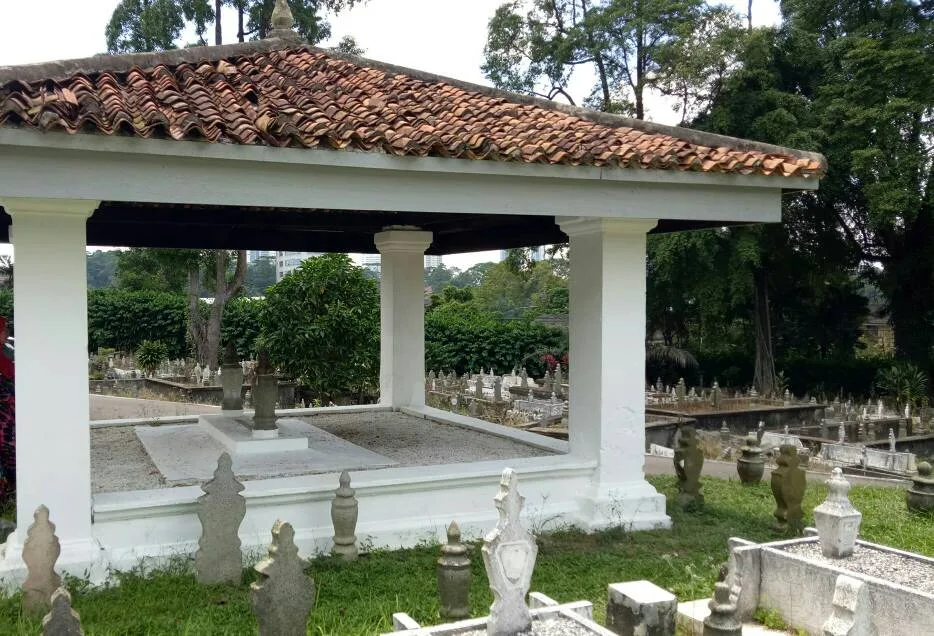
After all the Regalia was handed over to Governor William Jervois, on March 27, 1876, he was sent to the state of Johor and placed under the care of the Maharaja of Johor, Maharaja Abu Bakar, while an investigation into the affairs of the state of Perak was conducted.
A British Commission of Inquiry regarding the "Perak War" was established in June and July 1876. Finally, the British government decided that Sultan Abdullah, Laksamana Muhammad Amin, Dato' Syahbandar Uda Maamor, and Orang Kaya Menteri Ngah Ibrahim would be exiled to the Seychelles, and Sultan Ismail would be exiled to Skudai, Johor.
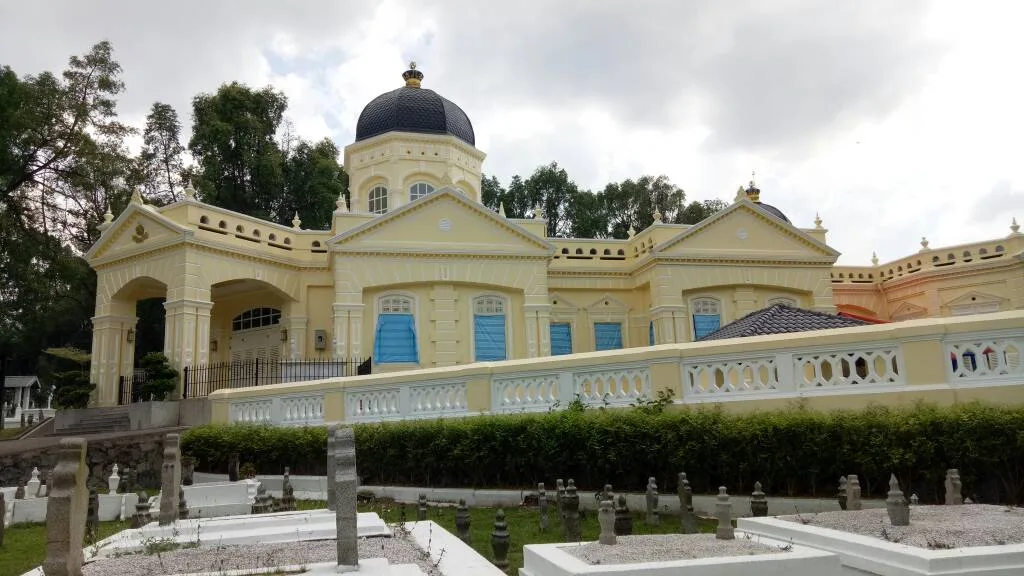
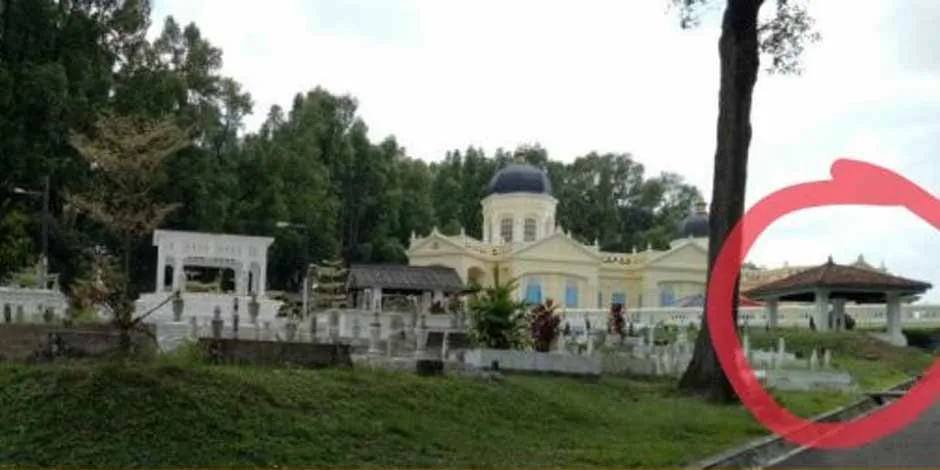
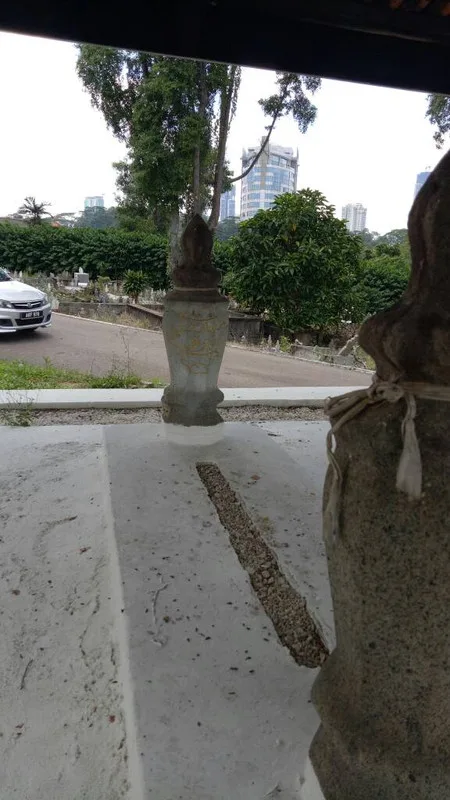
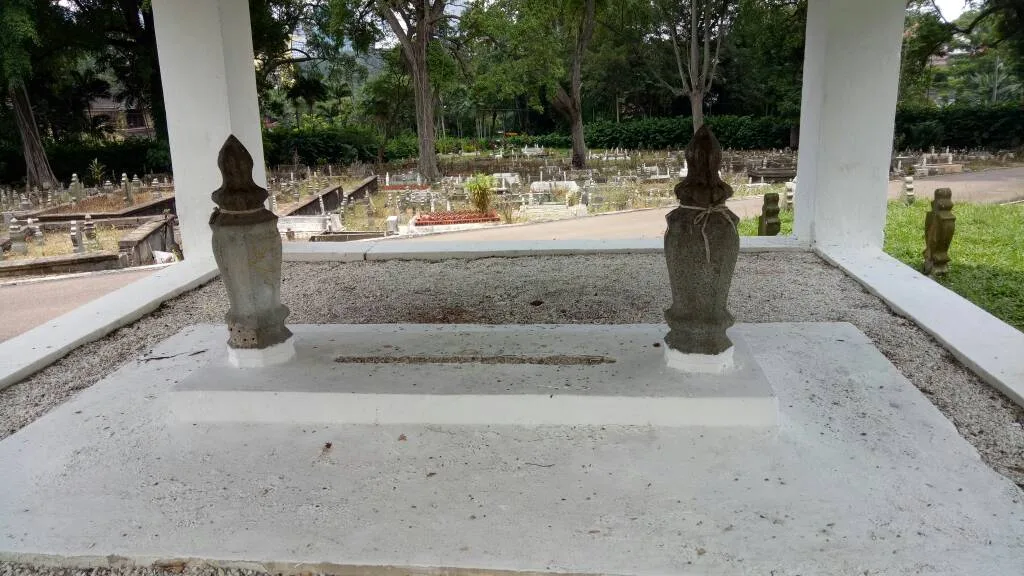
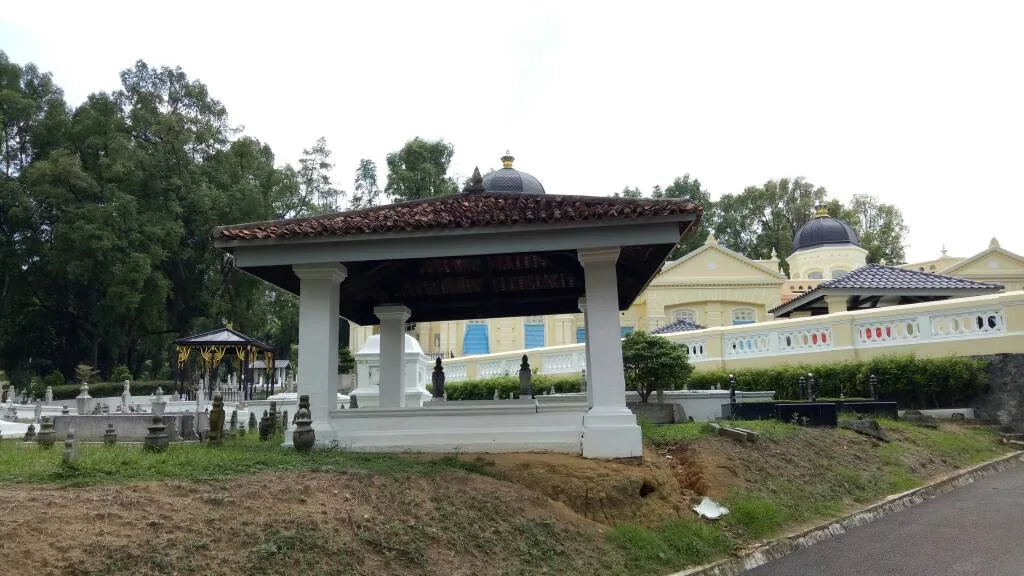
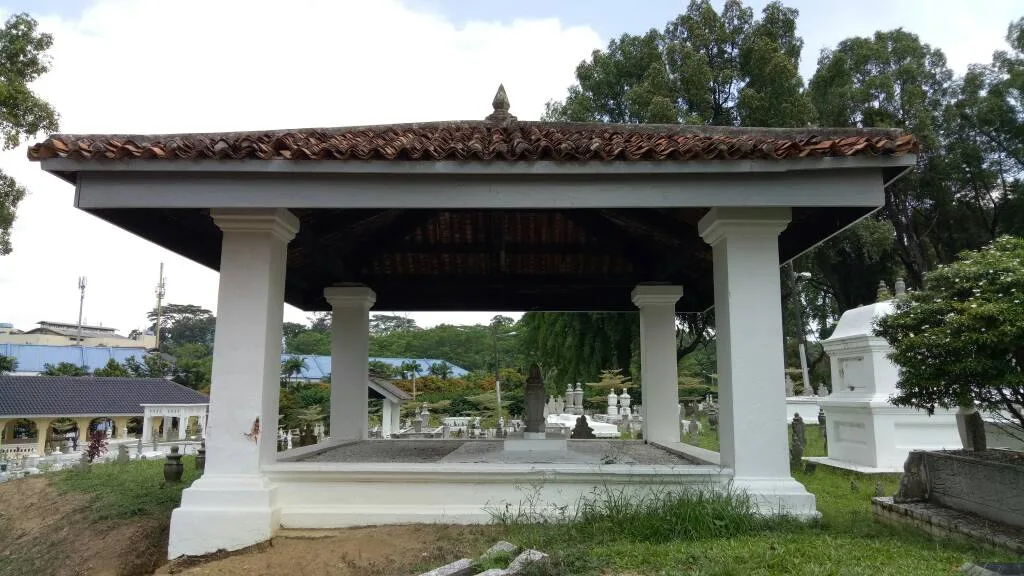
Sultan Muda Ismail passed away on September 13, 1889. He was then buried at the Mahmoodiah Royal Mausoleum, Johor Bahru, and was given the title Marhum Mangkat Di Sekudai. A little about the Mahmoodiah Royal Mausoleum: it is a Johor royal mausoleum located on Jalan Mahmoodiah, Johor Bahru.
The mausoleum contains two sections: its main building, which has architecture resembling a mosque, houses the tombs of the late Sultans and Sultanahs of modern Johor who have passed away, as well as several members of the Johor royal family and state dignitaries.
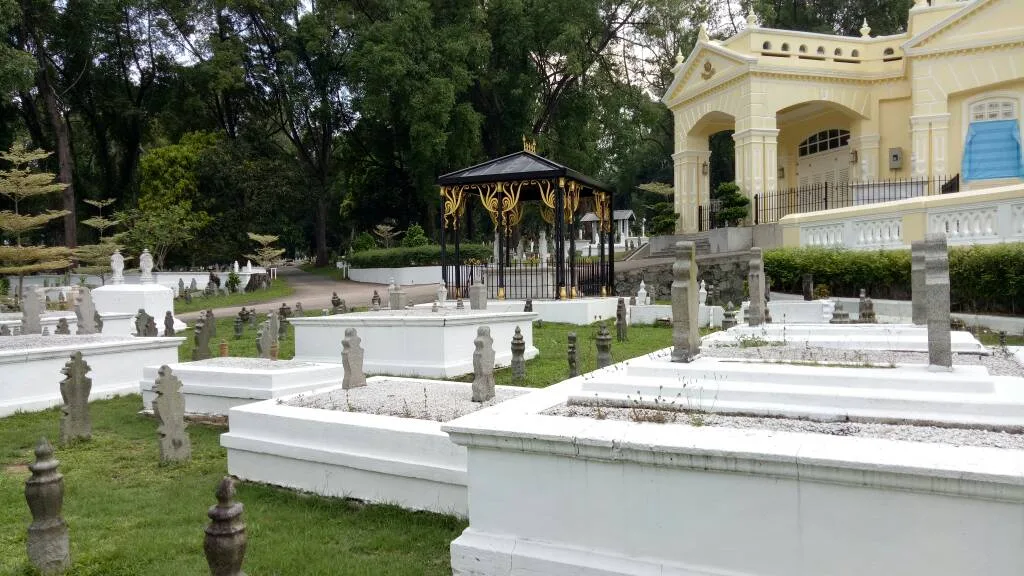
In the grounds of the royal mausoleum, there is an area with a white wall enclosure, also called Kota Lama or the Inner Circle, which houses the tombs of other Johor royal family members and state dignitaries. There are 5 Sultans of Johor, including one Sultan of Perak, buried here.