The Tale of Elephants in the State of Perak
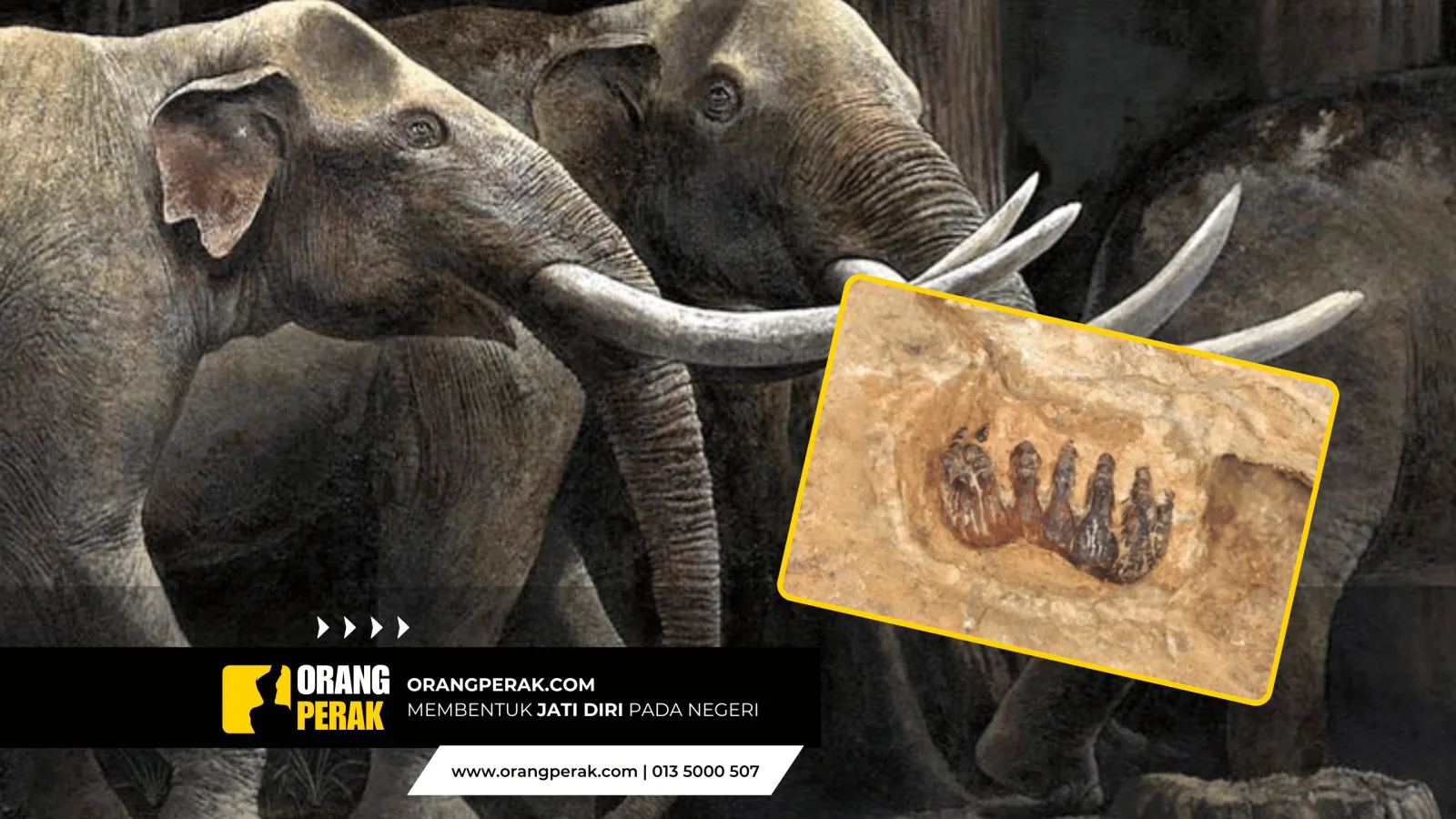
Elephants are famous for their massive size and strength, synonymous with the long history of Perak. It was even mentioned by Sir Frank Swettenham in his book "A Real Malay," which touches on the Malay people in the state of Perak, stating that the Malays were skilled at taming and keeping elephants.
Elephants were also once traded as commodities, in addition to helping ancient society as a means of transport, traversing forests, carrying goods, hauling timber, and much more. Because of this, several places in Perak were named after elephants, namely Batu Gajah, Kampung Gajah, and Bukit Chandan. In fact, when meeting the first Sultan of Perak,
Tun Temong
went to present the Geliga Embun to the Sultan, riding on 77 elephants. This time, orangperak.com would like to invite all readers to appreciate several stories about famous elephants in the state of Perak so that these tales do not fade away with time.
1. Gajah Chapang Pileh, Proof of the Wisdom of the Sultan of Perak
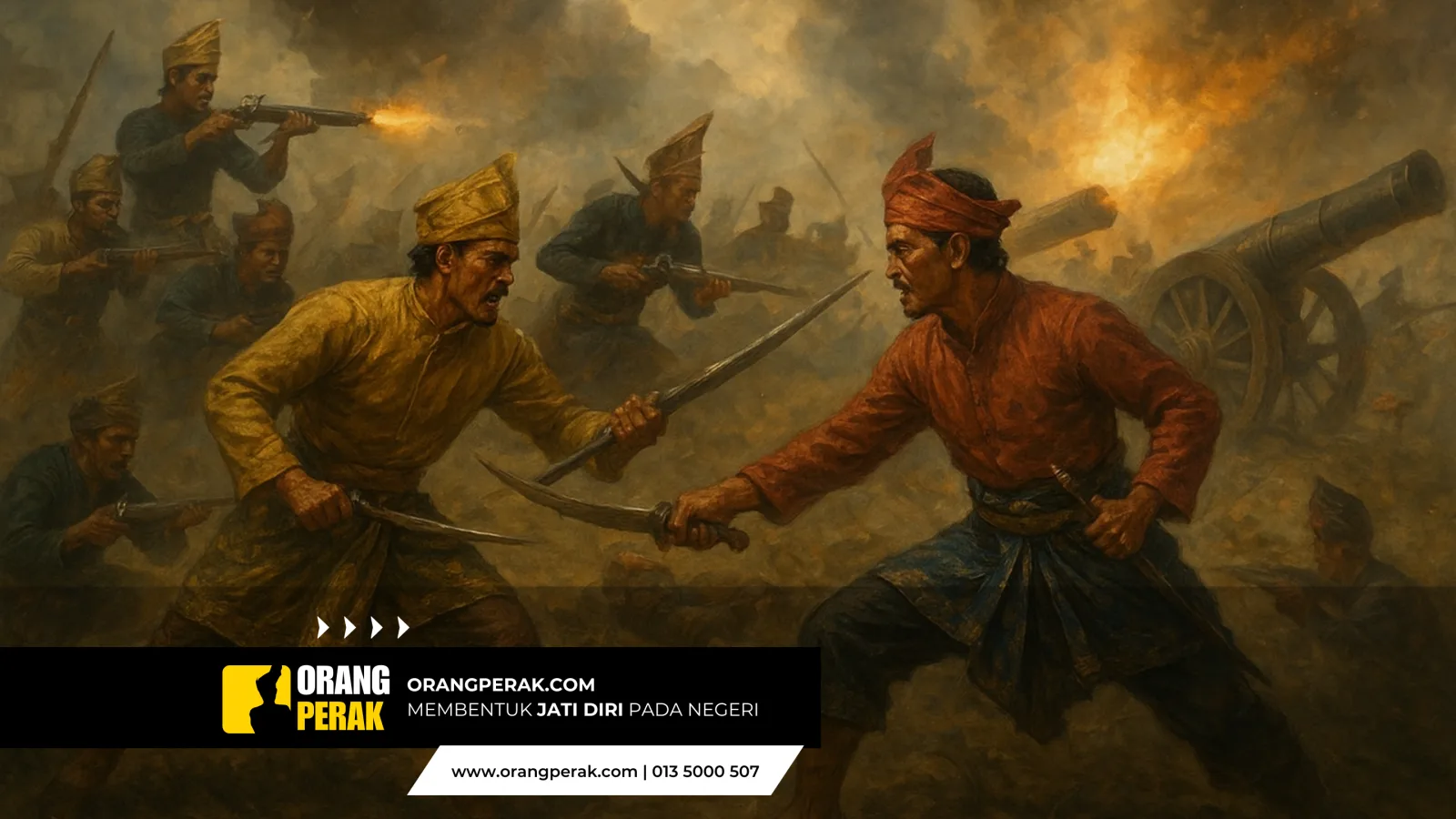
In 1806, Sultan Abdul Malik Mansur ibni Almarhum Sultan Ahmaddin Shah ascended the throne to become the 19th Sultan of Perak. During his reign, the states of Perak and Kedah were heavily attacked by the Siamese army. Sultan Abdul Malik Mansur Shah suggested to the Sultan of Kedah, Sultan Ahmad Tajuddin, that the Kedah army join forces with the Perak army to fight the Siamese and refuse to provide the Golden Flower (Bunga Emas) to the King of Siam. However, the Sultan of Kedah, Sultan Ahmad Tajuddin, was not confident that the combined forces of Perak and Kedah could stop the Siamese advance. Instead, in 1818, Kedah was ordered by Siam to attack Perak and to gather soldiers and war equipment to help Siam face attacks from the Burmese army. Kedah followed the order and prepared an army under the leadership of Tengku Yaacon and the Bendahara of Kedah, subsequently attacking Perak. The Perak army, consisting of men and women defending the state, was led by Che Panjang bin Maharaja Lela Uda Tahir. However, Kedah later withdrew its attack on Perak and began negotiating peace terms. In 1821, Siam attacked Kedah and Perak in retaliation for the friendly relations between the two states. Perak was forced to send tribute in the form of a golden flower as a sign of being under Siamese rule. After several years, Sultan Abdul Malik Mansur Shah gifted King Rama II, the King of Siam, a rare elephant named Chapang Pileh, which means 'the chosen one'. The elephant was found by Toh Muda Panglima Kinta Ngah Abdul Sam while in the forest in Kinta. King Rama II was very fond of it, and the King of Siam subsequently freed Perak from Siamese rule.
2. Kulup Chandan, Sultan Yusuf's Beloved Elephant
In the early stages, there were no palaces built of stone for the Sultan of Perak to reside in. The Sultan of Perak's palace was merely a house built of high-quality wood on the banks of the Perak River. The area along the Perak River, especially in Lower Perak, had no hilly terrain. When Raja Idris was installed as Sultan in 1877, he built a palace (
Istana Negara
) on a hill near Batang Hari (the Perak River) because Sayong was frequently flooded whenever the Perak River overflowed. Finally, the hill was named by the Sultan as Bukit Chandan, with the title Seri Andalan. According to the story, this name was taken from the name of Sultan Yusuf's elephant, Kulup Chandan. It is said that one day, the elephant Kulup Chandan ran away, and Raja Idris (who was then the Raja Muda) and his followers followed the elephant's tracks until they reached the foot of Gunung Bubu. Upon arriving at the foot of the mountain, he encountered an old man with a long beard wearing a white robe. Unexpectedly, the old man came forward to pay homage and said, "Your Highness will become the Sultan of Perak, and when you are installed as Sultan later, do not reside in Sayong anymore, but build a palace on the hill on the banks of the Perak River. As for the elephant named Kulup Chandan, you must set it free seven days after your installation..." To cut a long story short, Raja Idris was installed as the 28th Sultan of Perak, and all the instructions of the "old man" were fulfilled by him. From that date, the name Bukit Chandan remained as the site of the official palace of His Royal Highness the Sultan of Perak.
3. Si Larut, The Elephant That Discovered Klian Pauh
The story in Taiping all began when an elephant named Si Larut, owned by Long Jaafar, suddenly went missing. After searching for several days, Si Larut was finally found at the site that is now the Taiping Prison. However, after Long Jaafar found the elephant, he was quite surprised to see his elephant covered in hard mud that appeared to contain metal grains. Curious about the incident, Long Jaafar decided to investigate. After discovering
that the lumps covering Si Larut were tin ore
, Long Jaafar went to Penang and successfully brought back 20 Chinese workers to Larut to conduct mining activities. After that, the tin mine opened by Long Jaafar in Klian Pauh made a huge profit. This situation caused more and more Chinese people to migrate to Larut to become tin miners. It is believed that the district was named Larut after Long Jaafar's elephant.
4. The Event Caused by The Revenge of the Elephant at Sungai Kerawai, Teluk Intan
On September 17, 1894, a train in transit was suddenly attacked at Sungai Kerawai, Teluk Intan. During the incident, the steam train carrying three passenger carriages, mostly consisting of merchants and mine owners who had just returned from surveying several mining locations in Perak, was targeted. As soon as it arrived in Teluk Anson, now known as Teluk Intan, the train driven by an Englishman was attacked by a herd of male elephants that were waiting there, ramming it head-on. The incident occurred at dusk between 5:00 PM and 7:00 PM, and the scene was dark as it was located in a forest area. It is well known that elephants are very sensitive to loud noises and bright lights. The steam-powered train was traveling at a speed of 60 km to 80 km per hour, which was considered fast for the capacity of a steam engine. Due to the strong head-on collision, the male elephant died at the scene. The skull of the male elephant is now kept at the Taiping Museum, Perak, and its thigh bone is kept at the KTMB museum, while its tusks were reportedly taken to England. The thigh bone of the male elephant, which is about a meter high, is still well-preserved and displayed in the mini lobby of the KTMB museum at the KTMB Headquarters, Kuala Lumpur. Those are the 4 brief stories that we at orangperak.com have compiled regarding the tales of elephants in the history of Perak. As mentioned at the beginning of the article, the Malays in the state of Perak were very skilled at taming and keeping elephants. Once upon a time, elephants were the primary transport for the wealthy and powerful. These are among the animals that indirectly became a symbol representing the history of Perak.