The Story of the War Between the British and Perak in 1875
Many are familiar with the famous story of the Perak Malay uprising against British interference in the administration of the state of Perak, which culminated in the assassination of the first British Resident in Perak, J.W.W. Birch.
This time, orangperak.com would like to delve deeper into the events following the assassination of the British Resident and the British retaliation against the Perak Malay uprising in the conflict known as the Perak War. On November 2, 1875, J.W.W. Birch,
The first Resident of Perak
was killed while bathing in a riverboat house from his ship, the SS Dragon, on the Perak River near Pasir Salak. He was killed after the Malays became dissatisfied with his administrative methods and his steps to interfere in Malay affairs. His Malay interpreter was also killed in the attack.

Malay warriors also besieged the British Resident's residence in Bandar Tua, Kg Gajah. The British feared this uprising would spread simultaneously across the Malay Peninsula; therefore, they immediately acted by requesting assistance from the Colonial Office to send troops to prevent the Malays from launching an armed uprising against the British. 60 British soldiers from the 10th Regiment and 30 police officers from Penang began arriving in Perak on November 5 and started planning to recapture Bandar Tua and subsequently attack the Malay fort.
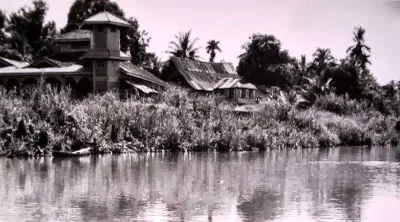
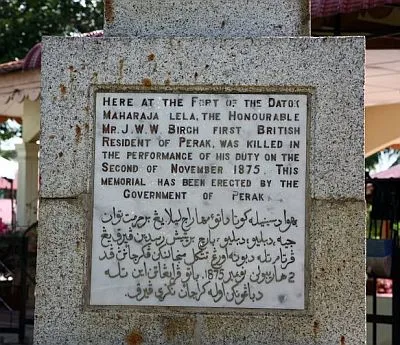
Two days later, the first battle between British troops and Malay warriors took place in Bandar Tua, Kg Gajah. The British succeeded in recapturing the Resident's residence, which had previously been occupied by the Malay warriors. After fighting fiercely, the Malay warriors retreated to the Pasir Salak fort. They further strengthened the defenses of the Pasir Salak fort and prepared to face a massive British assault. J.W.W. Birch's body was found on the banks of the Perak River near Bandar Tua shortly after the battle ended.
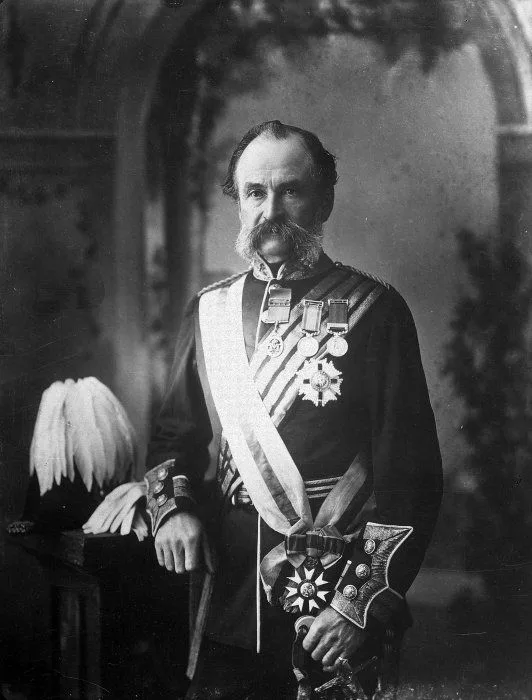
The Governor of the Straits Settlements, Sir William Francis Drummond Jervois, visited Perak on November 9, 1875, to oversee British military operations against the Malay warriors. He found the Malay fort in Pasir Salak to be too formidable to attack with the British forces then available in Perak. Ultimately, he decided to request additional military reinforcements from London, India, and Hong Kong. British troops arrived in Pasir Salak and began a siege of the fort on November 15, 1875. They blockaded the area, preventing any movement in or out of the Pasir Salak fort, but did not initiate an assault. The fort was defended by nearly 800 Malay warriors and was equipped with several rentaka cannons and rifles. A warship carrying 300 British soldiers from the 80th Regiment, based in Hong Kong, arrived in Singapore to resupply on November 16, 1875, and resumed its voyage to Perak the following day. Subsequently, nearly 1,400 British troops from India, consisting of the 3rd Regiment, 1st Gurkhas, and The Madras Sappers, arrived in Penang from India on November 26, 1875. This force was led by Brigadier General J. Ross and was equipped with several cannons and rocket launchers. The contingent then moved to Perak by land through Krian, heading toward Pasir Salak. The 80th Regiment of the British Army from Hong Kong arrived in Perak in early December 1875 and joined the British troops from India and those already besieging the Pasir Salak fort. The British military launched an attack on the Pasir Salak fort with a force of nearly 2,000 soldiers. The first British assault was successfully repelled by the Malays, resulting in the deaths of Captain Innes and several British soldiers from the 10th Regiment. After several failed attacks on the Pasir Salak fort, the British military finally succeeded in defeating the nearly 800 Malay warriors defending the fort on December 12, 1875. The Pasir Salak fort, the mosque, and several surrounding villages were burned by British troops under the orders of William Jervois. Datuk Maharaja Lela and his followers retreated to Sayong.
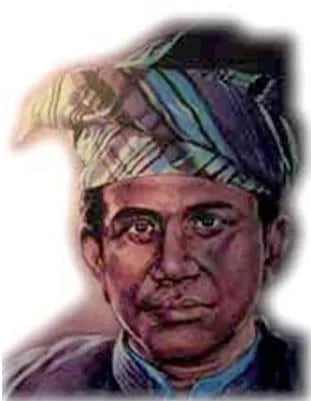
While hunting for Dato Maharaja Lela and other Malay warriors, British troops were ambushed in Kota Lama Kanan on January 4, 1876. Several British soldiers, including Brigadier H.J. Hawkin, were killed in the attack. H.J. Hawkin was a high-ranking British military officer killed by the Malays. However, the Malay warriors later retreated after being unable to withstand the artillery and rocket fire. The village of Kota Lama Kanan was subsequently burned by the British. From Kampung Kota Lama to Enggor, all villages passed by the British troops were destroyed, even if the Malay warriors were not hiding in those villages. The fierce battle at Kampung Kota Lama Kanan was the last major engagement between the Malays and the British military.
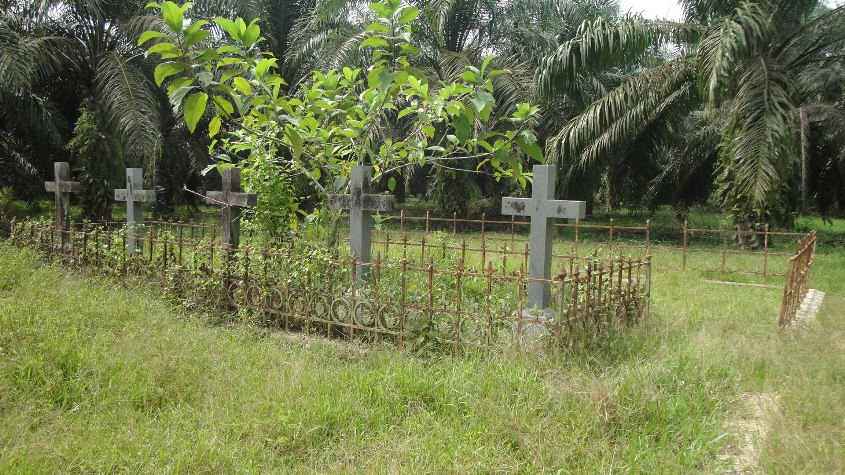
Three of J.W.W. Birch's assassins were captured by British troops on February 17, 1876. They were detained while awaiting trial. Raja Ismail, who surrendered to the Sultan of Kedah in early March, was handed over to the British in Penang. On July 21, 1876, Sultan Abdullah and Ngah Ibrahim were exiled to the Seychelles, and Raja Ismail was exiled to Singapore. A trial was held in Matang to determine the fate of J.W.W. Birch's assassins from December 14 to 22, 1876. The court eventually found all those captured guilty of murdering a British official. Finally, on January 20, 1877, Dato Maharaja Lela, Si Puntum, and Pandak Endut were hanged to death at Kota Ngah Ibrahim, Matang.