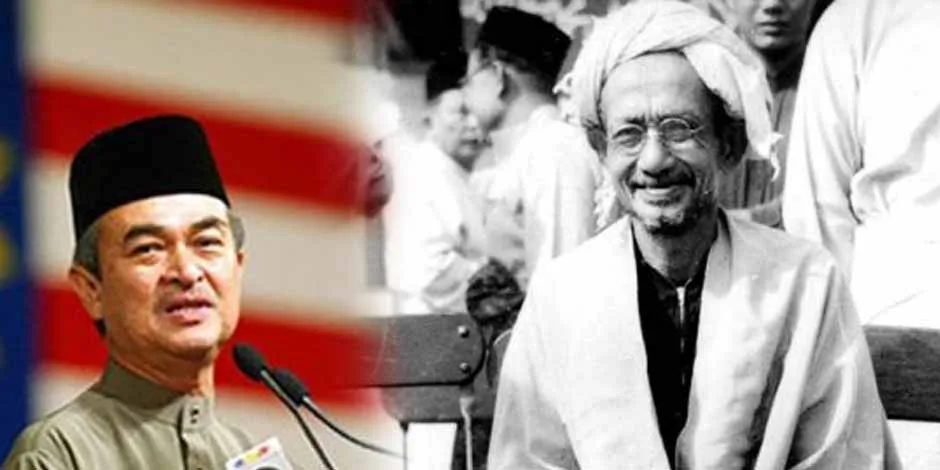
The Story of Sheikh Abdullah Fahim, Grandfather of the 5th Prime Minister
Sheikh Haji Abdullah Fahim once appealed for the Malay people to hold firmly to the spirit of ummah unity and to unite as one nation.
He also frequently urged the Malay people to distance themselves from groups issuing rulings that were not in line with the Shafi'i school of thought and deviated from the Ahli Sunnah Wal Jamaah. He deeply hoped that any factions or groups disagreeing on religious matters would choose the path of reconciliation and reunite, so that minor cracks would not turn into major divisions that could harm the unity of the religion and the nation. The Malay world is actually endowed by Allah SWT with extraordinary wealth. This wealth is not merely based on physical riches but also on a special richness that graces this blessed land, manifesting in a unique form. It exists as a treasure of knowledge channeled through the thoughts of true scholars. Indeed, the wealth and strength of knowledge for a nation and country are acknowledged as a source of spiritual excellence that is hard to match. History proves that the civilizations of great nations in the world do not rely solely on physical strength but depend on internal strength, which is anchored in knowledge-based thinking. In the history of this country, we can clearly see a gift from Allah SWT that is very prominent in the Malay land, namely the presence of the Islamic movement through the activities of great-souled and sincere scholars. The results of their efforts subsequently gave birth to a tradition of knowledge-building that further strengthened our civilization in the Malay world. Although for the past 500 years, colonial groups such as the Portuguese, Dutch, and British constantly infiltrated with a thousand and one tricks to paralyze the excellence of Islam in Tanah Melayu, their devious intentions were never achieved. Instead, the power of Allah SWT overcame everything. Islam continued to grow and develop until the moment when the British colonial idea to freeze and enslave the Malay-Muslim soul through the Malayan Union was broken by the Muslim-Nationalist Movement in this country in 1946. Thus, the current of the Islamic movement continued to flow through the Malay world as cool as mountain water, and it has watered the Malay world incessantly to this day.
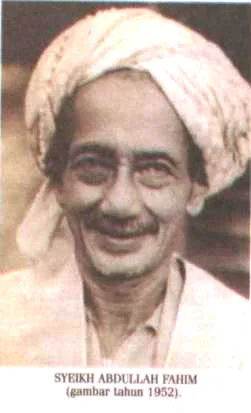
Sheikh Abdullah Fahim
From him, the light of Islam continued to bloom and flourish. Consequently, one by one, scholars emerged in the Malay world who also contributed their energy and ideas to ensure the integrity of Islam remained preserved from the propaganda of orientalists and their cohorts. During the transition era from colonial grip to the age of independence, a great scholar was born who contributed much to the development of Islam in Tanah Melayu (Malaysia). The scholar who possessed a far-reaching vision from Seberang Prai, Pulau Pinang, was Tuan Guru Sheikh Abdullah bin Ibrahim, or better known as Sheikh Haji Abdullah Fahim. He was a scholar and educator who was persistent and made great contributions to the development of Islam and the social and political progress of this country. Like Sheikh Mohd Idris al-Marbawi, the first Maal Hijrah figure, Sheikh Haji Abdullah Fahim was also born in the Holy Land of Makkah al-Mukarramah in 1870, in a place not far from Masjid al-Haram called Shuib Ali. His father, Sheikh Ibrahim bin Haji Tahir, resided in Makkah and became a religious teacher at Masjid al-Haram in the field of Quranic studies until he breathed his last in the Holy Land. When he was born, Tuan Guru Sheikh Abdullah Fahim's father was a Quran teacher in Makkah and had a large number of students. A large portion of his father's students came to Makkah from the Malay Archipelago, such as Tanah Melayu, Indonesia, Pattani (Thailand), and several other places throughout the Malay world or Nusantara. According to history, Sheikh Ibrahim and his son, Tuan Guru Sheikh Haji Abdullah Fahim, were appointed as board members of Masjid al-Haram. While in Makkah, Tuan Guru Sheikh Haji Abdullah Fahim took the opportunity to study Islamic and international politics. His awareness to learn the ins and outs of Islamic and international politics clearly shows that he was a scholar who loved knowledge that was balanced between the worldly and the hereafter. In addition, it also proves how Tuan Guru Haji Abdullah Fahim was a scholar who possessed an open mind and was not narrow-minded. Knowledge, whether for worldly or afterlife interests, was studied for the benefit and welfare of the Muslim community itself. The spirit to learn various subjects, including leadership, social affairs, and politics, proves he was not a static scholar. Instead, it proves the dynamic nature of a scholar. Throughout his life, Tuan Guru Sheikh Haji Abdullah Fahim showed a deep and extraordinary interest in seeking more than 45 famous teachers, among whom were renowned Islamic philosophers of that time. His consistent efforts resulted in commendable success. He held qualifications in more than 15 fields of Islamic knowledge. Tuan Guru Sheikh Haji Abdullah Fahim's main expertise was in the fields of astronomy (falak) and Arabic literature. Astronomy is actually related to science, while literature (Arabic) has connections to art and the human soul in navigating life. From the two disciplines mastered by Tuan Guru Sheikh Haji Abdullah Fahim, it is evident that he possessed knowledge that was balanced between the physical and spiritual, the world and the hereafter. Besides that, Tuan Guru Sheikh Haji Abdullah Fahim also possessed a high spirit of jihad and had participated in Islamic movements in Arab countries to oppose the colonization by the Jews, the French, and the United States. At this stage, we can clearly see the fighting spirit of a scholar like him. In upholding the light of Islam on earth, he was not just willing to preach with his tongue, but more than that, he was willing to "go to the field" to uphold a struggle, especially in opposing colonialism. In this regard, his involvement in the Islamic movement in Arab countries opposing Western imperialists, which consisted of the world's major powers, not only proves his character as a genuine scholar who was brave enough to oppose the enemies of religion, but his bold steps were a manifestation of himself as an Islamic fighter who was never afraid to defend the sovereignty of the Arab-Muslim land from colonial elements. Indeed, the strong fighting spirit that always existed within him was what Tuan Guru Sheikh Haji Abdullah Fahim brought until he arrived in Tanah Melayu and resided in Pulau Pinang. He married a Malay girl who had lived in Makkah. As a result of their life together, he was blessed with two children, Ahmad Ghazali and Ahmad, who later became known in Malaysia as Ahmad Badawi, the father of Tun Abdullah Ahmad Badawi, a national political figure and the fifth Prime Minister of Malaysia.
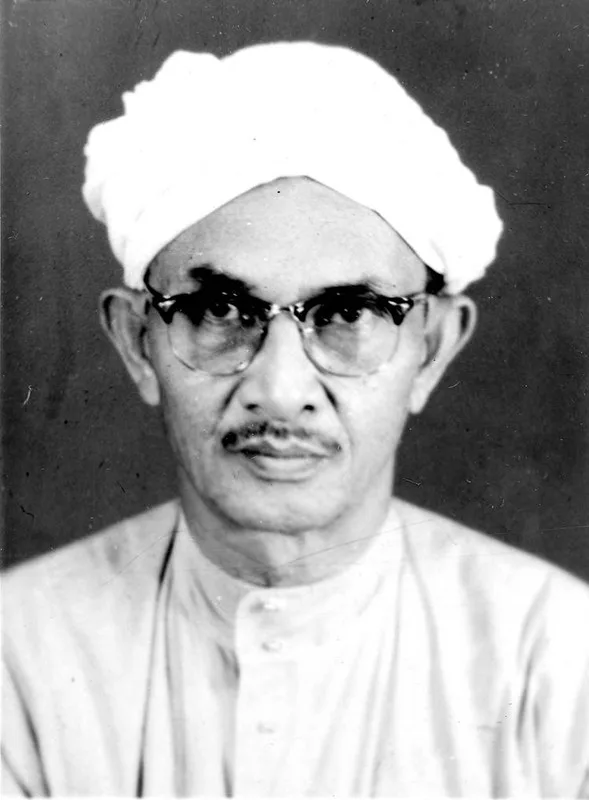
Ahmad Badawi
Such is a very valuable legacy that is being felt by all the people in this country, especially Muslims, as a result of the services and devotion of Tuan Guru Sheikh Haji Abdullah Fahim. His prominence in the field of education was unparalleled; in fact, at the beginning of his career, Sheikh Haji Abdullah Fahim was a teacher at Masjid al-Haram, teaching astronomy, usuluddin, Quranic tafsir, and hadith. Many of the students who attended his lectures came from the Malay world, including the Malay Peninsula, Sabah, Sarawak, Brunei, Sumatra, Java, the Philippines, Pattani, and Thailand. In fact, some of his students came from Arab countries, India, and China. In 1921, Tuan Guru Sheikh Haji Abdullah Fahim returned to Tanah Melayu. Upon his return to his homeland, he remained active in teaching religion to local students at his ancestral home in Kepala Batas, Seberang Prai, Pulau Pinang. Not long after that, he was invited to become a religious teacher at Pondok Tuan Haji Wan Sulaiman Sidik, located in Kampung Limbong Kapal, Alor Setar, Kedah. While in Kedah, Tuan Guru Sheikh Haji Abdullah Fahim was given high honors by the state government. At that time, he was appointed as a religious teacher to the Sultan of Kedah himself. His appointment was one of the peaks of his high achievements in the field of Islamic education. During his four years in Kedah, Tuan Guru Sheikh Haji Abdullah Fahim had the opportunity to deepen his Malay language skills. He was actually more proficient in Arabic because he was born and raised in Makkah. His skills allowed him to quickly adapt to the local atmosphere, especially regarding the customs in Kedah. These skills also opened a wider path for him to gain experience in religious and local political affairs because, at that time, he always had the opportunity to be close to the Sultan of Kedah and the state's leaders. In 1925, Tuan Guru Sheikh Haji Abdullah Fahim returned to his village in Kepala Batas, Pulau Pinang. Upon his return, he continued his efforts to teach religion to local students on the porch of his ancestral home there. At that time, he had five regular students. Among them were Sheikh Abu Bakar Baqir, Ustaz Haji Abdul Halim Hadi, and Haji Ghazali. As the number of students grew, the place of study was moved to the Kepala Batas Mosque, which is located in front of his house. In 1931, the 30th Sultan of Perak, the late Sultan Iskandar Shah, invited Sheikh Haji Abdullah Fahim to become the mudir (principal) at the renowned Madrasah Idrisiah, Bukit Chandan, Kuala Kangsar. The appointment was made to replace Sheikh Abdullah Maghribi, a famous scholar who retired from the position. Along with that, many of Tuan Guru Sheikh Abdullah Fahim's students who had studied in Kepala Batas before that also moved with him to Kuala Kangsar, Perak, and eventually, many of them also became teachers there. Throughout his service as mudir at Madrasah Idrisiah, he successfully produced many capable religious and educational figures. Among them were Sheikh Abu Bakar Baqir, Sheikh Abdul Halim Hadi, and others. After several years in Perak, Sheikh Abdullah Fahim returned to Pulau Pinang and resumed his religious lectures at the Kepala Batas Mosque while waiting for the completion of a newly established religious school known as Daeratul Maarif Al-Wataniah (DMW). The construction of this school was fully funded by public donations and the zakat of Muslims. The school is located next to the mosque on the ancestral land of Sheikh Abdullah Fahim's family, which is now known as Masjid al-Aljamiat al-Badawi, Kepala Batas, Pulau Pinang. When the religious school was completed in 1934, Sheikh Haji Abdullah Fahim, or better known as "Tok Ngah Lah" among the residents of Kepala Batas, began studies there, assisted by his former students who had potential and leadership qualities, such as Sheikh Abu Bakar Baqir, Ustaz Abd Halim Hadi, Ustaz Ghazali, Haji Ahmad Badawi, Haji Ahmad Maliki, and others. At that time, there were no dormitory facilities like today, but the school provided land of approximately 10 feet x 8 feet for the students' heirs to build small huts with four or six pillars. These huts also served as places to sleep and cook. Students who studied there came from all corners of the Malay Peninsula. An interesting thing about the students at the pondok at that time was that their uniform was quite different from the clothes usually worn by students of other pondok schools. Usually, in that "era," all pondok school students were required to wear a white kopiah or ketayap (lebai cap) and a sarong. That was the usual scenario regarding the attire of pondok school students anywhere at that time. However, at the DMW school, the students' attire could be said to be far ahead or quite advanced, as the students wore white trousers and a songkok. The sensitivity of the Muslim community at that time towards Western clothing was quite high. They could be said to dislike imitating "white people's" clothing; instead, they were more comfortable with traditional Malay attire—sarongs and Baju Melayu, with a songkok or white ketayap. In this regard, the DMW school can be described as a school that pioneered a reform in the tradition of dress in religious schools in this country. This situation also clearly reflects the open-mindedness of the founder of the pondok, who did not want to be shackled by obsolete and outdated traditions of thought. Anyone visiting the DMW school at that time would see an interesting sight where the huts were built in rows. In other places, it was called a pondok school because it did not have a systematic school education system. The DMW school established by Sheikh Haji Abdullah Fahim was a modern Arabic school, even though it still retained accommodation in small huts. Every year, this pondok school organized an Ihtifal Ceremony, which is similar to today's Parents' Day or PTA Day. Parents from all over the country would camp here. In addition to presenting awards to excellent students, the ceremony was enlivened by renowned national-level speakers who provided awareness and a fighting spirit for demanding independence. History has witnessed that Arabic schools and pondok schools produced many fighters who demanded the country's independence from the colonizers. Their voices were loud and effective. Sheikh Haji Abdullah Fahim, who became the core of this struggle, successfully produced many young leaders at that time, and they subsequently stepped forward to fight for independence from the British colonizers. The drops of his fighting blood still flow in our land today, and it became fresh again through the thoughts of his grandson, Tun Abdullah Ahmad Badawi, who led Malaysia starting in October 2003.
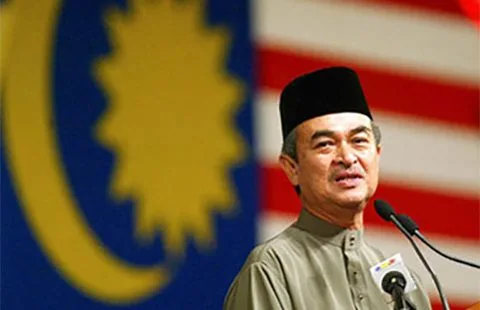
Tun Abdullah Ahmad Badawi
Although Sheikh Abdullah Fahim introduced the school system as mentioned earlier, he also continued the old systems of general study that he provided at the mosque. This system was study in the form of reviewing or examining turath books written in the early days of Islam, especially books on tafsir, hadith, fiqh, tawhid, astronomy, and others. This system still remains today in Makkah. Pilgrims will be able to see teachers and scholars sitting on chairs in Masjid al-Haram after the Maghrib prayer and giving lectures according to selected books. The struggle to uphold the light of Islam is not easy because it has to face various challenges. Sometimes fighters fall not because of their struggle but because of other factors such as certain rewards. However, Sheikh Abdullah Fahim possessed a firm character, and this did not cause him to lose his way. Besides that, Sheikh Haji Abdullah Fahim was one of the scholars who was firm and very concerned about the division of the Muslim community. He advised the Malay people not to follow the Khawarij teachings that sparked disputes among Muslims when they left and separated from the leadership of Saidina Ali RA. He also once showed firm action by leaving a gathering that attacked and belittled Malay people who held to the Shafi'i school of thought. The group that was strongly condemned was the Khawarij group. According to him, the Khawarij-minded group tried to confuse the general understanding that was deeply rooted in the Ahli Sunnah Wal Jamaah school. Sheikh Haji Abdullah Fahim once appealed for the Malay people to hold firmly to the spirit of ummah unity and to unite as one nation. He also frequently asked the Malay people to distance themselves from groups issuing rulings that were not in line with the Shafi'i school of thought and deviated from the Ahli Sunnah Wal Jamaah. He deeply hoped that any factions or groups disagreeing on religious matters would choose the path of reconciliation and reunite, so that minor cracks would not turn into major divisions that could harm the unity of the religion and the nation. Sheikh Haji Abdullah Fahim was the first person appointed as the Mufti of Pulau Pinang after independence. He held that position for five years. Besides the academic field, Sheikh Haji Abdullah Fahim also participated in the political field. This participation caused him to later emerge as a prominent politician who often contributed sharp and brilliant thoughts in that field. He once shouted the slogan “Hidup Melayu” (Long Live the Malays) and suggested that the spirit of Malayness be planted in the people of Tanah Melayu and Indonesia because both were like twins. The outspokenness of Sheikh Haji Abdullah Fahim in such matters made his direct involvement in the movement to demand independence not something strange; in fact, he always encouraged his son, Haji Ahmad, who was famous by the name Ahmad Badawi, to join the political movement and later move actively as the Deputy Head of the UMNO Malaya Youth Movement before passing away on May 7, 1977. Many do not realize that Sheikh Haji Abdullah Fahim possessed a very amazing specialty, which was being wise and sharp-minded in predicting things. The proof is when he predicted that Tanah Melayu would be independent in 1957 because, in his view, the struggle to demand independence at that time was like “ripe fruit.” His greatness did not stop there; he was also quite famous for his ability to give speeches, and he himself was a true UMNO fighter. According to the former Bertam State Assemblyman of Pulau Pinang, Datuk Mohd Noor Ahmad, there were two important proposals put forward by Sheikh Abdullah Fahim that were adopted by Tunku Abdul Rahman Putra al-Haj, the first Prime Minister of Malaysia, by suggesting that: The delegation to London demanding independence from the British, led by Tunku Abdul Rahman, should not go by plane but should go by sea so that they would have a long and sufficient time to discuss with each other. Setting August 31, 1957, as the independence day for Tanah Melayu (Malaysia). This was according to the calculations of Sheikh Haji Abdullah Fahim, who was quite famous as an astronomer. His loyalty to the struggle of the nation was priceless. His love for the UMNO struggle was true love; he never complained and was instead strong in pouring out his energy and thoughts as the Chairman of the Religious Committee since the early establishment of UMNO.
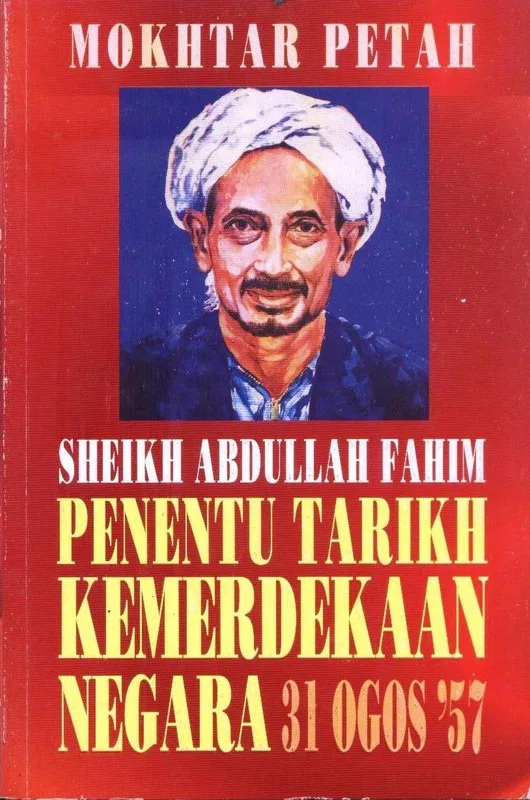
Sheikh Abdullah Fahim
The spirit of fighting for the fate of the nation and religion was fought for until the moment of his death. In fact, according to a source from Datuk Mohd Noor Ahmad, when Sheikh Haji Abdullah Fahim breathed his last, the UMNO badge was still attached to his shirt. In his daily life, Sheikh Haji Abdullah Fahim was someone who was very easy to socialize with and was very well-liked by the local residents, who consisted of a multi-racial society. It was once said that shopkeepers around Pulau Pinang usually felt very lucky if Sheikh Haji Abdullah Fahim entered their shops but would feel worried if he said the goods in their shops were expensive, as that was a sign that the shopkeeper's sales for that day would decline. Conversely, shopkeepers always hoped that Tuan Guru Sheikh Haji Abdullah Fahim would enter their shops because his presence was a sign that their sales for that day would be brisk. Those were among the specialties possessed by Sheikh Haji Abdullah Fahim, who was a saint (wali) highly respected by the residents of Pulau Pinang, especially in Seberang Prai and Kepala Batas. Sheikh Abdullah Fahim breathed his last at 8:00 AM on April 28, 1961, at his ancestral home in Kepala Batas. The late scholar left behind one child, Ahmad Badawi, and several grandchildren, among whom is our beloved national leader, Tun Abdullah Ahmad Badawi.
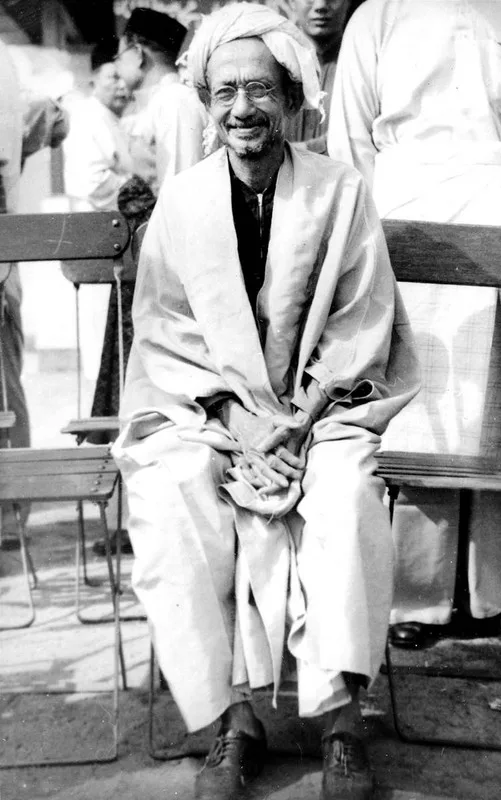
Sheikh Abdullah Fahim
According to Datuk Mohd Noor Ahmad, when Sheikh Haji Abdullah Fahim was still alive, Tun Abdullah Ahmad Badawi always followed his grandfather, especially in general study classes at the mosque, and he socialized a lot with the students of the DMW Arabic school. He is a national leader who is very fortunate because he was raised in a family environment and surrounding atmosphere that was fenced with the light of Islam. Along with that, we, the people of Malaysia, especially Muslims, are very fortunate to have a national leader like him who inherited the lineage of scholarly leadership from his own father and grandfather. Thank God (Syukur Alhamdulillah).
- Yayasan Dakwah Islamiah Malaysia (YADIM)
- Sembang Kuala
- Office of Tun Abdullah Ahmad Badawi