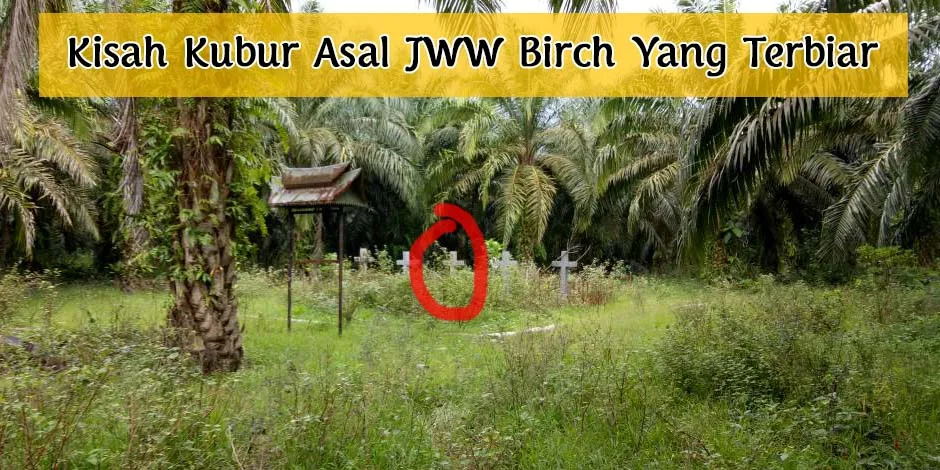
The Story of J.W.W. Birch's Neglected Original Grave
Past events are history that must be remembered so we do not repeat the mistakes of those before us. It also strengthens our spirit to defend the sovereignty of our nation and country. What distinguishes our mindset from Western society is how we value and preserve our historical heritage. Even if that history is sometimes painful, it is well-maintained in Western countries to serve as a lesson for the younger generation there.
On April 24, 2017, the orangperak.com crew set out to track down the original location of the grave of the first British Resident of Perak, J.W.W. Birch. Also located within the same fenced area as Birch's grave are the graves of British soldiers who were killed in the first attack on the Malay fighters' fort at the beginning of the Perak War. Following the attack, which resulted in high casualties among the British troops, the Governor of the Straits Settlements at the time requested additional military reinforcements to be sent to Perak to fight the Malay warriors. The British then sent troops from India and Hong Kong to assist the forces already stationed in Bandar Baru.
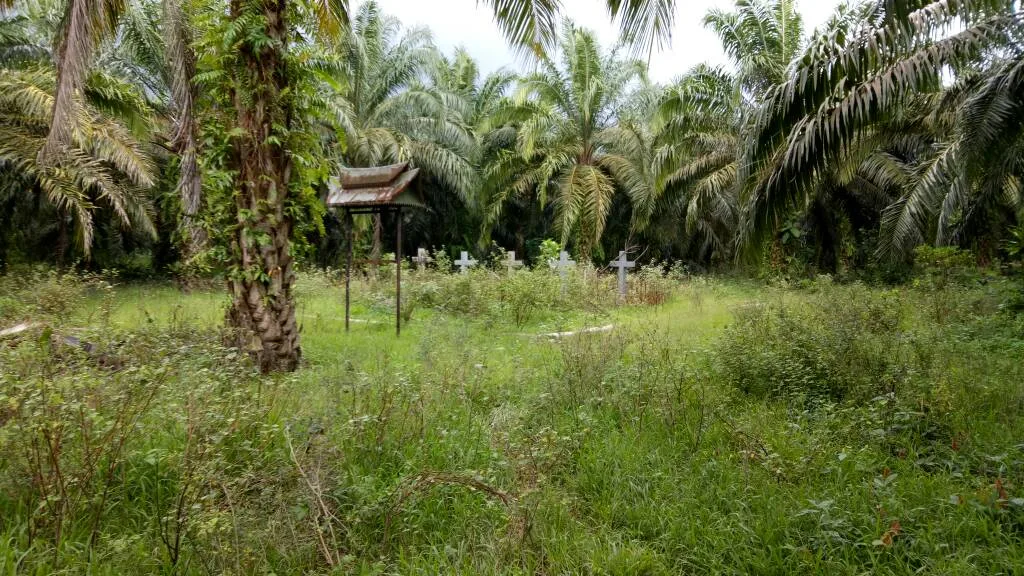
The grave of J.W.W. Birch and the British soldiers is located in Kampung Teluk Memali, not far from Kampung Gajah. The cemetery area was formerly known as Bandar Baru, which served as the administrative center of Perak during the reign of the 19th Sultan of Perak, Sultan Abdul Malik Mansur Shah, who ruled from 1806 to 1825. At that time, Bandar Baru was described as a very prosperous place with many shops and warehouses.
When the Pangkor Treaty was signed, the British took over the area and built a house and office for the British Resident, surrounded by a high wooden fence heavily guarded by British soldiers. There was also a jetty for British warships to dock and patrol the waters. Surely, all readers of orangperak.com are already familiar with the story behind the killing of J.W.W. Birch at the hands of the Perak Malays.
After being killed by Sepuntum, Birch's body was eventually washed away by the current of the Perak River. After successfully attacking J.W.W. Birch, the Malay warriors surrounded and attacked the British position in Bandar Baru. However, the effort was unsuccessful, and the Malay warriors retreated to strengthen their position at the Pasir Salak fort. After the siege ended, the late J.W.W. Birch's body was found on the riverbank not far from the residency, and he was buried near where he was found. That is a brief excerpt regarding the story of J.W.W. Birch's murder and the beginning of the Perak War. You can read about
the full events of the Perak War by clicking the link here
.
Returning to the orangperak.com crew's effort to track down J.W.W. Birch's grave for our readers, the grave is now located deep within an oil palm plantation and far from residential areas. The road to the cemetery is also in poor condition and is not safe for regular vehicles. Fortunately, our friend had a 4x4 vehicle that could be used for this search.
.jpg)
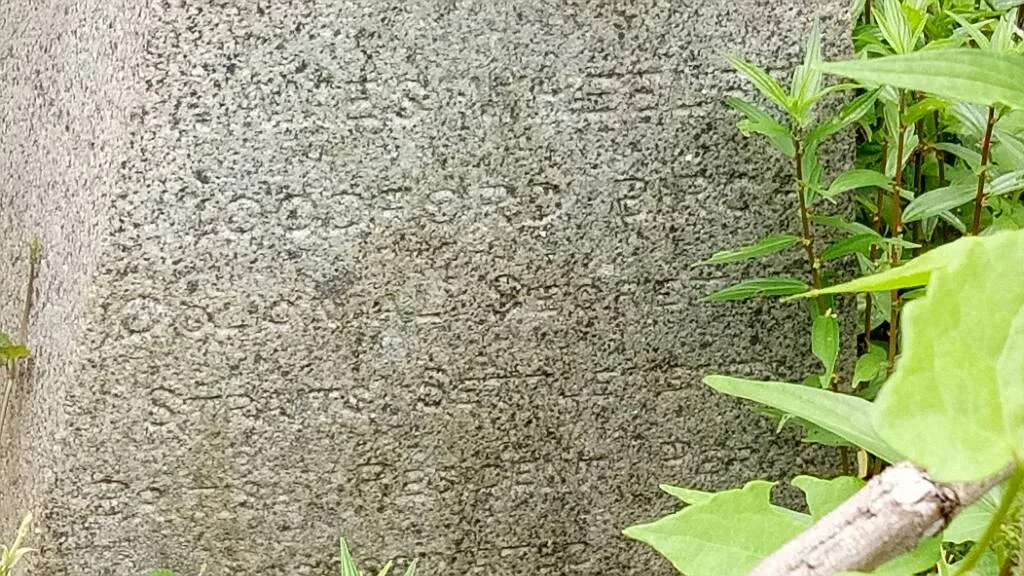
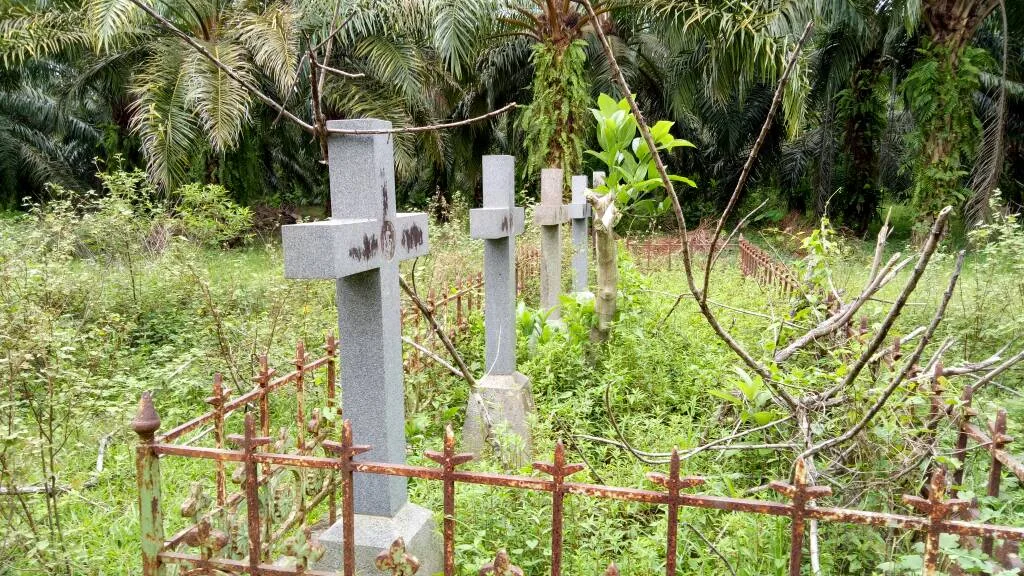
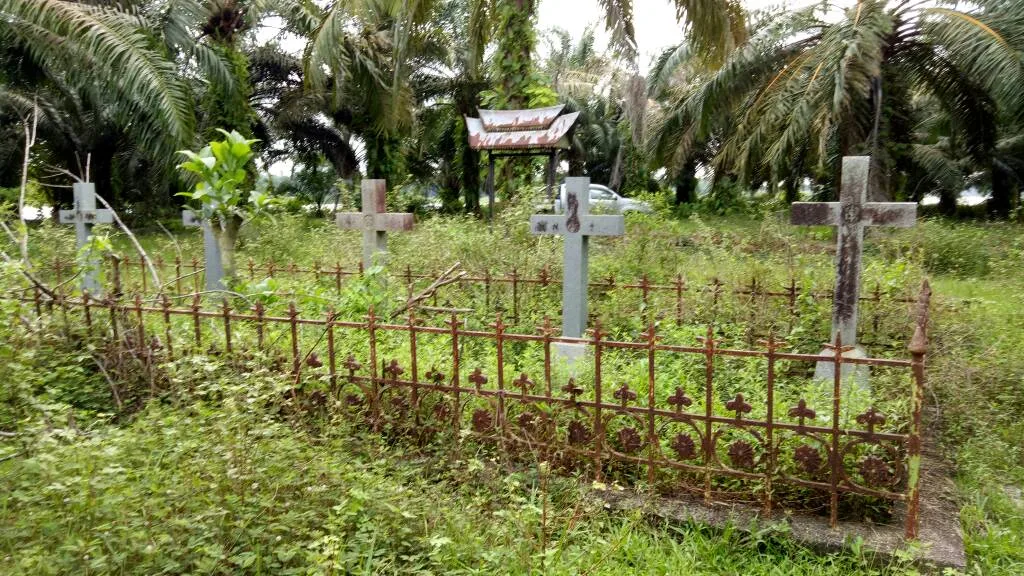
With the help of information from villagers, we finally succeeded in finding the cemetery area. Upon arrival, we found that the cemetery had long been neglected. The area was overgrown with bushes, and the iron fences were rusted and collapsed. Besides J.W.W. Birch's grave, there are four other graves of British soldiers, most notably that of Captain Innes, the first British officer killed in the Perak War when he led his troops to attack the Malay fort in Pasir Salak.
.jpg)
According to information we received from officials at the Pasir Salak Historical Complex, research by the National Heritage Department based on existing records confirms that the remains of J.W.W. Birch, Captain Innes, and 3 other British military officers who were killed are still in the cemetery. There are even records showing that the British government once established a special fund and provided an allowance to two residents of Kampung Pulau Juar to maintain and clean the cemetery area.
.jpg)
However, this allowance was stopped when the country achieved independence, and the responsibility for maintaining the cemetery was handed over to the National Heritage Department, which was established after independence. This effectively refutes rumors that J.W.W. Birch's remains were moved from the cemetery and taken to England, or that the cemetery only contains a memorial stone for Birch along with the British Resident's clothing. In other information, there is a record stating that Mat Arshad (J.W.W. Birch's interpreter, who was killed on the same day as the British Resident) was buried about 12 chains away from J.W.W. Birch's grave. The National Heritage Department is currently still working to locate Mat Arshad's grave.
.jpg)
It is very shameful to see this cemetery in such a neglected state, especially since this year is Visit Perak Year 2017. The cemetery should be preserved because it is a remnant of the story of the Malay people's struggle to defend the sovereignty of their homeland. Is it because it is the grave of someone considered an enemy that it does not need to be maintained? Yet, the La Cambe cemetery, which houses over 20,000 Nazi German soldiers in France, is maintained and serves as a memorial area regarding the sad events experienced by France when it was occupied by Nazi Germany.
.jpg)
Hopefully, the responsible parties will take the initiative to preserve the cemetery in Kampung Teluk Memali, and perhaps a gallery could be set up to commemorate the reasons for the Malay people's resistance against the British, which ultimately led to the killing of the first Resident of Perak. This would also add to the historical tourism sites in the area, alongside the existing Sultanate tombs and the Pasir Salak Historical Complex.