The Pangkor Treaty
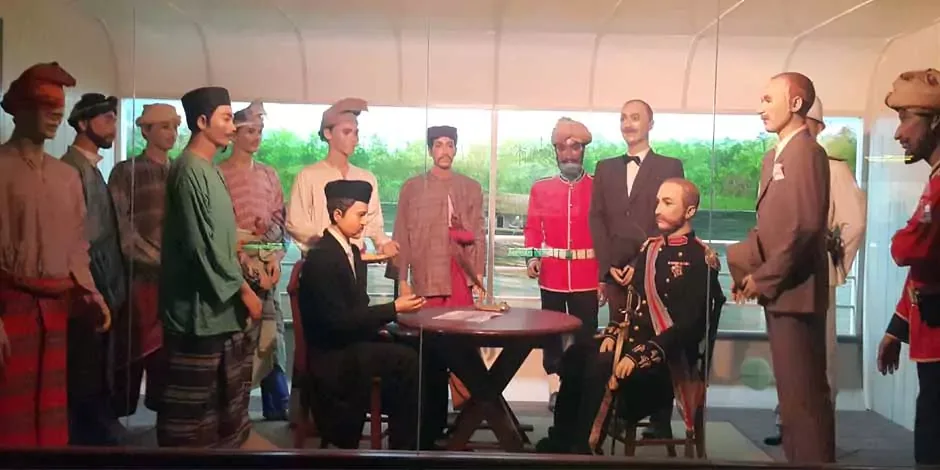
On January 20, 1874, the Pangkor Treaty was sealed between the British and the state of Perak. The Governor of the Straits Settlements, Sir Andrew Clarke, represented the British, while Raja Muda Abdullah held power in Lower Perak. Also present were dignitaries such as the Bendahara, Temenggung, Orang Kaya Menteri, Shahbandar, Raja Mahkota, Laksamana, and Dato Sagor, who supported the Raja Muda.
The Pangkor Treaty granted the British the authority to intervene in the administration of Perak. However, this treaty was criticized by some as a mistake, as it opened the door for British interference in Malay administration.
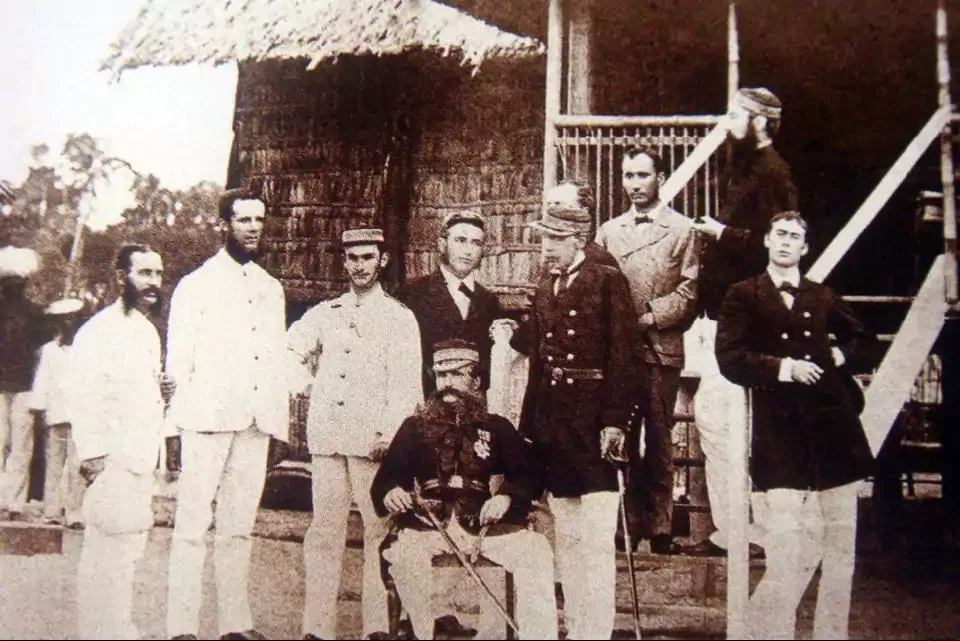
The signing took place on the HMS Pluto ship in the Dinding Strait, between Lumut and Pangkor Island. With Sultan Abdullah's agreement, Governor Sir Andrew Clarke removed Sultan Ismail (the 25th Sultan of Perak) from the throne of Upper Perak and replaced him with the Sultan Muda. Sultan Ismail was given a monthly pension of 1,000. Meanwhile, Ngah Ibrahim was no longer recognized as the ruler in Larut.
Introduction and Background of the Pangkor Treaty
The Pangkor Treaty played a significant role in the sequence of historical events in Malaysia, illustrating the clash between colonial powers and the long-standing political structures of local society. In the 19th century, the spirit of exploration and global conquest reached its peak among European nations, which sought to expand their spheres of influence and trade. As a result of these changes, European colonial powers took the initiative to extend their power networks throughout Southeast Asia, including the area now known as Malaysia.
The Pangkor Treaty itself was not an isolated event, but a midpoint in a series of events and rising tensions between colonial and local powers. At that time, the Malacca Malay Sultanate, which had been a center of trade and culture, had fallen due to Portuguese and Dutch colonization in the previous century. This led to the rise of several Malay states as new power centers on the peninsula, such as Perak, Selangor, Negeri Sembilan, and Pahang.
However, the vibrant political and economic continuity in these states was strained by competition among them, compounded by the increasingly evident test of foreign influence. In response to the growing unrest, the British East India Company took on the role of stabilizing the situation to ensure the safety and stability of their trade in the region.
The Pangkor Treaty, negotiated in 1874 by a British official, James W. W. Birch, on Pangkor Island, triggered fundamental changes in politics and power relations on the peninsula. This treaty involved British intervention in the affairs of the Malay states and became the foundation for a more organized and colonial-controlled form of government.
In the following sections, we will delve deeper into the 19th-century historical context in Malaysia that led to the signing of the Pangkor Treaty, as well as the actual details of the treaty that played a crucial role in shaping the fate and future direction of Malaysia.
19th Century Malaysian Historical Context
The 19th century witnessed major changes that shaped Malaysia's political, social, and economic landscape. At the beginning of this century, Malaysia was still filled with Malay kingdoms ruling various territories. However, this balance changed with the arrival of the era of imperialism, which saw European powers racing to establish global empires.
At the beginning of the century, European nations such as Britain, the Netherlands, and France competed to expand their spheres of influence across the globe. Malaysia was not exempt from these major changes. Driven by increasingly sophisticated technology and the urge to acquire rich natural resources, European powers began looking toward Southeast Asia, including Malaysia, as an important destination to control.
Trade became one of the main factors in this change. Ports in Malaysia attracted strong interest from European powers due to their strategic location on trade routes between East Asia and India. Malaysia's geographical position as a center of trade and a source of natural resources like tin also drew attention.
Furthermore, increasingly advanced technology and communication also enabled European powers to assert their positions more efficiently. The development of steamships and the telegraph opened opportunities for easier long-distance control, making it easier for military and administrative forces to manage distant territories.
These changes played a significant role in shaping the conditions that eventually led to the signing of the Pangkor Treaty. European colonization in the region caused major changes in the administration, political structure, and economy of the Malay states. The pressure to maintain the position and interests of colonial powers in trade and geopolitics inspired changes that resulted in unrest and chaos in the Malay states.
In the following section, we will investigate the actual content of the Pangkor Treaty and how it became a response to these changes in the context of 19th-century Malaysian history.
Content of the Pangkor Treaty
The Pangkor Treaty, signed in 1874 between British representatives and Sultan Abdullah of Perak, formed important guidelines in outlining the roles of colonial powers and local government structures. The treaty consisted of several points that provided guidelines for the relationship between the involved parties.
One of the important aspects of this treaty was the recognition of British colonial power over the sultanate and Malay lands. This meant that European colonial powers had the authority to intervene in the important internal affairs of the Malay states, including the determination of leaders and principles of governance. Sultan Abdullah also agreed to consult with the British Resident on all important matters involving his state.
Additionally, the treaty contained specific demands imposed on the local parties. Sultan Abdullah was required to take steps to combat poaching and smuggling activities within his territory. This was in response to the instability of the region and to ensure smooth trade under the control of colonial powers.
The Pangkor Treaty also outlined important principles regarding the legal system. It gave the British the power to intervene in court cases when Europeans were involved, making them no longer subject to the sole authority of the local people. This encouraged a clearer separation between Europeans and locals, fostering the dominance of European culture in the region.
It should be noted that this treaty actually paved the way for the establishment of British Residents in the Malay states. These Residents acted as representatives of the colonial power in local administration and played a key role in determining the policies and future direction of the Malay states.
In the following section, we examine the aftermath of the signing of the Pangkor Treaty and how these changes shaped the political development and foreign relations of Malaysia at that time.
Factors of the Pangkor Treaty
It cannot be denied that the state of Perak was a major tin producer in the world, leading the United Kingdom since before the 19th century.
At the same time, the British were already in power in Penang, Malacca, and Singapore, and thus they considered Perak a state with a very important and strategic position.
However, the tin business at that time in Perak was somewhat disrupted because the situation in the state was unstable and unsafe due to the outbreak of the Larut War and fighting between several Chinese secret societies.
The Pangkor Treaty originally sprouted from the death of Sultan Ali (the 24th Sultan of Perak) in 1871. Raja Abdullah, who was the Raja Muda at the time and should have been appointed as the new sultan, did not attend the late Sultan Ali's funeral ceremony.
Because of this, Raja Bendahara Raja Ismail was raised and installed as the Sultan of Perak because, according to the coronation customs of the Malay Rulers, he was the legitimate sultan as he possessed the royal regalia.
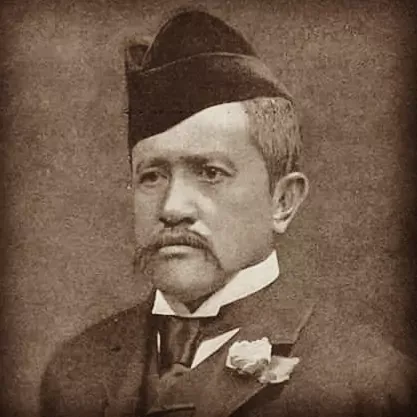
Raja Abdullah felt dissatisfied, and this prompted him to seek British assistance. At the same time, there was hostility between two Chinese secret societies, Ghee Hin led by Chin Ah Yam and Hai San led by Chung Keng Quee, to compete for tin mines.
Assistance from the British was needed by Raja Abdullah to resolve these two problems. The British saw this as a golden opportunity to expand their influence in Southeast Asia and control the tin trade.
Who Was Involved in the 1874 Pangkor Treaty
As a result, the Pangkor Treaty was signed in 1874, involving Raja Abdullah (Raja Muda of Perak) along with the dignitaries who supported him, before the Governor of the Straits Settlements, Sir Andrew Clarke.

The dignitaries involved in the meeting for the treaty were the Bendahara, Temenggung, Orang Kaya Menteri, Syahbandar, Raja Mahkota, Laksamana, and Dato Sagor.
Terms of the Pangkor Treaty
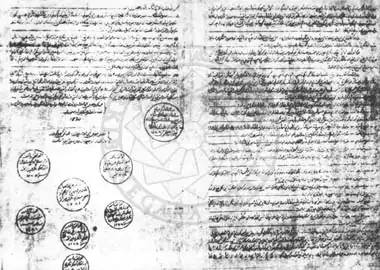
The meeting between Raja Abdullah, Sir Andrew Clarke, and several Perak Chiefs without the presence of Sultan Ismail and Raja Yusuf on Pangkor Island on January 20, 1874, resulted in the Pangkor Treaty, and its terms were as follows:
Raja Muda Abdullah was appointed as the Sultan of Perak, Bendahara Ismail, the former Sultan, was allowed to use the title Sultan Muda; the Sultan of Perak must provide a place for the Resident, the advice of the British Resident must be followed except in matters concerning Malay religion and custom; clauses regarding the collection of all taxes and state revenue, as well as general administration rules, must be determined with the advice of the British Resident.
- Raja Muda Abdullah is recognized as the Sultan of Perak.
- Raja Bendahara Ismail, who is currently the Acting Sultan, is allowed to retain the title of Sultan Muda with a pension and a small territory granted to him.
- All appointments of other high-ranking officials made during the time Raja Bendahara Ismail received the royal regalia shall be confirmed.
- The power granted to the Orang Kaya Menteri over Larut by the late Sultan shall be confirmed.
- All state revenue shall be collected and all appointments shall be made in the name of the Sultan.
- The Sultan accepts and provides a suitable residence for a British official named the Resident. This official will be commissioned to the Sultan's palace, and his advice must be sought and acted upon on all matters other than those touching on the Islamic religion and Malay customs.
- An Assistant Resident, a British official acting under the Perak Resident, with similar powers and subject only to the Resident, shall be stationed at the palace of the Governor of Larut.
- The funding for these Residents and their positions shall be determined by the Straits Settlements Government and shall be the first charge on the revenue of the State of Perak.
- The royal allowances regulating the income to be received by the Sultan, Bendahara, Menteri, and other officials shall be the next charge on that revenue.
- The collection and control of all revenue and general administration of the state shall be regulated under the advice of these Residents.
- The treaty where the Dinding Islands and Pangkor islands were ceded to Great Britain was misunderstood, and therefore, it is necessary to readjust it so that the true purpose of the treaty's drafters can be enforced, and it is hereby declared that the boundaries of the ceded territory shall be corrected as follows: From Bukit Segari, as shown in Chart Sheet No. 1 of the Straits of Malacca, a copy of which is attached, marked A, straight across to the sea, then along the coastline to the south, to Pulau Katta on the West, and from Pulau Katta stretching east-northeast for about five miles, and then north, to Bukit Segari.
- That the area south of the Krian River, which is the part of the area whose drainage flows into that river from the south, is declared as British Territory, to correct the boundary of Province Wellesley (Seberang Perai). The boundary shall be marked by a Commissioner, one named by the Straits Settlements Government, and another named by the Sultan of Perak.
- That when the current chaos in the State of Perak has ceased and peace and order have been restored among the warring factions in the State, immediate steps under the control and supervision of one or more British Officials shall be taken to restore as far as possible the mining works and ownership of machinery, etc., as the situation was before the chaos occurred, as well as to manage the payment of compensation for damages, and the decision of the official or officials in such matters shall be final.
- The Menteri of Larut promises to acknowledge as his debt to the Straits Settlements Government all charges and expenses incurred for this investigation, and also for the charges and expenses incurred by the Straits Settlements Colony and Great Britain in their efforts to establish peace in the State of Perak and the security of trade.
Implications and Consequences for Malaysia
The signing of the Pangkor Treaty had a lasting impact on political, social, and economic changes in Malaysia. The implications of this treaty forged a new path in the country's history, reflecting a situation where European colonial powers increasingly determined the direction and future of Malaysia.
Politically, the Pangkor Treaty empowered the British colonialists to oversee the administration of the Malay states. The appointment of a British Resident as a representative of the colonial power in each state curtailed the autonomous power of the Malay rulers and local leadership. This changed the political landscape in Malaysia, introducing elements of foreign administration that became the basis for decisions in those states. Political power, which was previously concentrated in the hands of local rulers and dignitaries, now increasingly shifted to the colonial power.
In the social aspect, the Pangkor Treaty also influenced the structure of society and the relationship between the Malay and European communities. The adoption of laws that separated courts for European and local communities accelerated cultural and social changes. This pattern of separation led to an increasingly evident power imbalance between the two communities, which affected aspects of education, economy, and politics.
The economic sector also underwent transformation as a result of this treaty. Colonial powers viewed Malaysia as a source rich in natural resources and a strategic location for trade. With the introduction of a more organized administrative structure, colonial powers could control the state's wealth more efficiently. However, this also provided room for greater economic exploitation by colonial powers, and the profits obtained tended to flow out of Malaysia.
As a result of all this, the Pangkor Treaty became the foundation for further transformations in Malaysian history. This treaty is a significant event in understanding the country's political, economic, and social journey, and provides a perspective on how European colonial powers shaped the fate and future direction of Malaysia.
In the following section, we will examine the influence of the Pangkor Treaty on Malaysia's political dynamics and foreign relations, as well as the social changes that occurred after this treaty was signed.
Influence of the Pangkor Treaty on Politics and Foreign Relations
The Pangkor Treaty played a key role in changing Malaysia's political dynamics and promoting the influence of the British colonial power in domestic affairs. With the appointment of British Residents in the Malay states, colonial influence extended into the design and implementation of the foundations of administrative and political affairs. This resulted in changes to the local political system, which had previously been more traditional.
The political system that developed under the influence of the Pangkor Treaty was more centralized and controlled by the colonialists. The power of the Malay rulers and local dignitaries diminished, and administrative power shifted to the British Resident stationed in each state. This resulted in the establishment of a more organized and colonial-controlled governance hierarchy, changing the way state government was administered.
Malaysia's foreign relations were also affected by these changes. The British colonial power used the political authority gained from the Pangkor Treaty to ensure stability and security within their territories. This led to deeper intervention in Malaysia's foreign affairs, including matters involving relations with other powers in the region. Consequently, Malaysia's foreign decisions were increasingly influenced by British interests.
The influence of the Pangkor Treaty was also felt in the changing political dynamics among the local community. With the arrival of colonial powers, the Malay community was increasingly exposed to foreign political and social ideas, which led to the development of more modern and inclusive ways of thinking. This also stimulated the development of political movements and the rise of nationalism among the local population, as a reaction to the increasingly widespread foreign influence.
Overall, the influence of the Pangkor Treaty on Malaysia's politics and foreign relations is complex and extensive. Changes in the local political system, the influence of colonial powers on internal affairs, and the influence on foreign relations all played a role in shaping the foundations of the country's politics and history. In the following section, we will explore the social changes that occurred after the signing of the Pangkor Treaty.
Social Changes After the Pangkor Treaty
The Pangkor Treaty triggered a wave of profound social change in Malaysian society. The oppression of colonial power and changes in political and economic structures had a direct impact on the way of life, values, and patterns of interaction in society.
One of the most noticeable social changes was the change in political structure. The British colonial power controlled the administration of the Malay states through the appointment of Residents. This resulted in a shift of power from local leaders to the colonial power, changing the way local leaders interacted with the people and carried out administrative duties. The local community had to adapt to this new structure, changing the power dynamics among the people and the local elite.
Furthermore, economic changes also spread socially. Colonial influence in trade and the economy influenced employment, ways of life, and value systems. The development of economic sectors such as mining and planting introduced by the colonialists led to changes in employment structures and lifestyles. Economic interests that were more focused on certain commodities also gave an impression of the traditional economic balance of the local community.
These changes also encouraged a more complex combination of cultures and ideas. The colonialists brought new ideologies, technology, and education systems. It changed the way education was delivered and received, and stimulated intellectual and social development in society. This process opened the door to a broader intellectual and cultural awakening, with the local population considering new perspectives and enriching their cultural lives.
However, these changes also brought challenges and imbalances. Changes in social and economic structures could put pressure on society, especially those affected by these changes. The economic and social gap between the local and European communities, as well as within the local community itself, increased, creating friction and social unrest that had to be faced.
In conclusion, the social changes after the Pangkor Treaty reflect the dynamics and complexity of the transformation experienced by Malaysia. With changes in political, economic, and cultural structures, the people of Malaysia faced challenges and opportunities that influenced their way of life, thinking, and interactions. In the following section, we will reflect on the historical significance of the Pangkor Treaty in understanding Malaysia's development, and why it is still relevant today.
Historical Significance of the Pangkor Treaty
The Pangkor Treaty played an indispensable role in shaping Malaysia's historical landscape and still has a strong connection to the present day. Investigating it provides important insights into the country's political, social, and economic development, and reminds us of the impact of colonial power on Malaysia's identity and direction.
One of the important values of the Pangkor Treaty is as a turning point for the colonial policy that shaped Malaysia. Understanding how European colonial powers were actively involved in local administration and political influence plays an important role in assessing how Malaysia developed its institutions and political system. This treaty serves as a foundation for understanding the origins of the relationship between the state and colonial powers, and how this relationship shaped key aspects of the country's administration.
In addition, the Pangkor Treaty outlined guidelines on how small states could interact with major powers in foreign relations. The foreign influence and demands on local sovereignty seen in this treaty are important lessons in maintaining the integrity and sovereignty of the country in the context of complex international relations today.
This historical value also stimulates critical thinking about how external factors can shape internal changes. The changes that Malaysia experienced after the Pangkor Treaty are a clear reminder of the power of foreign influence and how local society reacts to these changes. It helps us understand how global, political, and economic changes can influence development on a larger scale.
In the modern context, the Pangkor Treaty reminds Malaysia of the journey it has traveled and the challenges it has faced. It encourages people to continue seeking a national identity and understanding the historical roots of the country. By understanding its role in history, Malaysia can reflect on the need to ensure sovereignty, stability, and continuous development in the context of a constantly changing world.
Overall, the historical significance of the Pangkor Treaty is to ensure that we do not forget our historical roots and draw inspiration from them. It invites us to cultivate a spirit of nationalism and political awareness in facing today's challenges and strengthening Malaysia's position in the global community.
Effects of the Pangkor Treaty
This treaty contains 14 points, the most important of which is its relation to the appointment of a Resident in the state of Perak. In this provision, the Resident was given full authority over the collection and control of export revenue, trade, taxes, and also state administration, except for matters related to Malay religion and customs.
However, Raja Ismail did not recognize the treaty even though Raja Abdullah had been recognized by the British as the sultan and Sir James W.W. Birch had become the first British Resident in Perak.
Following this treaty, the British became directly involved in administrative affairs within the Malay states. The intervention of the British Resident later caused dissatisfaction among the Malays.
The palace circle, especially those who were unhappy when their power was lost little by little, caused the Malays in Perak to begin fighting against the British.
The Malays began to conspire to kill J.W.W. Birch. The assassination was carried out in 1875 in Pasir Salak. You can refer to the article Details of the Story of JWW Birch's Last Breath.

Many parties, all of whom were Perak locals involved in the murder of Birch, were arrested and sentenced to death. Among them were Dato Maharaja Lela, Datuk Sagor, Si Puntum, Pandak Endut, Laksamana Mohamad Amin, Ngah Ibrahim, and others. Sultan Abdullah was exiled to the Seychelles.
With the success in curbing Malay resistance, the British finally succeeded in strengthening their position in Perak and subsequently opened more tin mines in Perak and rubber plantations.
Consequently, the state of Perak, together with Negeri Sembilan, the state of Selangor, and the state of Pahang, were later known as the Federated Malay States.
Conclusion: Lessons from the Pangkor Treaty
The Pangkor Treaty provided various important lessons and perspectives that are still relevant in the modern context. This event not only shaped Malaysia's history but also provided a picture of the influence of colonial powers on the political and social dynamics of a country.
First of all, this treaty teaches us about the importance of understanding the origins of political developments and policies before us. Through the study of events like the Pangkor Treaty, we understand how the interaction between foreign and local powers shaped the patterns of state governance and administration. This understanding is important for forming political and development approaches based on historical awareness.
Secondly, the Pangkor Treaty reminds us of the danger of losing sovereignty and control over state affairs. The implications of this treaty, which introduced colonial power into domestic affairs, remind us of the need to maintain sovereignty and freedom in administrative matters. This is an important lesson in the modern era of globalization, where countries still need to maintain their identity and sovereignty.
Thirdly, this treaty inspires us to think critically about changes in society and how society adapts to these changes. Through the analysis of social and economic changes after the Pangkor Treaty, we understand the challenges and opportunities that arose due to interaction with colonial powers. This becomes relevant in a rapidly changing world where society needs to adapt to global developments.
In conclusion, the Pangkor Treaty is not just an event in Malaysian history, but also a valuable source of lessons for political, social, and economic understanding. Through the observation of this treaty, we gain a picture of the policies, changes, and effects of colonial powers in directing the future path of a country. By understanding these lessons, we can form a more informed and responsible view of Malaysia's development and its role in the global community.