The Nation's Pioneering Hanging Traffic Light in Bota Now a Memory
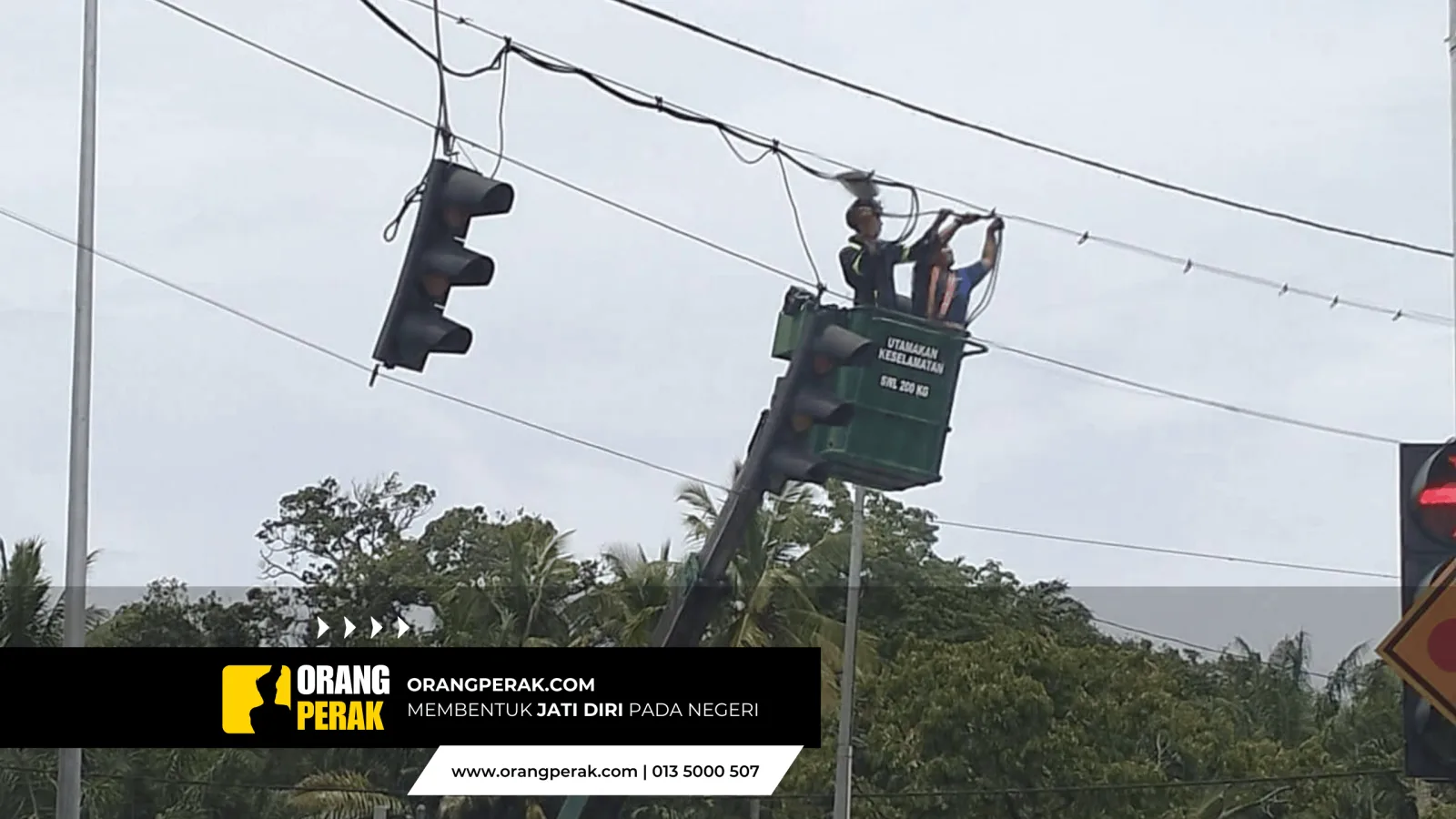
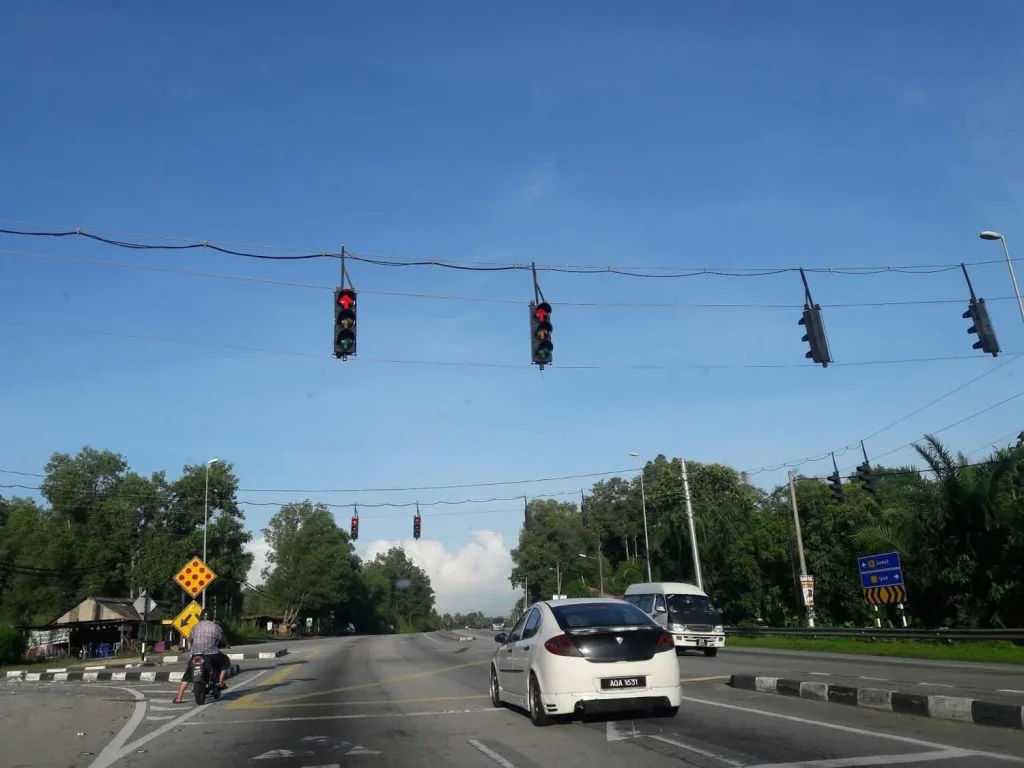
In 2013, a hanging traffic light system was introduced at the Felcra Nasaruddin Junction on the Ipoh–Lumut road. This location became a focal point due to its unusual design, where the traffic lights were suspended above the intersection using steel cables.
The traffic light was one of the pilot projects by the Perak State Public Works Department (JKR) and was said to be among the first hanging systems of its kind used in the country. It is also believed to have adopted technology from the United States for its installation.
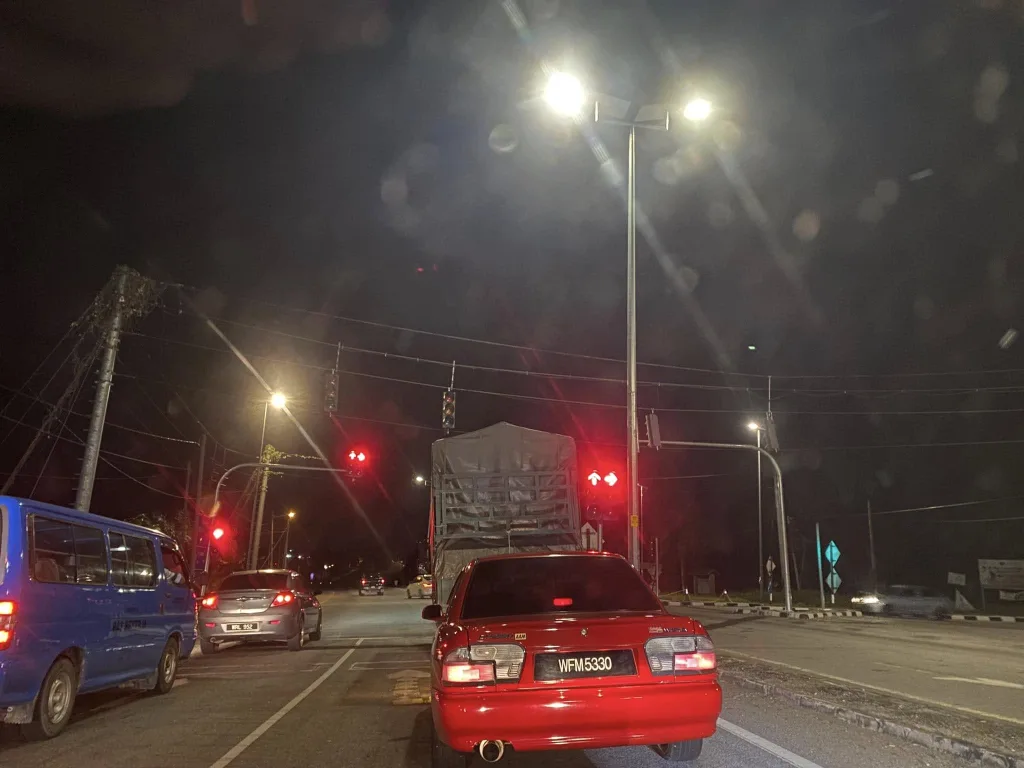
Before these lights were built, the intersection was merely a two-lane road without a traffic light system. After the road was widened to four lanes, the need for traffic lights arose to control traffic flow and provide safe passage for users entering and exiting Felcra Nasaruddin.
Service Termination After Over a Decade
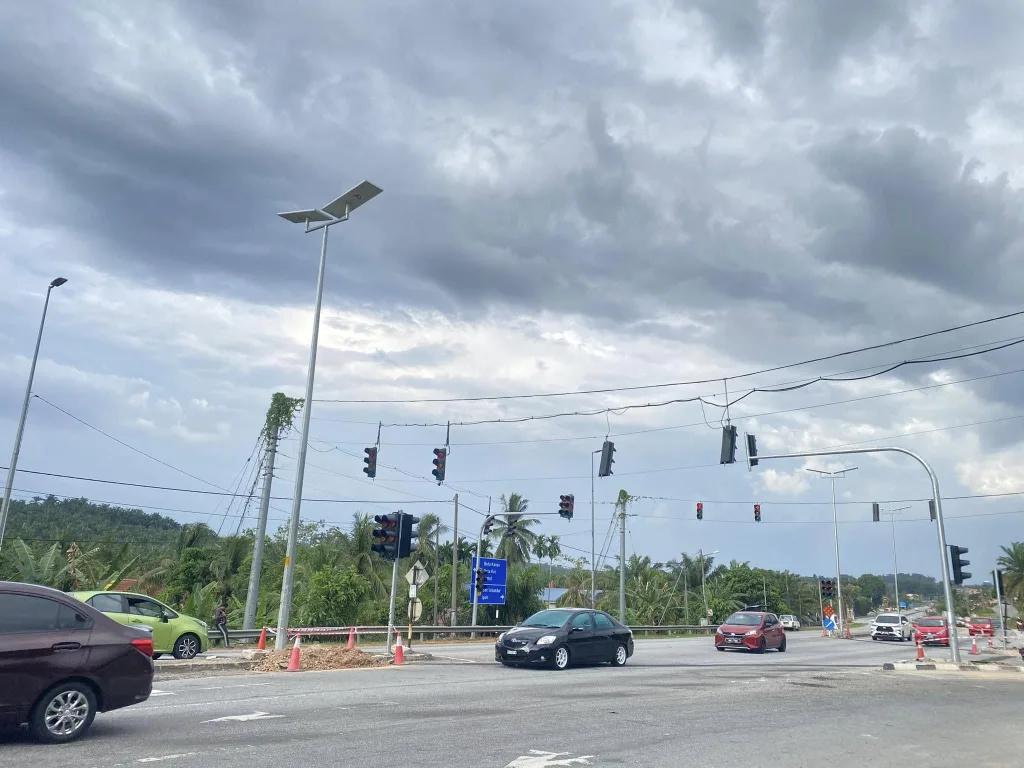
On September 25, the hanging traffic light, which had served for over 10 years, finally ceased operations. According to reports on local social media and observations by road users, the hanging lights have been replaced with a standard pole-mounted system.
Although no official statement has been issued by JKR thus far, the replacement is believed to have been carried out as a long-term maintenance measure and to improve the traffic system.
Most road users expressed nostalgia for this unique structure but understood the need for a transition to a more conventional and easier-to-maintain system.
Traffic Safety Priority
A hanging system using tensioned cables requires continuous monitoring, especially if exposed to extreme weather or high traffic vibrations. These risks prompted the need for a more stable system.
With a pole-mounted system, the stability of the light structure can be controlled more effectively. Furthermore, the pole design is more easily visible to road users from various directions.
Additionally, modern systems are now integrated with technologies such as traffic sensors and surveillance cameras, which are more suitable for installation on fixed structural poles.
Easier Maintenance and Access
Pole-mounted traffic lights allow technicians to perform maintenance work more safely and quickly. Conversely, a hanging system requires special equipment and periodic cable inspections.
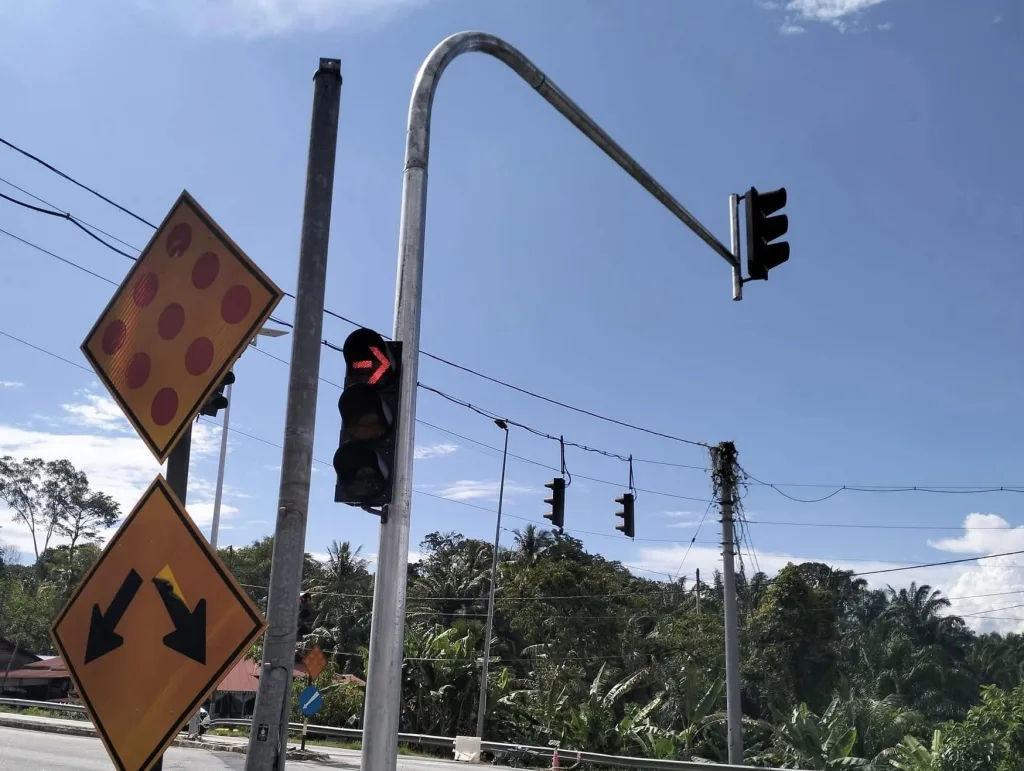
Pole-mounted lights also allow for a more systematic arrangement of electrical components without having to rely on the strength of hanging cables.
In the long run, maintenance costs are expected to be lower because light poles are more durable and do not require the replacement of major structural components as frequently as hanging cables.
Infrastructure Adaptation and Traffic Flow
The increasing number of vehicles and changes in road design demand a traffic system that can be adapted from time to time. Pole systems allow traffic lights to be repositioned easily.
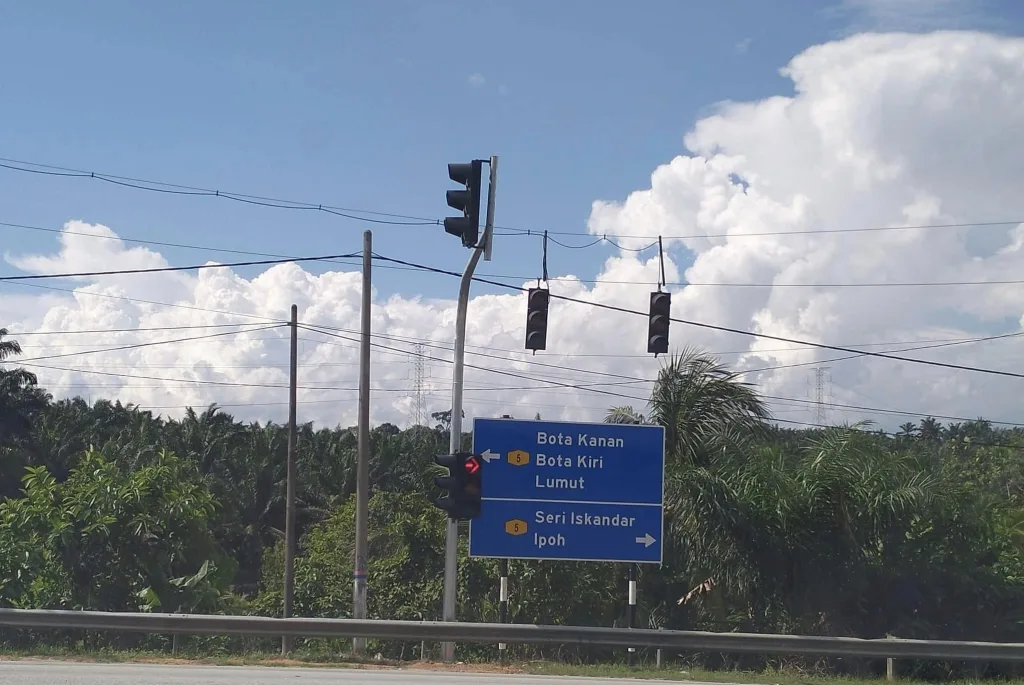
Poles also support the installation of additional signage or directional indicators, which is not easily done using a hanging system.
In terms of aesthetics and national standards, pole-mounted traffic lights are now the primary choice for most new road developments across the country.
Durability and Original Cost of the Hanging Traffic Light
Since it was first installed in 2013, the hanging traffic light at Felcra Nasaruddin never suffered major damage or fell due to strong winds. It remained stably suspended without any major incidents reported.
The cables used were said to be capable of supporting weights of up to 50 tons, making them sturdy enough for long-term use. The structure was also said to be resistant to swaying even when exposed to changing weather.
In terms of cost, this hanging traffic light only cost around RM178,000, compared to a pole-mounted system which usually reaches RM400,000. This made it a more budget-friendly alternative at the time.
Legacy and Community Nostalgia
Although it has been decommissioned, this hanging traffic light leaves an impression on the local community. It became a unique road icon, often mentioned by Bota residents and users of the Ipoh–Lumut road.
A large portion of the public appreciates JKR's early initiative in daring to try a new approach to traffic management, even though it has now been abandoned.
As a form of engineering record, this system remains relevant in the history of road development in Perak.
Reflection and Future Transition
The termination of the hanging traffic light system at Felcra Nasaruddin marks an important shift in the local traffic management landscape. It shows how old approaches are replaced to meet current needs.
Authorities are constantly looking for the best ways to ensure road user safety and minimize operational disruptions. Therefore, modern systems that are more robust and easily maintained have become a priority.
This change also paves the way for the implementation of new technologies in traffic light systems that are smarter, more efficient, and safer for the long term.