The Lost Dutch Fort in Teluk Intan Has Been Found
Many of us are aware of the existence of the Dutch fort on Pulau Pangkor and the Dutch trading post at the mouth of Sungai Dinding. However, not many are aware of the existence of the Dutch fort and trading post at Pangkalan Halban, Tanjung Putus.
Its location is believed to be at the mouth of Sungai Kinta, as previously published on the orangperak.com blog. You can refer to the previous article at
The Lost Dutch Fort at Pangkalan Halban
. After several brief preliminary studies, the location of the Dutch fort and warehouse at Pengkalan Halban, Tanjung Putus, has finally been successfully found. Before we delve further into this, let us trace the history of how the Dutch were able to build a fort and warehouse complex on the banks of the Sungai Perak near Teluk Intan. In 1747, Sultan Mudzaffar Shah III (the 13th Sultan of Perak) signed a treaty allowing the Dutch to monopolize the sale of tin and to build a new plant and fort at Pangkalan Halban, Tanjung Putus, to replace the Dutch fort located at Sungai Dinding. The Dutch fort at Pangkalan Halban was fully completed in 1748 and was garrisoned by 50 soldiers equipped with several cannons for the defense of the fort area.
As previously mentioned, during the reign of the Sultan of Perak at that time, the capital of Perak was centered at Pulau Indera Sakti, which was formerly known as Pulau Cempakasari. Check
Pulau Indera Sakti, Witness to the Golden Age of the Perak Sultanate
. Tanjung Putus was an important area in the state of Perak once upon a time, especially during the reign of Sultan Iskandar Zulkarnain. The Tanjung Putus area is now known as Batak Rabit. The role of this Dutch fort and warehouse was very significant, as evidenced by its mention several times in the book Hikayat Misa Melayu written by Raja Chulan. Through this administrative center, all taxes related to the tin trade from the state of Perak were processed.
On March 13, 1753, Sultan Iskandar Zulkarnain (the 15th Sultan of Perak) signed a treaty with a representative of the Dutch East India Company (VOC), Thomas Schippers. This treaty illustrates the importance of this fort to the Dutch. Among other things, the treaty stated that all tin trading transactions must be conducted at the company's fort and warehouse. Measurements for trading purposes were to be determined by the company, and every ship wishing to leave Perak had to stop at the company's fort for inspection before receiving clearance.
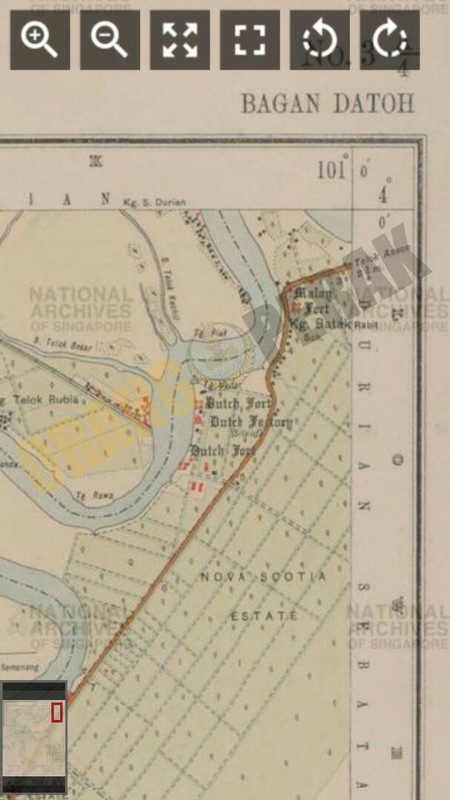
Interestingly, it is also mentioned that the Dutch fort and warehouse complex at Pangkalan Halban, Tanjung Putus, was larger and had more facilities for trade compared to the Dutch Fort on Pulau Pangkor. As we already know, when Malacca was handed over to the British through the Kew Letters in 1795, Lord Camelford and Lieutenant Macalister, along with forces from the British Royal Navy, besieged Pangkalan Halban. Eventually, the Dutch officer at the Pangkalan Halban Fort, Christoffel Macalister, surrendered the fort and the plant to the British.
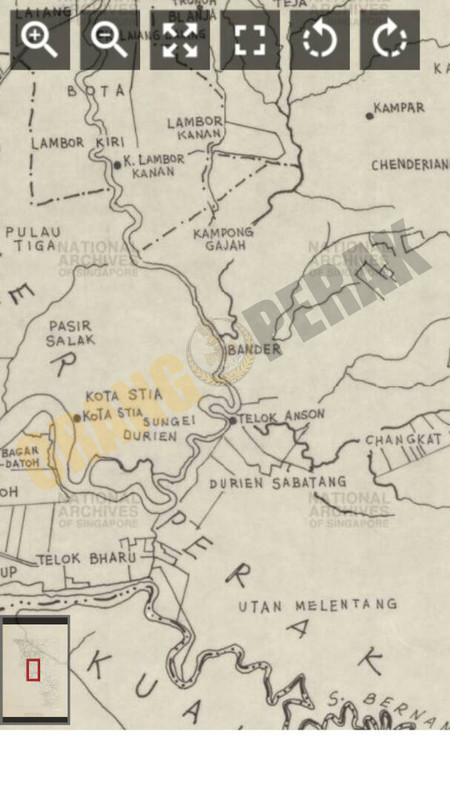
The first British Resident of Perak, none other than J.W.W. Birch,
also spent the night at this Dutch Fort in 1875 before he was assassinated in Pasir Salak by Malay warriors in the same year. Refer to
Details of the Assassination of JWW Birch
.
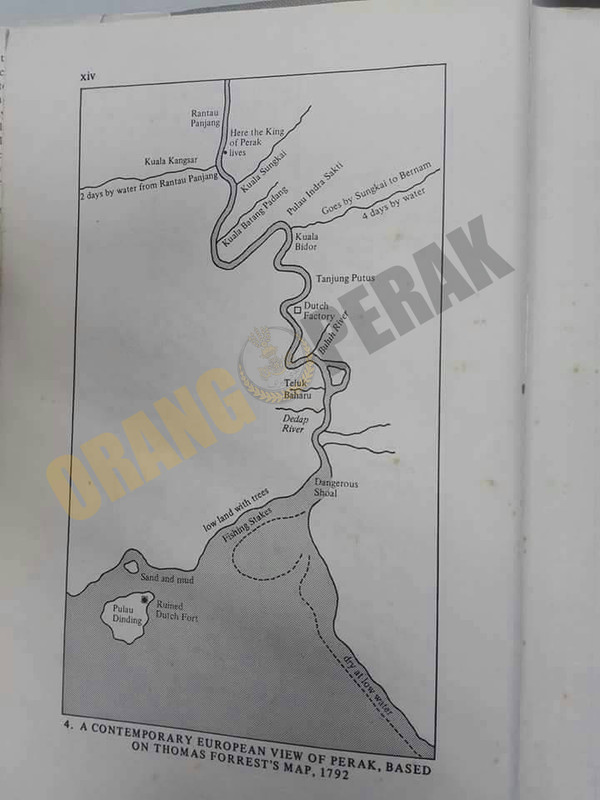
In 1880, the British Superintendent of Lower Perak ordered the fort to be demolished, and the iron and bricks from the fort were used for the construction of Telok Anson Town, which is well known today as the town of Teluk Intan.
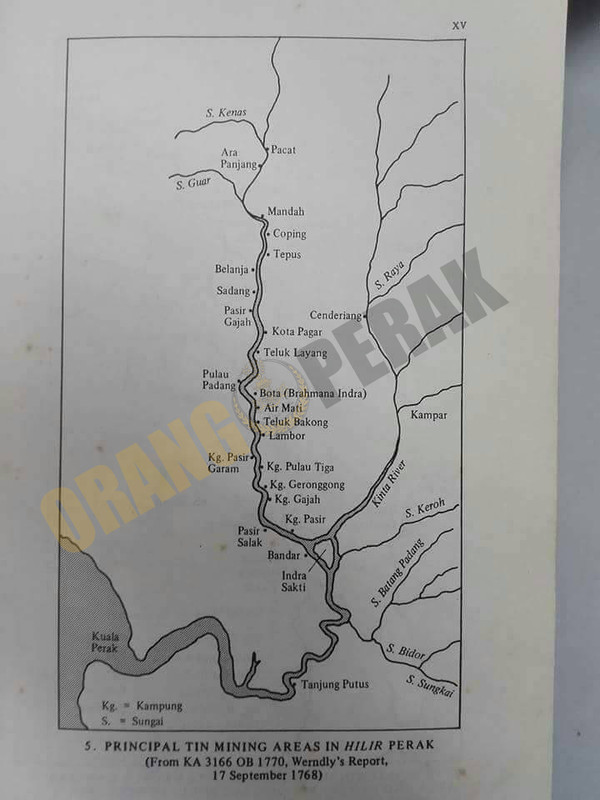
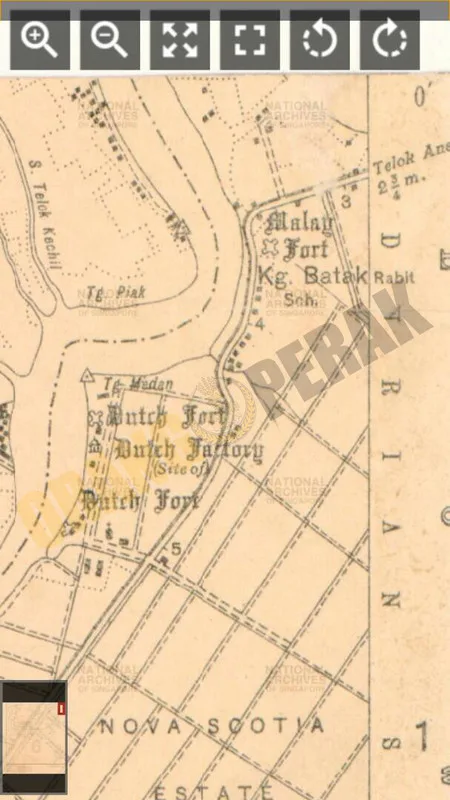
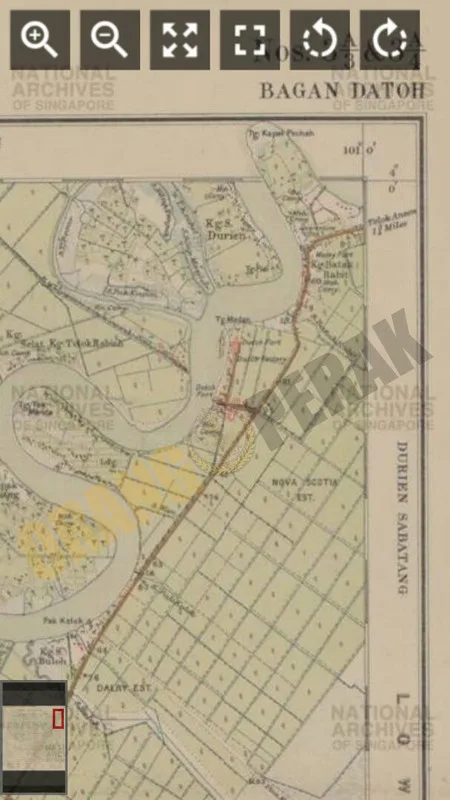
The location of Pangkalan Halban, Tanjung Putus, is situated on the banks of the Sungai Perak, near the Batu Lima bridge today. The location of the area was very strategic as it was at the tip of a cape, allowing the Dutch to control the movement of ships and boats passing through the Sungai Perak. Today, the area and the site are under the administration of the Nova Scotia plantation. Realizing the importance of this history before it is lost to the passage of time, our friend
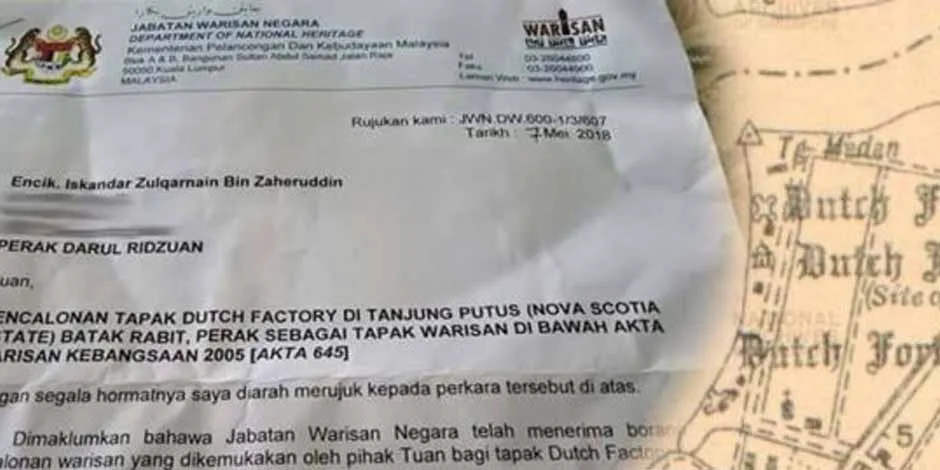
Iskandar Zulqarnain
has taken the first step by nominating this fort site as a historical heritage site to the National Heritage Department.
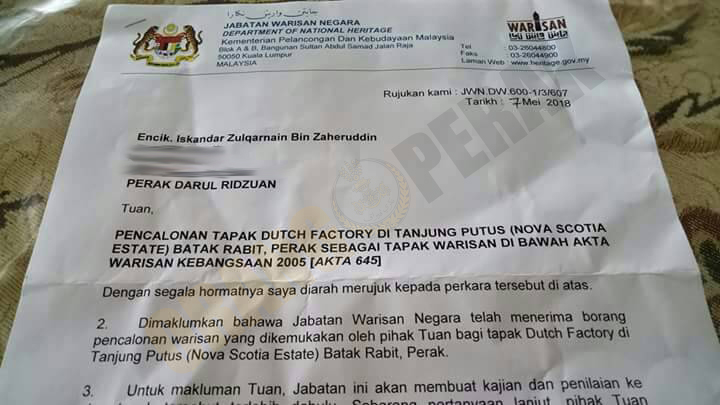
We hope that the National Heritage Department can conduct studies at this site, thereby restoring the glory of this fort to the historical map that has been completely forgotten by our society today. Sources and References:
- Misa Melayu by Raja Chulan
- National Archive of Singapore
- National Archive of Malaysia
- https://www.orangperak.com/kubu-belanda-yang-hilang-di-pangkalan-halban.html
- Journal of the Malaysian Branch of the Royal Asiatic Society