The Impact of the Larut Wars from 1861 to 1874
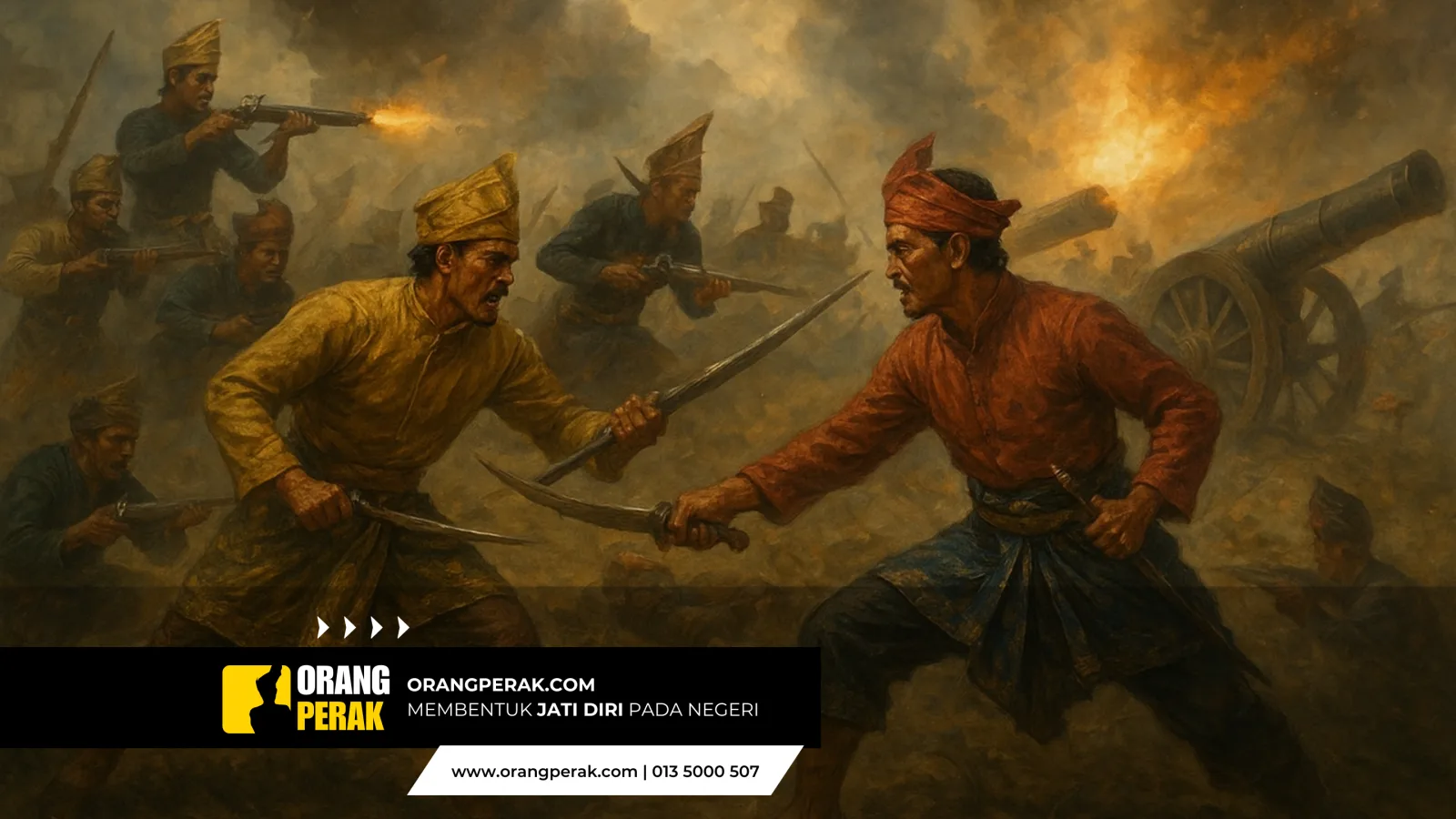
The Larut Wars were a series of four conflicts that broke out starting in July 1861 and ended following the signing of the Pangkor Treaty in 1874.
This armed conflict involved Chinese secret societies in a struggle to control tin mines in Taiping, which later became a proxy war between the feuding Perak nobles and royalty, namely Raja Abdullah and Ngah Ibrahim. Many are already familiar with this historical tale, but this time, orangperak.com, through deeper historical sources, wants to take readers to better understand what actually happened at that time, how it changed the political landscape in Tanah Melayu, and its impact to this day. The industrial revolution in Great Britain caused a significant increase in the demand for tin in Europe. The Malay Peninsula was the largest producer of tin in the world at that time. However, the British desire to control the tin supply from the Malay states was disrupted by disputes and chaos involving state dignitaries as well as pirate attacks in the Straits of Malacca. Before 1861, the supply of tin to the British from the Larut district proceeded well. Although
Orang Kaya Menteri Paduka Tuan Ngah Ibrahim
imposed taxes on tin production, the lucrative returns obtained by the British from the sale of tin ore covered the losses caused by those taxes.
The First Larut War 1861 - 1862
In 1861, the tin supply from Larut was disrupted due to the outbreak of the first Larut War. This conflict stemmed from a dispute over water access to mining areas. Water sources were essential for the tin mining process because the sluice box mining method was used. Dissatisfied, the Ghee Hin group in Klian Baru was attacked by the Hai San group from Klian Pauh. The disruption of the tin supply caused Chinese merchants in Penang, who had made large investments in the mining industry, to suffer losses, and they complained to the Governor of the Straits Settlements to take action to restore the situation. Due to pressure from merchants in Penang, the Governor of the Straits Settlements, Colonel William Orfeur Cavenagh, intervened and eventually forced Ngah Ibrahim to act to calm the situation. Ngah Ibrahim, on behalf of the Sultan of Perak, was forced to pay $17,447 in compensation to the Ghee Hin group. Peace arrived briefly in the Larut district.
The Second Larut War 1865
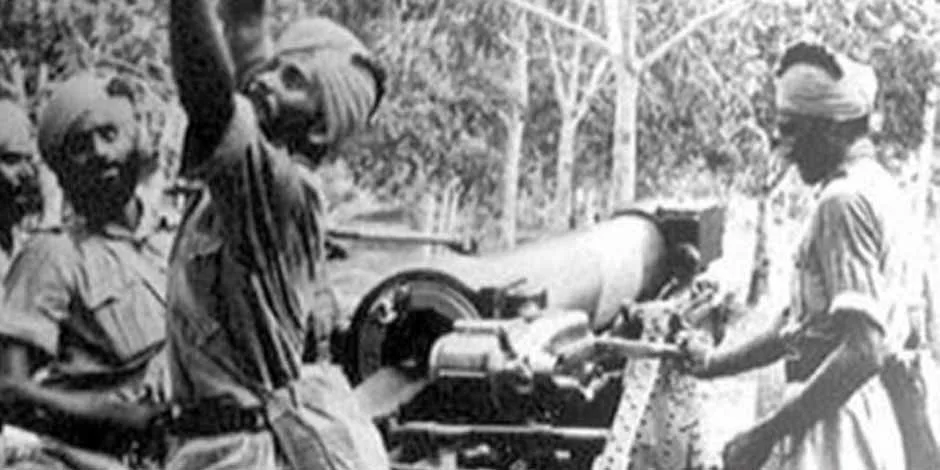
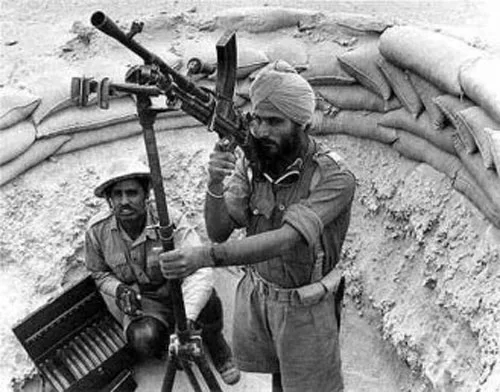
The peace that ensued did not last long. This was because both groups still held grudges against each other, and any minor issue would lead to a major dispute. Four years later, the second Larut War erupted, stemming from a fight during a gambling game involving members of the secret societies. The Hai San group captured 14 members of the Ghee Hin group as hostages, and eventually brutally murdered 13 of them. The last hostage managed to escape and informed his group of the incident. The Ghee Hin group retaliated and attacked the Hai San village. They burned buildings in the village and killed 40 residents. Once again, the tin supply was disrupted. This dispute was very severe and spread to Seberang Perai and Penang, and was also joined by other secret societies. Some time later, both sides, exhausted, finally agreed to hold discussions. The results of the investigation conducted by the British authorities found both the Ghee Hin and Hai San groups guilty of disturbing the peace in Penang, and each was fined $5,000, with several of their leaders banished. For a while, the tin supply continued. However, the British began to worry about the disputes that were disrupting their tin supply. The British concern led Ngah Ibrahim to take proactive action by hiring Captain Tristam Speedy as Secretary (Administrator) in Larut, specifically to modernize the administrative system in Larut and improve safety and security. For this purpose, Captain Tristam Speedy brought 110 Sikh Sepoy soldiers from Punjab to Perak to replace 40 Malay police, funded by Ngah Ibrahim.
The Third Larut War 1871 - 1872
The Third Larut War broke out after rumors spread that the leader of the Ghee Hin secret society had an affair with the wife of the cousin of the Hai San group leader, Chung Keng Quee. After their actions were exposed, the couple was captured, tortured, and then placed in a pig basket, thrown into an abandoned mine, and left to drown. Seeking revenge for the death of their leader, the Ghee Hin group, with 4,000 mercenaries brought in from mainland China via Penang, attacked the Hai San group, and for the first time, the Hai San group was successfully expelled from the Larut district. About 10,000 Hai San followers became refugees in Penang. A few months later, the Hai San group, assisted by Ngah Ibrahim, managed to reoccupy their tin mines in Matang and Larut. At this time, Raja Abdullah, who was claiming the throne of Perak and was also an enemy of Ngah Ibrahim, supported the side opposing Hai San and Ngah Ibrahim. This then turned the war from a Chinese mining group conflict into a civil war involving Perak Malay dignitaries. The death of Sultan Ali in 1871 was followed by a power struggle among the Malay dignitaries, namely Raja Ismail, Raja Yusof, and Raja Abdullah. Raja Abdullah's failure to attend the funeral of the late Sultan Ali angered the Perak dignitaries. As a result, a large group of state dignitaries, together with the Larut Minister Ngah Ibrahim, installed Raja Ismail as the Sultan of Perak. State dignitaries in southern Perak also gave their support to Raja Ismail and installed him as Sultan. This installation was opposed by Raja Abdullah, but Raja Abdullah had no base or support to hold power. To gain support and influence, Raja Abdullah gave his support to the Ghee Hin group with the hope that if they won their dispute with the Hai San group, Ngah Ibrahim's position would be eroded and Raja Abdullah's own position would be strengthened, allowing him to challenge the installation of Sultan Ismail as the Sultan of Perak. Raja Abdullah also tried to get support from a British merchant named W.H.M. Read, who was also his business partner. Raja Abdullah expressed his readiness to Read to accept a British advisor if he were installed as the Sultan of Perak. However, the Governor of the Straits Settlements did not entertain the request because he wanted to give Ngah Ibrahim a chance to resolve the Larut War problem without British assistance. Finally, the Sepoy soldiers under the leadership of Captain Tristam Speedy succeeded in helping Ngah Ibrahim restore Hai San's control over Klian Pauh. With that defeat, the Ghee Hin group was unable to assist Raja Abdullah in his efforts to be installed as Sultan.
The Fourth and Final Larut War 1873
The Fourth Larut War erupted in 1873, less than a year after the end of the Third Larut War. After the Hai San Group, with the help of Ngah Ibrahim, regained control of the mining area in Klian Pauh, the Ghee Hin Group, supported by Raja Abdullah, counter-attacked with the help of mercenaries and weapons brought from Singapore and China. Ngah Ibrahim's property was also destroyed, and Malay residents were killed and their property destroyed. The chaos spread to the Krian district, Pangkor Island, and Dinding. The Malay dignitaries who had previously sided with the feuding Chinese groups were finally shocked to see the chaos caused by the Chinese groups. The destruction brought by the 40,000 feuding Chinese caused great disaster to the state of Perak. Merchants in Penang once again saw their investments destroyed by the dispute and again asked the Governor of the Straits Settlements to take action to restore peace in Perak so that their businesses would no longer suffer losses. The Perak royalty involved in the struggle for the throne were unable to maintain peace in the area. The situation had become uncontrollable, and the chaos that occurred brought disaster to the Malays, Chinese, and British. In the book "The Golden Chersonese and The Way Thither" (Published 1892 G.P. Putnam's Sons), the Victorian-era traveler Isabella Lucy Bird (1831–1904) mentioned how Raja Muda Abdullah went to meet his friend in Singapore, Tan Kim Ching. Tan, together with English merchants in Singapore, drafted a letter to Governor Sir Andrew Clarke, which was signed by Raja Abdullah. The letter stated Raja Abdullah's desire to place Perak under British protection, and also to send "a person of sufficient authority to show (him) a good system of government." On September 26, 1872, Chung Keng Quee sent a petition signed by himself and 44 other Chinese leaders to request British intervention following an attack on 12,000 Chung Shan members by 2,000 Sen Ning members. The need to restore peace and order in Perak led the British to change their policy to intervene in the affairs of the Malay states, which led to the signing of the Pangkor Treaty. In 1874, the Governor of the Straits Settlements, Sir Andrew Clarke, held a meeting to establish a treaty on Pangkor Island, and finally, Sultan Abdullah was installed to occupy the throne of Perak without the presence of his rival, Sultan Ismail. The treaty documents were signed on January 20, 1874, aboard the HMS Pluto on Pangkor Island to resolve the Chinese dispute, settle the dispute regarding the claim to the Perak throne, and pave the way for the existence of a British Resident in Perak. Captain Speedy was then appointed as the administrator of Larut and assistant to the British Resident. Chung Keng Quee and Chin Ah Yam, the leaders of the Hai San and Ghee Hin secret societies, were both awarded the title of Kapitan Cina by the British, and the town of Larut and Klian Pauh were named Taiping (Taiping in Chinese means Everlasting Peace) to celebrate the peace treaty between them. Three days later, Chung Keng Quee was appointed as a member of the Peace Commission led by Captain S. Dunlop, Messrs. Frank Swettenham, and William A. Pickering. One of the objectives of this commission was to organize the settlements scattered around the Larut district. The commission also decided to divide the mining area in Klian Pauh (Taiping) to the Hai San group and Klian Bharu (Kamunting) to the Ghee Hin group.