The Battle of Slim River Between Japan and Britain in 1942
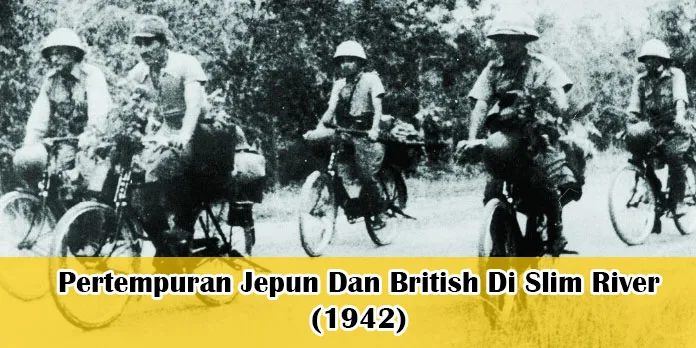
The Battle of Slim River took place during the Second World War in early January 1942. This event involved a battle between the Imperial Japanese Army and the British Indian Army in Trolak and Slim River, Perak.
The Japanese military forces invaded the northwest part of Malaya via southern Thailand on December 11, 1941, and eastern Malaya via Kota Bharu on December 7, 1941. From Thailand, the Japanese forces advanced rapidly toward the west coast of the peninsula and successfully broke through British attempts to block their advance. On Christmas Day 1941, the Japanese army had successfully captured the entire northwest of the peninsula. There were several moments where the British were able to build an effective defense system against the Japanese using tactics employed near Kampar, specifically at Sungai Dipang. During the four-day battle in Kampar, the fighting witnessed the effectiveness of artillery usage, which caused the Japanese army to suffer high casualty numbers. On January 2, 1941, British troops from the 11th Infantry Division were flanked from the south of the Kampar position by a larger Japanese force, which attempted to cut off the British division from the road leading to Singapore. This situation caused the British troops to retreat toward a new defensive position in Trolak, located five miles north of Slim River.
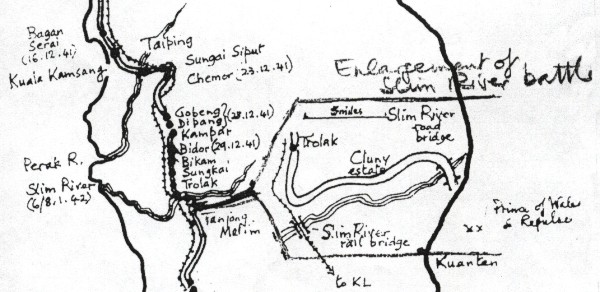
The British defense on the road to Trolak began with a four-mile corridor on a post 60 miles across thick, almost impenetrable jungle. After passing through a village, the road led through an open area at the Cluny rubber estate, located about five miles before reaching the Slim River railway bridge. The road then curved to the east and followed the upstream direction of the river for another six miles before crossing the Slim River via a bridge. The British commander, Acting Major-General Paris, had lost one of his three brigades during the battle in Kampar. The 5/16th Brigade, which joined after retreating through the 12th Brigade, had moved south toward the coast to defend the western part of the division and also to rest and reorganize. This left Major General Paris at the defensive position with Lt. Col. Ian Stewart, who led the 12th Indian Infantry Brigade, and Lt. Col. Ray Selby, who led the 28th Gurkha Brigade. Both brigades had suffered from reduced strength due to casualties sustained during previous battles at Jalan Gerik and Kampar.
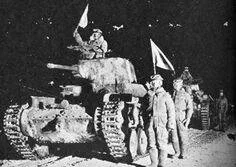
The battalion led by Stewart was positioned on the left and right of the road leading to the northern corridor of Trolak, where the Cluny Rubber Estate and Lt. Col. Stewart's headquarters were located. Forces from the 4/19th Hyderabad Regiment defended the forward position with anti-tank obstacles and roadblocks. The final defensive position was held by troops from the 5/2nd Punjab Regiment. The 2nd Argyll and Sutherland Highlanders were gathered in a defensive position but lacked any anti-tank obstacles or roadblocks. The Gurkha forces led by Selby were scattered along the road and railway line leading to the bridge, prepared with explosives. The attacking Japanese force consisted of an assault team led by Colonel Ando (mostly composed of the 42nd Japanese Infantry Regiment), which had taken over the regiment led by Okabe (41st Infantry Regiment) that had suffered high casualties during the ambush in Kampar. Both units were from the 5th Division of the Imperial Japanese Army. The assault force consisted of 17 Type 97 medium tanks and 3 Type 95 Ha-Go light tanks under the command of Major Toyosaku Shimada. Shimada had a plan that was unusual for the Second World War: a night attack using tanks as shock weapons. It was actually a dangerous proposal for tanks because visibility is very limited at night, which could endanger the tank crews themselves. On the afternoon of January 5, 1942, the 5/16th Brigade of the Japanese army retreated through the 12th Brigade's position. Shortly after, the force from the 42nd Regiment led by Colonel Ando arrived at the Hyderabad position and launched an initial attack on the British troops, but the attack was successfully repelled with 60 Japanese soldiers killed. Colonel Ando decided to hold his position and wait for tank reinforcements before launching the next attack. The following day, on January 6, the tank company led by Major Shimada arrived, and Shimada appealed to Colonel Ando to allow his force to attack the British directly rather than using the usual Japanese tactic of encircling the British position from the rear. At 3:30 AM on January 7, 1942, during heavy rain, Shimada's force began a mortar and artillery attack on the British position held by the 4/19th Hyderabad Regiment led by Major Alan Davidson Brown. Then, the Japanese tanks began to advance through the British defenses and received counter-attacks from the Hyderabad forces, who contacted artillery to conduct shelling, which eventually destroyed one Japanese tank. The Hyderabad forces were then cut off from artillery support and had no anti-tank weapons to defend themselves. The infantry force led by Ando from the 3rd Battalion and the 42nd Regiment successfully broke through the obstacles at the roadblock set up by the Hyderabad forces. Within 15 minutes, Japanese army engineers successfully destroyed the roadblock, and the Japanese troops then advanced, causing the Hyderabad forces to break into small groups. The Japanese troops then followed the tanks, which easily smashed through the remaining Hyderabad forces. The remaining Hyderabad troops then fled toward the jungle, and at 4:00 AM, the Japanese army headed toward the next British position.
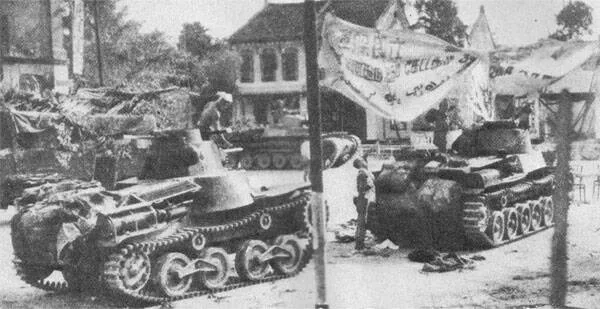
Only a few of the Hyderabad forces retreated to the 5/2nd Punjab Regiment led by Lt. Col. Cecil Deakin, and they warned the Punjab Regiment that tanks were heading toward their position. Shimada lost two tanks to landmines and anti-tank guns at the forward position held by the more experienced Punjabi soldiers. The Punjabi soldiers then successfully set another tank on fire using Molotov cocktails, which caused the Japanese tanks to get stuck on the narrow road. If the British artillery support had been successfully contacted at that time (the wires connecting to the artillery had been cut), Shimada's force would have been easily stopped as they were stuck and their positions were more exposed. This golden opportunity for the British army was lost, and the Japanese army successfully broke through the Punjabi forces, while the tank force found a path to penetrate, allowing them to bypass the damaged tanks. The Punjabi forces blocked the Japanese advance until 6:00 AM with fierce fighting. Deakin and several remaining Punjabi soldiers managed to escape across the Slim River, but most of the battalion members were hunted down and captured by the 42nd Japanese Regiment. By 6:30 AM, the Japanese tanks approached the 2nd Battalion, Argyll and Sutherland Highlanders, who were under the command of Lt. Col. Lindsay Robertson. The 2nd Argylls were stationed around the village of Trolak and protected the 12th Brigade headquarters. This force was a very experienced British military unit and was considered the best jungle warfare unit for the British in Malaya. The Argylls were in a defensive position but lacked anti-tank defenses and landmines. They only had warnings about the rapid Japanese advance from panicked Indian sepoys from the Hyderabad force. Despite the warning, one of the four Japanese tanks was mistaken for a Punjabi Bren Carrier, and the tank moved through the Argylls' position, splitting the battalion. All four tanks then headed toward the railway bridge. With the arrival of the main Japanese force led by Shimada and the infantry led by Ando shortly thereafter, the Argylls were completely broken, and their route from the road was cut off. The Argylls were reduced to many small groups, but they fought fiercely and managed to stall the Japanese advance longer than the two previous British battalions, holding out until 7:30 AM. The forces east of the road (Companies C and B) under Col. Robertson fought toward the rubber estate and tried to attack the Japanese advance from the rear by moving south through the jungle and splitting into small groups. Six weeks later, some of these soldiers were still in the jungle. The company under the command of Lt. Donald Napier, which was west of the road, managed to break the Japanese encirclement and cross the river before blowing up the railway bridge. Company D, which was north of Napier's company, suffered the same fate as the other Argyll forces, scattering into the jungle and trying to reach the lines. Most of the soldiers in Company D were captured before they could reach the river. Only 94 members of the Argylls attended the "roll call" on January 8. After successfully controlling the area around Trolak village, this was when the Japanese army began to show their cruelty in the rubber plantations around Trolak. In this area, there were several wounded members of the Argyll and Hyderabad forces. Second Lieutenant Ian Primrose reported that after he regained consciousness after fainting during the battle, he found the Japanese army starting to divide the wounded members into groups that could walk and groups that could not. Primrose decided that he could still walk, and he was very lucky because, after that, the Japanese army began shooting and stabbing the members who could not walk. Then, the survivors were ordered to dig graves to bury those who had fallen and were then told to carry the wounded Japanese soldiers.
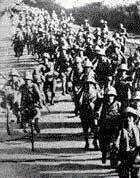
Before reaching the 28th Gurkha Brigade position, the Japanese tanks under Shimada's command saw a very good opportunity because, at that time, a Punjabi force of 146 members, including officers led by Lt. Col. Cyril Stokes, was marching in formation toward Trolak. The Punjabi force was heading toward Stewart's brigade to assist them in defending the position against the Japanese. The lead tank, commanded by Lt. Sadanobu Watanabe, rushed directly toward the Punjabi force and then fired machine guns directly at the line of Punjabi soldiers. Lt. Col. Stokes died instantly from the attack, and the Punjabi battalion suffered very high casualties. By 8:00 AM, the Japanese tanks were at the main British headquarters area. The 28th British Brigade was completely unaware of the fate that had befallen Stewart's brigade, causing them to be unprepared and easy victims for the Japanese army, which then destroyed them quickly. Although the British army suffered a severe defeat and many were killed, some members managed to cross the railway bridge before the main Japanese force took control of the position. Like the fate that befell the Punjabi force, the last battalion in Selby's brigade, the 2/1st Gurkha battalion led by Lt. Col. Jack Oswald Fulton, was marching on the road before the Japanese tanks reached them. However, this time they were marching away from the Japanese advance, and then the Japanese tanks arrived from behind them. The casualty count this time was much higher than the casualties suffered by the Punjabi force. Only one officer and twenty-seven members attended the "roll call" the next day. Lt. Col. Fulton, who was wounded in the stomach, later became a prisoner of war and died in captivity two months later. The Japanese tanks, which had now successfully broken through both British brigades, moved toward the rear of the 11th British Indian Division's position and then headed toward two bridges. They then left the railway bridge to Shimada's force and the main Japanese army; Lt. Watanabe then headed toward a more important bridge six miles ahead. In this attack, the Japanese tanks smashed through artillery, medical, and other support units located in front of the bridge. Two British officers were killed while driving when the Japanese tanks arrived in the rapid attack. Upon reaching the bridge at 8:30 AM, Watanabe's tank group found that the bridge was defended by 40mm Bofors anti-aircraft guns from the Singapore and Hong Kong Artillery Regiment. Although two guns were successfully lowered quickly to fire at the Japanese tanks, the anti-aircraft shells could not damage the tank armor, and the gun crews then fled. Then, Watanabe himself cut the wires to the explosives placed on the bridge using his own sword. The situation at that time was still early in the morning, and the Japanese attack successfully threw the entire 11th British Indian Division into chaos, and the surviving British troops tried to save themselves by crossing the Slim River. In the last 25 kilometers (16 miles), the Japanese army, which now controlled the bridge, sent 3 tanks under the command of Toichero Sato to explore the area across the river. Sato's force moved 4 km (3 miles) before encountering a British artillery defensive position defended by two 4.5-inch Howitzers from the 155th Field Artillery Regiment. Sato's tanks then began firing at the first gun, causing it to turn and block the road. The crew of the second gun managed to lower the barrel and fire at the Japanese tanks. The tank commanded by Sato was hit and destroyed, causing Sato to be killed. Two other Japanese tanks then retreated toward the bridge.
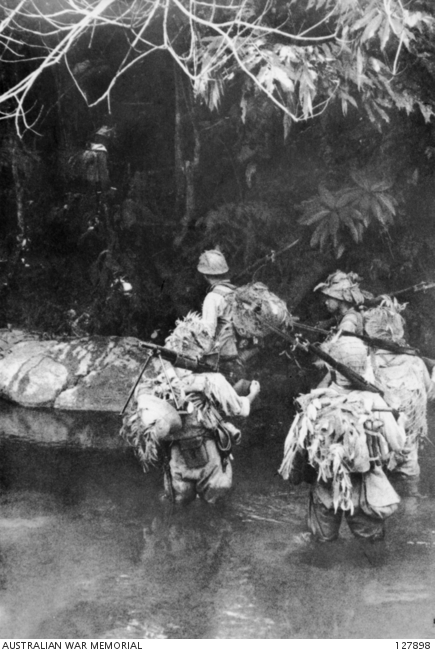
The 11th British Indian Division suffered very high casualties in the battle, although some members managed to save themselves and join the defense of Singapore. Many members of the division were still in the jungle after the British surrendered to the Japanese. Many of the survivors were captured by the Japanese army, and there were a few, such as Lt. Colonel Lindsay Robertson and his men from the Argylls, who tried to avoid capture but could not run far from the rapid Japanese advance. Robertson was killed on January 20, 1942. There were members of the Argylls who were still in hiding in August 1945. A Gurkha NCO, Naik Nakam Gurung, was found during the Malayan Emergency in October 1949, and he had been living in the jungle since 1942. Stewart's 12th Brigade could only gather no more than 430 members, including officers, with 94 members, including officers, from the Argylls. Selby's brigade fared slightly better, with 750 still present at the "roll call" the next day. Overall, the 11th Division was estimated to have lost nearly 3,200 members and a large amount of other war equipment. The Japanese army successfully attacked through the division along 19 miles and captured two brigades with minimal cost to themselves before lunchtime.
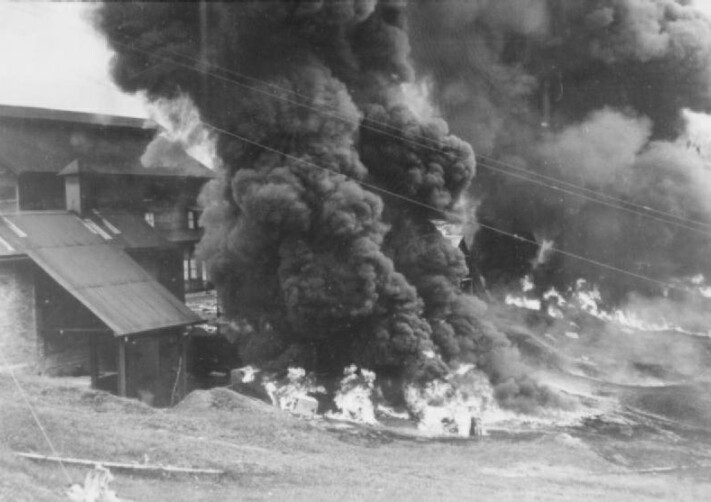
General Wavell, after meeting with the survivors of the battle, was shocked by their condition and ordered that the 11th British Indian Division not be placed on the front lines. This British defeat allowed the Japanese army to capture Kuala Lumpur without resistance. General Wavell then ordered Percival's forces to retreat to the south and surrender central Malaya without a fight. He also gave the 8th Australian Division a chance to prove they could face the Japanese army. This severe defeat caused Lieutenant-General Percival to change his defensive tactics and order an immediate retreat to southern Malaya, where an ambush would be carried out at the Gemensah Bridge by the Australian Army.