The 2006 Reburial of Ngah Ibrahim and Laksamana Mohamad Amin
The 2006 Reburial of Ngah Ibrahim and Laksamana Mohamad Amin
On September 9, 2006, national history witnessed the return of two great Perak figures, Orang Kaya Menteri Paduka Tuan Ngah Ibrahim bin Long Jaafar and Laksamana Mohamad Amin Alang Duakap, after their remains had rested in foreign soil for over a century.
The reburial ceremony for these two warriors holds great significance in re-evaluating their contributions and sacrifices in resisting British colonialism in Malaya.
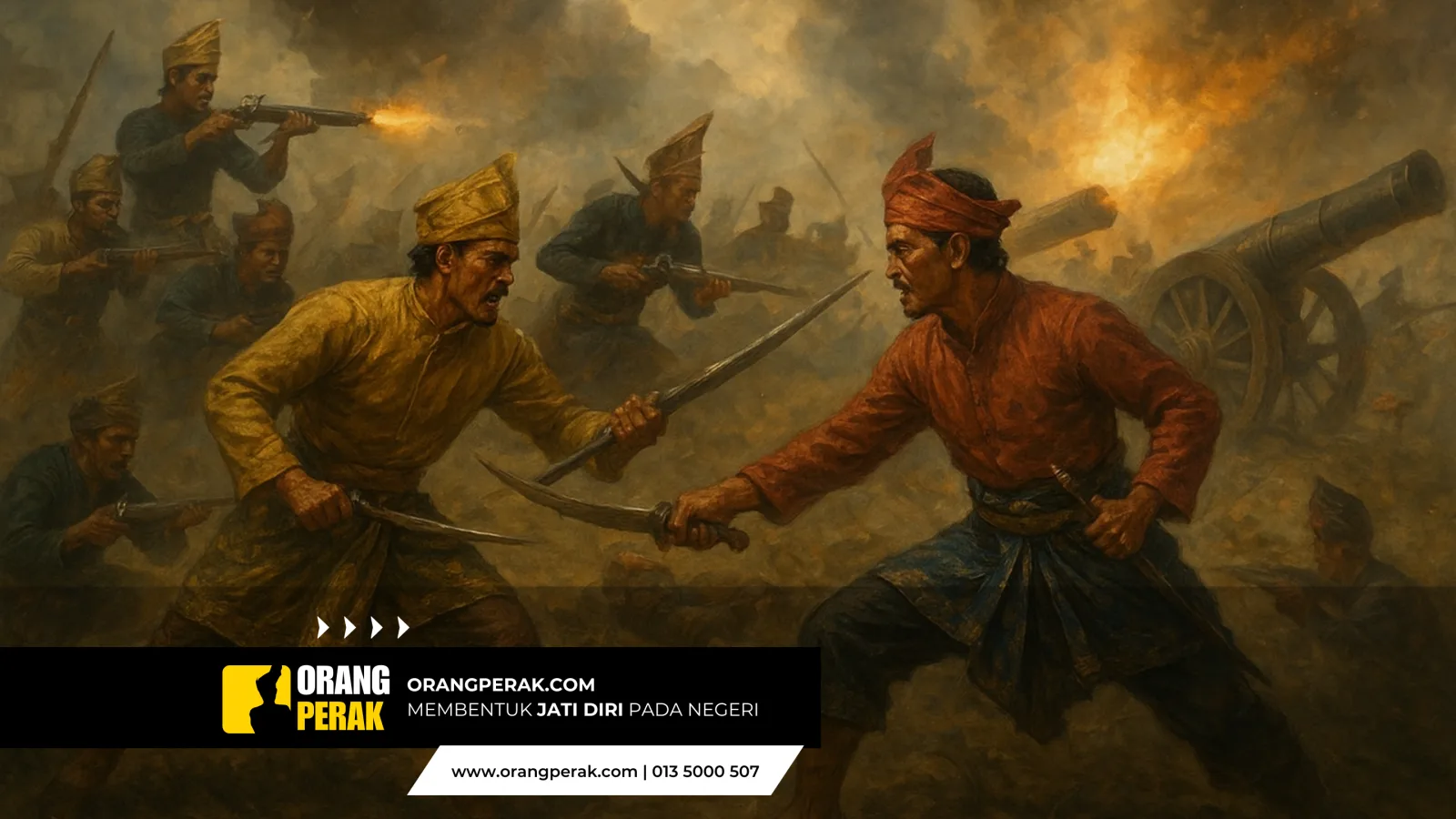
On November 2, 1875, James Wheeler Woodford Birch, the first British Resident in Perak, was assassinated in Pasir Salak, an event that marked the peak of tensions between British officials and local nobility and dignitaries.
This assassination triggered military and legal actions that led to the Perak War (1875–1876), the trial of those involved, and severe punishments including hanging and exile for several figures. This foundational event became the ongoing justification for colonial oversight over the state of Perak.
Following investigations and trials, key figures such as Dato’ Maharajalela, Pandak Endut, and Sepuntum were sentenced to death (hanged) on January 21, 1877. Meanwhile, Sultan Abdullah Muhammad Shah II, Ngah Ibrahim, Laksamana Mohammad Amin, and several others were sentenced to exile.
They were sent to the Seychelles in 1877 as a measure to weaken local leadership, which was perceived as a threat to British control.
After their period of exile in the Seychelles, some figures were moved to Sarawak and later to Singapore, where some spent the remainder of their lives. This raises an important issue for historians, as there are inconsistencies in sources regarding the date of Ngah Ibrahim's death.
Some general references and museum narratives state he died and was buried in Singapore in 1887, while other sources (including some family records and popular writings) record the date as February 4, 1895. For Laksamana Mohammad Amin, more traceable sources consistently state he died in Singapore around 1908 and was originally buried in a cemetery that later became the subject of relocation/rediscovery.
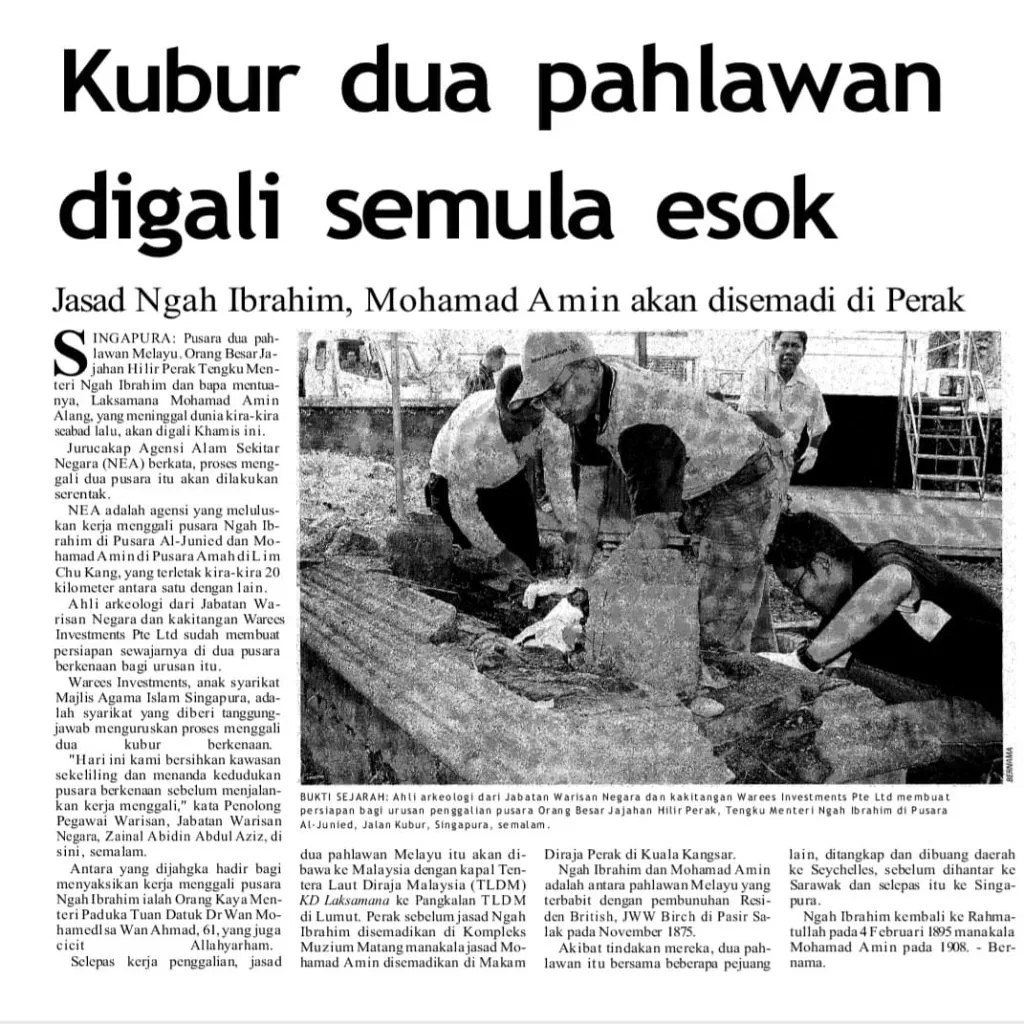
Rediscovery of Burial Sites and Excavation Procedures (2004–2006)
According to Singaporean archival documentation and press coverage, in the early 2000s, urban development and documentation projects around the Jalan Kubor / Kampong Glam area led to studies of old cemeteries.
Archaeological research and tomb documentation identified the burial locations of Perak figures, including Ngah Ibrahim in the area associated with Al-Junied at Jalan Kubor, and Laksamana Mohammad Amin, who was originally at Pusara Aman, Choa Chu Kang, before being relocated.
The excavation and exhumation process for repatriation was carried out with the consent of Singaporean authorities (including the National Environment Agency) and in cooperation with local Islamic agencies (Majlis Ugama Islam Singapura/Warees) and a Malaysian archaeological team. Press reports from September 7–9, 2006, covered the excavation activities and preparations for the transfer.
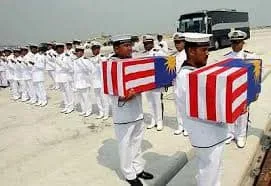
Return to Perak: 2006
After more than a century, efforts to bring home the remains of these two warriors finally succeeded in 2006.
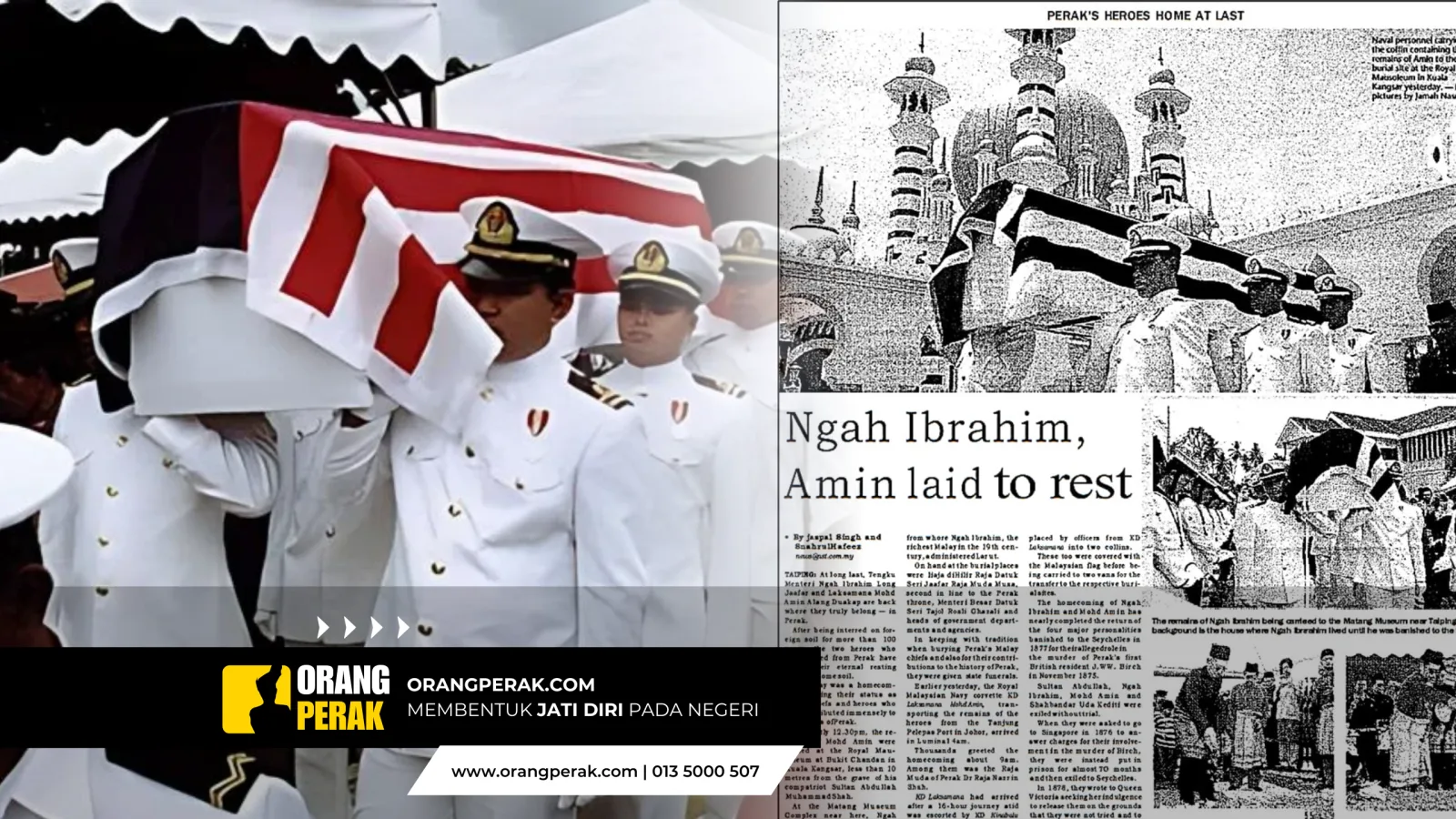
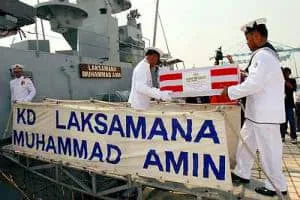
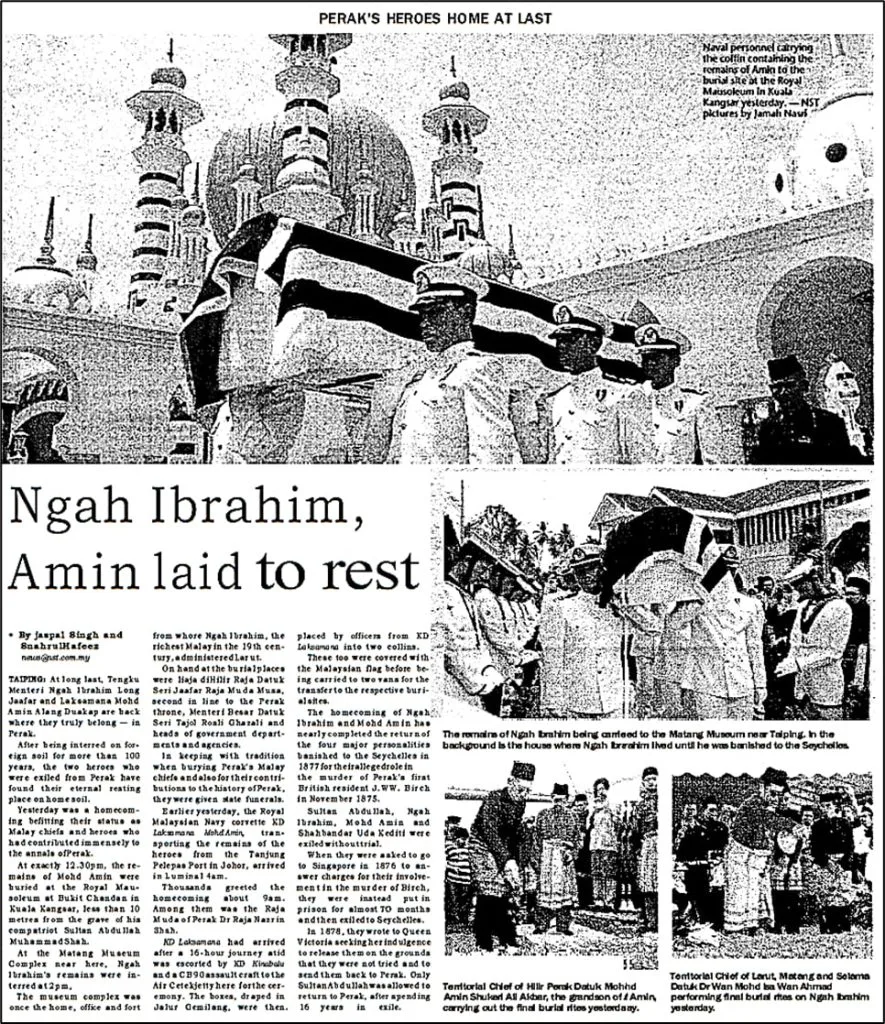
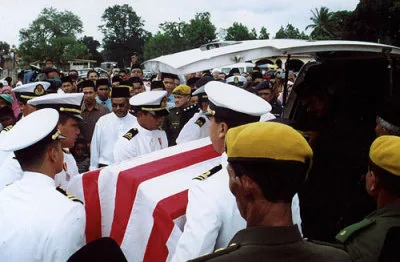
Exhumation work was carried out in Singapore before their remains were placed in two separate coffins. Both were given high honors as the coffins were draped with the Jalur the Jalur Gemilang and the Perak state flag, and brought home on a Royal Malaysian Navy (TLDM) ship, the KD Laksamana Mohamad Amin.
This full ceremonial event was carried out through the cooperation of various parties, including the Ministry of Culture, Arts and Heritage, the Department of Museums and Antiquities, the National Heritage Department, historical bodies, and the Perak State Government.
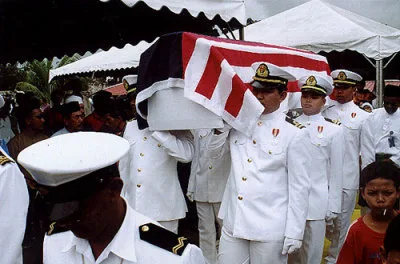
Reburial Ceremony
On September 9, 2006, the reburial ceremony took place in two different locations:
- Laksamana Mohamad Amin was buried at the Bukit Chandan Royal Mausoleum, Kuala Kangsar at 11:00 AM.
- Ngah Ibrahim was laid to rest at Kota Ngah Ibrahim, Matang, Taiping at 1:30 PM, at the historical complex that served as his administrative center in the 19th century.
This ceremony not only expressed national respect but also completed a long chapter of Perak's history that had been severed by colonialism.
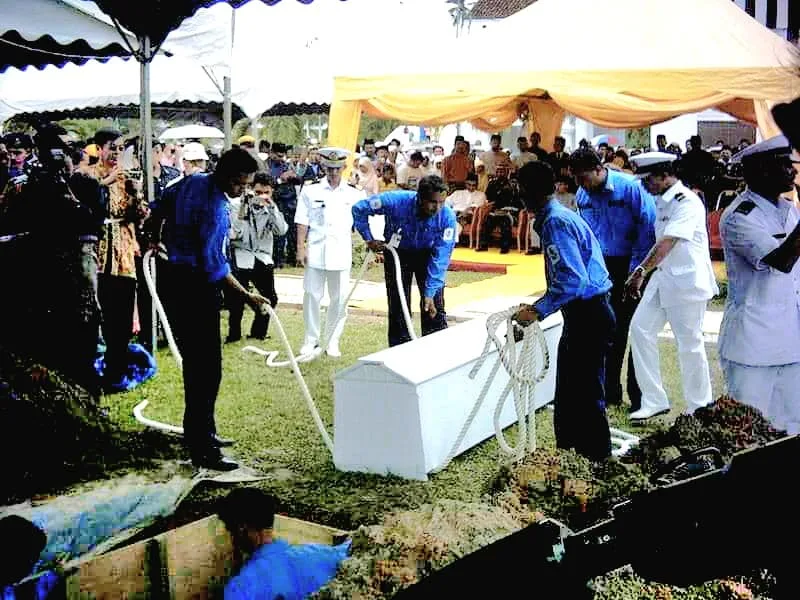
The reburial of Ngah Ibrahim and Laksamana Mohamad Amin in their homeland more than 100 years after their passing carries great symbolism. It is not merely the return of the remains of two Malay warriors, but also the revival of the memory of the struggle against colonial oppression.
This story serves as a reminder that even though they were exiled and died in foreign lands, the spirit of their struggle eventually returned to the soil they defended. The return of their remains is a form of historical justice, placing them back into the embrace of Perak, the state they once defended with blood, dignity, and sacrifice.