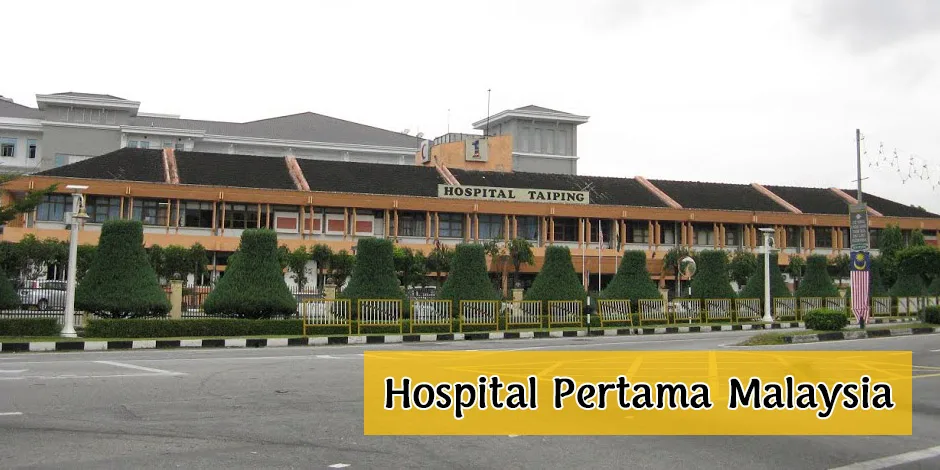
Taiping Hospital is the First Hospital in Malaysia
Taiping Hospital, formerly known as Yong Wah Hospital, is the oldest existing hospital in Malaysia. Located on Jalan Taming Sari (Main Road) near the commercial town center, it is one of the largest hospitals in Malaysia and the largest in the state of Perak. The hospital's location is highly strategic, situated 80 km from Ipoh and 85 km from Penang, allowing it to serve the population in the northern states of Malaysia.
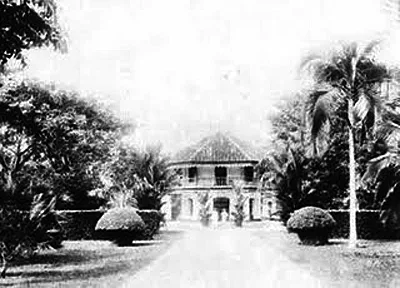
Wah Yong Hospital or the Chinese Pauper Hospital was the first hospital established in the Malay States. It was founded in 1880 to treat Chinese coolies and tin miners who were frequently ill and suffering from various diseases such as diarrhea, cholera, malaria, beriberi, dysentery, and lung diseases. Its establishment was developed in parallel with the significant economic growth in the town. The hospital received financial support from Chinese merchants, while the State Government assisted with medical equipment, medicine, and nursing staff. Out of consideration for the welfare of the poor, the hospital only charged a minimum fee of 50 cents per year for poor coolies. The hospital's policy ran smoothly for the first six months since its inception, but difficulties in collecting fees later arose. The reason was that most coolies failed to pay their medical fees due to their low income.

Consequently, at the end of 1880, the State Government took full responsibility for Yong Wah Hospital, relocated it to its current site on Jalan Utama, and renamed it Taiping General Hospital. The cost of maintaining the hospital was very high, so Sir Hugh Low, the British Resident of Perak, imposed a poll tax of one dollar on every person living in Taiping, including the district, to be paid annually, and health coupons were given to those who paid the fee. The payments were used as contributions toward the expenses of maintaining the hospital, with no profit derived from the collection. All food, medicine, and attendance were provided without any charge, but the Chinese community strongly protested this tax, as it had never been imposed in other Malay states, and the system was subsequently abolished in 1884.
Taiping Hospital Facts:
- 1880 – The first hospital, known as Yong Wah Hospital in the Federation of Malaya, was established in April 1880 in Taiping, Perak. In December of the same year, it was taken over by the State Government, renamed Taiping Public Hospital, and moved to Jalan Utama.
- 1881 – The hospital underwent major renovations and extensions.
- 1884 – Sir Hugh Low imposed a one-dollar poll tax for hospital services. This system was abolished in the same year.
- 1890 – A Sanitary Board was established to control and monitor the health and hygiene of the town.
- 1897 – On February 3, the first Roentgen ray apparatus was installed in Taiping. Berita Harian reported that this might be the first country in the Far East to use Roentgen rays. On February 14, the first X-ray demonstration was conducted at this hospital.
- 1906 – Medical staff extended services to outpatients, especially in rural areas of Perak.
- 1917 – On June 12, Taiping farmers complained about the 'lack of X-ray facilities in the area'.
- 2007 – In 2007, the hospital was separated into two main units. The outpatient unit was moved to a new building on Jalan Tupai, while the old building serves as the emergency unit and remains at the original location.
The institution consisted of many buildings housing wards and other facilities, carefully arranged according to a plan and planted with coconut trees, beautiful trees, and flowering plants, which were soothing to the eyes. The purpose of the hospital was to contain the spread of diseases among the coolies, reduce the mortality rate, and increase the growth rate; the purpose of its establishment eventually yielded positive results. The number of deaths and illnesses gradually declined in the district, and more surprisingly, the birth rate increased significantly, and Taiping continued to succeed in economic growth. The institution was under the administration of Dr. Hamilton Wright, the first Health Inspector, where the hospital could accommodate 900 patients at one time, according to Sir Cecil Clementi's report during his visit to the state. In 1881, the hospital underwent major renovations and extensions. The total cost of the renovation was estimated at about 2,100 Straits dollars. By 1884, additional wards and a dispensary were added; the hospital's drainage system was also improved at a total cost of 9,379 Straits dollars. Also in the same year, a total of 3,068 cases were handled by the hospital (a total of about 13,000 cases in Perak), of which 2,501 cases involved beriberi. The main cause of beriberi was due to malnutrition and improper sanitation practiced by the coolies. Taiping also housed a lunatic asylum (within the hospital grounds) and a prison hospital (within the prison) under the supervision of Mr. Thomas Prendergast. In 1906, Government medical staff extended services to outpatients, especially in rural areas. The mortality percentage for cases treated was 18.08% in Taiping, compared to 13% in other hospitals in Perak.
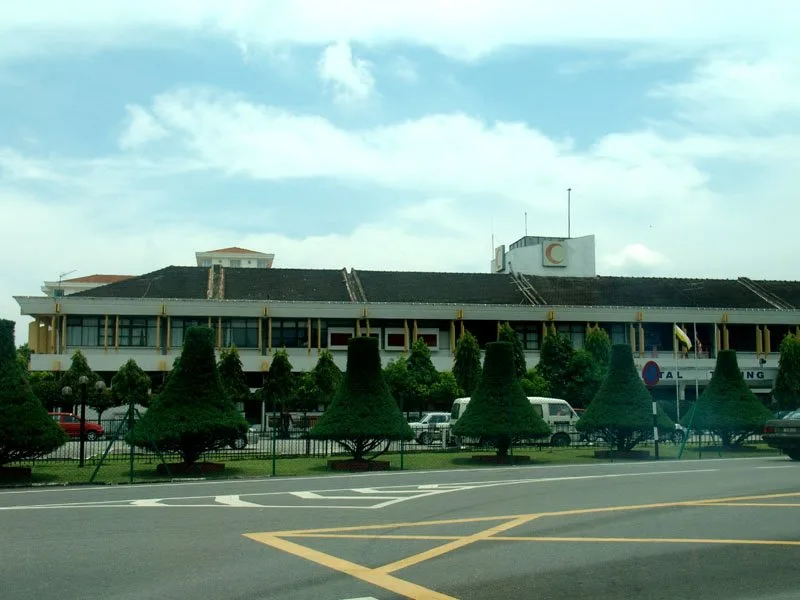
The number of patients treated within one year reached thousands, and the total amount of money spent by the Government on the Medical Department, including all doctors and assistants, nurses, dispensers, dressers, attendants, cooks, gardeners, gatekeepers, and others, amounted to a very large sum. It was reported that many government allocations flowed into the hospital. Therefore, in 1890, a Sanitary Board was established to control and monitor the health and hygiene of the town. On February 3, 1896, the hospital was installed with X-Ray equipment, marking it as the first hospital in Malaya and even the Far East to possess such facilities. Mr. Leonard Wray presided over the opening ceremony, and the first patient to use the X-Ray was a pomfret fish. In 1906, the Medical Department reported that 318,000 Straits dollars had been spent in Perak for development in every sector. A year later, the population in Taiping and elsewhere in Perak had gradually increased as a result of better healthcare, which was taken seriously by the government. Taiping became a pioneer for a health institution that was later adopted by other towns in Malaya, and eventually, almost every town in Malaya had a hospital.