Ngah Jabor, the 7th Dato Panglima Kinta in the 1875 Perak War
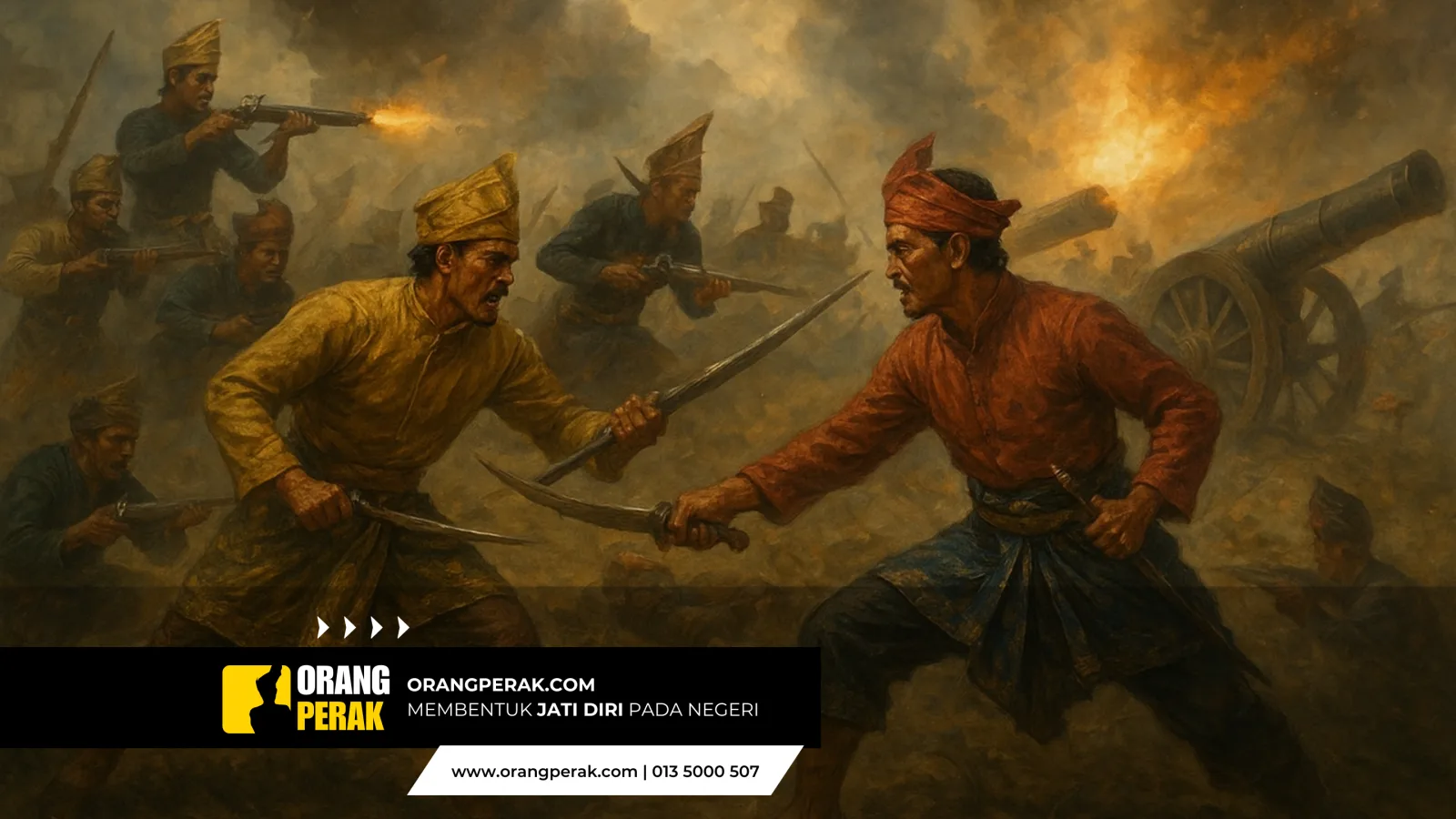
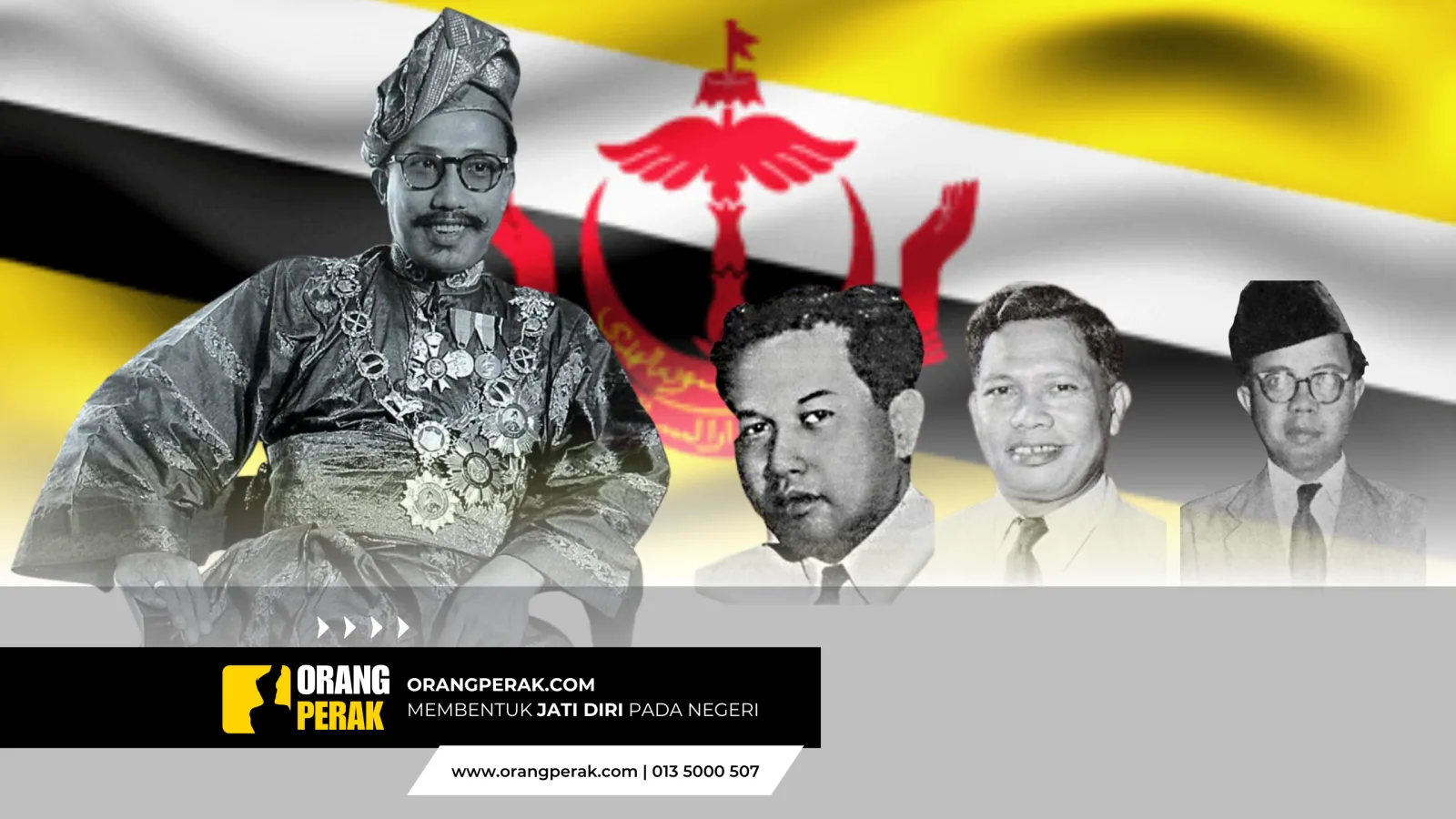
On July 20, 1875, the first British Resident of Perak, James Wheeler Woodford (J.W.W.) Birch, forced Sultan Abdullah (the 26th Sultan of Perak) to sign an agreement surrendering tax collection rights, threatening that if he refused, the British would no longer recognize him as the Sultan of Perak. Sultan Abdullah was angered and firmly refused to submit to these demands. Ultimately, J.W.W. Birch and the British decided to proceed with the takeover of tax collection and revoked their recognition of Sultan Abdullah as the Sultan of Perak. This triggered the assassination of J.W.W. Birch on November 2, 1875, which received support from Perak Malay chiefs, including Menteri Ngah Ibrahim, the 7th Dato Panglima Kinta Toh Ngah Abdul Jaafar (Ngah Jabor or Toh Gemok), Laksamana Mohamad Amin, and Shahbandar Uda Maamor. As a result of this assassination, the British attacked Perak, sparking the Perak War beginning on November 2, 1875. The British took drastic measures by mobilizing their troops to capture Perak with the help of the Mandailing people who had fled to Perak after being involved in wars in Pahang and Klang. Pasir Salak was captured on November 15, 1875. During the battle, British troops, who were then of Punjabi descent, burned houses along the river in Kampung Gajah and Pasir Salak. Because Sultan Ismail (the 25th Sultan of Perak) provided protection to the 6th Dato Maharaja Lela Pandak Lam, who was a chief of Pasir Salak, Sultan Ismail's position was also attacked. The British, with the help of Mandailing individuals such as Raja Uteh, Raja Asal, and Raja Mahmud, attacked Sultan Ismail's position in Papan using rocket launchers, but Sultan Ismail had already managed to escape to Kampung Kepayang (Fair Park, Ipoh) with Dato Maharaja Lela Pandak Lam, Dato Sagor Ngah Kamdin, and his followers.
According to the views of P.L. Burns in the Perak Enquiry Papers, it is stated that Toh Senongsa Seri Nara Wangsa Itam Dewi, Dato Panglima Kinta Ngah Jabor, Dato Sagor Ngah Kamdin, and Dato Maharaja Lela Pandak Lam were strong supporters of Sultan Ismail as the Sultan of Perak, while Laksamana Mohamad Amin was hostile toward Sultan Ismail; however, Laksamana Mohamad Amin still expressed support for Sultan Ismail as the Sultan of Perak. Sultan Ismail brought with him the royal regalia of the Perak Sultanate and 20 elephants. He requested help from the residents of Kampung Kepayang for refuge and to join in resisting the British troops and the Mandailing people. Kampung Kepayang, which was then under the patronage of Dato Panglima Kinta Ngah Jabor and led by his elder brother Toh Senongsa Seri Nara Wangsa Itam Dewi, became a temporary hiding place for Sultan Ismail and his followers.
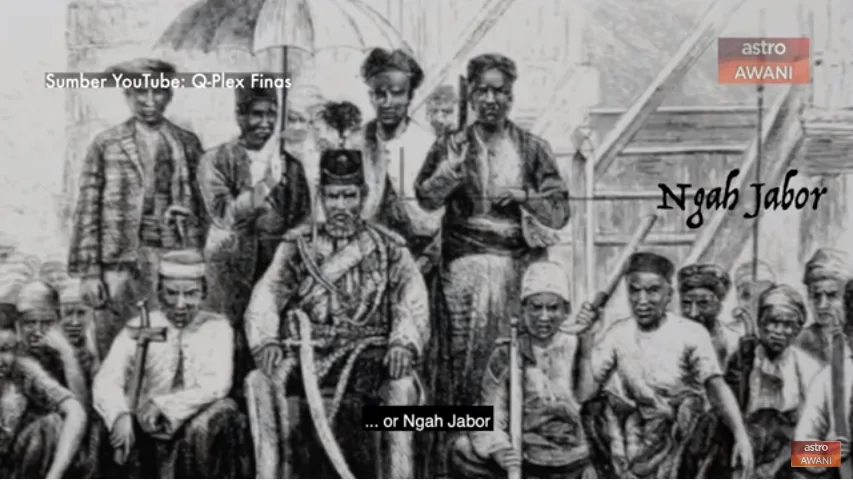
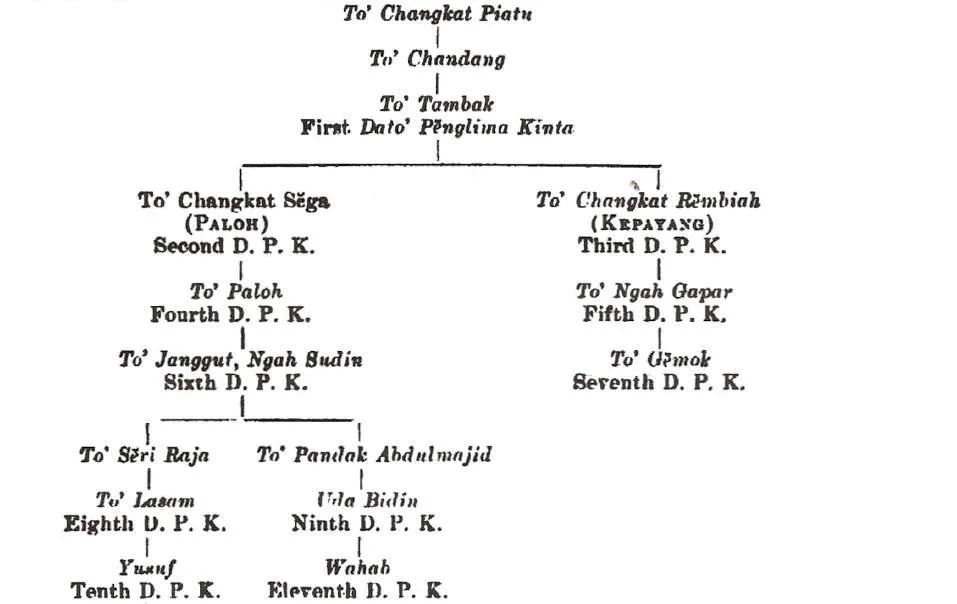
According to C.N. Parkinson, Dato Panglima Kinta Ngah Jabor was the elder brother of Dato Maharaja Lela Pandak Lam. They shared the same mother, Anjang Nih, but had different fathers. The father of Dato Panglima Kinta Ngah Jabor was the 5th Dato Panglima Kinta, Toh Ngah Abdul Ghaffar (Ngah Gapor), while the father of Dato Maharaja Lela Pandak Lam was the 5th Dato Maharaja Lela, Tok Maulud. After finding that the location of Kampung Kepayang was no longer safe from the pursuit of British troops and the Mandailing people, Sultan Ismail swore by planting his sword into the ground that he would return to rule the state of Perak one day. Then, he and his followers trekked through the wilderness to Chemor. They crossed the routes of Jalong, Ulu Piah, continued to Krunei, and entered Kedah. Sultan Ismail and his followers were eventually trapped by the Siamese in Pattani with the assistance of William Maxwell.

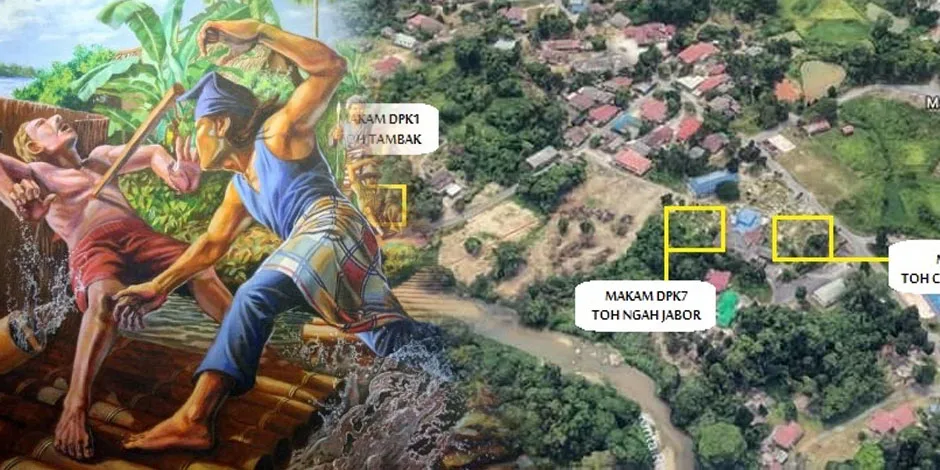
From March 3, 1875, to March 4, 1875, Seputum, Cik Gondah, and Ngah Ahmad were tried in Bandar Bharu. Seputum stated that Cik Gondah struck J.W.W. Birch with a sword, but it was Dato Panglima Kinta Ngah Jabor who initiated the assassination by stabbing J.W.W. Birch with a spear. According to Cik Gondah, Dato Panglima Kinta Ngah Jabor was responsible for obtaining aid and gunpowder from Sultan Ismail. Finally, they were found guilty by Judge Raja Idris (Sultan Idris), flanked by J.G. Davidson and Frank Swettenham. From December 14, 1876, to December 22, 1876, Dato Maharaja Lela Pandak Lam, Dato Sagor Ngah Kamdin, Dato Panglima Kinta Ngah Jabor, Pandak Indut, Kulup Ali, and Si Tuah were tried. All were sentenced to death by hanging except for Dato Panglima Kinta Ngah Jabor, Kulup Ali, and Si Tuah, who were sentenced to imprisonment in Singapore. Sultan Abdullah, Menteri Ngah Ibrahim, Laksamana Mohamad Amin, and Shahbandar Uda Maamor were exiled to the Seychelles, while Sultan Ismail, Toh Senongsa Seri Nara Wangsa Itam Dewi, and Panglima Perang Semaun were exiled to Skudai, Johor.
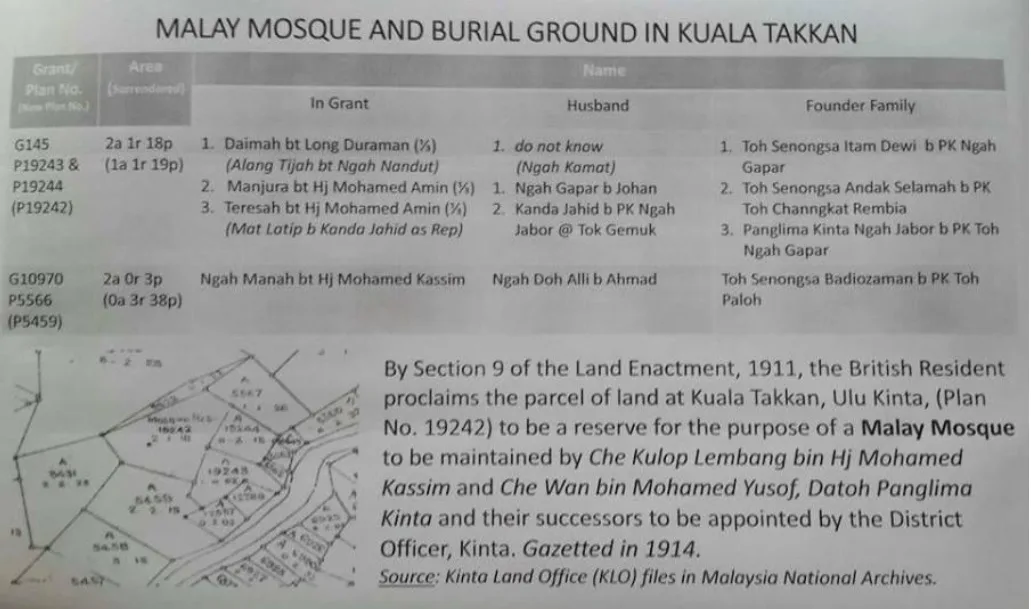
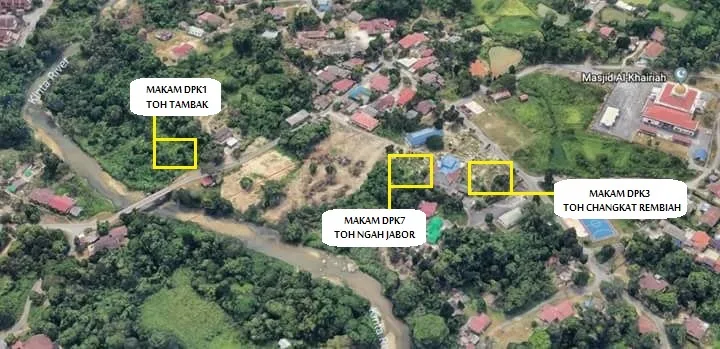
Dato Panglima Kinta Ngah Jabor was secretly released by Judge Raja Idris (Sultan Idris) after ten years of imprisonment in Singapore (1877 to 1887). He returned to Kampung Kepayang and changed his name to Toh Gemuk to avoid detection by the British. He breathed his last in Kampung Kepayang and was buried next to Masjid Al-Khairiah (Masjid Warisan), Kampung Kepayang, which is located between the tomb of his ancestor, the 1st Dato Panglima Kinta Toh Tambak bin Maharaja Kinta Toh Chandang, and the tomb of his grandfather, the 3rd Dato Panglima, Toh Changkat Rembiah bin Dato Panglima Kinta Pertama Toh Tambak. Dato Panglima Kinta Ngah Jabor and Laksamana Mohamad Amin were in-laws, as his son, Kanda Jahid, married the daughter of Laksamana Mohamad Amin named Ngah Teresah. According to Kinta Land Office documents at the National Archives of Malaysia, part of the waqf land in Kampung Kepayang, including Masjid Al-Khairiah (Masjid Warisan), Kampung Kepayang, is under the names of Ngah Teresah binti Laksamana Mohamad Amin and Puteh Manjura binti Laksamana Mohamad Amin.
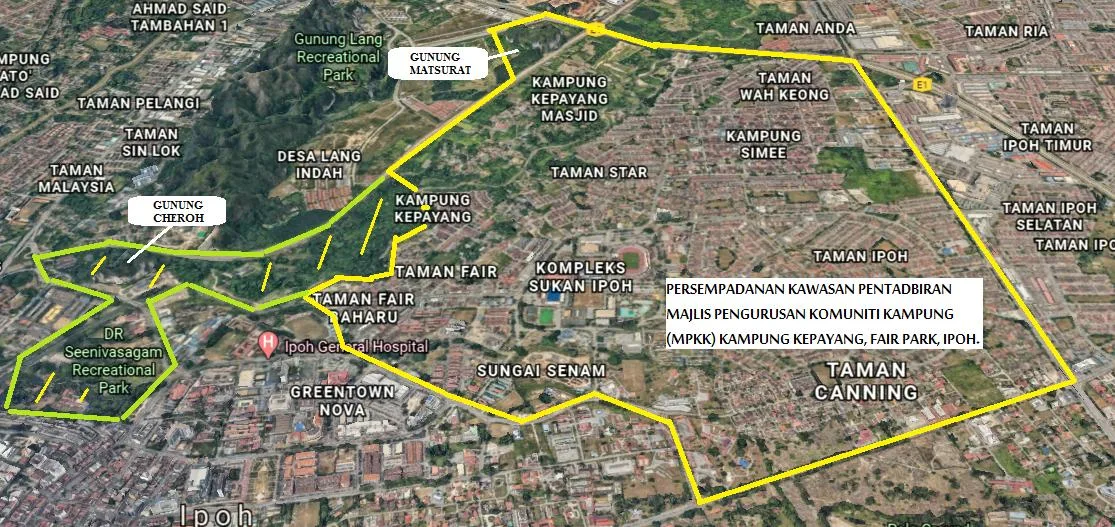
The impact of Dato Panglima Kinta Ngah Jabor's involvement in the assassination of J.W.W. Birch caused him and his descendants, known as the Panglima Kinta Pasak Kepayang lineage, to be blacklisted by the British and no longer permitted to hold the position of Dato Panglima Kinta. Traditionally, the position of Dato Panglima Kinta was held on a rotating basis between the descendants of the Dato Panglima Kinta Pasak Paloh and the descendants of the Dato Panglima Kinta Pasak Kepayang. After the 1875 Perak War, the rotation of the position ceased, and the position of Dato Panglima Kinta remained held by the descendants of the Dato Panglima Kinta Pasak Paloh, while the position of Toh Senongsa Seri Nara Wangsa (Kampung Kepayang) was abolished in the monarchical structure of the Perak Sultanate.
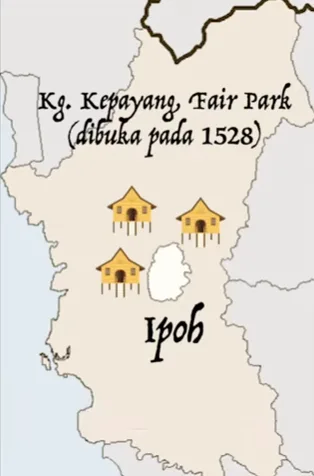
The involvement of the two main chiefs from Kampung Kepayang, namely the Orang Besar Lapan, Dato Panglima Kinta Ngah Jabor, and his elder brother, the Orang Besar Enam Belas, Toh Senongsa Seri Nara Wangsa Itam Dewi, in the assassination of J.W.W. Birch had a profound impact on Kampung Kepayang. The British, who were ruling the State of Perak at the time, seemed to try to erase Kampung Kepayang from the history of the Kinta District as a response to the assassination. Formerly, Kampung Kepayang was the Administrative Center for the Kinta District, established in 1528 by Tun Kelalang bin Tun Saban Balik, but it has now become a small, marginalized village, excluded from the development of the Kinta District.
References:
- "Genealogy of the Panglima Kinta Seri Amar Bangsa DiRaja and Toh Senongsa Seri Nara Wangsa", compiled by Fazil Shuhaimi Talib, published by the Kulop Kinta Family Association (PK3)
- "Titles and Ceremonial Traditions of the Royalty and Nobility of the State of Perak, Malaysia", written by Dr. Adib Vincent Tung Abdullah, published by Perak Academy
- "Papers on Malay Subjects", written by R.J. Wilkinson, published by The Federated Malay States Press
- "Get to Know Kampung Kepayang", directed by Mukriz Mahader, published by Astro AWANI
- "Pasir Salak, Center of the Movement Against the British in Perak", written by Abdullah Zakaria Ghazali, published by Yayasan Perak
- "Kinta Valley: Pioneering Malaysia's Modern Development", written by Salma Nasution Khoo and Abdur-Razzaq Lubis, published by Perak Academy
- "The Journals of J.W.W. Birch", written by P.L. Burns, published by Oxford University Press
- "Malaysian History: Discourse on National Sovereignty, Statehood, and Independence", written by Abdul Rahman Haji Ismail and Azmi Arifin, published by Universiti Sains Malaysia
- "Particulars on the Royal Family and Chiefs in Perak", National Archives of Malaysia, ANM 3003/0008160