Malaya's First Labour Day Celebrated in Ipoh
When it comes to Labour Day, it is safe to say that all Malaysians know it is a public holiday for all workers in the country. But do you know the history or origins of Labour Day? For our loyal readers at orangperak.com, the Labour Day celebrated in our country was originally called May Day. Many of our readers may not yet be aware of the history and origins of this May Day.
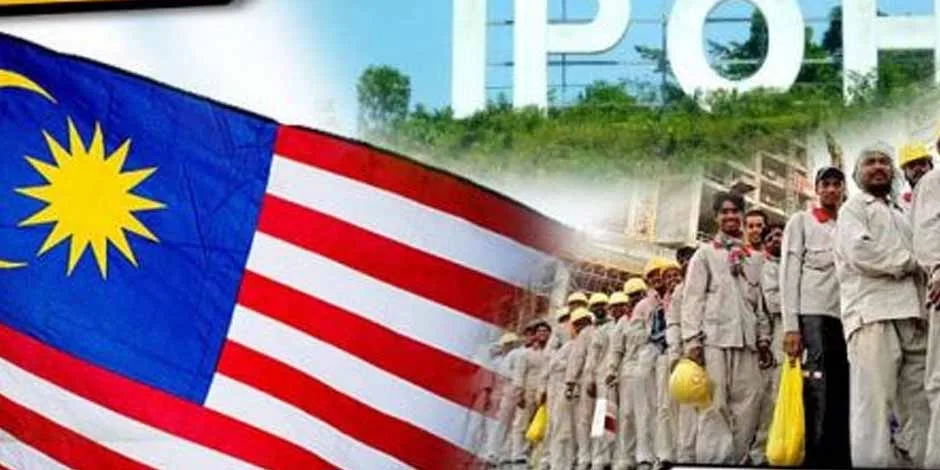
Therefore, in this article, orangperak.com will explore the history and origins of May Day in Malaysia. The Labour Day or May Day that we celebrate on May 1st each year was actually first celebrated in Malaya in 1921 by anarchists in Ipoh, Perak. The first major May Day rally in Malayan history was attended by workers and students in Ipoh. In our nation's history, anarchist groups from China began establishing themselves in Malaya as early as 1908. For readers of orangperak.com who are unfamiliar with the term, an anarchist is someone who adheres to the ideology of anarchism. Anarchism is a political theory that aims to create a society without hierarchy in politics, economics, and social structures. Anarchists argue that anarchy—the absence of imposed rules—is a format that can be applied to social systems to create individual freedom and social harmony. Anarchists view the ultimate goal of freedom and harmony as a mutually constructive cooperation between individuals. Below are four examples of anarchist beliefs:
- Anarchism is a socialist system without government. It begins among people and will maintain its vitality and creativity as long as it remains a movement of the people (Peter Kropotkin).
- The abolition of exploitation and human oppression can only be achieved through the abolition of greedy capitalism and oppressive government (Errico Malatesta).
- Freedom without socialism is injustice, and socialism without freedom is slavery and brutality (Mikhail Bakunin).
- We do not need to embrace and depend on wealthy entrepreneurs because, in the end, they profit and we lose. Without them, we can still organize shows, events, demonstrations, publish books and magazines, release recordings, distribute literature and all our products, organize boycotts, and participate in political activities. And we can do all of that well (O'Hara).

In 1918, the Chan-she anarchist collective from
Truth Society
began to be established in Singapore, Kuala Lumpur, and Ipoh to disseminate works, books, and pamphlets about anarchism. The following are some of the titles of anarchist books published in Malaya in Chinese at that time:
- Anarchism and Socialism
- The Philosophy and Ideas of Anarchism
- Simple Explanations of Anarchism
- Conversations Regarding Anarchism for Working Men
- The Principle of Working Men’s Unions
Anarchists also published the first Chinese-language newspaper in Kuala Lumpur, the Yik Khuan Poh, which means 'to benefit the masses,' starting in March 1919. For our loyal readers at orangperak.com, the Yik Khuan Poh newspaper was recognized as the most radical newspaper in Malaya at that time. The editor of this newspaper was an anarchist named Goh Tun-ban. He was diligent in spreading ideas about anarchism through the Yik Khuan Poh. On May 1, 1919, Goh Tun-ban published a special article in the Yik Khuan Poh about the labor movement worldwide, specifically to celebrate May Day that year. The spread of anarchist ideas began to worry the British colonialists, who feared this ideology could threaten their position. Because of this, in July 1919, the British arrested Goh Tun-ban. He was imprisoned in Pudu Prison and subsequently deported in November 1919 due to his anarchist activities. In 1919, anarchist collectives from Kuala Lumpur, Penang, Ipoh, Seremban, and Singapore established the Malayan Anarchist Federation (MAF) to spread anarchist ideas throughout Malaya. One of the MAF's objectives was to publish May Day pamphlets on Labour Day, which falls on May 1st each year. One of the pamphlets they published was titled “The Power of the Proletariat”.

On May 1, 1921, in Ipoh, Perak, anarchists successfully organized the first 'May Day' Labour Day rally in Malayan history. This is one of the major contributions of the anarchist movement in our nation's history that should not be forgotten. In fact, there is another legacy resulting from the anarchist movement in Malaya: the Printing Presses and Publications Act 1984. The British colonialists, feeling threatened by the anarchist pamphlets, newspapers, and books of that time, enacted the 'Printing Presses Ordinance 1920' as a weapon to restrict the publication and dissemination of anarchist ideas. This 1920 ordinance was later changed to the 'Printing Presses Act 1948' and subsequently amended again to the 'Printing Presses and Publications Act 1984'. To this day, the Printing Presses and Publications Act 1984 is still used by the government to restrict media freedom and freedom of speech in Malaysia. In closing, from orangperak.com, let us together commemorate the contribution of the anarchists in birthing and pioneering the tradition of the left-wing and labor movements in Malaysia, which eventually succeeded in making May 1st a public holiday enjoyed by all Malaysians today.