Kuala Kangsar Royal Museum, A Gem of Perak Malay Architectural Heritage
Kuala Kangsar Royal Museum, A Gem of Perak Malay Architectural Heritage

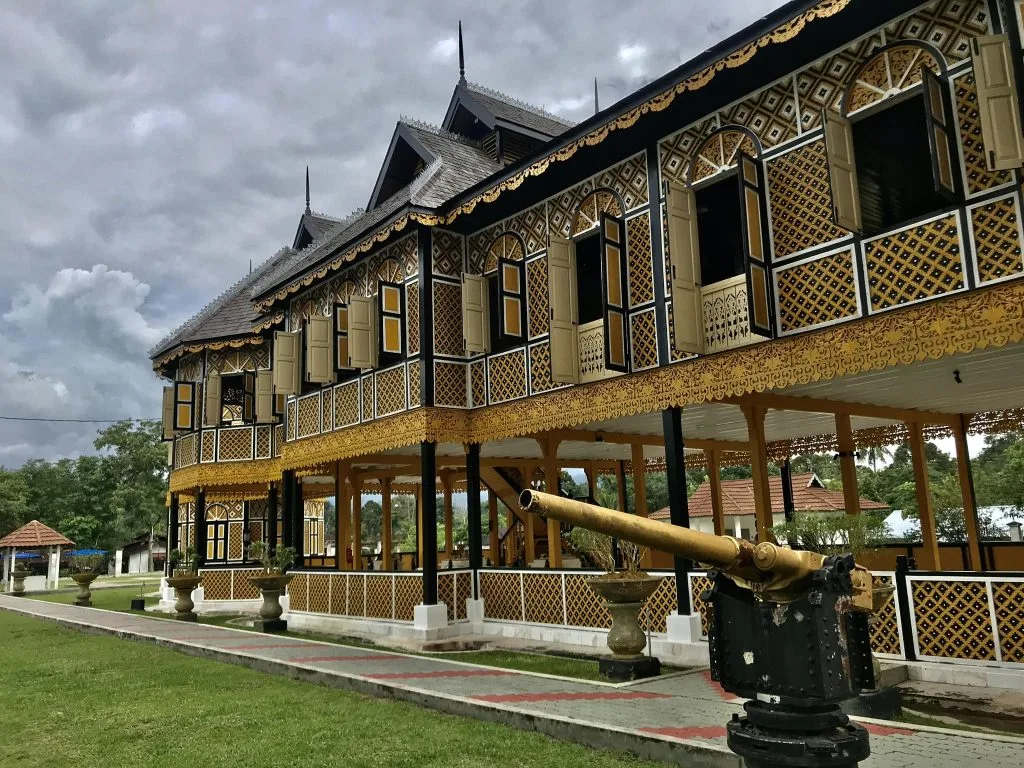
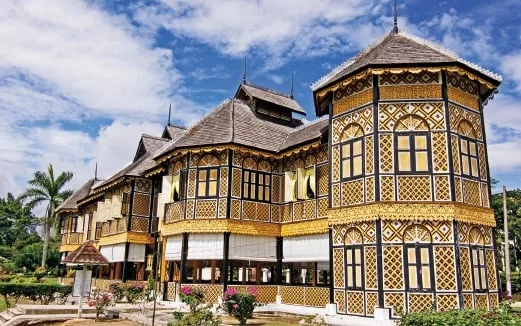
In the heart of the royal town of Kuala Kangsar, steeped in history, stands a majestic building that symbolizes traditional Malay architectural skill – the Kuala Kangsar Royal Museum. This building, formerly known as Istana Kenangan, Istana Lembah, and Istana Tepas, does not merely preserve the history of the Perak Sultanate, but also showcases the refinement of Malay craftsmanship that is increasingly rare in this modern era.
Built in 1926, this palace is a testament to the brilliance of Malay carpenters who were able to create a palace structure without using a single iron nail. Every inch of this building tells the story of the glory of the Perak Sultanate and the beauty of the nation's architectural heritage.

History of the Construction of Istana Kenangan
The construction of Istana Kenangan began in 1926 under the command of the late Sultan Iskandar Shah, the 30th Sultan of Perak, known as Marhum Kadasallah. At that time, Istana Iskandariah, which served as the official palace of the Sultan of Perak, was still under construction to replace the aging Istana Negara. Therefore, the Sultan ordered the construction of a temporary palace, which later became known as Istana Kenangan.
A famous carpenter from Seberang Prai, Haji Suffian, was given the responsibility to lead the construction of this palace, assisted by his two sons, Zainal Abidin and Ismail. The construction process took several years to complete. Sultan Iskandar Shah then resided in Istana Kenangan from 1931 to 1933 before moving to the larger and more comfortable Istana Iskandariah.
After the Sultan moved, Istana Kenangan was used as an official guest palace for the Perak state government. The building became a focal point for various important ceremonies such as the Sultan's Birthday celebrations, the appointment of Perak dignitaries, and official government functions. Its strategic location in Kuala Kangsar made it a center for traditional Malay royal activities.
Stunning Architectural Uniqueness
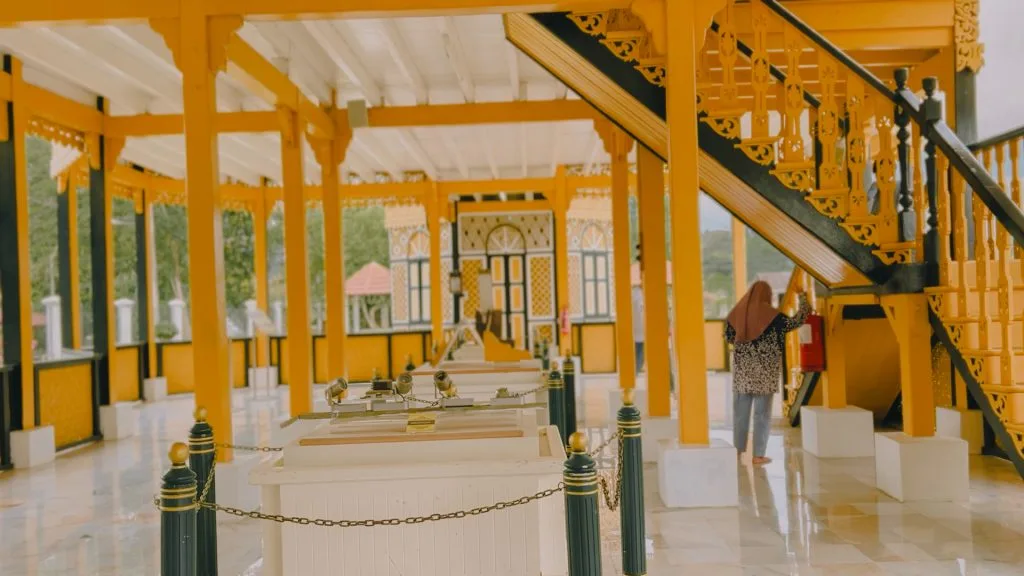
One of the most fascinating aspects of Istana Kenangan is its construction technique, which uses no iron nails. The entire structure was built using hardwoods like cengal and meranti with a sophisticated system of pegs and joints. This technique not only demonstrates the expertise of traditional Malay craftsmen but also makes the building more durable compared to modern structures that rely on metal nails.
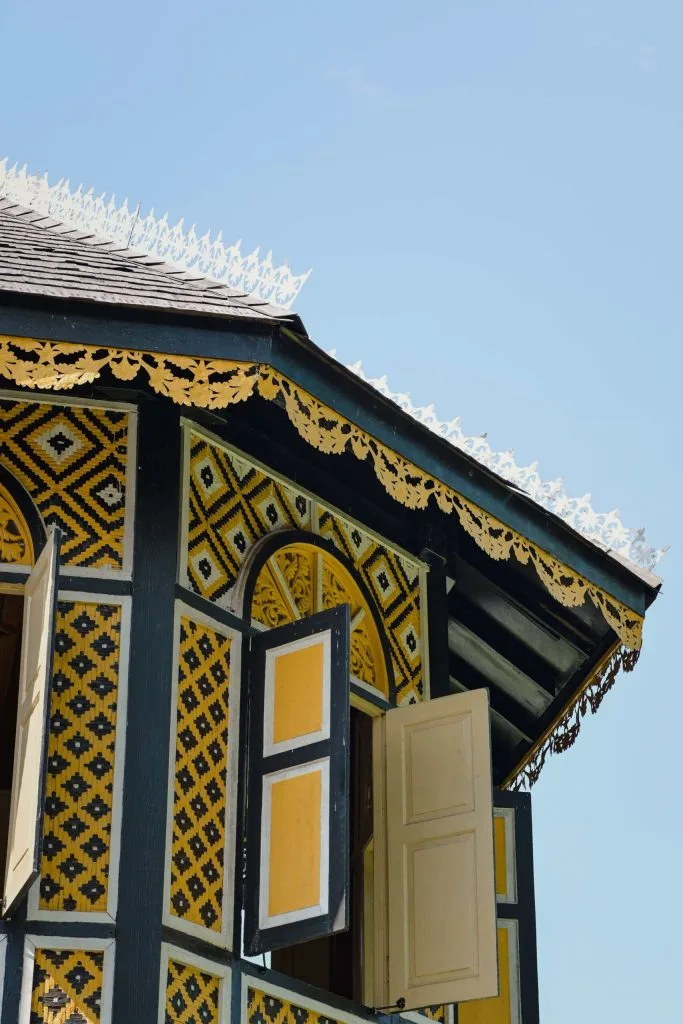
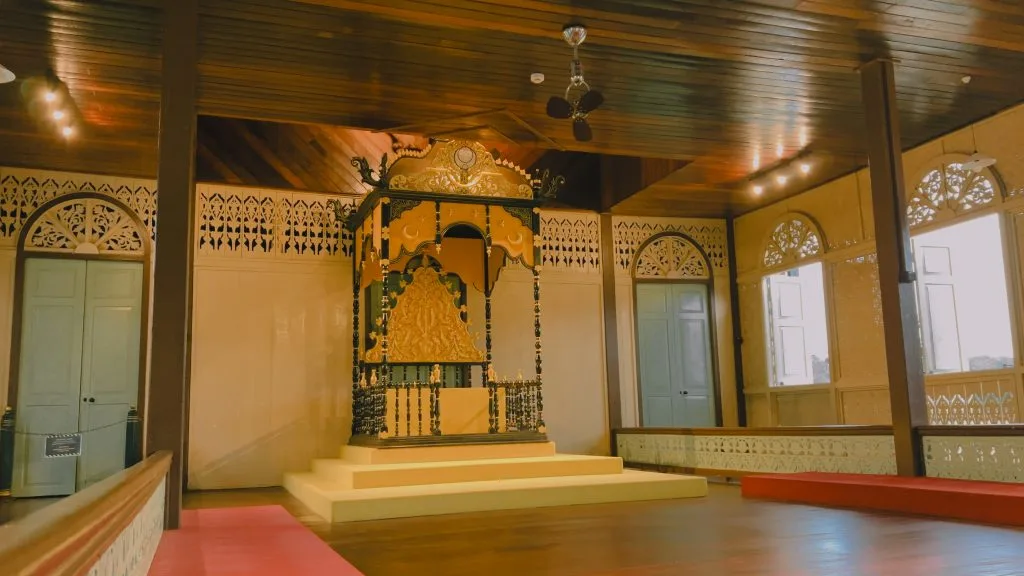
The palace roof features traditional Malay palace architectural characteristics, namely the 'perabung lima' (five-ridge) and 'pisang sesikat' (comb-like) designs, which symbolize royal status. Its walls are made of 'tepas', which is woven bamboo with fine traditional patterns. Each weave was crafted with care, reflecting the refinement of Malay handicraft.

The building is supported by 60 sturdy wooden pillars, measuring 41 meters long and 11 meters wide. When viewed from the air, the shape of the palace resembles a sword kept in its sheath, a symbolic design full of meaning.
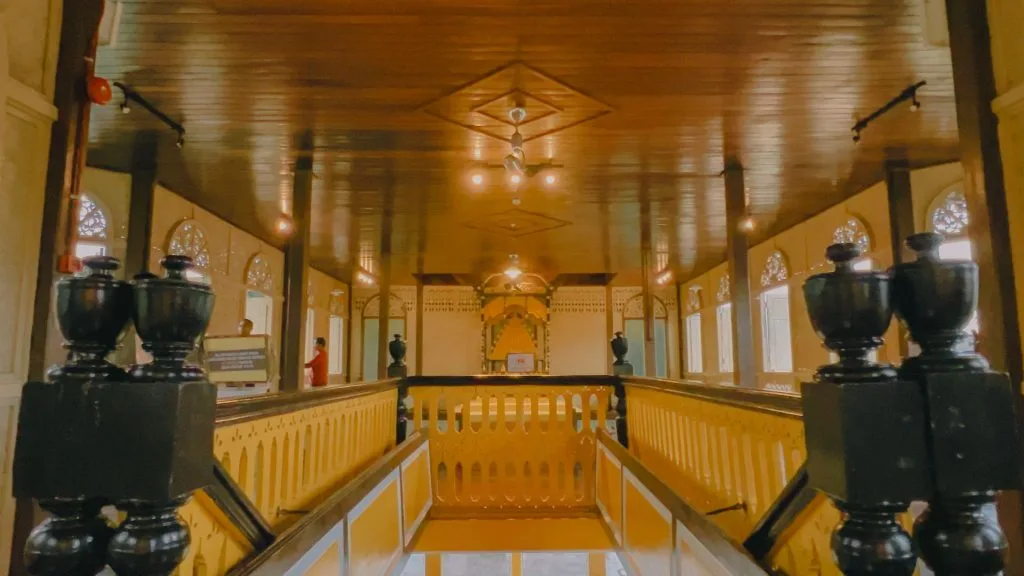
Inside, the upper floor of the palace houses the royal throne used for official ceremonies. The ground floor served as the official office for Sultan Iskandar Shah during his stay here. Unlike the upper floor, which is entirely made of wood, the ground floor uses a cement floor with 'bidai' (bamboo blinds) as room dividers.
Transformation into the Royal Museum
In the 1960s, Istana Kenangan underwent a major restoration process through the efforts of the late Tunku Abdul Rahman Putra Al-Haj, the first Prime Minister of Malaysia. It was during this time that the building was officially renamed "Istana Kenangan," which means "Palace of Memories," in recognition of its invaluable historical significance.
In 1982, the late Sultan Idris Shah II wisely consented to hand over Istana Kenangan to the Department of Museums and Antiquities (now known as the Department of Museums Malaysia) to be turned into a museum. Four years later, on November 16, 1986, HRH Sultan Azlan Muhibbuddin Shah officially inaugurated the Kuala Kangsar Royal Museum, making it a heritage institution that showcases artifacts and the history of the Perak Sultanate.
Recognition of the building's historical value reached its peak on March 9, 2009, when the Kuala Kangsar Royal Museum was gazetted as a Historical Heritage Site under the National Heritage Act 2005. This declaration further strengthened its status as a national treasure that must be preserved for future generations.
Meticulous Conservation Process
Before the conservation process began, a detailed study was conducted on the physical condition of the building. The study found that 42 main wooden pillars had severely rotted and needed to be completely replaced. Additionally, 444 'tepas' wall panels (woven bamboo), which are a signature feature of the building, were also damaged and needed to be renewed.
To ensure structural durability, the original roof made of belian wood was reinforced by adding two new layers underneath - a waterproof plywood layer and an aluminum layer. Other architectural elements such as wood carvings, floors, ceilings, doors, and windows also suffered 20 to 40 percent damage and were carefully repaired by conservation experts.
On September 26, 2017, the Kuala Kangsar Royal Museum underwent a major repair and conservation process. This 1.68 million ringgit project was aimed at ensuring the building remains an icon of Malay Royal architecture that can be visited by future generations. The renovation process was completed on November 30, 2019.
This conservation process was not just aimed at repairing physical damage, but more importantly, to ensure that the traditional Malay construction techniques used in the original build are not lost to time. Every repair process was carried out carefully to maintain the authenticity of the building's architecture.
Importance of the Kuala Kangsar Royal Museum
The Kuala Kangsar Royal Museum plays an important role in several aspects. First, it serves as a center for the preservation of traditional Malay architectural heritage. Second, it acts as an educational institution that teaches the younger generation about the importance of preserving historical heritage. Third, it serves as an important cultural tourism attraction for the state of Perak.
Every year, thousands of visitors, including students, researchers, and foreign tourists, come to this museum to learn about the history of the Perak Sultanate and admire the beauty of traditional Malay architecture. The uniqueness of this building is often a subject of study for those interested in traditional architecture.

Conclusion
The Kuala Kangsar Royal Museum is not just an old building or an ordinary museum. It is a heritage gem that holds a thousand stories about the glory of the Perak Sultanate and the greatness of traditional Malay architecture. Every pillar, every bamboo weave, and every wood carving in this building tells of the skill and meticulousness of the Malay craftsmen of the past.
With continuous conservation and high public awareness about the importance of cultural heritage, we can ensure that this precious treasure will continue to stand majestically for future generations to enjoy. A visit to the Kuala Kangsar Royal Museum is not just a tourism activity, but rather an adventure to delve into the beauty of a priceless national heritage.
For those interested in visiting, the Kuala Kangsar Royal Museum is located in the royal town of Kuala Kangsar and is open daily with no admission fee charged. A visit here will surely leave a deep impression and lasting memory of the greatness of our Malay heritage.
Visit Information
- Operating Hours: Tuesday - Sunday (10:00 AM to 5:00 PM)
Friday (10:00 AM - 12:15 PM) (2:45 PM - 4:30 PM)
Monday (Closed) - Admission Fee: Free
Location
Bukit Chandan, 33000 Kuala Kangsar, Perak Darul Ridzuan
- Fax No: +605-776 5500
- Phone No: +605-776 5500
Let's explore our heritage! 🏛️✨
References:
- Official Portal of the Perak State Museum Board
- Official Portal of the National Heritage Department
- Pamer-Pam.com
- Sembang Kuala