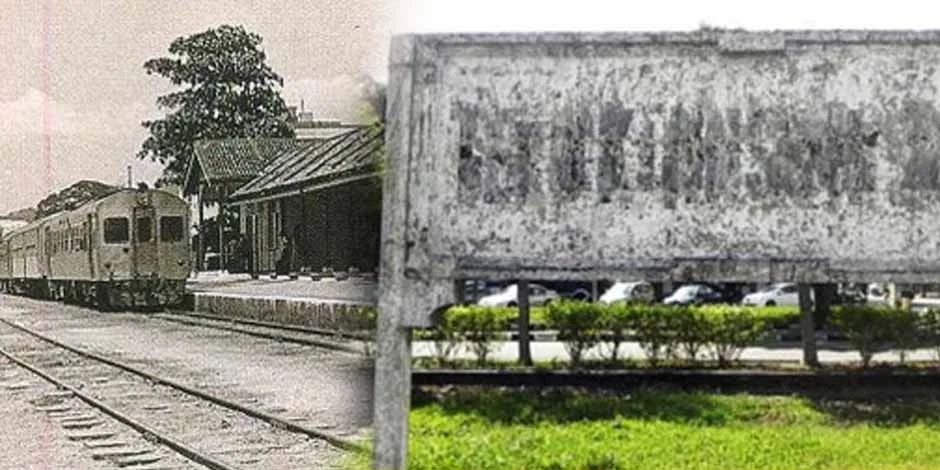
History of the Teluk Intan to Tapah Road Railway Line
There is so much fascinating history in the state of Perak. Perak was one of the first states to receive modern technology in this country, driven by economic progress from the abundant tin ore resources found in the belly of this fortunate state.
This time, orangperak.com would like to take all readers to learn more about the history of the railway line between Tapah Road and Pekan Teluk Intan. Before modern transportation systems were introduced, rivers were the primary routes and main mode of transport for the people in Perak. Rivers were also essential for various daily activities of the residents. Settlements and towns began along riverbanks. After the arrival of the British, several modern transportation systems were introduced in Malaya, such as trains, horse-drawn carriages, steamships, and so on. In Perak, the first railway line was built in 1885, connecting Kuala Sepetang (Port Weld) to Taiping. The Perak State Railway played its role in constructing railway lines throughout the state of Perak. Following the Kuala Sepetang-Taiping railway, several major lines were opened, including Taiping-Kamunting (1890), Kamunting-Ulu Sepetang (1892), Batu Gajah-Ipoh (1893), Kota Baharu-Batu Gajah (1894), and others.
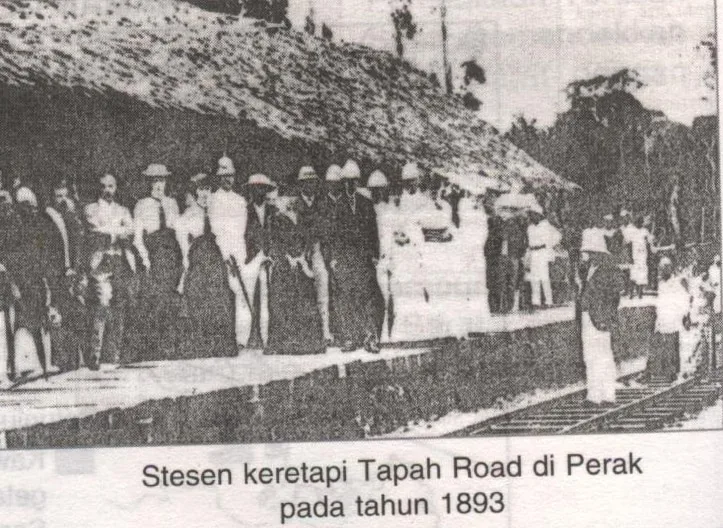
The history of the Tapah Road to Teluk Intan railway line began when Archibald Edward Harbord Anson, the Lieutenant Governor of Penang, drafted plans to build a planned town, Pekan Teluk Anson, in 1882. Included in this construction plan was the building of a railway line that could connect this town to the Kinta Valley, as well as a port that could be used to transport ore from the Kinta Valley to external markets. The railway line between Tapah Road and Teluk Intan started at the Tapah Road Railway Station and ended at the Teluk Anson Wharf Station (now Teluk Intan). Initially, the contract for the construction of the Tapah Road-Teluk Intan line was cancelled due to geographical obstacles between the two locations. However, two Perak State Railway engineers, Spence Moss (Railway Consulting Engineer) and local Railway Engineer T. Scott Gardner, took the initiative to proceed with its construction.
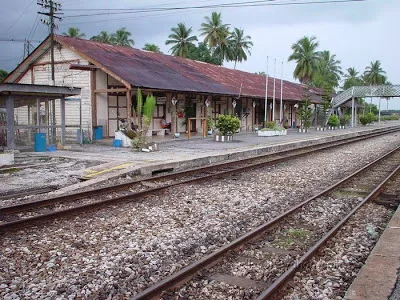
Construction work for this railway line faced many difficulties because a bridge had to be built to cross the Bidor River. Finally, in 1893, the Tapah Road and Teluk Intan railway line was successfully completed. On September 6, 1893, the railway line was ready for use. The Teluk Anson and Tapah Road railway line was officially opened for train traffic on May 18, 1893. The ceremony was officiated by the Governor of the Straits Settlements, Sir Cecil Clementi, the British Resident of Perak, Sir Frank Swettenham, the District Officer of Lower Perak, senior railway officials, state dignitaries, and other guests. In conjunction with the inauguration of the railway line between Teluk Anson and Tapah Road, a special ceremony was held to install the final connection on the Bidor bridge as a sign of its opening. Later, on May 18, 1895, the Tapah Road Station was opened. This station was inaugurated by the Governor of the Straits Settlements, Sir Cecil Clementi Smith. A grand event was held to mark the opening of the station. Also present at the inauguration ceremony was Sir Frank Swettenham, the British Resident of Perak at the time.
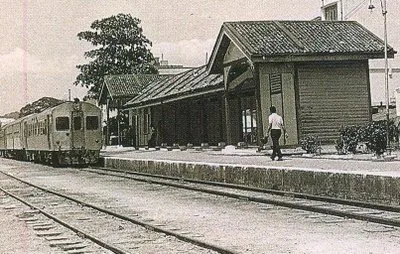
When this branch line was completed and opened to traffic in 1893, it became an extension of the railway communication system. Efforts to expand railway services to other places were intensified because it was a highly profitable investment for the British. The revenue obtained from railway services could cover the expenses for adding new railway lines. Most trains operating on this branch were mixed trains (one locomotive + two passenger coaches + freight wagons). The journey from Tapah Road to the Teluk Anson Wharf took approximately one hour, except when passing other trains. The only place for trains to cross was at the Sungai Tukang Sidin Station. The length of the railway route for the Tapah Road to Teluk Anson line was 29.1 km. Below are some brief notes about the stations and stops on this line.
- Tapah Road Station (0.0km). The main station for travel to Ipoh or Kuala Lumpur.
- Changkat Petai Halt (5.5km). Just a small stop.
- Degong Station (10.4km). A non-interlocked station. Originally had a 424-foot platform on the left side of the track and a 1371-foot loop.
- Chikus Station (13.0km). A regular non-block station.
- Sungai Tukang Sidin Station (16.6km). A block station (non-interlocked). Had a 300-foot platform for up-trains and a 300-foot platform for down-trains. It had a 1033-foot loop capable of accommodating 41 wagons. Some reports state the loop length at this station was 1320 feet.
- Permatang Halt (19.0km). A stop equipped with a ticket counter.
- Sungai Kerawai Station (22.2km). A regular non-block station.
- Bandar Teluk Anson Station (26.8km). A station equipped with a ticket counter. Had a 386-foot platform on the right side of the track.
- Teluk Anson Wharf Station (29.1km). A block station (non-interlocked). Had a 245-foot platform for up-trains and a 245-foot platform for down-trains. It had a 771-foot loop capable of accommodating 30 wagons. At this wharf, there were once facilities for locomotive storage, a turntable, wagon and coach inspection areas, and areas for unloading bulk goods. There was also a weighbridge with a maximum capacity of 20 tons.
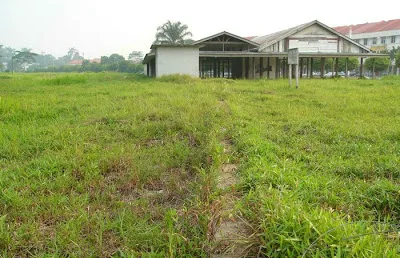
Nevertheless, some remnants of the railway service in Teluk Intan can still be seen and preserved. We can see several important historical remnants of the railway service in Teluk Intan. Among them is the Teluk Intan railway station building, which is now used as a driving school. The railway crossing gate with the Changkat Jong road leading to Bidor can also still be seen. However, we cannot predict how long these historical remnants will be able to withstand the challenges of modernization. For your additional information, this route was terminated by KTMB in 1989.