Getting to Know Chin Peng, Leader of the Malayan Communist Party from Sitiawan
Chin Peng was born on October 21, 1924, in Sitiawan, Perak, with the birth name Ong Boon Hwa, and passed away on September 16, 2013, in Bangkok, Thailand. He was a leader of the Malayan Communist Party and a Cantonese-descended Chinese man, allegedly born in a small two-story bicycle shop at No. 36, Jalan Kampung Koh, Sitiawan, Perak. However, during his legal bid to be allowed entry into Malaysia, he failed to produce his birth certificate. He was the second of six children living in poverty. His father had come from China, disillusioned by the economic recession.
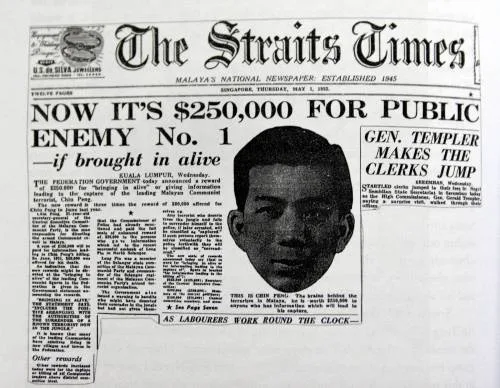
As a child, Chin Peng was very interested in reading print media and following developments in China. At that time, there was a dispute between Chiang Kai-shek and Mao Zedong. The Japanese army had seized Manchuria and controlled the interior of China. China was the birthplace of his father and ancestors in the Kwantung region. At the age of 15, Chin Peng felt a close affinity with the Western-educated nationalist Chiang Kai-shek, who controlled southern China and Taiwan. However, the small book On Protracted War written by Mao Zedong changed his stance toward communism. His determination to oppose the Japanese, who later invaded Malaya in 1941, was clear. In 1940, he was accepted into the Malayan Communist Party, an overseas branch of the Communist Party of China. He also joined Force 136, an armed unit established by British intelligence to fight the Japanese in Malaya. At the time, he was only 18 years old. Chin Peng led the MPAJA (Malayan People's Anti-Japanese Army), a guerrilla force fighting the Japanese military. The British military (Special Air Service and MI6 units) parachuted into the Perak jungles, providing various weapons, funding, training, and other equipment to equip Force 136 and the MPAJA. The MPAJA once attacked Japanese troops on the Perak River near the banks of Pasir Salak in 1942.
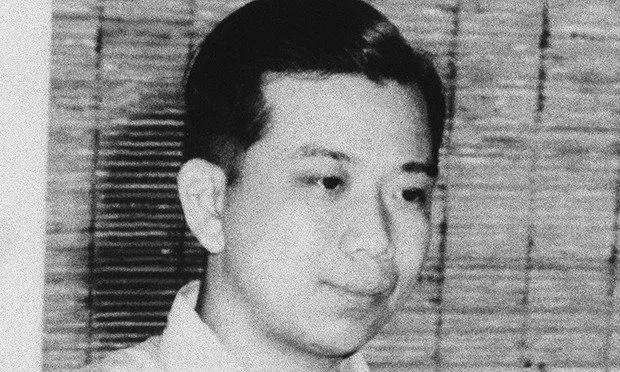
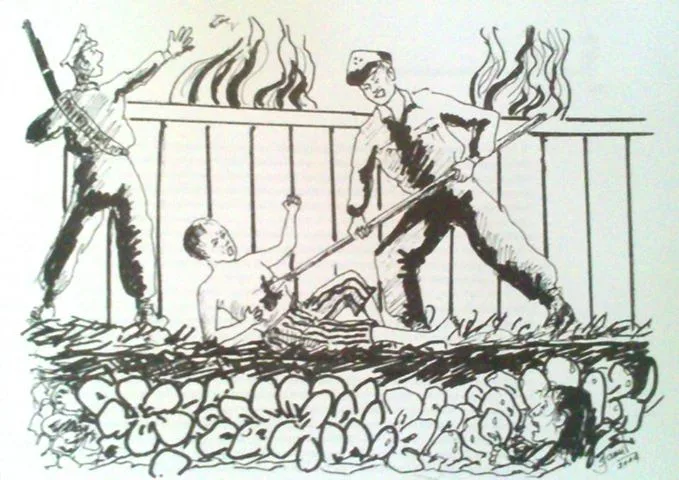
After World War II, several radical factions within the MPAJA emerged from the jungle to kill and torture those who had collaborated with the Japanese military and British informants. They also killed local leaders such as village Penghulus (headmen) and Imams as a tactic to consolidate their control. Additionally, radical factions within the MPAJA attempted to seize administration, particularly in the southern part of Malaya. The actions of these allegedly radical factions were never curbed by the MPAJA. This suggests that the MPAJA may have been assessing the success of such actions. Allowing its members to run rampant, killing and torturing residents, indicated that these actions had the tacit support of MPAJA leaders. The actions of these radical factions in the MPAJA sparked anger among the Malays, who rose up to oppose the communists under leaders such as Kiai Salleh Karim from Batu Pahat, Johor. As a result of this Malay backlash, the Malayan Communist Party failed to seize power and was forced to ask for Tunku's intervention to calm the Malays who had risen up at the time. The MPAJA's attempt to seize administration from the legitimate government led to them being labeled as a leftist faction, and they were subsequently banned, with their leaders and members arrested.
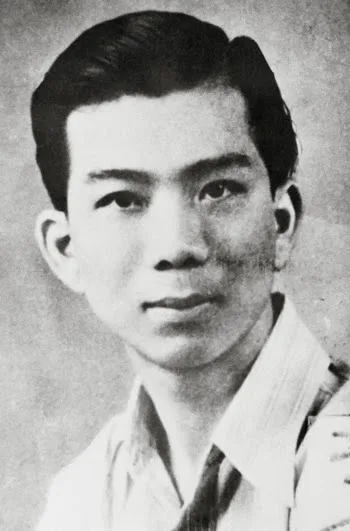
The return of the British with their military administration (BMA) for a short period prevented the 'Three Star' (Bintang Tiga) from expanding their influence. The failure of the Bintang Tiga to seize Malaya through armed movement led to an agreement to disband the MPAJA and surrender firearms, alongside the payment of compensation to the guerrillas involved. For his services in the resistance against the Japanese occupation, Chin Peng was invited to London to receive the Order of the British Empire medal for his significant contribution in leading the MPAJA and Force 136 against the Japanese. However, his determination to establish a communist government in Malaya, remove the British, and eventually liberate Malaya grew stronger thereafter. The peaceful and prosperous atmosphere in London increased his resolve to fight in the jungles of Malaya. At the age of 23, Chin Peng was appointed Secretary-General of the Malayan Communist Party, replacing Lai Tek, whom he had killed in Thailand. Lai Tek was a triple agent who had defected and absconded with the Malayan Communist Party's funds. Under his leadership, the Malayan Communist Party became increasingly aggressive and militant, attacking plantations, rubber warehouses, smokehouses, and managers' homes owned by the British in Malaya. Consequently, MCP members increasingly admired Chin Peng's courage and vision. This tactic backfired on the Malayan Communist Party because it was not accepted at all among the Malays.
The Malayan Communist Party did not practice atheism. Although the main principles of communism written by Karl Marx did not believe in God and stated that religion was the opium of the people, what happened in Malaya at that time was that they practiced religious principles, as seen in some MCP figures such as Rashid Maidin, Abdullah C.D., and Suraini Abdullah. They continued to perform the five daily prayers as required by Islam, even while fighting in the jungle. They also performed the Hajj pilgrimage. Indeed, Rashid Maidin was a pious man with high religious knowledge; he even taught his grandchildren and several village children to read the Quran and Tajweed. During the Emergency, the British, in collaboration with the Malay elite, launched a psychological war—propaganda through mass media—to influence the minds of the Malays so they would be convinced that the Malayan Communist Party was cruel and not worth following. The experiences of the Malays after World War II and the communist tactics of killing hundreds of innocent people caused most Malays to reject the violent ways of the communists. The Malay struggle for independence without bloodshed was not liked by the communists, who wanted political power to fall into their hands by using violence and instilling fear in the general public. The communist struggle cannot be considered a struggle for independence because they only fought for the interests of the MCP and not for the independence of Malaya. This was proven when they continued their violent tactics even after Malaysia achieved independence. Independence proved that it could be achieved not through futile bloodshed, but through peaceful negotiations that were more beneficial and advantageous for all parties.
Due to difficulties and a lack of support from the community, Malayan Communist Party leader Chin Peng requested that negotiations be held in 1955. The Baling Talks were held at Sekolah Rendah Kebangsaan Tunku Putera, Baling, in 1955. Tunku Abdul Rahman, finding that Chin Peng refused to accept the condition of dissolving the MCP and refused to participate in elections through other parties as a condition for amnesty, moved to reject the MCP's demand to be allowed to operate as a legal political party. With the Malayan Communist Party's refusal to make peace, Tunku Abdul Rahman declared the independence of Malaya on August 31, 1957, at Stadium Merdeka without the Malayan Communist Party. The weakened Malayan Communist Party was pushed further into the jungle, sometimes even being forced out of Malaysia, particularly along the Malaysia-Thailand border. His attempts to return to Malaysia received support from the Chairman of the Penang Gerakan Movement, Datuk Dr. Teng Hock Nan, and the DAP party. Chin Peng never expressed regret for leading the Malayan Communist Party in their war against the Malaysian government; in fact, he was proud of it, as he wrote in his book: "Every generation builds its own dreams. But you pay for your dreams. We have paid the price for our dreams. I do not regret fighting for something I believed in and still believe in as a just struggle."
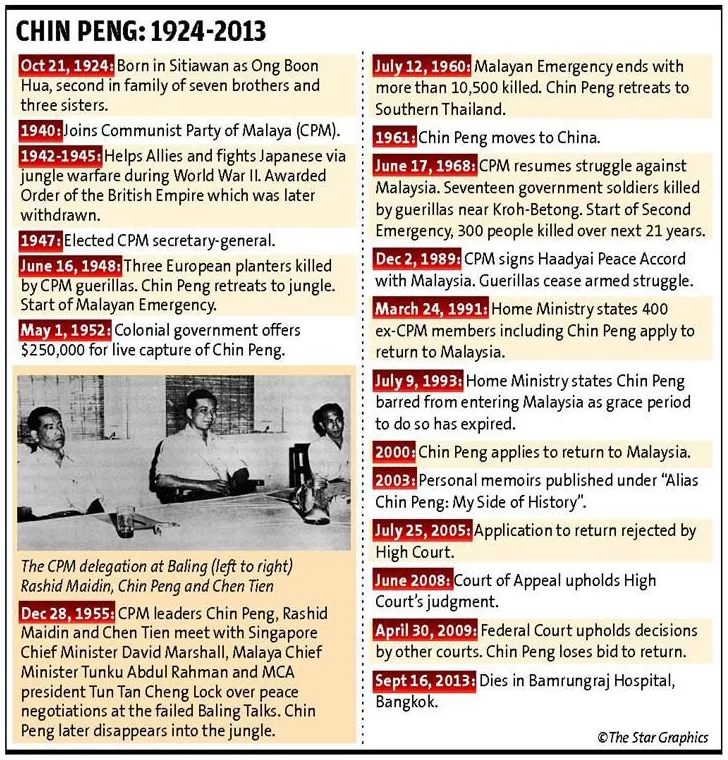
Chin Peng once brought his case to the Penang court to be allowed to return to Malaysia. However, the acceptance of Chin Peng back into Malaysia was strongly opposed by many relatives of the victims of the Malayan Communist Party's cruelty, including police and military personnel who were injured or killed. This was because Chin Peng was the person responsible for the failure of the Baling Talks by insisting that the Malayan Communist Party be accepted as a political party, even though he had been offered amnesty previously. However, there were parties who questioned why Musa Ahmad and Shamsiah Fakeh, former members of the Malay Nationalist Party (PKMM), could be accepted back into Malaysia, but not Chin Peng. This question was raised without considering that Chin Peng never expressed regret for killing Malaysians; instead, he was proud and wrote a book to justify his actions. The offer of amnesty given during the peace agreement in Hatyai, Thailand, on December 1, 2009, was conditional on the MCP dissolving the party and their communist ideology.
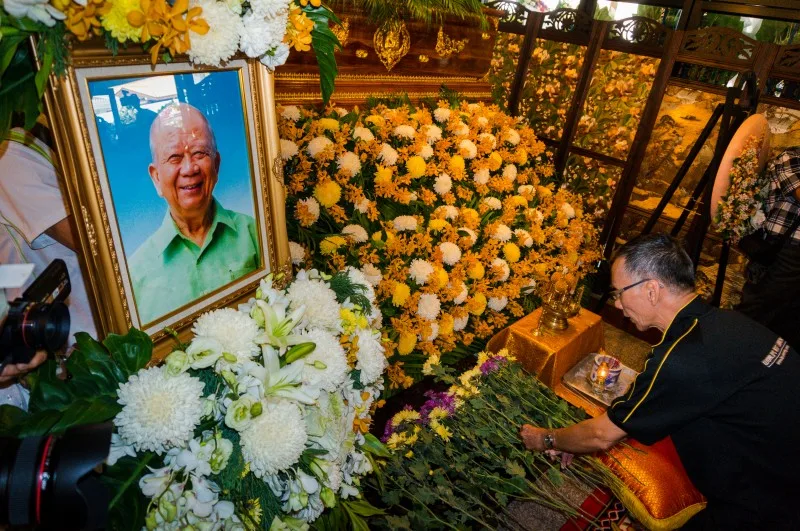
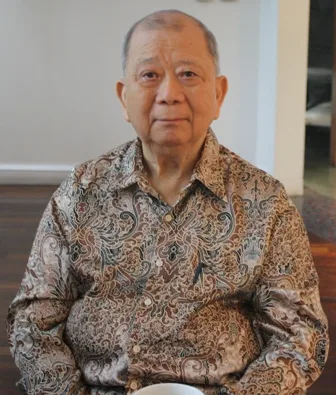
Chin Peng was reported to have passed away at the age of 90 in Bangkok, Thailand, at 6:20 AM on September 16, 2013. Before his death, he lived in exile in Thailand and was still unable to return to Malaysia; this was claimed to be a contradiction to a condition agreed upon in the 1989 Hatyai Peace Talks. The government, however, decided that Chin Peng did not fall into this category because he never renounced his party's struggle and communist ideology, as required in the Hatyai Peace Talks.