Discovery of the First Human Skeleton Inhabiting Mangrove Swamps, Pulau Kalumpang
Perak is believed to be the earliest state with prehistoric human settlements. This is evidenced by excavations conducted in Lenggong, which led to the discovery of the Perak Man skeleton.
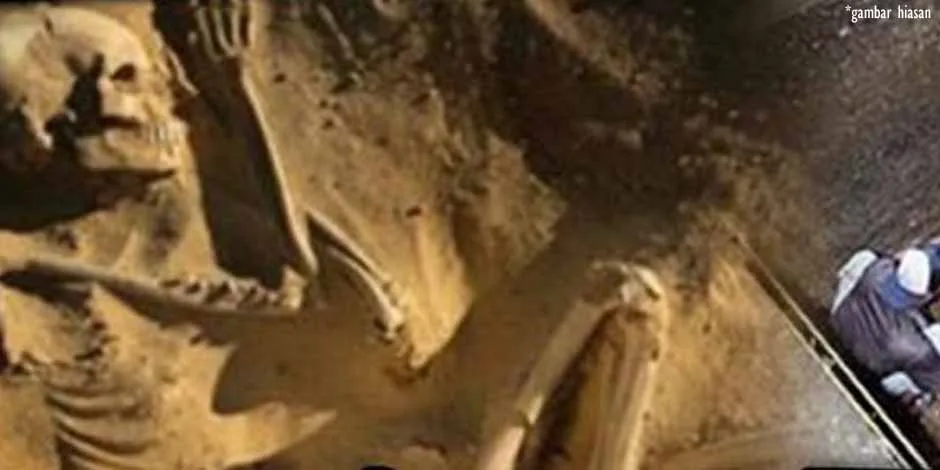
This time, we will discuss an important archaeological site in global historical research, marking the discovery of the earliest human skeleton to inhabit a mangrove swamp area, specifically on Pulau Kalumpang. For the information of our beloved readers, Pulau Kalumpang is located in Kuala Gula, Bagan Serai, Perak. Situated in the middle of the Straits of Malacca, it requires a nearly 45-minute boat ride from the Kuala Gula jetty to reach it. Pulau Kalumpang has been known since 1988 as an archaeological site proving that humans existed thousands of years ago in mangrove forest areas. The mangrove forest is a meeting point between the salty seawater of the Straits of Malacca and the fresh water of the Sungai Selinsing. The prehistoric human remains found here represent the first prehistoric skeleton in the world to have lived in a mangrove forest area.
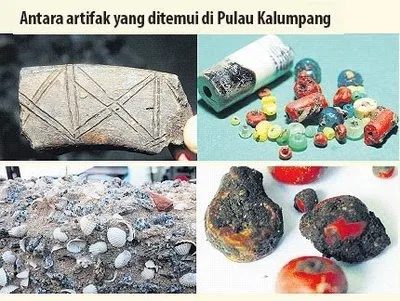
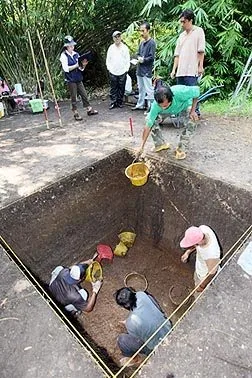
According to sources from the National Heritage Department website, this archaeological site is located in the mangrove swamps of Pulau Kalumpang. A British researcher named I.H.N. Evans conducted initial research in this area during the 1920s and 1930s. Researchers believe this site contains remnants of a society from the proto-historic era. Other researchers include Quaritch-Wales (1936), Sieveking (1955), Dr. Gibson Hill (1956), and Peacock, Lord Medway, Alastair Lamb, and his wife Venice Lamb in 1963. In 1987, archaeological research and excavations were carried out by the Department of Museums and Antiquities in collaboration with other state-level departments and Universiti Kebangsaan Malaysia. Artifacts reported by Evans through his excavations included dugout canoes, human bones, pottery shards, and beads made of agate, glass, and carnelian. Artifacts with Hindu influences were also found, including a gold ring engraved with the image of Lord Vishnu on Garuda and a seal impression in Pallava, Sanskrit script. These findings are evidence of the existence of a maritime settlement of proto-historic society on these islands, which were located along international trade routes at the time, serving as a port where traders obtained fresh water and food. The discovery of thousands of Indo-Pacific glass beads and their raw materials indicates that this site was one of the production centers for Indo-Pacific glass beads, while the discovery of thousands of earthenware shards also shows that the local community produced pottery to be traded to the interior regions. Based on absolute dating, this site has been occupied by coastal communities since 200 BC. The people of Pulau Kalumpang were also skilled sailors and traders, based on the discovery of ecofacts in the form of deep-sea fish bones.
Food remains found include seashells, leading it to be known as the 'Shell City Island.' Over 50 types of shells have been found there. Also discovered were bones of fish, monkeys, birds, wild boars, and macaques. They ate whatever was available, but at that time, it is believed they did not practice any religion. Deoxyribonucleic Acid (DNA) testing will be conducted to determine their connection to the Malay people in Kuala Sepetang, Kuala Gula, and Kuala Kurau. Strangely, this group of prehistoric humans simply vanished. The cause of their extinction and disappearance is a very interesting subject for study. To ensure the Pulau Kalumpang archaeological site remains preserved, it has been declared a National Heritage by the National Heritage Department.