The Story of the Savior of Teluk Intan During World War II
Many great figures of various races and religions hail from Teluk Intan. They contributed significantly to the development and shaping of the nation into the beautiful, peaceful, and progressive country we live in today.
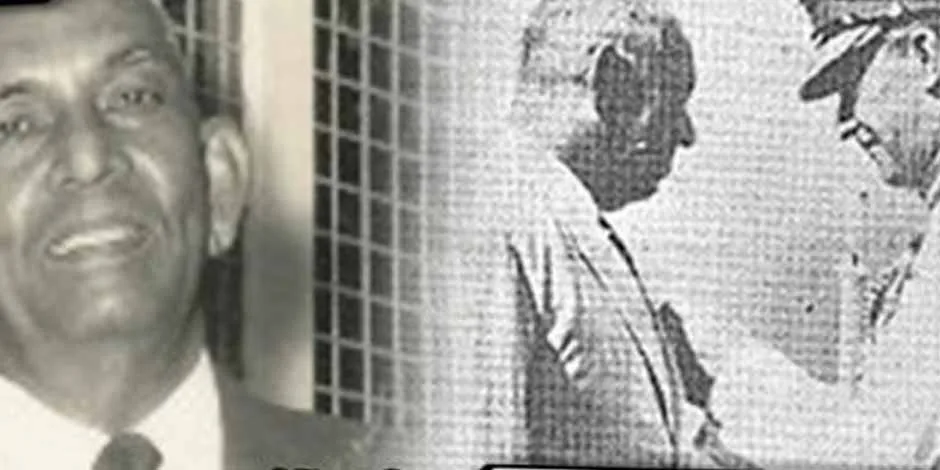
This time, orangperak.com would like to highlight an individual who contributed immensely to the residents of Teluk Intan during the Japanese occupation era and the interim communist rule in Malaya. His efforts saved thousands of lives in Teluk Intan, yet few recognize him today. He was Mr. Weeratunge Edward Perera. Weeratunge Edward Perera, born in Telok Anson (now Teluk Intan), Perak on June 22, 1898, was the son of Weeratunge Charles Perera and Galgodliynage Marthina Perera. His father was a railway engineer from Kotahena, Ceylon (now Sri Lanka).
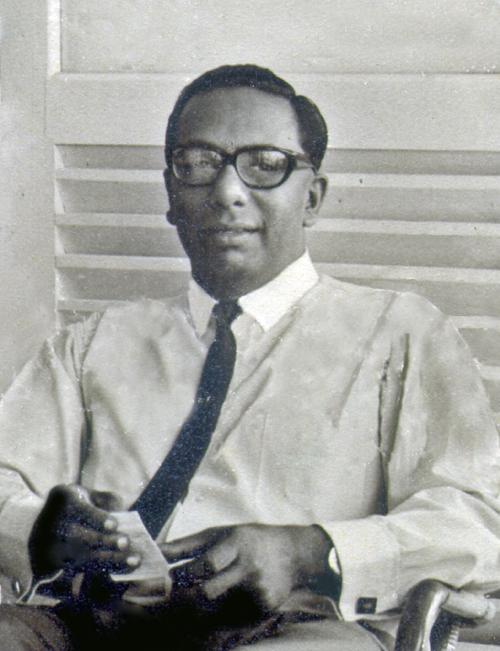
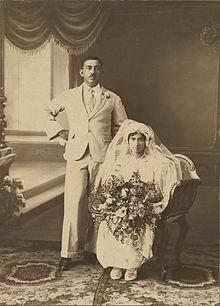
He later settled in Malaya in the 1880s after accepting a permanent offer as a Railway Guard Manager between Telok Anson and Tapah, eventually retiring as the Chief Permanent Way Inspector for the Malayan Railway company. Mr. Edward Perera and his siblings grew up in Seremban, Negeri Sembilan, where his father had been transferred. W. E. Perera began his education at St. Francis Institution, Melaka, and later moved to St. Xavier's Institution, Penang, to sit for the Junior Cambridge examination. He passed his Senior Cambridge Certificate examination while World War I was at its peak. He was also among the witnesses who saw the Russian warship Zhemchug bombed by the German Empire's warship, Emden, at the port of Butterworth, Penang. After finishing his studies in Penang, his father arranged for him to become a civil servant and placed him as a trainee under the Chief Clerk. There, Mr. W. E. Perera learned to buy and sell land, plant rubber trees, and became proficient in the Malay language. Mr. W. E. Perera later worked under Rev. W. E. Horley as a teacher at the Methodist High School, Telok Anson. Following the advice of his mentor, W. A. Rabel, and several friends, he saved money to invest in coconut and rubber plantations and successfully managed them while still serving as a teacher. For the loyal readers of orangperak.com, this provided him with the funds to engage in community activities, such as helping to form the Scout Association in Lower Perak and establishing the Methodist Youth Fellowship in Teluk Intan. In 1922, he founded "The Cosmopolitan Club" in Telok Anson, a secular club involving various races to counter British efforts to divide the races in Malaya. This club gave him the opportunity to interact and mingle with influential people from various backgrounds, including Japanese, Chinese, European, Indian, Malay, and the Royal family in Telok Anson. In 1928, after visiting his mother in Taiping, he met and eventually married Meepaygamay Kankananga Joci Perera (March 7, 1908 – January 6, 1994) on January 11, 1929. The couple was blessed with 10 children. When World War II reached Telok Anson in the form of air raids by the Japanese Imperial Army, despite being advised to leave by the British District Officer of Telok Anson, Mr. W. E. Perera was one of the few who dared to come out of hiding to help those less fortunate.
He was a volunteer with St. John Ambulance, and a month before the Japanese reached Telok Anson, he received training as a Superintendent in the medical unit—training that proved very useful when the war broke out. When the British began retreating from Kampar and Telok Anson to strengthen defenses in Slim River, British troops destroyed the water storage tanks in Changkat Jong. When the Japanese army arrived in Telok Anson, Mr. Edward Perera met with the Japanese commander and informed him that the British had destroyed the water supply for Telok Anson and might have poisoned the surrounding water sources. The Japanese commander then provided him with a vehicle and a written letter ordering him to find workers and technicians to repair the water tanks in Changkat Jong immediately. The commander also provided a guarantee pass so that the workers under Mr. Edward Perera's supervision would not be harassed by Japanese soldiers patrolling the main roads. He and several others who were willing to work to restore the water supply to Telok Anson worked day and night for three to four days and finally succeeded in restoring the water supply for the use of the Japanese army and civilians. After gaining the trust of the Japanese commander occupying Telok Anson, he appealed to the commander to order his soldiers to stop harassing the girls in Telok Anson. The commander replied that he could not stop his soldiers' actions, but suggested that Mr. Edward Perera immediately establish an interim government and appoint a mayor to control the behavior of the Japanese soldiers in Telok Anson. Without wasting time, he accepted the challenge, called his acquaintances out of hiding, and immediately established a sanitation control team and a police force, which functioned under Raja Yahaya as the O.C.P.D. of Telok Anson and Mr. J. Bahaduri, a lawyer, as the Mayor of Telok Anson. After Perak had been occupied by the Japanese for 3 months, Japanese civil officials arrived to re-establish the Perak State Government, and Mr. Megat Yunus was appointed as the District Officer of Lower Perak. Mr. Edward Perera was then appointed as the Electricity Supply Officer by Raja Muda Yusuf and D.O. Megat Yunus in recognition of his contributions. When the British retreated from Telok Anson, the situation became chaotic, and theft occurred at the Telok Anson Government Hospital, causing beds, mattresses, and medical supplies to go missing. Based on information Mr. Edward Perera obtained, he successfully recovered the missing medicines from the house of a Surgical Assistant's brother who worked at the hospital.
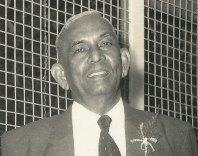
Throughout the war, he did not face threats from the Japanese army or the communists, although there were some who were unhappy with his efforts. There was an incident where Mr. Edward Perera slapped a health officer from the Indian National Army (a Japanese-allied force in India) who demanded 5 dollars from him to be donated to the anti-British movement in India. This led to him being accused of being a traitor and detained by the Kempeitai police and thrown into a lock-up. However, a few hours later, he was released after protests from several of his friends who served the Japanese against the detention by the Kempeitai. Several families lived with him throughout the war. Among them were Mr. Neoh Ban San and his family, Mr. James Ranatunge and his family, Mrs. Rosie Shoemaker and her family, Mrs. Loveridge, and six former members of the British Reserve Force. Mr. Edward Perera saved several people in his house from Japanese threats. His eldest daughter, Jothika, mentioned that her father saved Mrs. Shoemaker twice. Japanese soldiers saw Mrs. Shoemaker and shouted "English!" while drawing their pistols. Her father immediately told them that Mrs. Shoemaker was Indian, not English, and the Japanese officer changed his mind. Some time later, Mrs. Shoemaker was detained by communists for giving birth to a Japanese child, but Mr. Edward Perera saved her once again. Dato Abdullah, the Chief Minister of Perak and later Minister of Lands and Mines, was the District Officer of Lower Perak when Mr. Edward Perera saved him from communist terrorists. The people in Perak, especially in Telok Anson, faced more difficult times during the Japanese retreat as communists began to take over due to the power vacuum. In a letter to his family, Mr. Edward Perera stated that one day, while heading to Ipoh by truck to buy fuel for machinery in Telok Anson, he encountered a group of British paratroopers. This was the first time he had met British soldiers in several years. He immediately informed the British soldiers that within 2 days, communist forces from China would arrive in Telok Anson and that all civil servants who had worked with the Japanese would likely be killed. The British soldiers then informed him that British troops from India landing at Port Swettenham (now Port Klang) would head north without passing through Telok Anson. However, the officer assured him that he would pass the information to his superiors. The following evening, British troops from India finally arrived in Telok Anson and began patrols.
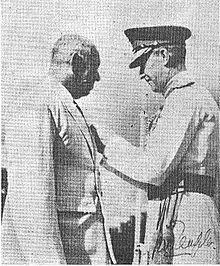
One of the major challenges Mr. Edward Perera faced was during the early days of the British Military Administration (BMA), when communist terrorists tried to show their power by ordering schools to close, taking over public property, and kidnapping wealthy individuals who refused to fund them. However, through his own initiative, he defied the communist orders by reopening the missionary school on Jalan Anson. The communists, angry at his actions, tried to burn the school, but the fire was successfully extinguished. The missionaries later arrived and found that Mr. Edward Perera had performed a great service in restoring and saving their school. In appreciation, Mr. Edward Perera was appointed as the principal of the ACS school, becoming the first non-Methodist to serve as principal there. He was also the individual responsible for building the first housing scheme for teachers in Malaya. His great contributions to society were recognized by the government. However, he politely declined to accept an award from the Sultan of Perak. He also declined to accept the MBE (Member of the Order of the British Empire) medal from the British government through Governor Sir Edward Gent. However, General Sir Gerald Templer insisted on awarding him the medal, stating that it was the community that requested the medal be awarded for the contributions he had made all those years. Mr. Edward Perera eventually retired in Petaling Jaya, Kuala Lumpur. He then taught Buddhist philosophy at a local university. He passed away on September 23, 1982, at the University Hospital, Petaling Jaya, due to a heart attack. He was one of the earliest organ donors in Malaysia, and his corneas were donated to two eye patients. His funeral was conducted with cremation rites, and his ashes were later scattered in the sea of the Straits of Malacca in Klang.