The Story of the Formation of the Parang Panjang Group in Kampung Bekor, Perak
In an effort to defend the Malays, scholars, religious leaders, and local figures were said to possess extraordinary abilities at that time.
There are two individuals often associated with mystical practices in Malay society: the pawang (shaman) and the bomoh (traditional healer). Scholars, religious leaders, and local figures played a crucial role as points of reference for seeking guidance. Religious leaders were instrumental in uniting the Malays, who consisted of various ethnic groups. This was made easier as the early scholars came from diverse backgrounds. There were scholars from India, Arabia, and Indonesia who served as catalysts for the fighting spirit during the period when Malays faced pressure and communist cruelty. The rise of nationalism, communist tyranny, and economic imbalances led the Malays to seek alternatives to save their lives. This was further compounded by the loss of the sultans' political power and the murder of several scholars by the communists. The British also reported that the practice of invulnerability (ilmu kebal) began in November 1945 in Negeri Sembilan. This practice spread throughout Malaya, including Singapore. Reports from the War Office Record also acknowledge that the sabilillah (holy struggle) successfully united the Malays when facing the pressure of the Bintang Tiga (Three-Star/Communist forces).
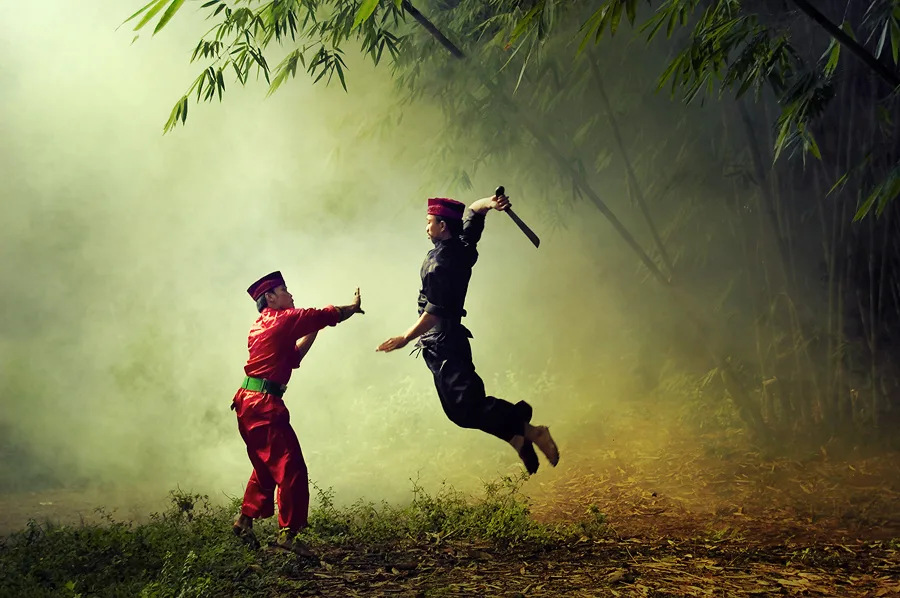
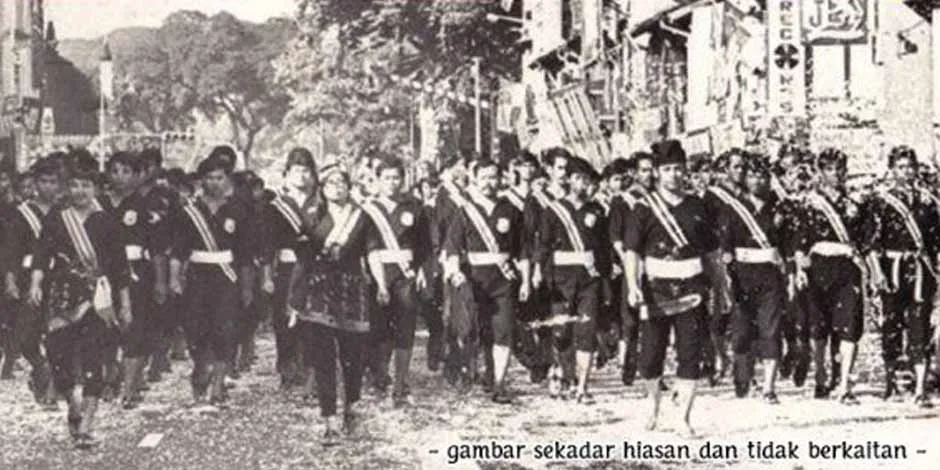
Communist harassment and tyranny led the Malay residents of Kampung Bekor to form the parang panjang group. They also learned self-defense arts such as pencak silat. Among the figures who became the focus for learning pencak silat were Ibrahim and Shaharuddin bin Yeop Abdul Hamid. The Chinese were not exempt from learning kuntau. Many kuntau masters were said to reside in Bekor. Mosques and suraus became important gathering places to unite the Malay residents of Kampung Bekor. One influential local leader in uniting the Malays in Kampung Bekor was Harun bin Uda Hassan. Harun bin Uda Hassan gathered villagers at the surau and mosque, warning them not to cooperate with the communists. The involvement of several local scholars such as Tuan Haji Salleh bin Abdul Manan, Tuan Haji Abdul Rahman bin Abdul Manan, and Tuan Haji Shahbudin bin Lebai Sulaiman Bakul successfully united the Malay residents in Kampung Bekor. There was also involvement from several sheikhs from Bagan Serai, such as Tuan Syeikh Osman. When the Malays were under pressure, a sheikh in Bekor brought the knowledge of the invulnerable ring and acted as a fatwa issuer for the parang panjang line. There were also Malays selling invulnerable armbands to protect lives in the Manong and Bekor areas. Red scarves were used to boost the fighting spirit. In generating internal energy for practitioners of invulnerability, the Quran became the main pillar. Various methods were used by the Malays to defend their survival. The Malay practice of invulnerability was accompanied by the use of objects such as amulets and gold needle implants (susuk). The gold needle implants were inserted into the blood vessels of each practitioner. Rings, bracelets, and necklaces were used as protective talismans when fighting the communists. British intelligence reports prove that protective amulets were sold by Malays in Manong-Bekor. The rings were made of copper coils and worn for self-protection. These invulnerable rings were widely used in locations where fights between Malays and Chinese occurred, particularly in Perak. Because these scholars possessed high knowledge, they were easily accepted by the residents of Kampung Bekor. Learning the art of invulnerability somewhat increased the confidence of the Malays to face the communists' cruel actions. Scholars, religious teachers, and local leaders were reported to play an important role in spreading anti-Chinese sentiment. In the mid-20th century, invulnerability arts and secret societies were used by the Malays for self-defense. The number of practitioners of invulnerability during that period was estimated to reach thousands. The British, who failed to control the situation, considered the Malay practice of invulnerability to be disruptive to social stability and peace. This was because the Malays' reliance on the sultan and the mufti shifted to the scholars and practitioners of invulnerability. The contribution of scholars, religious leaders, and local leaders cannot be denied in leading and awakening the Malay community when threatened by the communists. Their numbers cannot be clearly determined because it was a tradition and principle of the old scholars not to be boastful. Therefore, their knowledge was only spread within a limited scope and at the local level. In the first six months after the Japanese surrender, negative prejudice already existed among the Malays and Chinese. This was because, when a
fight between Malays and Chinese occurred in Sungai Manik,
many Chinese from Bekor helped the communists in that location. The events of hostility and attacks on the Malays caused the Malays to take immediate action.
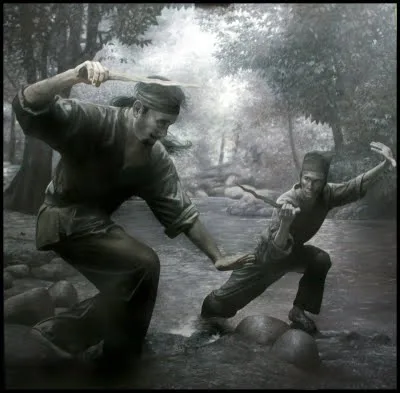
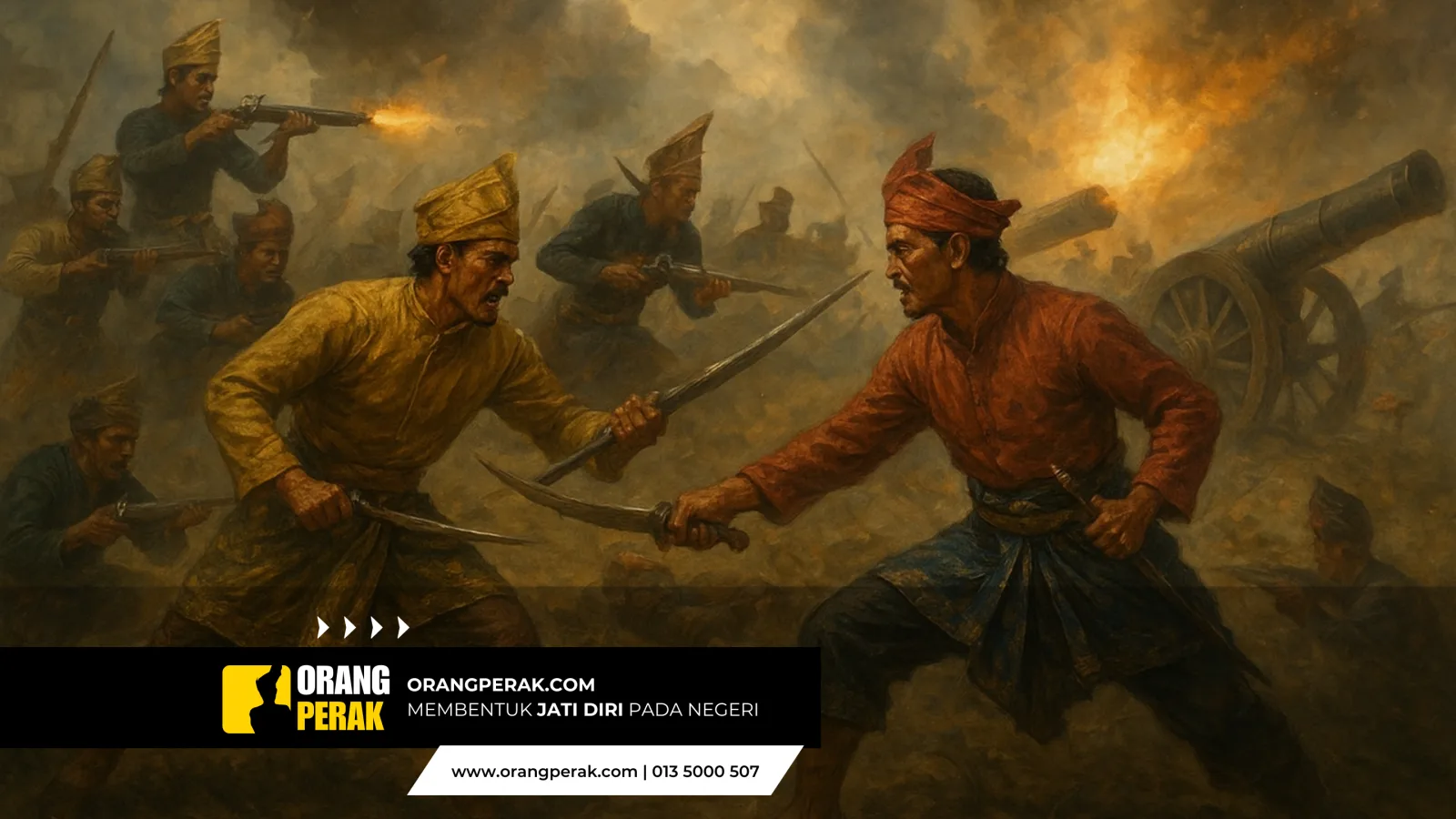
Furthermore, the scholars, religious leaders, and local leaders of Kampung Bekor instilled the spirit of jihad and fisabilillah. They issued a jihad fatwa, stating that it was the duty of Muslims to defend their homeland if invaded by enemies of Islam. This caused the spirit of the Malay community to become hardened and deeply rooted in the spirit of struggle. Race relations in the Bekor and Kelian areas began to strain. It could be said that almost every night, the sound of the tetuang (bamboo horn) used by the Chinese to practice kuntau could be heard. The seeds of the fight between Malays and Chinese began on January 2, 1946, which resulted in one Chinese person being killed and four others missing in Bekor. The Civil Adviser Officer (CAO) of Kuala Kangsar visited the scene on March 4, 1946, and held a meeting with Malay and Chinese leaders. On the same night, six Chinese houses were burned, including the Bekor Chinese School. The Chinese fled and sought refuge at the Ban Sin Loong Estate. In another incident, 100 Chinese people fled in disarray when chased by Malays for damaging Malay crops while building a six-foot-wide village road. The construction work was also carried out without permission from the villagers. The Malay residents rushed to the scene carrying parang panjang and drove the workers away. However, there were efforts toward peace made by representatives of the Malays and Chinese. A meeting was held in Manong, attended by representatives of scholars and Chinese leaders. Three demands were submitted by the Malays. The first demand was to return the Malays who had been captured and taken into the forest. If they had been killed, the Malays requested that their graves be shown so they could be reburied according to Islamic requirements. They also demanded the return of Malay property seized by the communists. The third demand was to surrender all weapons, such as rifles in their possession, to the government. Several local-level meetings were also held between the Kampung Bekor Village Head, Tuan Haji Muhammad Ali, and a Chinese representative in Bekor known as Ah Foi. This meeting was held on the initiative of Tuan Seedwell and Tuan Catchfold. The cause of the attack on March 5, 1946, was the murder of a Chinese person. Several Kampung Bekor residents were said to have taken the opportunity to kill Chinese people while they were carrying sacks of rice from Klian to Manong.
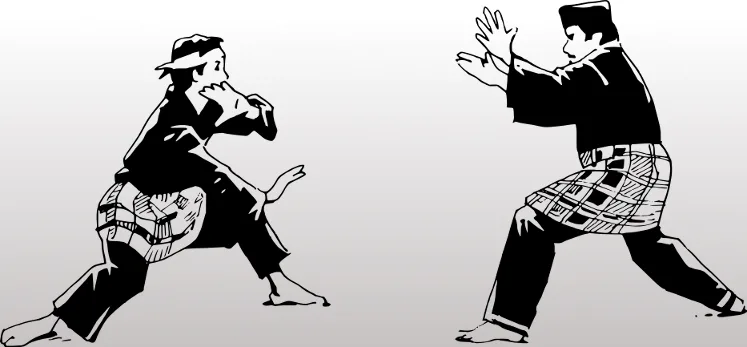
In another incident, several villagers hacked two Chinese people who were carrying rice to Manong town. One of them jumped into the
Perak River
nearby. Meanwhile, the other managed to escape. There are also sources stating that the fight originated from the murder of a Chinese resident who was carrying chickens in Kampung Bekor. The murder was committed by Kassim bin Alang Mat Yasin. The trader's body was thrown into the river and got stuck in the
Perak River
The body was found by the Chinese, and they carried the body through the Kampung Bekor path. Today, in the modern era, many consider this story a myth and a mere fantasy of the old Malays. Because there is no solid evidence that can be provided other than rough stories from the elders passed down to families orally. The knowledge is also said not to have been passed on to heirs and is now almost completely lost to the passage of time. However, this story should be read by all to commemorate the struggle of the Malays in the past in defending their rights and so that we do not forget the history that we were once severely colonized during the time of our ancestors.