The Story of Ahmad Boestaman from Tanjung Malim
Perak is one of the states that produced many nationalist figures who fought for the nation's fate against colonialism in this blessed land. The figure that orangperak.com will touch upon this time is already quite famous throughout Malaysia, yet not many know or have studied his life history. He was a writer, journalist, and national independence fighter, Dato' Ahmad Boestaman. Let us reflect on his life story so that we may internalize his spirit in defending the nation's independence, despite his left-wing leanings.
Born with the name Abdullah Thani Raja Kechil on November 30, 1920, he was raised in Kampung Behrang Ulu, Tanjung Malim, Perak. However, he is better known by the name Ahmad Boestaman, so much so that few know his original name. He also used the pen names Ruhi Hayat and Jiwalara. Receiving his early education in the village, Ahmad finished Grade Five and passed with Grade 1 in the Special Malay Class (SMC) examination. He then continued his studies at Anderson School Ipoh, a famous English school, up to the seventh grade. He once failed the "Junior Cambridge" examination at that school. However, he managed to redeem that failure by passing the Qualifying Test (QT), then the Overseas School Certificate (OSC), and finally the Higher School Certificate. He achieved all of this through self-study between 1963 and 1967.
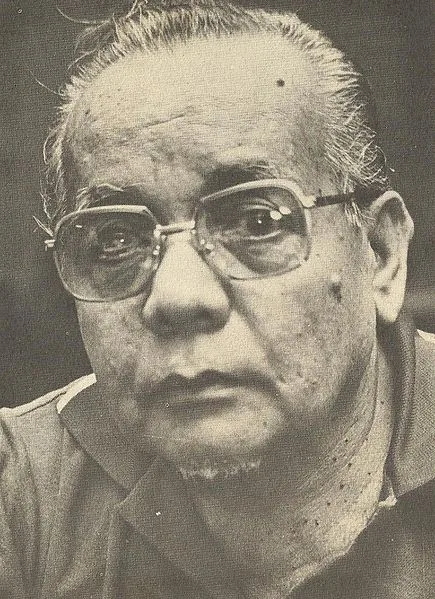
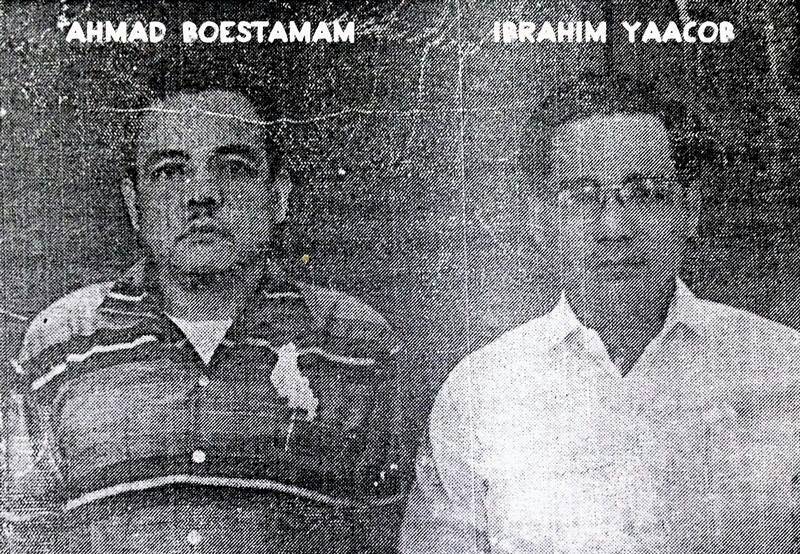
He later continued his studies at a higher level at Lincoln's Inn, London, for a Barrister at Law degree. However, he only studied halfway through that field. Nevertheless, he passed and successfully obtained a diploma in journalism from the Premier Journalist School in London in 1969. Ahmad Boestaman dabbled in journalism at the age of 15 while attending Anderson School by writing articles for the newspaper Saudara, which was published in Penang. He once worked with the newspaper Saudara as well as Warta Khas in 1940. He then worked for the newspaper Majlis, led by Ibrahim Haji Yaakob and Abdul Rahim Kajai. It was here that he was exposed to the political arena. In 1941, he served with Pak Sako at Utusan Melayu, which was headquartered on Queen Street, Singapore. He then worked for the newspaper Warta Malaya after Ibrahim Yaakob bought the newspaper company, and at the same time, he held the position of Secretary-General of the Kesatuan Melayu Muda (KMM). He was later detained by the British under the Internal Security Act (ISA) and released on February 15, 1942, after the Japanese successfully captured Malaya and Singapore. He worked with the Japanese administration through a propaganda body called Sesden Ka. He established an underground movement known as the National Leftist Movement (KITA) together with Mokhtar Al-Bakri, Hj Ramli Said, and Zulkifli Ownie. This organization hid behind Japanese military training and the name Malay Youth Front (Barisan Pemuda Melayu). Ahmad Boestaman also established the Kesatuan Rakyat Indonesia Semenanjung (KRIS) with the aim of liberating Malaya and uniting with Indonesia under the name Melayu Raya through cooperation with the Japanese. However, this effort did not come to fruition after Japan surrendered and the British returned to rule Malaya.
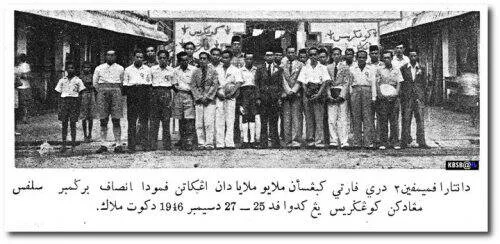
Ahmad Boestaman then established the Malay Nationalist Party of Malaya (PKMM). Under PKMM, he founded the Angkatan Pemuda Insaf (API) with the struggle slogan "Merdeka Dengan Darah!" (Independence with Blood!). However, the Communist Party of Malaya (CPM), which wanted to control Malaya through legal means, formed the "All-Malaya Council of Joint Action" with the aim of influencing Malay political parties and Indian trade unions at that time. With that, the ambition to form a communist republic in Malaya would become easier. Consequently, Ahmad Boestaman collaborated with the CPM, though he was aware that the CPM's struggle was colonial in nature toward Malaya. This was because the CPM had influence from the Communist Party of China, which collaborated with the Comintern, an international communist organization under the influence of the Soviet Union. Ahmad Boestaman initially allowed the Communist Party of Malaya (CPM) to influence the PKMM. This was because the financial aid and management of his newspapers, Suara Rakyat and Voice of the People, were held by the CPM. The main leadership, namely the President of PKMM, was also controlled by the CPM through Mokhtaruddin Lasso, a political refugee from the Communist Party of Indonesia (PKI) who became the leader of the 10th Regiment of the MPAJA. Eventually, the CPM determined the political policy of the PKMM. The political policy to protect and fight for the creation of national sentiment, advance the economy, education, and justice for the Malay community was changed by the CPM. The CPM also set an important policy that symbolized the formation of a "Malayan" nation, in line with its policy of creating an All-Malaya Council of Joint Action in the future. Thus, the PKMM's policy was no longer one hundred percent Malay. It had been adapted to the ambitions of the CPM. Ahmad Boestaman, who realized this, tried to balance the CPM's political influence; in a conference held on November 30, 1945, the policy to form 'Melayu Raya' or Indonesia Raya was included as one of the goals of the PKMM's struggle. In fact, this policy was deliberately highlighted by him to avoid negative public perception regarding the CPM's control over the PKMM. This also received cooperation from Indonesians residing in Malaya.
At that time, the British government supported UMNO because, for the British government, UMNO was a more moderate political party, not influenced by any external elements that threatened its political and economic position, and did not have a history of resistance against the British, as had been done by the PKMM, which was led by several former members of the KMM. UMNO was also blessed by the Malay rulers, who were the symbols of Malay sovereignty. The support of the Malay rulers for UMNO was acknowledged as very important because the Malay rulers were the heads of state governments who made agreements with the British government. UMNO's wisdom in attracting the Malay rulers to their side trapped the British government into acknowledging UMNO's interests. At this time, Ahmad Boestaman and the PKMM, which had been influenced by the CPM, established PUTERA as a large radical Malay body to join with AMCJA, a coalition of non-Malay political parties that was also influenced by the CPM. Both organizations then became important opponents because they issued the People's Constitution as an alternative constitution for the public, in addition to the Federation Agreement of 1948 prepared by UMNO, the Malay rulers, and the British government. By having a policy that did not focus entirely on the interests of the Malays, it meant that Ahmad Boestaman and the PKMM had gone against the current of the Malay awakening spirit in 1946. This is because the Malay resistance against the Malayan Union was the peak of their nationalist movement all this time.
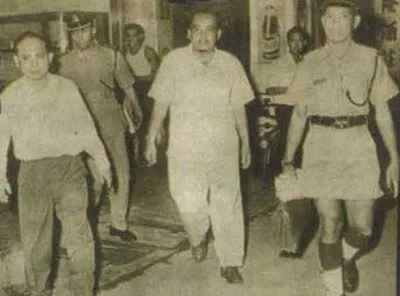
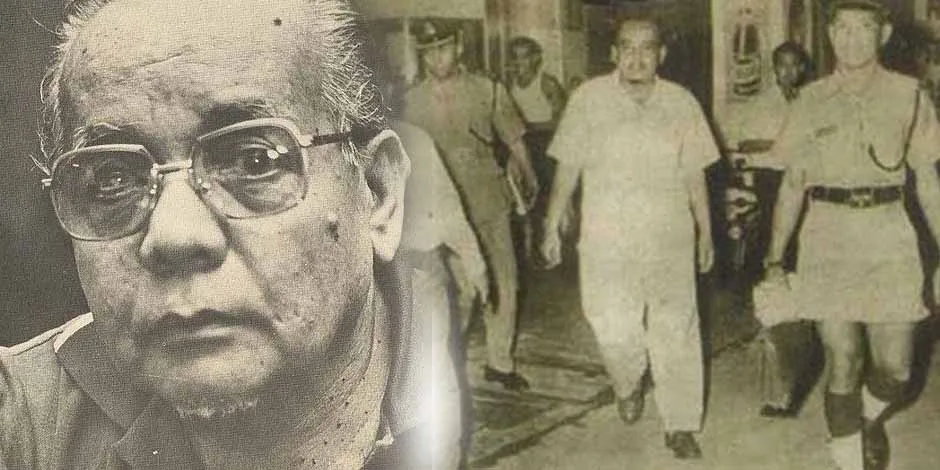
The Malay nationalist movement, which started so late and did not really challenge the British government, became quite tense with the introduction of the Malayan Union. This is because the anti-Malayan Union movement had awakened a political consciousness that was clear enough to involve women, who had previously been closed off by their traditional roles. The introduction of the Malayan Union united the Malays, not only among the people but also the Malay rulers and traditional chiefs who had previously been separated from the common people. The resistance was a movement that challenged the British government until it had to bow to their demands. In February 1946, while the spirit of demanding independence was burning among the Malays, Ahmad Boestaman, together with Dr. Burhanuddin Al Helmi, established the Angkatan Pemuda Insaf (API), a radical left-wing movement in Malaya until the organization was banned by the British. The arrest of Ahmad Boestaman from July 1948 to 1954 froze his political activities for a relatively long period, namely seven years. He was detained for so long because he was considered dangerous to British political security in Malaya. The declaration of emergency laws was also used by the British government to control CPM elements and their allies, including the PKMM and left-wing movements. Ahmad Boestaman was considered part of the dangerous driving force. After being released from detention, he established the Parti Rakyat Malaya in 1955. He became a Malay opposition leader by using the socialism-marhaenism ideology created by Sukarno. By collaborating with the Labour Party of Malaya, he succeeded in forming the Socialist Front (SF), which eventually became one of the famous opposition parties after the independence of Malaya. The 1959 Malaysian General Election gave recognition to his political activities all this time. He won the Setapak parliamentary seat in Kuala Lumpur under the Socialist Front ticket. With that, Ahmad Boestaman became one of the respected opposition members, along with other nationalist and Malay political figures such as Dato' Onn Jaafar, Dr. Burhanuddin, Khadijah Sidek, Zulkifli Mohammad, and Othman Abdullah.
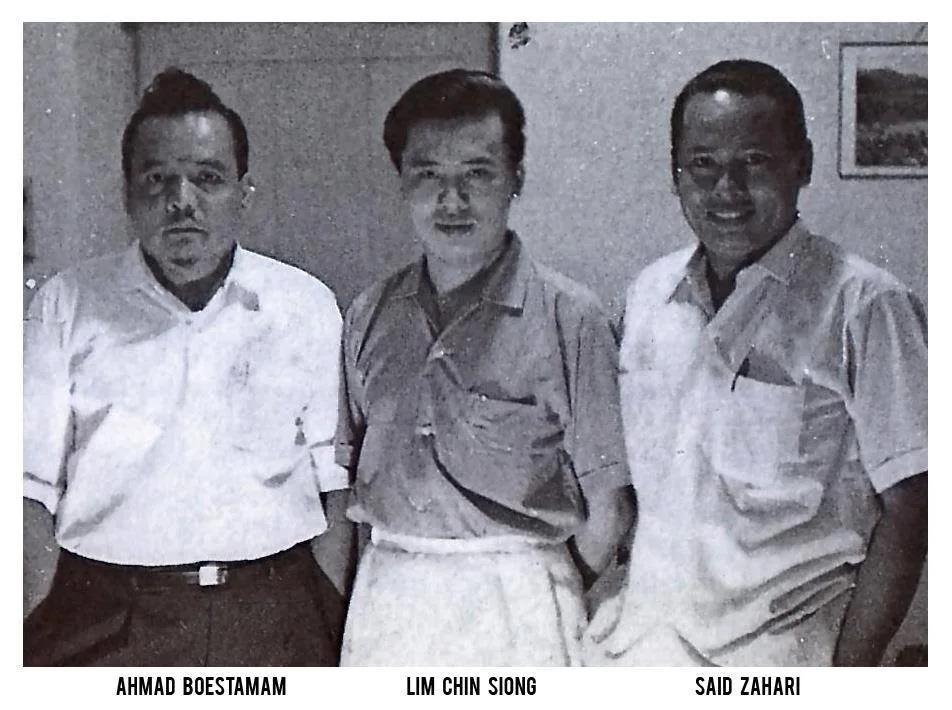
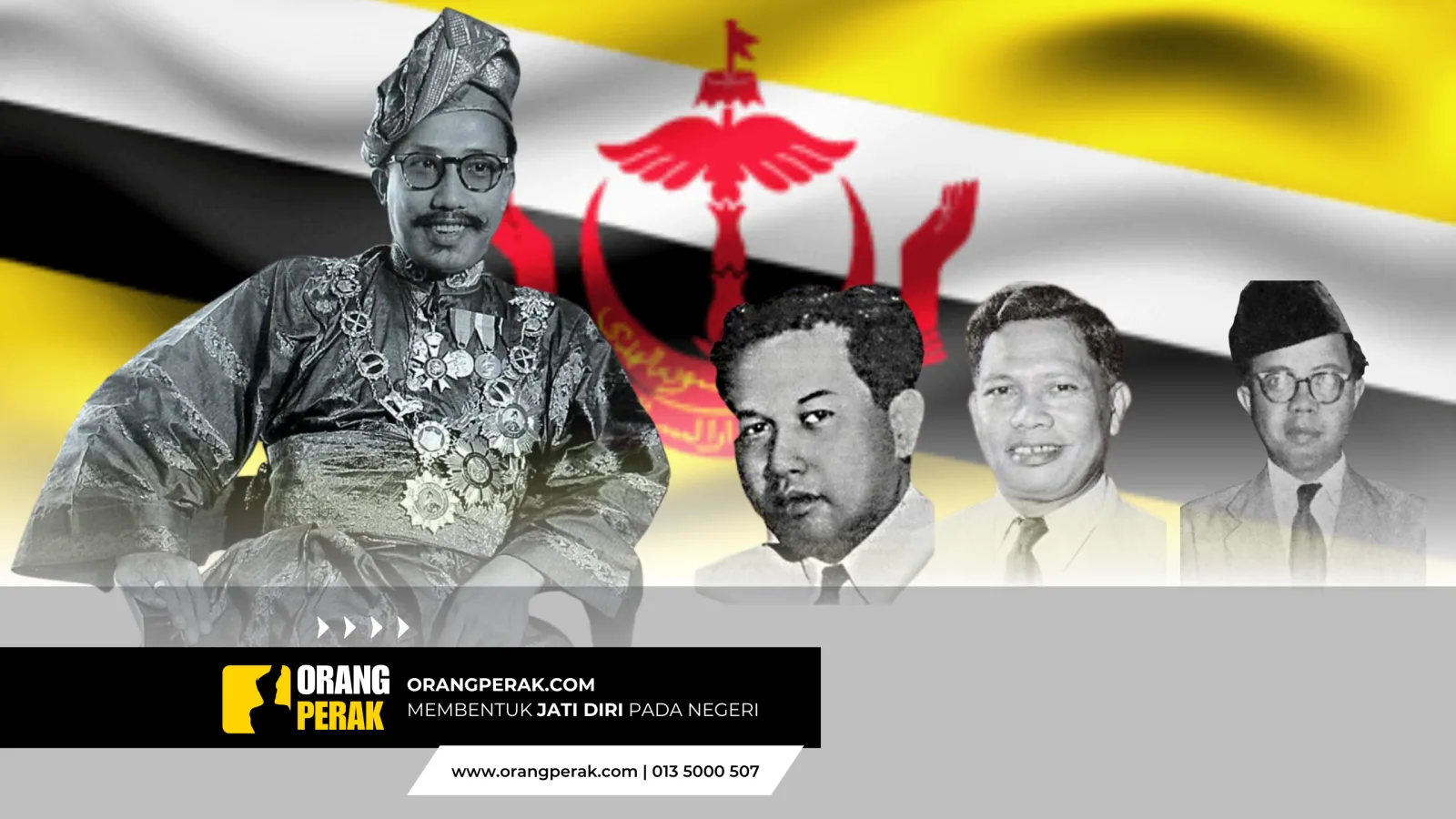
Capable non-Malay opposition figures such as D. R. Seenivasagam, Tan Chee Koon, and Lim Kean Siew joined forces with Ahmad Boestaman and other friends. The presence of Ahmad Boestaman and his friends forced the Alliance government to work hard to oppose them in the Dewan Rakyat. However, Ishak Haji Muhammad from the Labour Party lost in Temerloh, Pahang. This election was the first after independence on August 31, 1957. The 1959 Malayan general election was quite intense because it was held in stages, starting from the state of Perlis to Kelantan. At that time, Sabah and Sarawak had not yet joined and formed Malaysia. Parliamentary seats increased from 52 (1955) to 104 seats (1959). The Alliance won 74 seats and the opposition won 30 seats. Ahmad was arrested in 1963, for the third time in the history of his political life. This time, Ahmad was arrested by the government for four years. At that time, he was still a Member of Parliament for Setapak. The reason given by the Alliance government at that time was that he was involved in Indonesia's efforts to oppose the Malaysia concept that was being pursued by Tunku Abdul Rahman, the head of the Alliance government and Prime Minister of Malaysia. He was also accused of collaborating with the Communist Party of Indonesia (PKI) and being involved in the 1962 Brunei revolt. He released a novel titled "Merangkaklah Senja Menutup Pandangan" which depicted his story while he was a detainee.
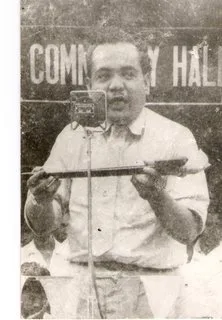
He joined the Parti Sosialis Rakyat Malaysia (PRSM) in 1980 until the end of his life. The remainder of his life was spent as a freelance writer for newspapers as a way to pass the time and earn a little income to support his life. Two years after performing the Hajj pilgrimage, he passed away in 1983 after suffering from lung cancer. With that, the life journey of a very dynamic and interesting political figure who gave fierce and bright colors as well as winding patterns to his life and Malaysian politics in particular, came to an end. His importance in Malaysian political history will not be forgotten. He successfully mastered the fields of politician, writer, and journalist well. He was awarded the Panglima Negara Bintang Sarawak (P.N.B.S) star, which carries the title of Dato by the Yang Dipertua Negeri of Sarawak.