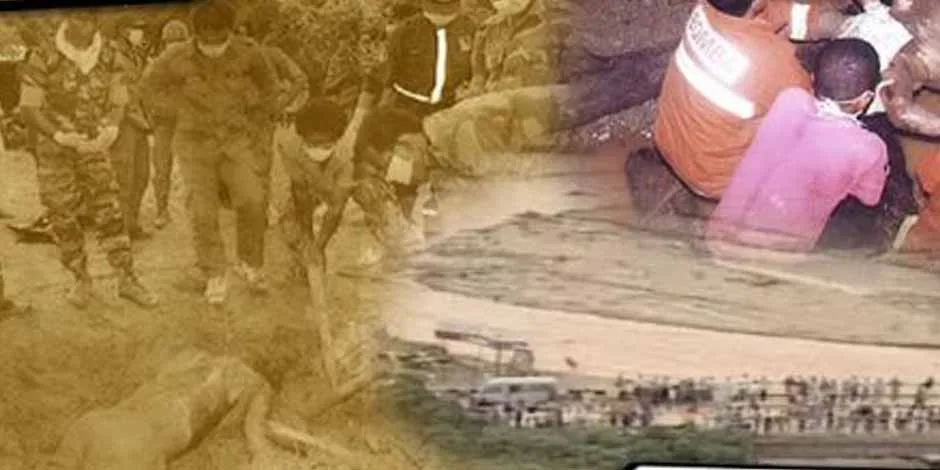
The Pos Dipang Tragedy, The 1996 Kampar Mudflood Disaster
The Pos Dipang tragedy was a mudflood disaster that occurred on August 29, 1996. This disaster took place in the late afternoon, around 6 PM, at the Pos Dipang Orang Asli settlement located in a remote area within the Kampar district, Perak. The incident happened two days before Malaysia's 39th Independence Day celebration.
The Pos Dipang tragedy happened a long time ago, but for those directly involved, the heart-stopping moments during the mudflood are still fresh in their memories. The mudflood claimed 44 lives. Of that number, only 39 bodies were recovered, while five remain missing to this day. The Pos Dipang Orang Asli village had about 60 houses built with the assistance of the Department of Orang Asli Affairs (JHEOA) and had approximately 1,500 residents. The settlement was established in 1978 when the fruit orchards they cultivated there began to bear fruit. Previously, the villagers lived at Batu 19, Jalan Cameron Highlands, not far from the area.
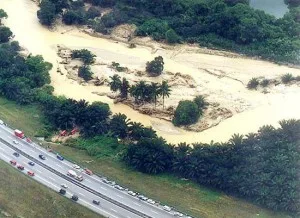
On the day of the incident, it had been raining heavily since about 12 noon until the evening. Even after 6 hours had passed, the rain did not stop. Suddenly, a loud boom was heard, interspersed with the roar of rain from the direction of the hills behind the village. The shocked villagers wondered what the strange sound was. A few minutes later, they heard a strange noise again. Before they could even think, the walls of their houses shattered, and water mixed with mud rushed inside. The force of the rushing current caused some residents to be thrown out of their homes, while several houses located on the banks of the Dipang River collapsed and were swept away. Once they realized the mudflood was consuming the Orang Asli village, the residents panicked; screams were heard everywhere, and some rushed out of their homes to save themselves. However, as soon as they stepped out, the strong current quickly grabbed them. Many residents were swept away, bobbing in and out of the current, their bodies repeatedly hitting and being pierced by tree branches.
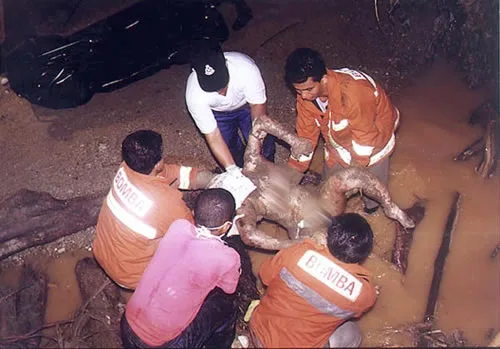
The situation happened unexpectedly. Before that, no one thought that the calmly flowing river could turn so violent. The impact of floating logs and the force of the flood destroyed 30 houses, while 20 others were damaged, and dozens of villagers, mostly Orang Asli, went missing in the tragedy. In addition to the Orang Asli community living along the Dipang River, a Chinese family living in a nearby village also became victims. Upon realizing the terrible tragedy, rescue teams rushed to the location even though the evening was turning into night and the surroundings were becoming dark, obscuring visibility. Generally, the search and rescue operation involved 400 rescue personnel, including the Kinta district police, the central fire department, the 2nd Brigade of the Royal Ranger Regiment from Ipoh, the 69 Commando Unit of the Police Field Force (PPH) from Ulu Kinta, the 3rd Battalion of the PPH from Bidor, Kampar District Office staff, the Civil Defence Force from Ipoh, and other parties. Around 1:30 AM, the first body, an Orang Asli woman in her 30s, was found. The search operation continued even though the rescue teams realized that the search was not easy, especially with the current still flowing strongly and the darkness caused by the power outage. They continued their search and rescue duties as best they could while waiting for night to turn into day to continue the search for victims. As soon as dawn broke the next morning, a truly horrifying sight was revealed.
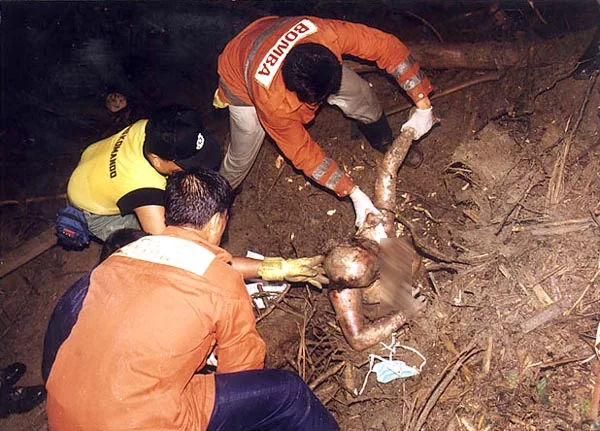
After 24 hours, the heavy rain had turned the landscape of the Pos Dipang Orang Asli village into a disaster zone. Despite the difficulties, the rescue team continued the search operation. They had to dig through piles of soil mixed with mud about 1.5 meters thick and move fallen trees to look for possible victims underneath. The chaotic state of the scene, filled with the remains of collapsed houses and fallen trees, made the search more difficult, especially since the rescuers were only using manual labor to find the bodies. The bridge on the Dipang River that connected the village to Kampar had collapsed due to the current, making it difficult to deliver aid. This forced the relief teams to take a long detour through Chenderiang from Tapah. By the end of the second day of the incident, August 30, 1996, the mudflood tragedy had recorded the recovery of 15 victims' bodies, while 27 others were believed to still be missing, swept away by the mudflood. The search operation subsequently recorded an increase in the number of deaths. The victims who perished in this mudflood incident ranged from babies as young as seven months old to elderly residents aged 70. According to reports, one of the bodies of the mudflood victims was swept as far as the Kinta River, Malim Nawar, about 48 kilometers from the scene.
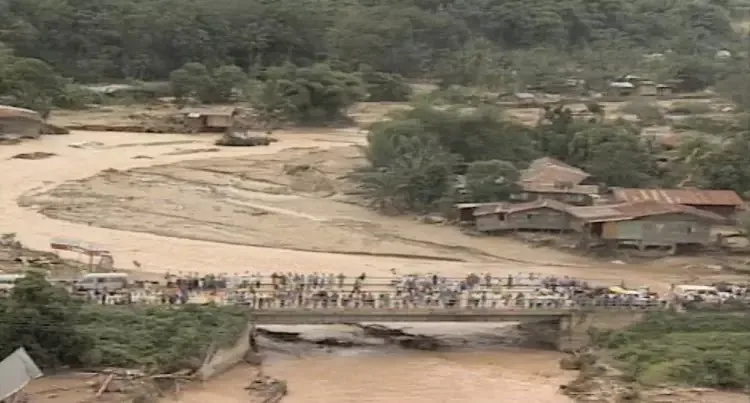
After 13 days, on September 11, 1996, the search operation for victims was called off, with the death toll of the Pos Dipang Orang Asli village mudflood tragedy recorded at 39, while five others remained missing and were never found. Behind this unexpected event, it opened the eyes of many parties. Human greed for natural treasures will surely bring consequences to anyone. The Pos Dipang tragedy, which recorded the largest number of casualties due to a mudflood, was reported to be closely related to rampant logging activities by certain parties in the area. However, the Orang Asli community believed that the terrible disaster that destroyed their settlement in the blink of an eye was a sign of God's wrath. According to Orang Asli belief, the 'Dewa Dipang' (Dipang Deity) who lived on the mountains in the area had become enraged due to the rampant logging activities that had disturbed the deity's dwelling. This caused the deity to become angry, resulting in the devastating mudflood that claimed these lives. Regardless, the Pos Dipang tragedy demanded various agencies to work hard to carry out their respective duties. Since the story of the devastating mudflood spread, various parties began to open their eyes and focus on the issue of Orang Asli settlements in this country. Among those inseparable from Orang Asli issues is the Department of Orang Asli Affairs (JHEOA), now better known as the Department of Orang Asli Development (Jakoa). After the tragedy, almost all state governments with large Orang Asli populations ordered the JHEOA to identify settlements that were exposed to danger, especially mudfloods. Following the disaster that destroyed almost the entire Pos Dipang Orang Asli village, a new settlement was built for them not far from the original site. The new Pos Dipang Orang Asli settlement also became a model settlement after state government studies found it to be suitable and safe to inhabit. The 1.5-hectare new settlement houses 53 homes, with each construction costing RM7,000.
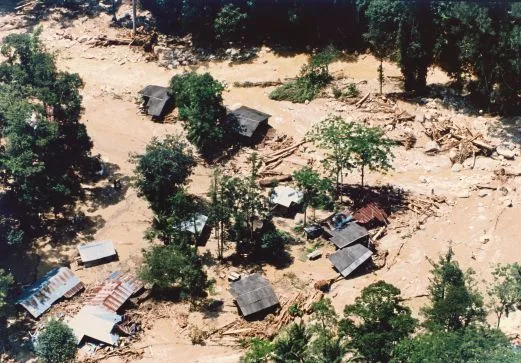
The Pos Dipang mudflood claimed 44 victims, with five others missing and never found. All victims, except for six people from a Chinese family living in Bah Hon Hin about six kilometers from the Pos Dipang Orang Asli village, were Orang Asli residents.