The History of the Dutch Fort on Pulau Pangkor
The fort, known as the Dutch Fort (Kota Belanda), was originally built by the Dutch in 1670 as a warehouse to store tin ore obtained from the State of Perak.
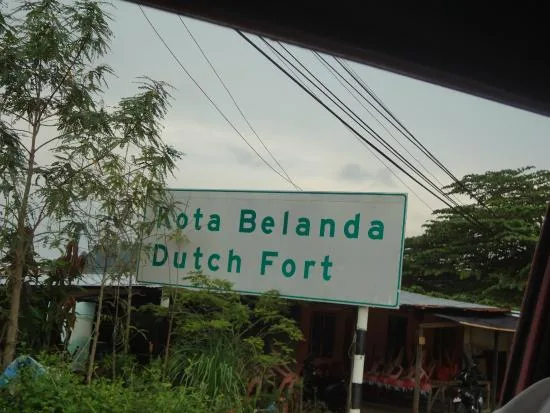
This fort is located in a bay on Pulau Pangkor known as Kampung Teluk Gedung, which was a fishing village at the time. The construction of this fort by the Dutch is closely related to the purpose of the Dutch arrival in the Malay Peninsula at the beginning of the 17th century. The Dutch, having established good relations with Perak, succeeded in their tin ore trading ventures. The Dutch East India Company (VOC) successfully gained a monopoly over the tin trade in the State of Perak. The fortress on Pulau Pangkor is better known as the Dutch Fort by the Malay population and is situated in the area called Teluk Gedung.
However, Dutch records refer to the fortress as Fort Dinding (Dingdingh). The name was taken from the Dinding River located on the mainland of the peninsula opposite Pulau Pangkor. Perak was a major tin-producing region in the world at that time, and the Dutch East India Company (VOC) was keen to control and monopolize the trade. Because of this, Dutch warships blockaded Perak for much of the 17th and 18th centuries. One of the main reasons for this blockade was that Perak was a protectorate of Aceh at the time, and the Dutch were then at war with Sumatran states, including Aceh. For this reason, the Dutch built a base at Teluk Gedung in 1670 to assist in the blockade and to prevent the British from occupying the island.
The British were active traders and the strongest competitors to the Dutch in the archipelago. According to a report by the Dutch Governor of Melaka, Balthasar Bort, in 1678, "at present, there are 59 Dutchmen in Perak involved in this blockade and stationed on Pulau Dinding, which is under the company's rule. They occupy a square wooden fort equipped with nine iron cannons." The 59 Dutchmen consisted of a merchant administrator, a captain, a record keeper, 3 assistants, 3 second mates, 2 medical officers, 8 armed guards, and 40 sailors. They guarded the fort alongside a small fleet consisting of the sailing ship 'Laren', the sloop 'Cacap', and a boat named 'Dingdingh'. The fort was found to have been further fortified a few years later, based on the records of British explorer William Dampier, who stated in 1689: "Only the Dutch inhabit and have a fort on the eastern part (of the island), and it is near the sea. In the bay area of the island, a small jetty was built for ships to dock. The fort was built in a square shape without towers and is more like a house. Each side measures about 10 or 12 yards. The walls have good thickness, are made of stone, and support a height of about 30 feet. There are about twelve to fourteen cannons, each guarding every corner. These cannons are placed on a solid foundation made into the wall, about sixteen feet high. Here, there is a governor and about twenty to thirty soldiers."
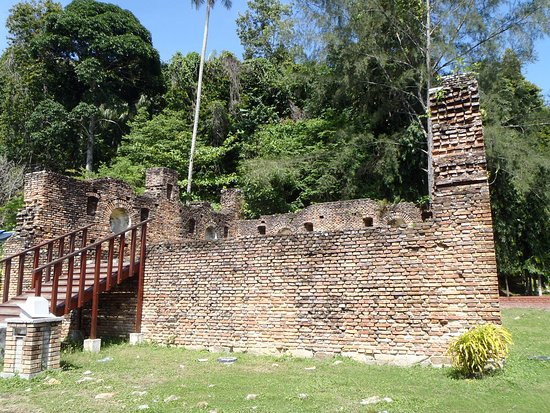
All supplies for this fort were brought from Melaka because, according to Dampier, this defensive fort was constantly threatened by the Malays. Although the Dutch traded with the Malays, they did not trust them. The Dutch would only venture far from the fort when they felt the situation was safe. Dampier mentioned an incident that occurred while the Governor, his guests, and his officers were sitting down for dinner. Suddenly, just as they were about to begin, a Dutch soldier shouted, "Malay!!". Immediately, the Governor, without saying a word, jumped out of one of the windows and ran as fast as he could to the fort. His officers and followers followed him immediately. They fired several shots to warn the Malays that they were ready to fight. However, no Malays appeared. There were boats full of Malays hiding behind the hill and near the coastline. And when the Dutch boat went out to fish, the Malays, using krises and spears, ambushed and killed two Dutchmen who were on the boat. The other Dutchmen jumped out of the boat and swam to the shore. They were about a mile from the fort. Once they reached the shore, each of them ran as fast as they could to reach the fort. The first victim to reach the fort immediately told the Governor what had happened while crying. Dampier continued his story: "We all stayed awake all night with all weapons and cannons loaded. But heavy rain fell that night, which made me less afraid of being attacked by the Malays, as I had been informed by one of the sailors from Melaka that the Malays would not launch any attacks when it rained. The next day, Dutch warships began patrolling to locate the Malays but found that they had already retreated."
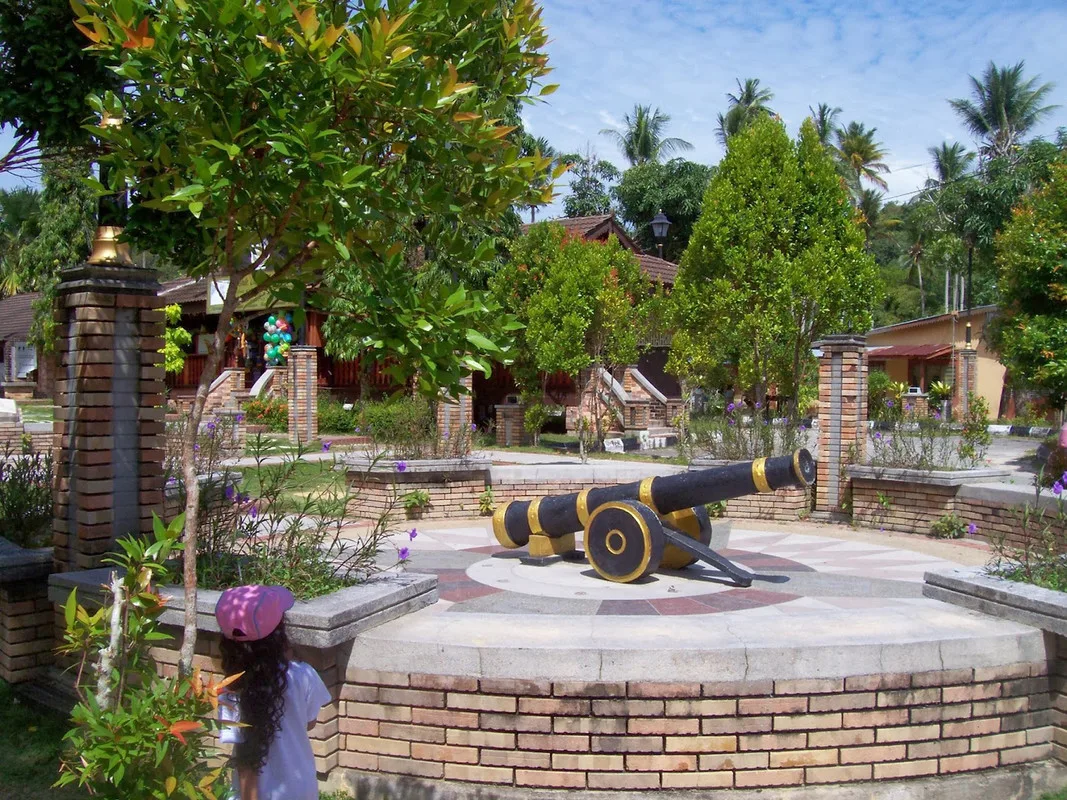
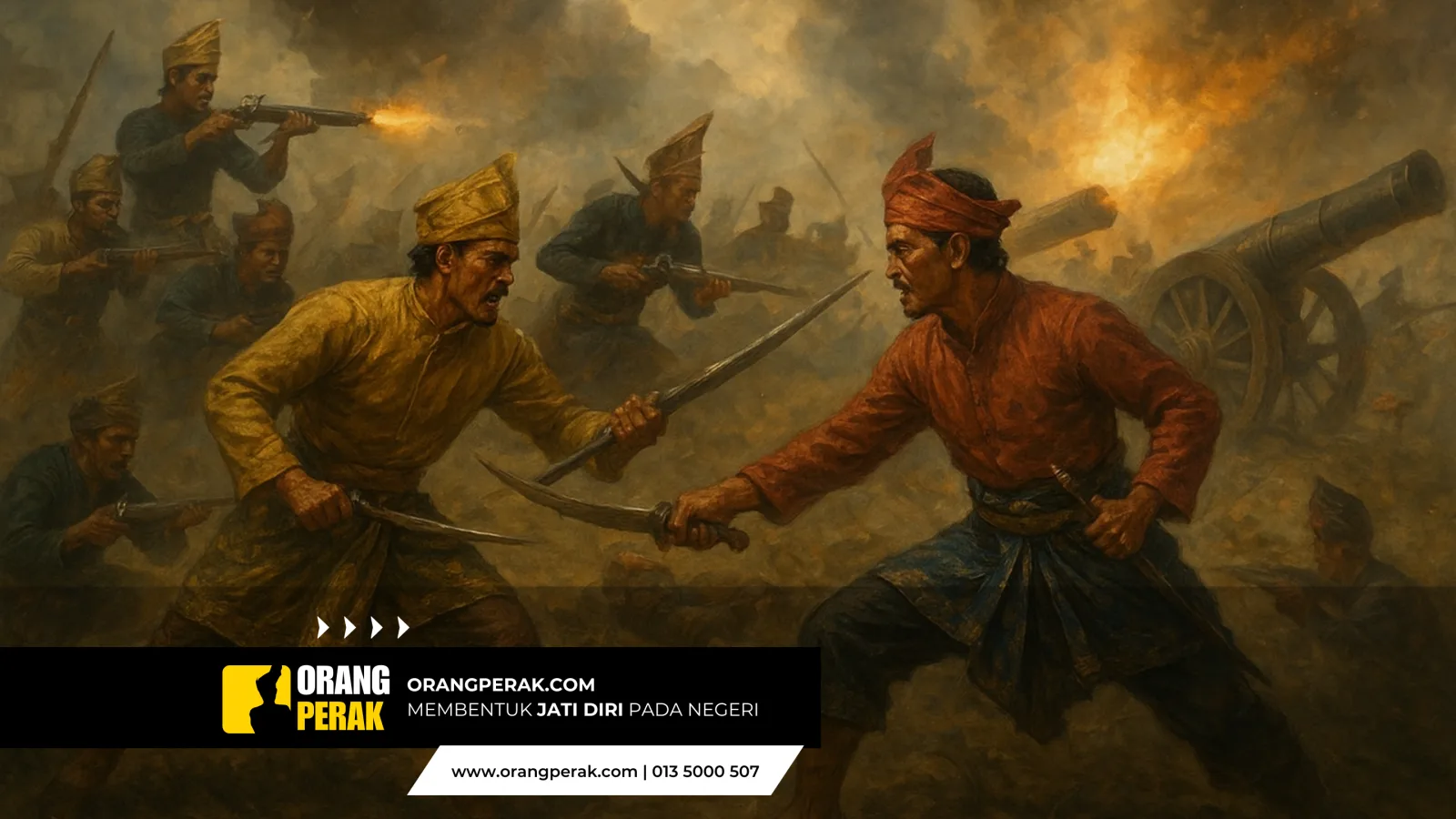
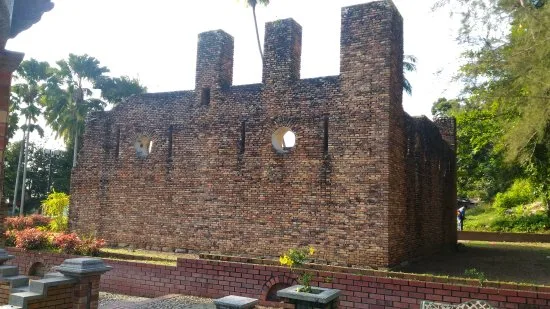
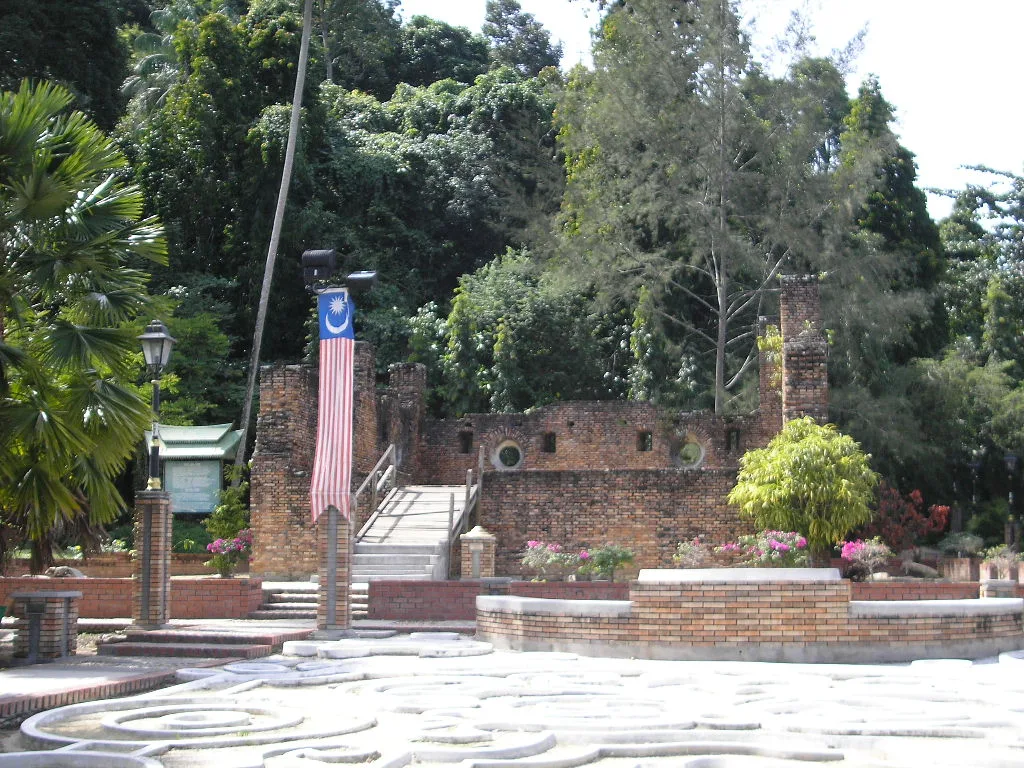
In 1690, the Dutch fort was attacked again by Malays led by Panglima Kulup, and the Dutch soldiers at the fort were killed. On June 24, 1693, an order was issued due to the massacre that had occurred at the fort. The order stated that no more soldiers would be stationed on Pulau Dinding, but a stone monument should be erected where one side of the monument would bear the crest of the Dutch East India Company and the other side the crest of the Dutch government as a sign that the island remained under Dutch ownership. In 1695, 1721, and 1729, orders were issued to repair the stone monument. On November 20, 1745, Governor-General Gustraaf Willem, Baron van Imhoff, ordered the fort on Pulau Dinding to be rebuilt and guarded by 30 Europeans and 30 Asians (provided they were not Bugis). Then, according to data from Melaka dated October 22, 1746, a merchant named Ary Verbrugge was sent to Perak to persuade the Sultan of Perak to allow a fort to be built on the Perak River and to agree to sell all tin ore to the Dutch East India Company. On June 25, 1747, the Sultan of Perak, Sultan Muzaffar Shah III, signed an agreement to send all tin ore to the Dutch and granted permission to build a fort anywhere along the river. According to the Malay history of Perak, the 'Misa Melayu' mentions that the Dutch reinforced a stone warehouse at Pangkalan Halban in Tanjung Putus. This new fort was established on October 18, 1748, and Van Imhoff then ordered the soldiers guarding the Pulau Dinding Fort to vacate it and begin guarding the new fort at Pangkalan Halban. You can learn more about the Pangkalan Halban Dutch Fort by clicking the link here. Following this, the Dutch government in Batavia ordered the old warehouse on Pulau Pangkor to be abandoned. Due to a lack of maintenance, the building fell into disrepair until 1973, when the National Museum restored it. The restored fort or warehouse follows its original shape and dimensions of 3 x 5 square meters, while its stone walls are 6 to 7 meters high.
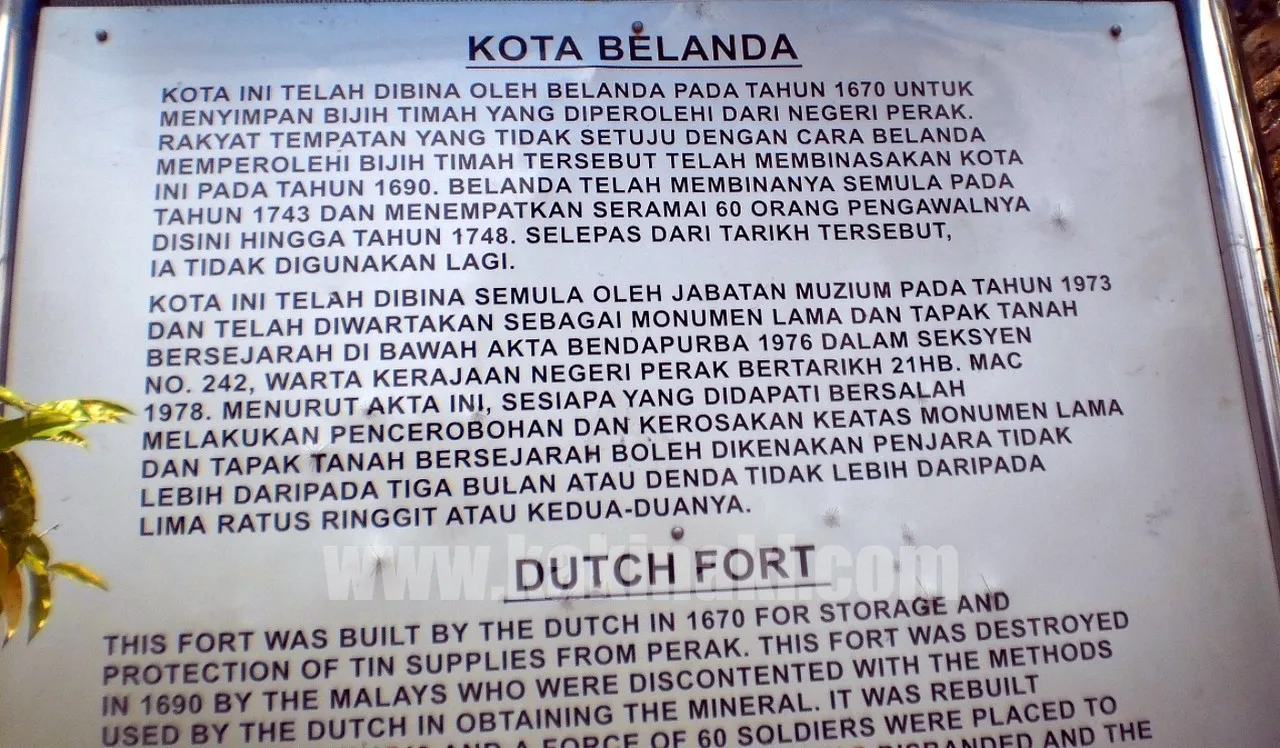
However, the roof could not be built because its original shape was unknown to the National Museum. This Dutch Fort was gazetted as an ancient monument and historical site under the Antiquities Act 1976 in Section No. 247, Perak State Government Gazette dated March 31, 1970. Then in 1997, the Perak state government further developed this area as a Perak state tourism site. Several traditional Perak 'limas' houses were built here. Various food, clothing, and souvenir stalls are also available here. Several parts of the fort have been restored and beautified within the surroundings of the Malay fishing village. Near this Dutch Fort, there is a Dutch Inscription Stone. This stone is located on the beach, about 100 meters from the Dutch Fort. The writing on this Inscription Stone is believed to have been carved by Dutch company soldiers while they were occupying the warehouse or Dutch Fort around the year 1743. It is also believed to be a memorial for the child of a Dutch official who went missing while playing near the stone.
The Dutch believed that the child had been eaten by a wild animal. To commemorate the event, the Dutch created the stone with a depiction of a wild animal (believed to be a tiger) catching a child. Other carvings may be the names of the carvers, stated in initials such as IK, R.O., and others, and there is a carving of the letters V.O.C., which is the abbreviation for Verenidge Oon Stindische Company - the Dutch East India Company.