The Current Neglected State of Dato Sagor's Tomb
Everyone knows the name Dato Sagor, who was once highly revered in the Malay community of Perak for his service in resisting the colonizers. Did you know that 'Dato Sagor' is actually just a title, said to be the seventh in the list of the Eight Major Chiefs (Orang Besar Delapan) of Perak?
If you are a loyal reader of orangperak.com and are unaware, the real name of the Dato Sagor we know today for his struggle against the colonizers and his involvement in the movement to assassinate
the first British Resident in Perak
is actually Ngah Kamdin.
As we know, Ngah Kamdin, better known by his title Dato Sagor, was arrested by the British because he was one of those involved in the movement to assassinate
the first British Resident in Perak
namely JWW Birch. However, this article published on orangperak.com is not intended to reintroduce who Dato Sagor was, but rather to highlight the current state of his grave, which may have been overlooked by local residents, descendants, or the relevant departments. If you would like to know more about Dato Sagor, please visit the article "
The Origin and History of the Name Dato Sagor
" for further review.
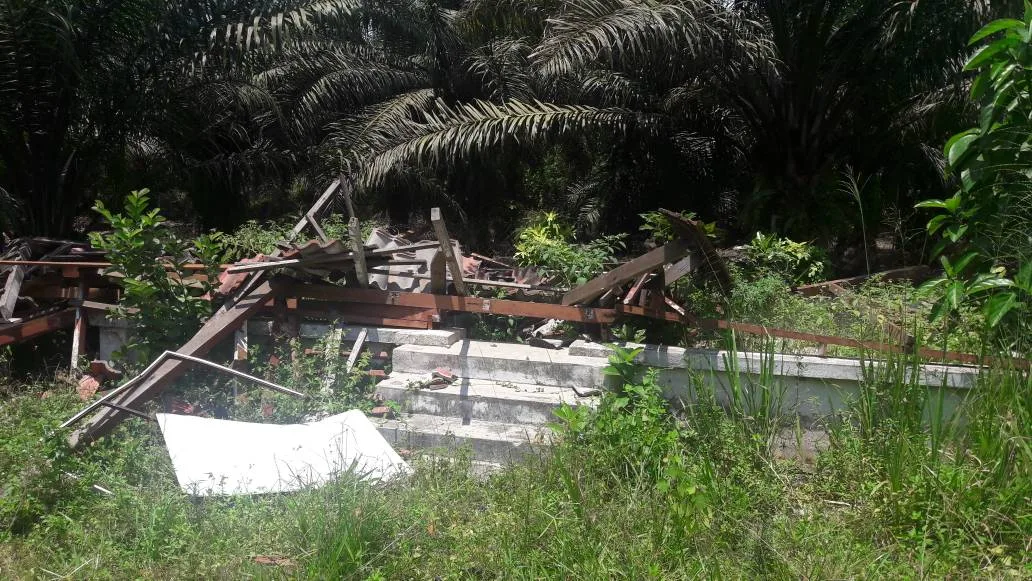
The roof structure of the Dato Sagor tomb pavilion has collapsed
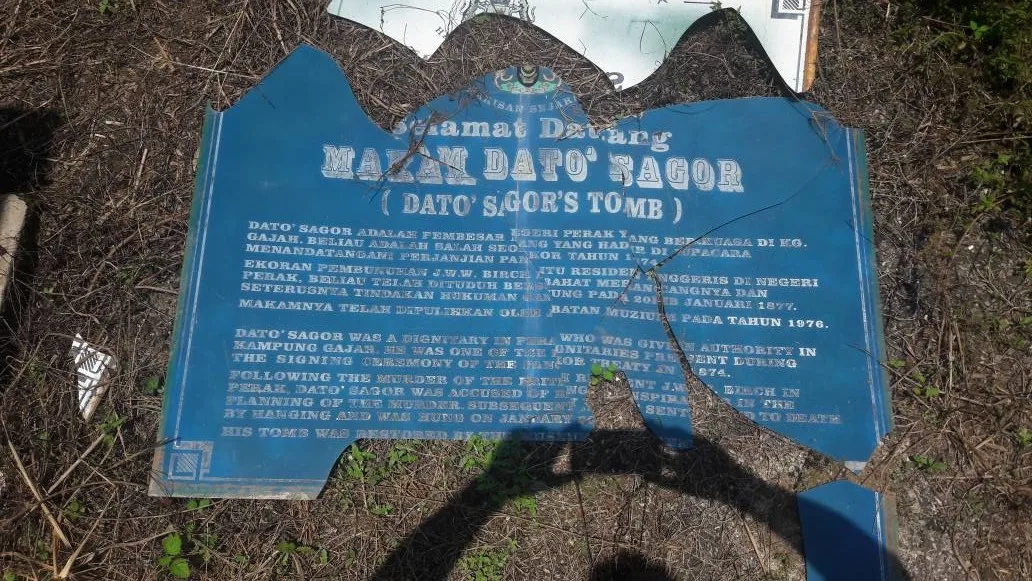
For your information, loyal readers of orangperak.com, it is recorded on the sign at Dato Sagor's tomb that restoration work was carried out in 1976 by the Department of Museums. However, many have raised concerns as to why the restoration efforts were not continuous and were only carried out during specific events. Let us reflect and look at several issues that may be the main factors behind this problem. There is an opinion from a loyal reader of orangperak.com stating that perhaps there is no funding allocated by the state government to the departments responsible for managing these old tombs.
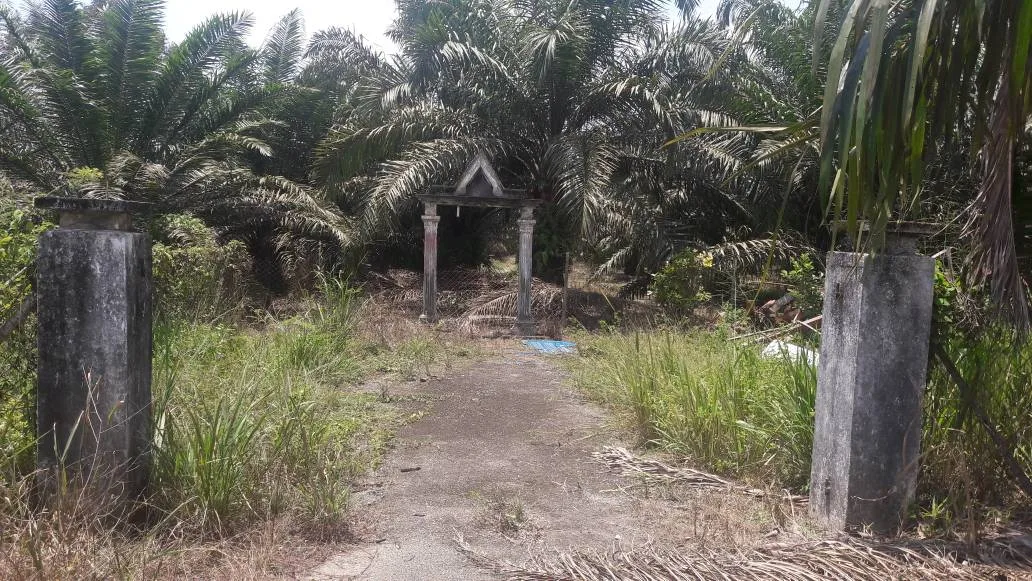
Entrance to the Dato Sagor Tomb area
Furthermore, some of our readers have suggested that local residents might have also overlooked this matter, and thus it was not brought to the attention of the departments that should be concerned about the fate of the old tombs of Perak's warriors and pride. Let us take a moment to look back at when we from the orangperak.com team went to find the grave of
the first British Resident in Perak
namely JWW Birch, and the article titled
The Story of JWW Birch's Neglected Original Grave
which we published on April 29, 2017. We believe the issue of these old, neglected tombs stems from the repeal of the Antiquities Act 1976 and the Treasure Trove Act 1957, which were replaced by the National Heritage Act 2005 (Act 645), effective since March 1, 2006.
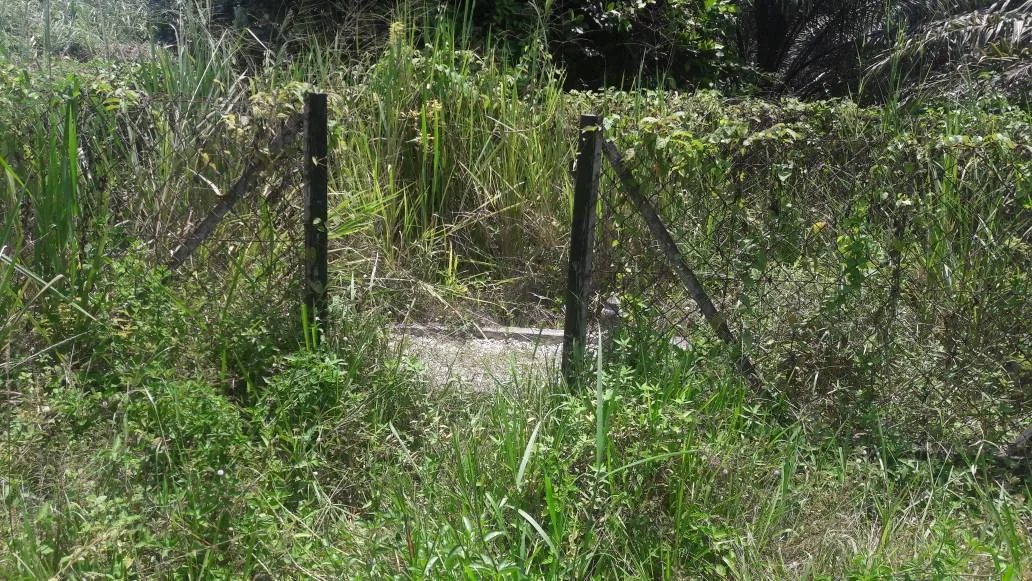
Grave next to Dato Sagor's grave
The National Heritage Act 2005 aims to provide comprehensive and integrated protection for all aspects of heritage that were previously absent in any federal or state legislation. This Act covers a broader scope, including Cultural Heritage, Natural Heritage, Tangible Heritage, and Intangible Heritage.
- reference for this excerpt at KKMM
Based on the brief explanation regarding the purpose of the National Heritage Act 2005 stated above, it clearly shows that its scope is too broad, covering all aspects of heritage comprehensively. This matter should be reviewed for improvement to protect the fate of old tombs that have potential as tourism products, by narrowing the scope and focus rather than managing everything in a blanket manner. If it is viewed as covering all aspects of heritage comprehensively, then the excuse of being 'overlooked' arises, which may seem trivial, but we must remember that its impact in the next 10 to 20 years will lead to a society that is blind to history. Here, we from orangperak.com appeal to everyone that we who are still alive today should be more aware and sensitive to the preservation of such tombs for the sake of our children, who will be the next generation.
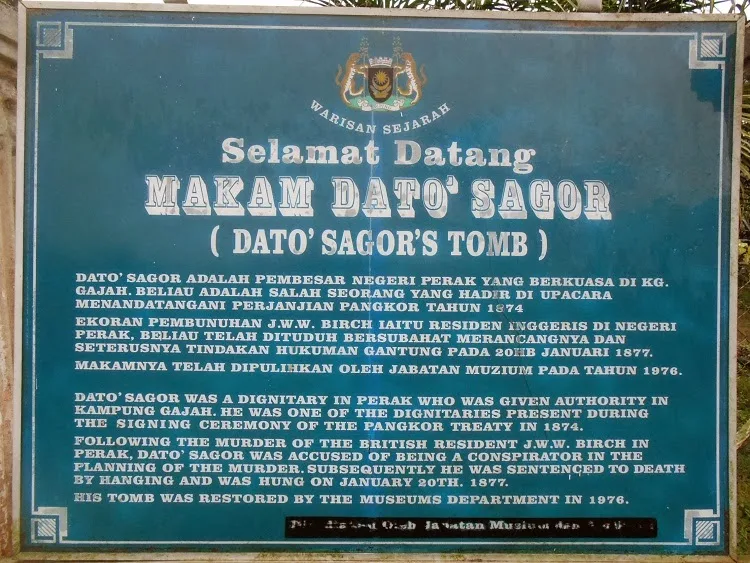
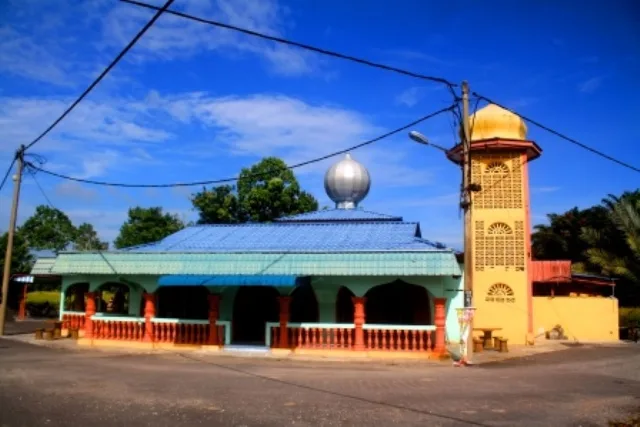
this photo was taken when it was still in good condition
This is very important for them because individuals who do not know about their past history, origins, and culture are like a tree living without roots, and it will fall before it grows tall. Those roots are the strong foundation for standing on the land where we continue to live today. So, let us all work together towards a better direction. Let us preserve graves that have historical value, whether they belong to heroes or colonizers, before it is too late. If you wish to visit Dato Sagor's grave, you can use the GPS coordinates 4.820964, 100.6762131. Photo credits to Sarip Dol.