The 1894 Elephant Attack Incident in Teluk Intan, Perak
Three train carriages heading to Teluk Intan, formerly known as Teluk Anson, from Tapah Road derailed after being rammed by a rogue bull elephant. This dark event occurred long before the country's independence, during a time when our nation was frequently troubled by colonialists and communist threats that demanded the right to rule through violence, coercion, and cruelty.
The railway service system, now operated by Keretapi Tanah Melayu Berhad (KTMB), has experienced several unexpected attacks that resulted in deaths and damage. These unexpected attacks involved rogue bull elephants charging at speeding trains. It is said that the attacks occurred due to an incident 115 years ago where a calf was struck by a train in the same area, leading the elephants to seek revenge.
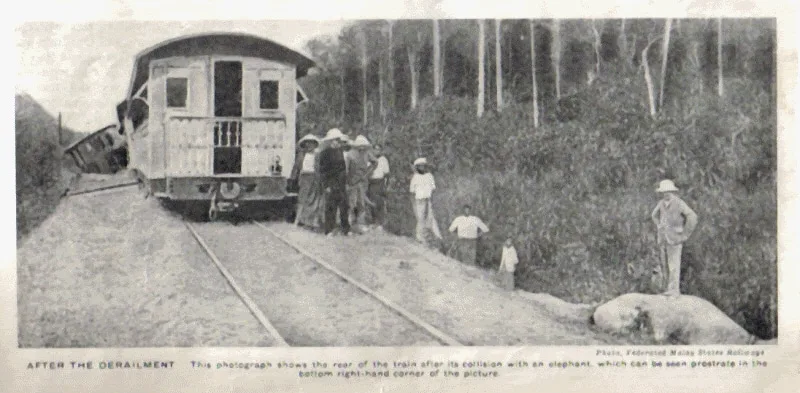
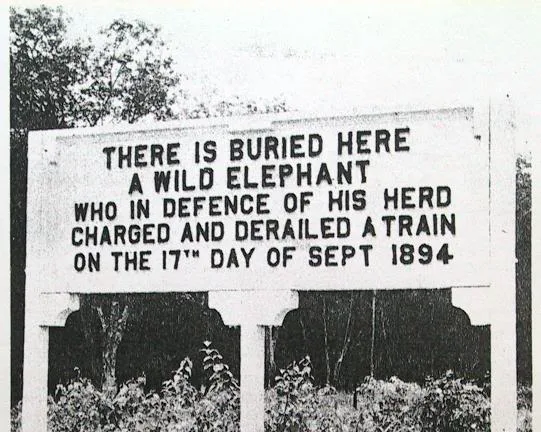
The elephant attack remains etched in the history of KTMB and the nation in general, as it involved a passenger train traveling from Ipoh, Perak to Kuala Lumpur. The attack in Teluk Intan occurred on September 17, 1894, when a steam train carrying three passenger carriages—mostly merchants and mine owners returning from inspecting mining sites in Perak—was targeted.
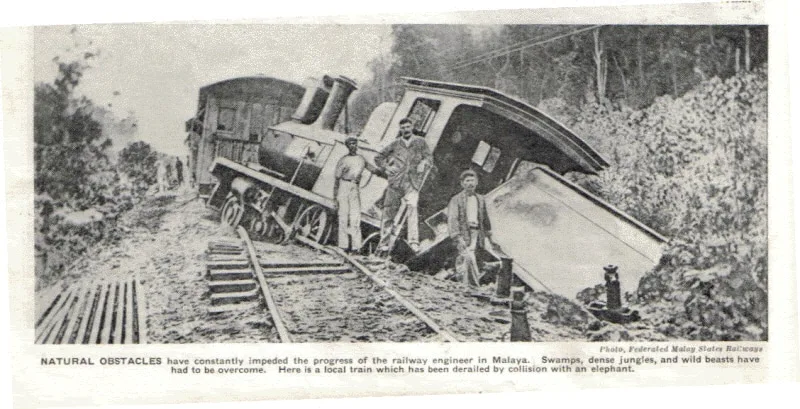
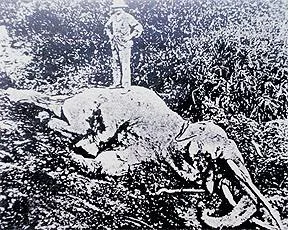
Upon arriving in Teluk Anson, now known as Teluk Intan, the train, driven by an Englishman, was attacked by a herd of bull elephants that had been waiting there, ramming it head-on. The incident occurred at dusk, between 5:00 PM and 7:00 PM, in a dark, forested area. It is well known that elephants are highly sensitive to loud noises and bright lights. The steam-powered train was traveling at a speed of 60 to 80 km/h, which was considered fast for a steam-class engine. Due to the force of the head-on collision, the bull elephant died at the scene.
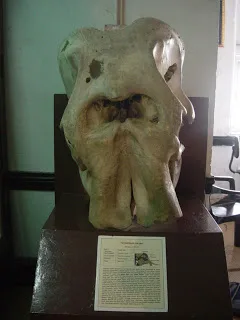
The skull of the bull elephant is now kept at the Taiping Museum, Perak, while its thigh bone is stored at the KTMB museum, and its tusks were reportedly taken to England. The elephant's thigh bone, which is nearly a meter tall, is still well-preserved and displayed in the mini-lobby of the KTMB museum at the KTMB Headquarters in Kuala Lumpur. Visitors can come to see the bone for themselves and obtain brief information about the incident described here.