The 1887 Papan Riot Incident
The 19th century is considered a chaotic era in the state of Perak. This was due to the power struggles and influence disputes between the sultans and the state's dignitaries during that period.
At the same time, the arrival of many Chinese immigrants to Perak to work as laborers in mining centers in the Larut and Kinta Valley areas worsened the situation, as many of these laborers became members of certain secret societies. In this article, orangperak.com will examine the 1887 Papan riot, which became a significant incident in Perak and played a crucial role in changing the security policies implemented by the Perak state administration at that time. Major unrest such as the Larut Wars, the Klang Civil War, and the Penang Riots in the 1880s to 1890s led the Tok Pek Kong secret society to control coolies and trade in the coastal areas of Penang, while the Hai San secret society controlled areas rich in tin ore in Perak and Selangor. Meanwhile, the defeated Ghee Hin secret society (which had the most members) was scattered in the poorest and least developed areas, until many Ghee Hin members who lost in the Larut and Klang Wars moved to Kinta and discovered richer tin deposits than in other parts of Perak. In the interior of 19th-century Perak, Chinese immigrants had no choice but to join groups that the British called secret societies. They joined these groups to obtain personal and family protection, as well as security for their businesses. Members of secret societies loyal to Ghee Hin, Hai San, and other groups could be found living in close proximity to one another in Chinese settlements in Kinta. Tensions resulting from old rivalries in Larut were eventually brought to Kinta. Since the Perak War and subsequently when the British succeeded in tightening their grip on the Perak administration, the British administration took steps to control security by establishing the Perak Armed Police Force. However, by 1879, police stations had only been built in Ipoh and Gopeng. Seven years later, 149 Sikh Perak police officers were serving and deployed to seven police stations throughout Kinta.
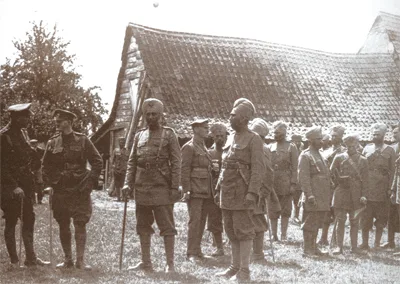
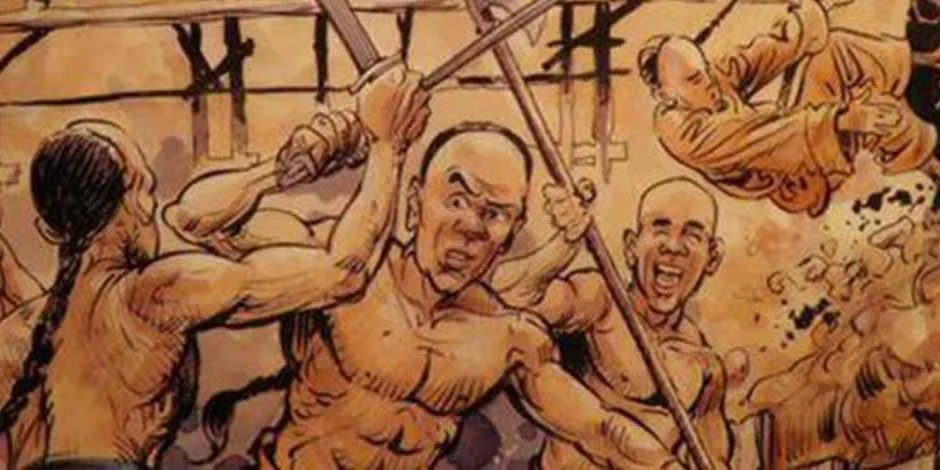
However, this number was still insufficient to maintain law and order in the district. That same year, fires occurred in Lahat and Papan. As a precaution, shopkeepers in Papan and Gopeng requested the Sikh Perak Police Force to patrol the villages, and they also funded the construction of a police station in Papan. Nevertheless, the escalating tension between the Ghee Hin and Ho Seng secret societies (a group allied with the Hai San secret society) led to the worst riot ever to occur in Kinta. On November 29, 1887, a fight broke out in a brothel in Papan, which eventually turned into a major riot between members of the Ghee Hin and Ho Seng groups, who had summoned hundreds of their members to gather the night before. If not for the swift action of the magistrate and his officers, assisted by the police force and local Malays in the surrounding area, this chaos would certainly have spread throughout the Kinta district. The rioters were armed with spears, knives, and carried banners. They also brought gongs, which were sounded throughout the procession. Ghee Hin members tied red cloth on their arms, while Ho Seng members tied white cloth on their arms and heads. Approximately 500 Ghee Hin secret society members arrived from Lahat early that morning and immediately attacked and robbed their rival society, injuring 6 people. One of the victims later died shortly after arriving at the hospital. In an account by Baxendale, he shared a story from his friend H.R. Baldwin, who was trapped in the Papan Riot, and how Magistrate J.B.M. Leach earned the title "The Strongman of Kinta" after the riot. The leaders of both groups were summoned to meet with the District Magistrate, Mr. J.B.M. Leach, and they explained to Leach that the fight was a private matter, claiming they had 9,000 members and 8,000 members on the other side, respectively. They also reminded Leach that there were only 40 Europeans and 30 Sikh police officers in Kinta, and they promised that if the authorities did not intervene, the lives and property of the authorities would not be touched or destroyed. Leach then replied that he did not care if they wanted to kill each other, but it was his responsibility to ensure that peace and the law were always upheld in Kinta, and for that, he was willing to sacrifice himself to defend it. Fighting then erupted, and at the same time, reinforcements led by Sir Hugh Low were still on their way from Taiping to Papan. Leach and the police force acted by attacking both sides to prevent them from burning each other's settlements. Baldwin, assisted by 3 Sikh police officers, was then ordered to intercept 800 society members who had burned down Lahat. When the force led by Sir Hugh Low arrived, the riot was immediately brought under control. Several Chinese were killed, but there was no damage or injury to the authorities. The magistrate, his officers, and the police force arrived just in time and succeeded in preventing a larger fight. However, one rioter was killed and several were injured in the fighting that took place on the streets of Papan. Many of the rioters carrying weapons were beaten with batons by the police, causing them to disperse quickly, and the riot was successfully stopped. The leaders of the riot were brought to justice before the Sultan of Perak, the British Resident of Perak, and the Panglima Kinta a few days after the incident. Two society members were found guilty of murder with intent and were sentenced to death by hanging. The sentence was carried out in Taiping. Meanwhile, nine society members were sentenced to prison terms ranging from six months to two years, depending on their respective offenses. Twelve society members were fined between $36 and $5,000, with a total fine of $11,916, and a bail of $1,500 was imposed on a tauke (business owner) as a guarantee to ensure no further chaos occurred in the area. The Papan Riot was successfully brought under complete control by the Sikh Perak Police Force, a paramilitary unit consisting of Sikhs, Pathans, and Punjabis under the command of Lieutenant Colonel R.S.F. Walker. After the Papan Riot, the Perak state government threatened to implement the death penalty for those who joined secret societies, but the order was later withdrawn. In 1890, an act to curb secret societies was issued.