Rumah Kutai, A Perak Identity Facing Extinction
Perak is famous for its rich architectural heritage, ranging from government buildings and houses of worship to residential homes. It is heavily influenced by a blend of cultures from tribes such as the Bugis, Rao, Banjar, Chinese, and the British, who migrated, traded, and governed in Perak.
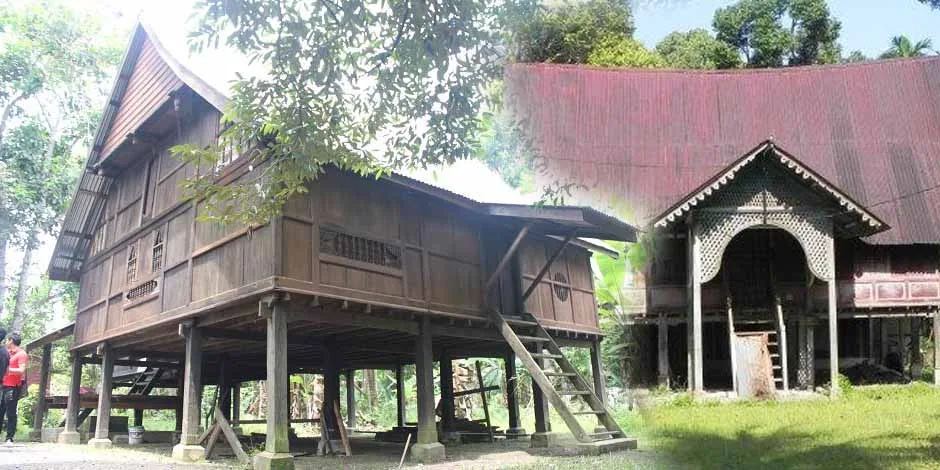
This time, orangperak.com would like to touch upon an architectural heritage found only in Perak that is increasingly being forgotten: the Rumah Kutai. We hope this will help everyone, especially the current generation and the people of Perak, to better understand the history of this architectural style. This heritage architecture of Rumah Kutai can only be found in the state of Perak Darul Rizuan and nowhere else. The term Rumah Kutai, or Kotai, means old or ancient. It is undeniable that the Rumah Kutai is the only type of traditional Malay house in the state of Perak that has been inhabited by locals for over 200 years and still stands proudly on the earth today.
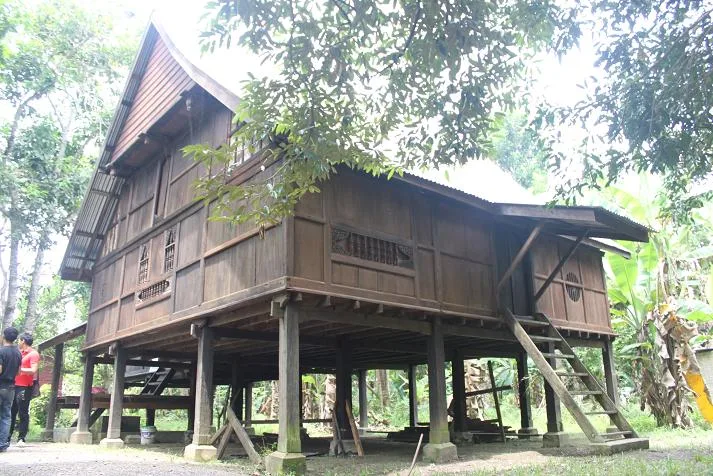
However, it is not an exaggeration to say that the local people of Perak, especially the younger generation, are unaware of the existence of the Rumah Kutai—the traditional old house of Perak—let alone those from outside the state. The uniqueness of the Rumah Kutai lies in the intricate carvings found on its doors, window openings, walls, and the variety of its joinery techniques. This is further reinforced by the long-standing stories preserved since ancient times regarding the history of the house's construction and its inhabitants. Looking at its unique architecture, it is clear that it cannot be separated from certain external influences, especially the architectural styles of the Aceh House and the Bugis Adat House from Sumatra. Nevertheless, several specific features in its architecture and structural materials remain distinct, maintaining its identity as the local architecture of Perak. These special features can be seen particularly in the 'lebah bergantung' (hanging bee) decorative motifs and the use of 'daun tepas berkelarai' (woven bamboo patterns) on the gable ends. Rumah Kutai comes in two types: the 12-pillar Rumah Kutai and the 16-pillar Rumah Kutai. Both types share the same structure. For the 12-pillar Rumah Kutai, the main house consists of six long pillars and six veranda pillars. When viewed from the front, the pillars are arranged in three rows, each containing four pillars: two long pillars and two veranda pillars of equal height. Thus, the 12-pillar Rumah Kutai is also called the 'Two-Space House'. Typically, the 12-pillar Rumah Kutai has a rectangular main house footprint, measuring 30’ x 30’. Meanwhile, the 16-pillar Rumah Kutai is still commonly found in Perak, such as in the villages mentioned earlier. The structure of the 16-pillar Rumah Kutai still uses 16 main pillars: eight long pillars and eight veranda pillars of equal height. The positioning of the pillars consists of four rows lengthwise and four rows widthwise, but the footprint is square rather than rectangular.

The use of 'jeria' flooring, a roof structure with a unique technological system, sliding doors, and distinct window shapes are features never found in other traditional Malay architectural elements, whether in Malaysia or the surrounding region, as listed below:
- Tunjuk langit (Sky pointer)
- Titi tikus (Mouse bridge)
- Round floral-motif windows
- Lattice and grilled peek-a-boo windows
- Carved convex panels
- Kaki gajah (Elephant foot)
- Lebah bergantung (Hanging bee)
- Kucing berlari (Running cat)
- Papan cantik (Decorative fascia board)
- Tanggam tebuk (Mortise and tenon joinery)
The design of a Rumah Kutai is heavily influenced by several factors, where the scope also determines the building components and the arrangement of spaces within the house. Among the common spatial components found in a Rumah Kutai are the veranda (serambi), the main house (rumah ibu), the connecting passage (selang), and the kitchen (rumah dapur), as shown in the following diagram:
- Serambi (Veranda) - Reserved for men; this is where male guests sit during feasts and conduct various other activities. At night, this space is used as a sleeping area for unmarried sons.
- Rumah Ibu (Main House) - The main house contains a veranda area and sometimes a small room, though rooms were added later and reserved for unmarried daughters. In the past, the entire main house had no partitions, and the boundary between the veranda and the central area reserved for women was marked only by a 5cm high threshold (bendul). The floor levels between the veranda and the central area were also different.
- Selang (Connecting Passage) - Besides serving as a walkway between the two buildings, it is a place for women to chat or carry out various activities. In the past, this space was roofless and wall-less, so it could be used for drying clothes and collecting rainwater. Young girls in the past used it as a washing area. Such a space is usually called 'pelantar selang' or 'jemuran selang', and once roofed and walled, it is known as 'selang' or 'selasar'.
- Rumah Dapur (Kitchen) - The kitchen is smaller than the main house, usually shaped like a bachelor's house, meaning it has no veranda. It is used for cooking, and all kitchen utensils are stored there. A staircase and a platform are located at the side of the kitchen door, often used by women to go to the river or well to fetch water, bathe, and so on.
One of the factors contributing to the extinction of the Rumah Kutai is the lack of public awareness regarding this heritage treasure, both in terms of its historical value and the intricacy of its architecture. Technological advancement and modernization have caused the construction of Rumah Kutai to be forgotten, and the houses that still stand tall are often left uninhabited due to migration or the death of the owners. By the early 20th century, the architecture of the Rumah Kutai no longer attracted the attention of the local people of Perak. This was due to the influence of the 'Rumah Limas' architecture being introduced in Perak, which seemed to offer more comfort and certain conveniences given its larger size.

When viewed in terms of construction, this house style is clearly simpler compared to the Rumah Kutai. It is no wonder that in a short time, the influence of Rumah Limas architecture—such as the Perak Bumbung Limas House, Modern Limas House, and Bungkus Limas House—successfully captured the hearts of the locals at that time. The unstoppable development of Rumah Limas architecture subsequently caused the Rumah Kutai architecture to lose its appeal and eventually be sidelined by the local population in Perak. Another reason why the Rumah Kutai architecture could not spread throughout Perak is its connection to the royal governing system at the time, where the Rumah Kutai was intended only for the residence of the ruling royal family and high-ranking officials who had close ties to the palace. Thus, these settlements were only found not far from the royal center located along the banks of the Perak River, especially in the districts of Hilir Perak, Perak Tengah, and Kuala Kangsar. Furthermore, the 'Undang-undang 99' (99 Laws) enforced by the royal system at the time also required that all Rumah Kutai built must have their front facade facing the riverbank, which was the main artery of transportation for the local community at that time. Additionally, traditional regulations characterized by 'caste' and social status were among the reasons why the Rumah Kutai could not develop well; even in terms of its placement, it was clearly linked to this, and thus it was only found around royal centers.

The extinction of the Rumah Kutai generally occurs for many reasons. Among them is the lack of proper maintenance, which causes these houses to deteriorate easily. The construction materials used, such as wood, make them susceptible to wood-eating insects like beetles and termites. Furthermore, the weather in this country can also cause the wooden structure of a Rumah Kutai to rot easily and be covered by mold and fungi. Consequently, if no follow-up action is taken immediately, these Rumah Kutai, which are invaluable for their historical and architectural significance, will inevitably collapse and be lost to the earth. Furthermore, if they are not preserved from now on, it is not impossible that one day, the existing Rumah Kutai and others will become extinct and vanish forever.