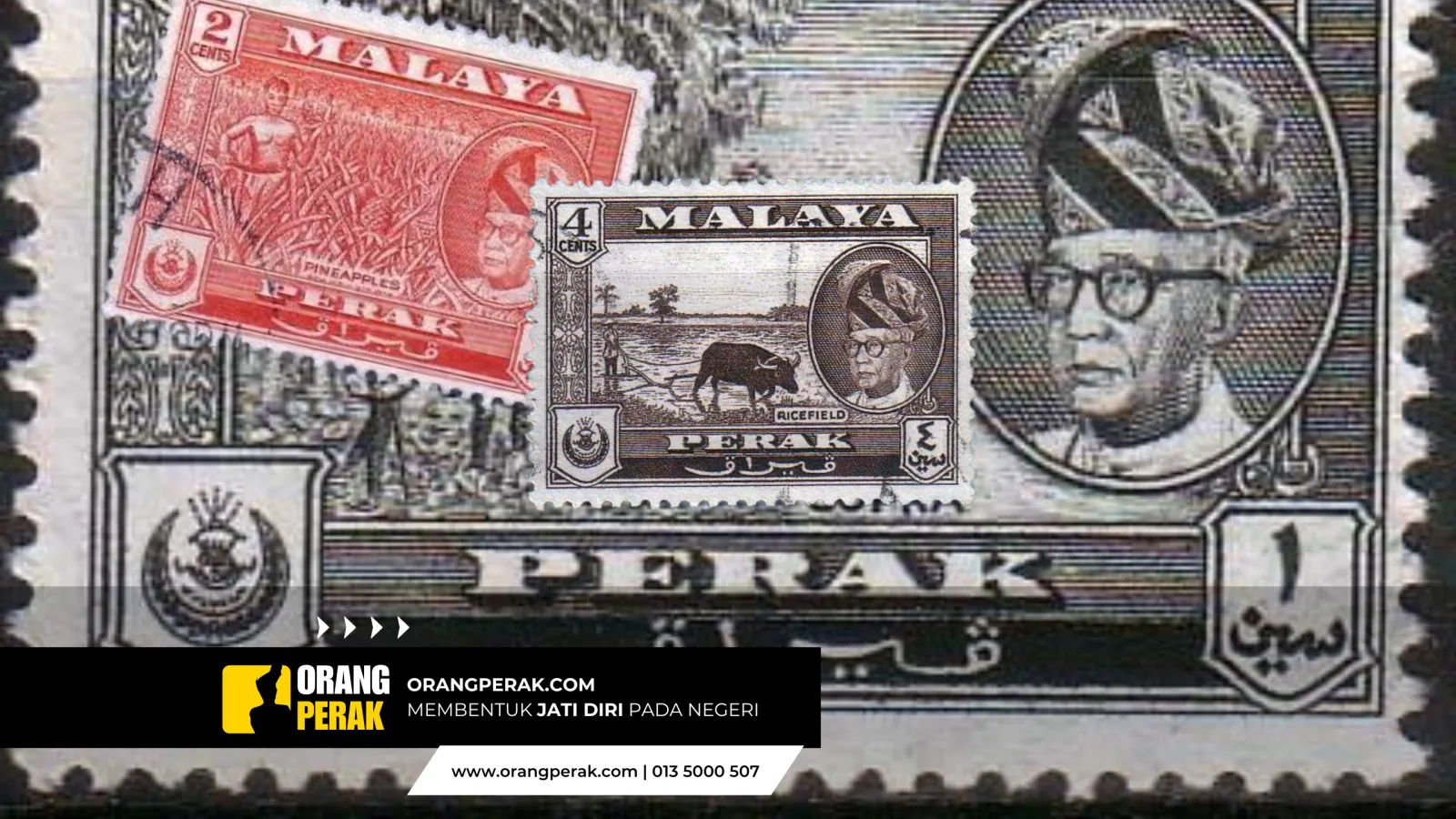
Perak State Malaya Stamps: A Piece of History on a Scrap of Paper
In today's digital world, many might consider stamps to be mere scraps of paper that are slowly being forgotten. However, for history buffs and philatelists, a single stamp can hold a story far greater than its size. It stands as a silent witness to changing times, a symbol of identity, and proof of cultural continuity. One collection that captures attention is the Malaya stamps from the State of Perak, issued leading up to the independence of Tanah Melayu.
More Than Just a Postal Payment Tool
Stamps are not merely tools for sending mail. They carry a narrative about who we are, where we come from, and where the nation is headed. The Local Motif stamp series was issued in 1957 for all states in the Federation of Malaya, including the Straits Settlements. According to records, the Perak series was issued on August 21, 1957, just 10 days before Tanah Melayu's independence, as part of an effort to build a national identity under the name "Malaya."
Although the motifs used were common to all states in the Federation of Malaya, the Perak state stamps remained unique because they featured the portrait of DYMM Paduka Seri Sultan Yussuf Izzudin Shah, the Sultan of Perak Darul Ridzuan at the time, who was also the grandfather of Sultan Nazrin Muizzuddin Shah.
Symbolism in Stamp Design
The design and printing of the stamps were carried out by the De La Rue Company in the United Kingdom, which is famous for its expertise in printing banknotes and security documents and still exists today. Each stamp value carries an image representing various aspects of community life:
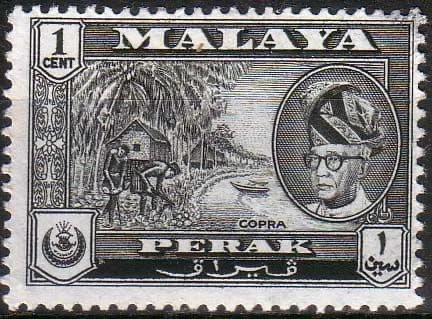
Areas like Bagan Datoh in Perak are famous for commercial coconut cultivation – one of the pulses of the local economy.
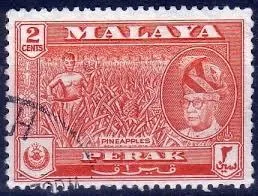
Although not a primary crop in Perak, pineapples were an important commodity in Tanah Melayu trade.
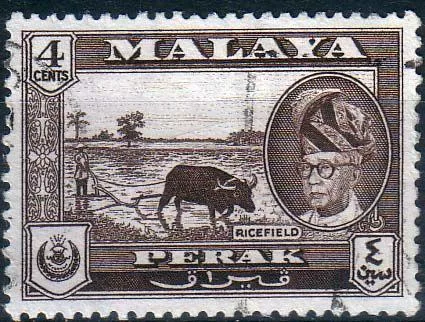
A symbol of the buffalo's primary role in rice cultivation and village life.
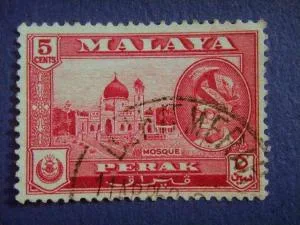
Symbolizing Islam as the official religion and the faith of the majority of the population.
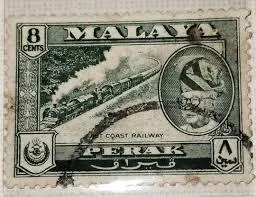
A symbol of the success of rail infrastructure development in Tanah Melayu.
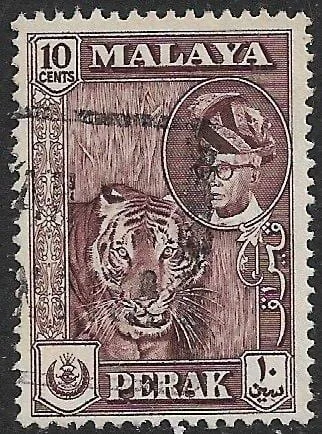
An emblem of courage and national identity.

Depicting the fishing industry as a source of livelihood for coastal communities.
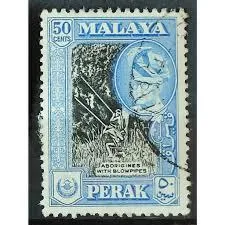
Paying tribute to the culture and local Orang Asli community.
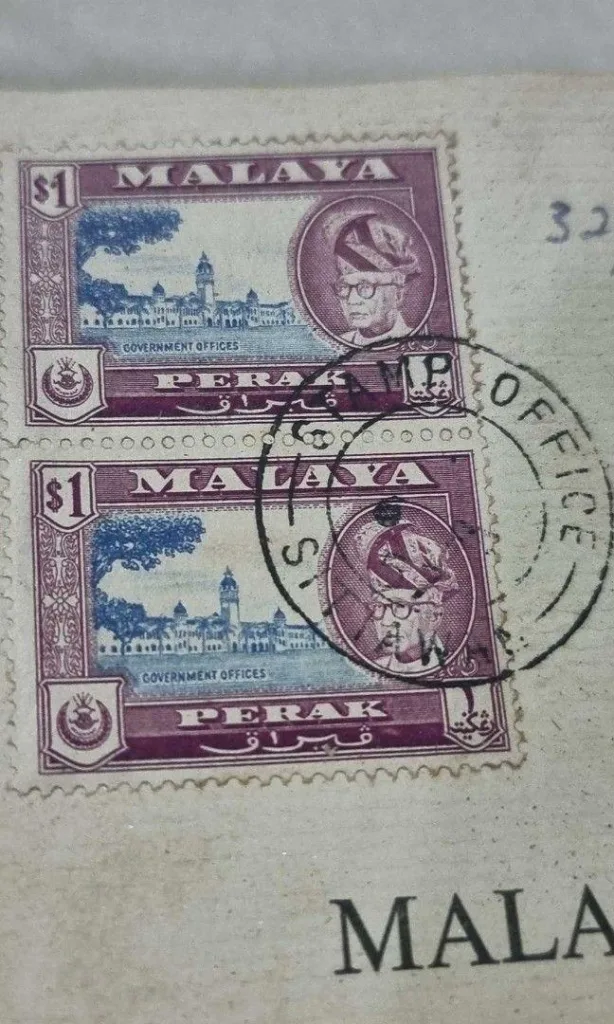
Now known as the Sultan Abdul Samad Building, a symbol of the administration of the Federation of Malaya.
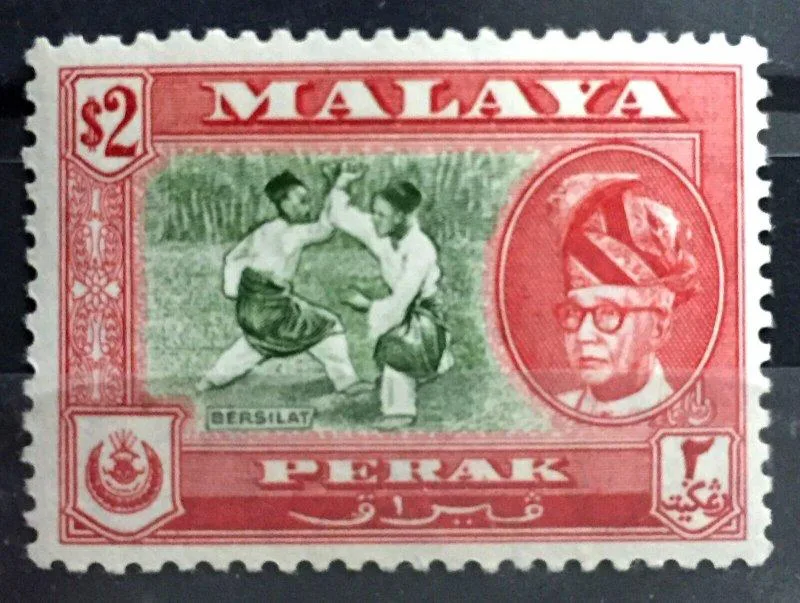
Highlighting silat as an important martial arts heritage in Malay culture.
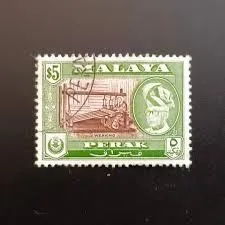
Upholding traditional weaving as a highly valued cultural heritage.
Stamps as Historical Narratives
Interestingly, although these Perak series stamps are easy to find and have a low market value in the world of philately (due to the large print run), they still hold high historical value. They serve as proof that Perak was one of the most advanced states in the Federation of Malaya at the time, and the large volume of stamps printed reflects the strength of Perak's economy.
The use of the word "MALAYA" on every stamp is also not trivial. It carries a grand narrative meaning to unite the states under one flag – moving toward sovereign independence.
Final Word: Heritage in a Single Stamp
These stamps are like small windows into the past, showing how a nation still in the process of finding itself used a small piece of paper to voice its identity, history, and future hopes. For collectors and history lovers, it is not just a collection, but a living document that records the journey of a nation.
So next time you see an old stamp, don't just consider it a decoration. You might just be holding a piece of the nation's heritage.