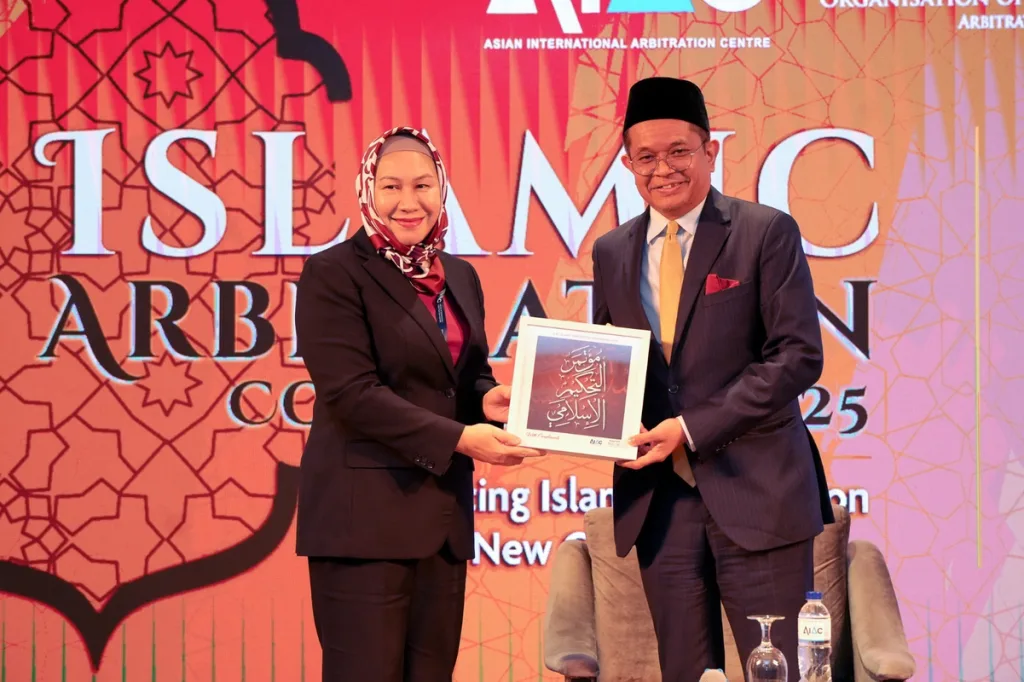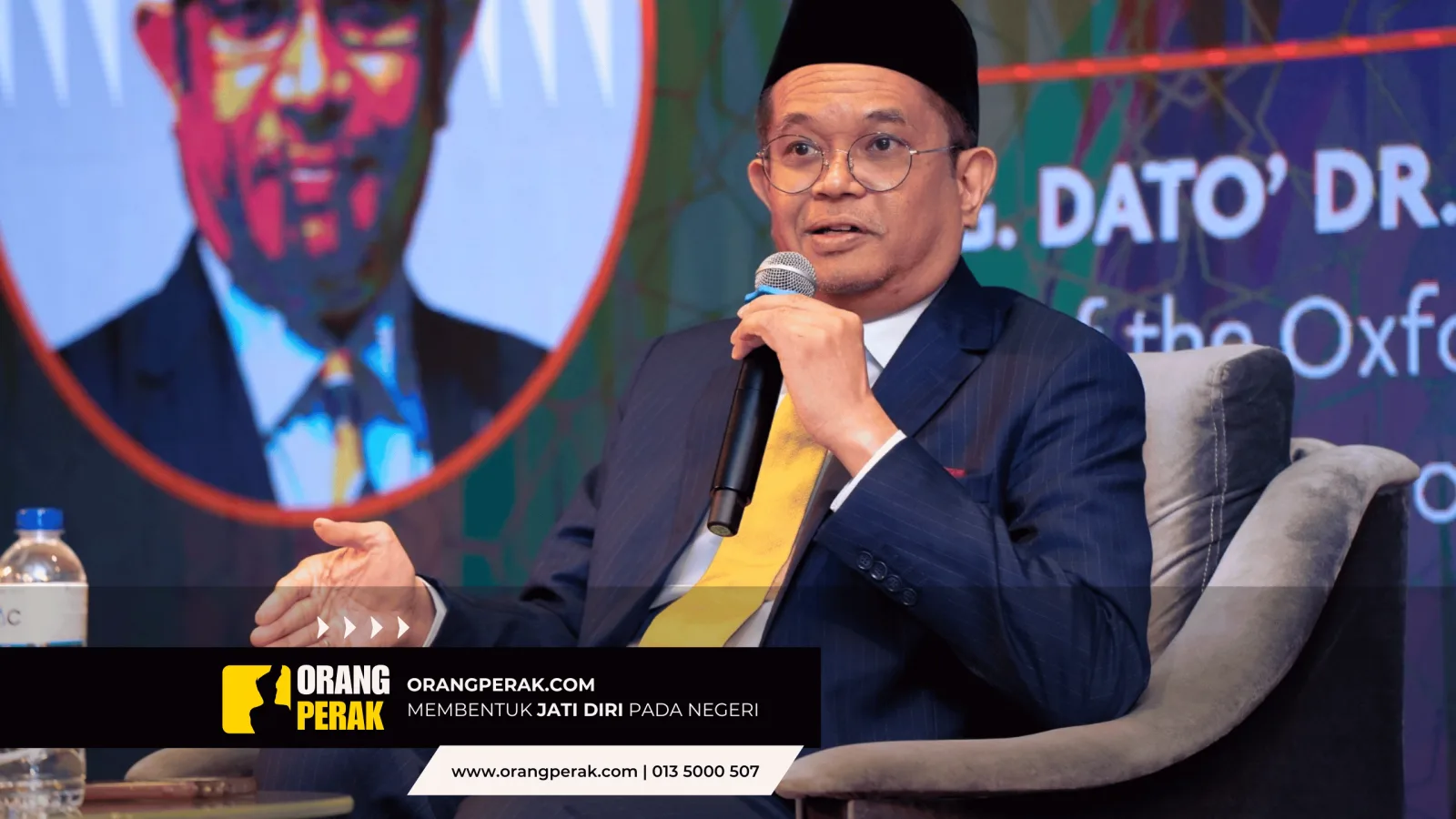
Perak Native at AIAC: Dr. Afifi Al-Akiti Emphasizes Sharia Values in Fair and Ethical Arbitration
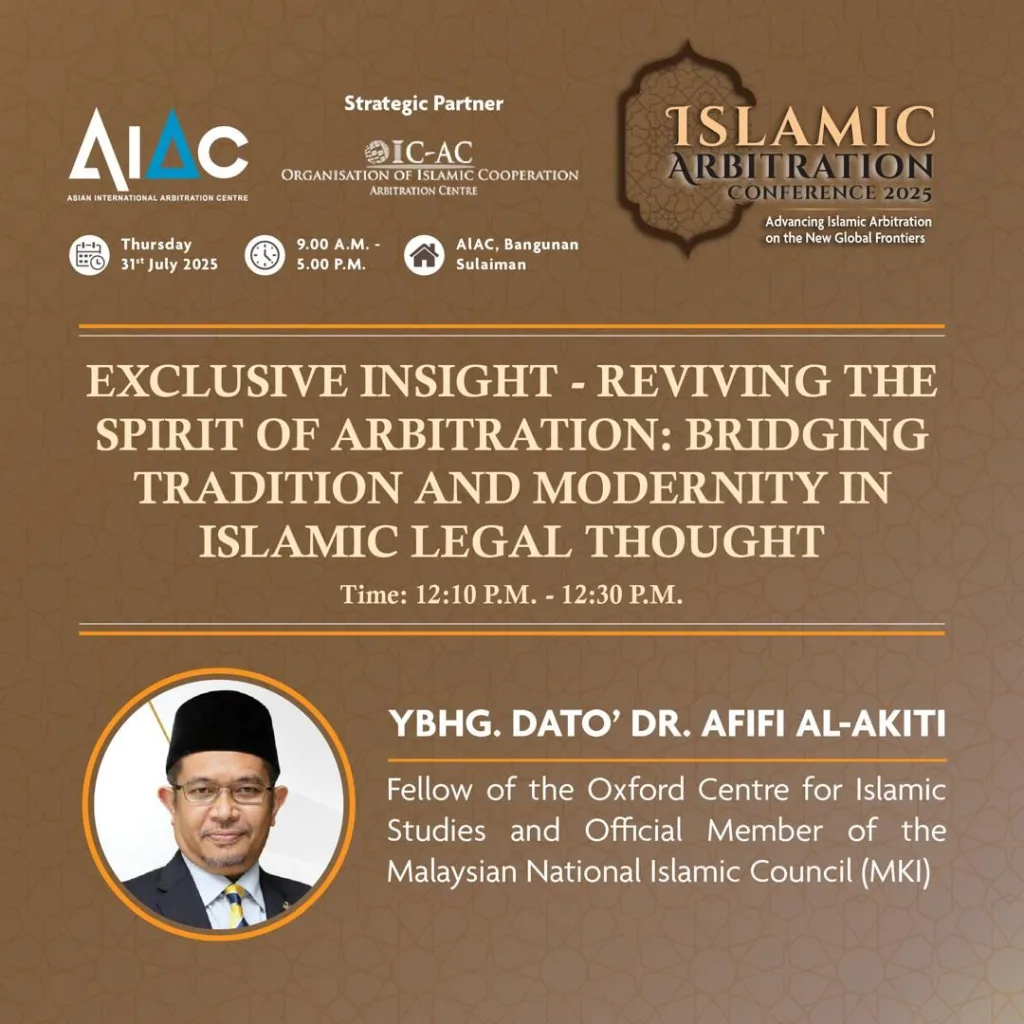
YBhg. Dato' Dr. Afifi Al-Akiti, a Perak-born scholar currently serving as the Kuwait Fellow at the Oxford Centre for Islamic Studies, spoke on the essential role of 'tahkim' or arbitration in Islamic tradition during an exclusive session hosted by the Asian International Arbitration Centre (AIAC). In a session titled "Reviving the Spirit of Arbitration: Bridging Tradition and Modernity in Islamic Legal Thought," he invited attendees to explore the Islamic legal heritage that serves as a bridge between traditional values and modern legal systems.
Revisiting the Concept of Tahkim in Islam
According to Dr. Afifi, in today's legal world, arbitration is considered part of Alternative Dispute Resolution (ADR). However, in Islam, this concept has long existed under the term "tahkim" and is part of the teachings of the Quran, specifically in Surah an-Nisa, verse 35.
He stated that tahkim is a voluntary contract between two disputing parties, where they mutually choose a 'hakam' or mediator they trust to be fair. This hakam not only listens to both sides but provides a binding decision if agreed upon. This is the foundation of justice in dispute resolution according to Islam.
Historical Example: Prophet Muhammad SAW as Hakam
Dr. Afifi revisited the story of Prophet Muhammad SAW before he was appointed as a prophet, when he was asked to resolve a dispute among the Quraysh tribes regarding who had the right to place the Black Stone (Hajar Aswad). The solution he proposed demonstrated justice, wisdom, and acceptance by all parties, which are the foundations of Islamic tahkim.
In this instance, he acted as a neutral, respected, and trusted third party, successfully uniting all four tribes through an inclusive approach. This proves that Islamic tahkim upholds the values of consultation (musyawarah) and consensus as its core principles.
Advantages of Islamic Arbitration Over Standard Litigation
Dr. Afifi emphasized that the advantages of Islamic tahkim include:
- Disputing parties can choose their own judge or hakam
- The process is faster than standard litigation
- Greater assurance of confidentiality
He cited the story of Caliph Umar al-Khattab, who accepted an arbitrator's decision even when he was a party involved. This demonstrates sincerity in seeking justice and the integrity of the Islamic tahkim system.
Lessons from Islamic Political History
Dr. Afifi also touched upon the conflict between Caliph Ali and Mu'awiyah, where the tahkim process was conducted openly to avoid prolonged civil war. Although the outcome triggered significant political differences in Islamic history, the tahkim process itself demonstrated an effort to resolve issues based on Sharia principles and consensus.
According to him, the ultimate resolution actually came from Hasan, the grandson of the Prophet SAW, who took a peaceful step and handed over power to Mu'awiyah for the sake of the community's stability. This is one of the highest manifestations of tahkim on a state level.
Tahkim as a Contemporary Alternative Solution
During the session, Dr. Afifi urged modern Islamic arbitration centers like the AIAC and the OIC Arbitration Centre to maintain the true DNA of tahkim. It is not merely a technical procedure, but an act of worship aimed at justice, sincerity, and unity.
If these original values are set aside—for instance, if there is no freedom to choose a hakam, if the process becomes too long, or if it is too transparent—then the spirit of tahkim that Islam champions is lost.
Upholding Tradition in the Modern Current
Dr. Afifi invited us all to reflect on the noble verse in Surah an-Nisa, verse 35, as a guide to resolving conflicts with wisdom. According to him, the Islamic arbitration system has the potential to become a primary alternative in the modern world if implemented according to its original spirit.
As a native of Perak who is now carrying the nation's name to the international stage, his presentation at the AIAC is proof that Islamic intellectual tradition remains relevant and competitive in addressing contemporary challenges.