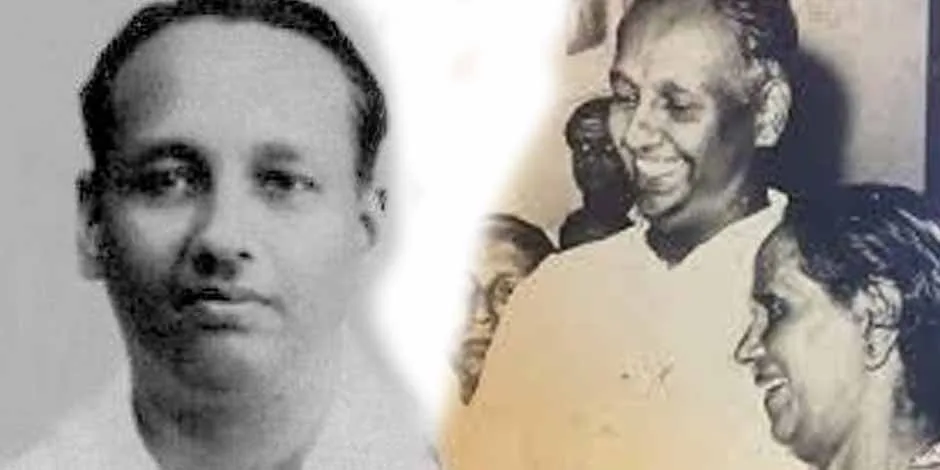
One of Malaysia's Founding Fathers from Sungai Siput, Perak
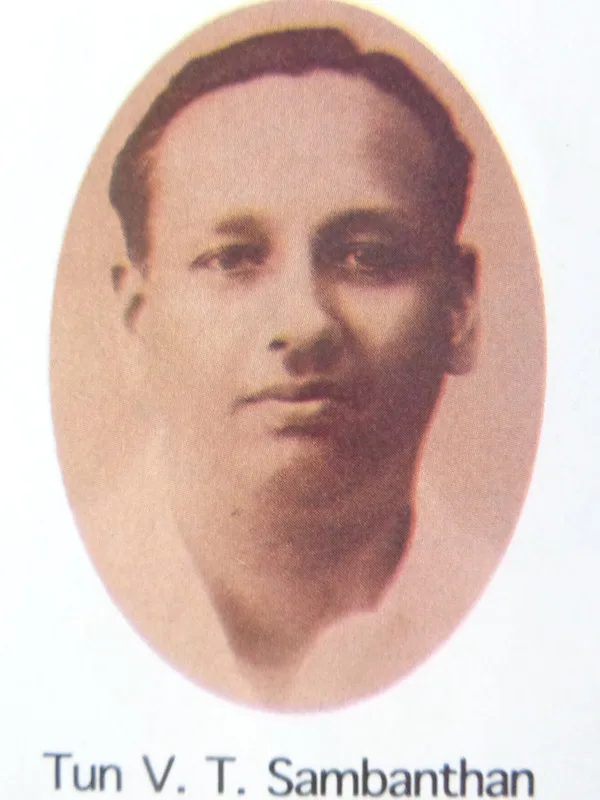
Tun Thirunyanasambanthan s/o Veerasamy, also known as V.T. Sambanthan, was the 5th president of the Malaysian Indian Congress (MIC). Indirectly, he was one of the founding fathers of Malaysia, alongside Tunku Abdul Rahman and Tun Tan Cheng Lock. He served as MIC president from 1955 to 1973 before being ousted by party members.
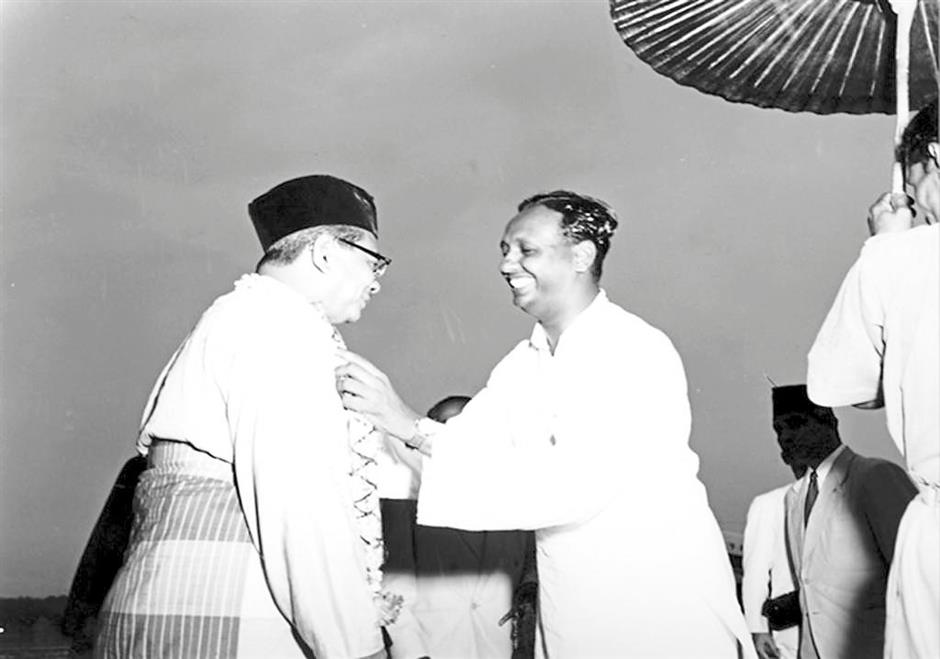
Sambanthan was one of the most important Indian figures who played a key role in the movement for Malaya's independence. As MIC president during the transition of power from the colonial authorities to the local government, he worked closely with Alliance Party leader Tunku Abdul Rahman, and the two formed a close bond of brotherhood. He is remembered for bringing the MIC into the multi-racial Alliance in 1955, which established the Alliance Party's image as a party representing the three main races in Malaya and Malaysia to this day. The pinnacle of his struggle was on August 31, 1957, when the country achieved independence under the Merdeka Agreement, and Tun Sambanthan was one of the signatories. Tun Sambanthan was born in Sungai Siput on June 16, 1919. His father, M.S. Veerasamy, came to Malaya in 1896 and was among the early rubber planters in Sungai Siput, Perak, owning several rubber estates. Tun Sambanthan's siblings were V. Meenachi Sundram, V. Krishnan, and V. Saraswathy. Tun Sambanthan received his early education at Clifford High School in Kuala Kangsar, Perak. He was a very keen sportsman and was known as a smart, friendly, and humorous student.
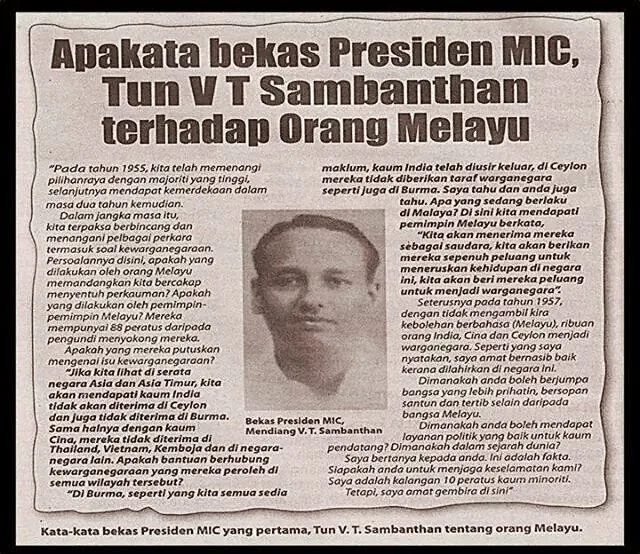
Sambanthan's early involvement in politics began with his intention to develop and unite the Indian community. Based on that, he organized the Perak United Indian Council in 1953. In the same year, he was appointed chairman of MIC Perak. The event that propelled him to become a major MIC political leader was the visit by Vijaya Lakshmi Pandit, the sister of Indian Prime Minister Pandit Jawaharlal Nehru. Sambanthan had been friends with Vijaya Lakshmi since his involvement with the Indian National Congress while studying at Annamalai University. At Sambanthan's invitation, Vijaya Lakshmi visited Malaya in 1954, and despite the ongoing Emergency, she visited Sungai Siput and inaugurated the Mahatma Gandhi Tamil School. The meeting between Sambanthan and Vijaya Lakshmi in 1954 successfully raised Sambanthan's profile and helped him contest for the MIC presidency in 1955. In 1955, he was elected as the Member of Parliament for Kinta Utara. The seat was renamed the Sungai Siput parliament in 1959. After World War II, the Indian professional elite united under the ideology of Indian nationalism. In 1946, the Indian elite in Malaya established the MIC. For the first eight years, MIC leaders consisted of those from Northern India or Malayalees, who were a minority among the Indian community in Malaya. The majority of Indians (90%) in Malaya at that time were from Southern India and mostly from the working class. When the Emergency was declared by the British in 1948 to combat the communist uprising, it led to changes in trade union regulations, shifting trade union leadership from the more organized Chinese to the Indians. The lack of clarity regarding MIC's objectives impacted the status of Indian plantation workers in the Malaysian economy, and its effects are still debated today. In 1954, there was a heated debate within the MIC on whether to join the alliance with UMNO and MCA, which had emerged as the main political movements in the country. The MIC had previously moved in tandem with Datuk Onn Jaafar's party, the Independence of Malaya Party and later the Parti Negara. According to Rajeswary Ampalavanar, author of The Indian Minority and Political Change in Malaya 1954–1957, the MIC leadership was inclined to join the Alliance, but there was resistance from party members. They stated their willingness to support it if the party could provide guarantees from the Alliance on issues involving inter-racial relations, especially those concerning Indian education. Later, MIC president K.L. Devaser received heavy criticism from the Tamil media for not paying attention to the issues faced by the community. Although he was vocal, his influence was mostly among the urban Indian elite, and he lacked grassroots support. Some within the party felt they needed a leader with strong ties to the grassroots. In March 1955, there were reports in the Tamil Murasu daily newspaper calling for the Tamil community to boycott the MIC. Sambanthan, who was then the state MIC leader, emerged as an alternative candidate for party leadership. According to historical records, he was actually forced to contest for the presidency. Another candidate, P.P. Narayanan, had been approached by party leadership but declined the offer to focus on union activities. Sambanthan also refused, but due to pressure from Tamil leaders, he finally agreed to lead the party. He was elected MIC president in May 1955. Sambanthan was also accepted by the Malay leadership because he was not very vocal, including on economic issues, and was more inclined to voice concerns regarding cultural and linguistic rights. One of the main challenges for the MIC was to unify the aspirations of the middle class with the needs of the working class, who in 1938 comprised 84% of plantation laborers.
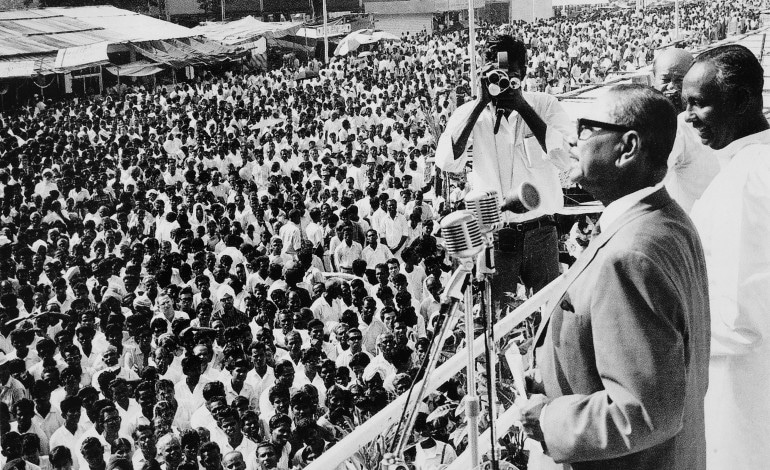
Sambanthan began campaigning to increase party membership among plantation workers by promoting Hindu teachings in a popular Southern Indian style, increasing the use of the Tamil language, and organizing Tamil cultural activities. However, the MIC under Sambanthan failed to reconcile the needs of the laborers with the political aspirations of the middle class. Traditional and lower-middle-class groups strengthened their influence within the party, while the professional and intellectual upper class began to distance themselves. This led to two leadership paths emerging among Indians in terms of politics and trade unions. Under Sambanthan's leadership, the MIC became a Tamil party. Sambanthan served as MIC president from 1955–71 and was responsible for transforming the party from an active, politically-based organization into a conservative, traditional party that promoted culture, religion, and language. This party was also the weakest among the three main Alliance parties. It had the smallest support base, at 7.4% in 1959, and had limited support from the Indian community. Tun Sambanthan, while serving as MIC president, helped strengthen the party economically by selling half of his father's 2.4 km² rubber estate to help the Indian community and the party. 1955 was a year of progress for Malaya toward self-governance. The British administration agreed to hold the first federal elections in July 1955, and Sambanthan was immediately involved in electoral politics. He faced challenges, and after negotiations with the Alliance and MIC leadership, he was placed to contest two seats in Batu Pahat, Johor, and Sungai Siput, Perak. Sambanthan contested the Sungai Siput seat and won in style. The Alliance won 51 out of 52 seats in that election. After the victory, Sambanthan was appointed as a cabinet member and sworn in as Minister of Labour in the Alliance government. The government at the time decided to push for an expedited transition of power, and an Alliance delegation went to London in January 1956 to discuss several issues, including negotiations for independence with British Secretary of State for the Colonies, Alan Lennox-Boyd. In early 1956, Sambanthan led the MIC delegation in negotiations between parties in the Alliance to draft a memorandum to be presented to the Reid Commission. Sambanthan was a capable negotiator and worked hard to ensure the needs of the Indian community were guaranteed, while being careful when touching on sensitive issues. At the time, he was criticized by party members for being seen as too soft on certain issues, but Sambanthan faced it all calmly and always took the middle path in negotiations. Because of that, he was praised by the Tunku. The final negotiations for independence in May 1957 were also seen as a personal transformation for Sambanthan. While in London to negotiate the constitution, Tunku Abdul Rahman decided that Sambanthan needed new clothes. Sambanthan had sparked some controversy when he was seen wearing Tamil attire, the dhoti, when appointed to the Federal Legislative Council. Such attire was seen as taboo in the British era. Sambanthan, however, defended his decision, saying, "This will make the common people feel happy." Even after the 1955 election, when he was appointed Minister of Labour, he continued to wear traditional Indian attire wherever he went.
Later, while in London, the Tunku decided to do something. As the Tunku mentioned in his book Looking Back: "When walking with me in London, he always lagged behind because he could not take long enough strides to keep up with my pace, or perhaps I was walking too fast. One day when we went out for a walk, I took him to the Simpson’s men's clothing store in Piccadilly. When we arrived, I said, 'Come in; I want to buy new clothes,' so he followed me inside. I then asked the tailor to provide the best suit that was ready-made and fit Sambanthan. He protested, but only briefly, then accepted without resistance and came out as a new man in a new suit – Western-made, new shirt, new tie, new shoes, and new socks." The Tunku also stated that after the incident, Sambanthan was not satisfied with just one suit and quietly went out to buy several more. During the debate to form the Federal Constitution in the Federal Legislative Council on July 10, 1957, Sambanthan pushed for greater cooperation between communities, and he reminded council members that Malaya was a multi-racial country. The success of the MIC at that time was largely driven by the close relationship between Tun Sambanthan and the Prime Minister, Tunku Abdul Rahman. Sambanthan worked with the MIC in a relaxed and informal manner. Unlike UMNO, which implemented many programs with specific goals, the MIC often acted as a bridge to provide patronage (votes from the senate and parliament, nominations for awards and medals, as well as licenses) to supporters and increase the Indian vote for the MIC in Malaysia. When Tun Abdul Razak Hussein replaced Tunku Abdul Rahman as Prime Minister of Malaysia, the MIC was pressured to follow UMNO's decisions more closely. This happened after the May 13 incident, and Tun Razak was more enthusiastic than the Tunku in highlighting Malay Supremacy. Sambanthan, who now held the title of "Tun," was forced to resign from the MIC and hand it over to V. Manickavasagam in 1973. As president of a party that was a key component of the ruling Alliance Party, he was appointed Minister of Labour (1955–57), Minister of Health (1957–59), Minister of Works, Posts and Telecommunications (1959–71), and Minister of National Unity (1972–74). When the Malaysian government decided to ban the Chinese lion dance and racial tensions were high after the May 13, 1969 incident, Tun Sambanthan, as Minister of National Unity in the early 1970s, brought several Chinese community leaders to Genting to discuss ways to calm the situation. The discussion was successful, and the government's ban on the lion dance was lifted because the government realized it was important to preserve the cultures of the various races in Malaysia. Apart from his ministerial duties, Tunku Abdul Rahman often gave important tasks to Sambanthan. In 1968, the Tunku sent Sambanthan to Fiji as a peace envoy. The Chief Minister of Fiji acknowledged Sambanthan's contribution in a letter to the Tunku, thanking him for the great success of the delegation, which was brilliantly led by Tun Sambanthan. Sambanthan also joined the delegation to Jakarta, Indonesia, in 1966 to witness the agreement where relations between Indonesia and Malaysia were restored after the Indonesia-Malaysia Confrontation.
V. T. Sambanthan also served as Acting Prime Minister for a day when the Prime Minister and Deputy Prime Minister were both out of the country at the same time. After resigning as MIC president, he was appointed chairman of the National Unity Board from 1974 to 1978. The board replaced the Ministry of National Unity. Throughout his 25-year political career, he often called for and implemented understanding that led to universal unity. In the Malaysian context, he focused his full attention on national unity in the final years of his life.