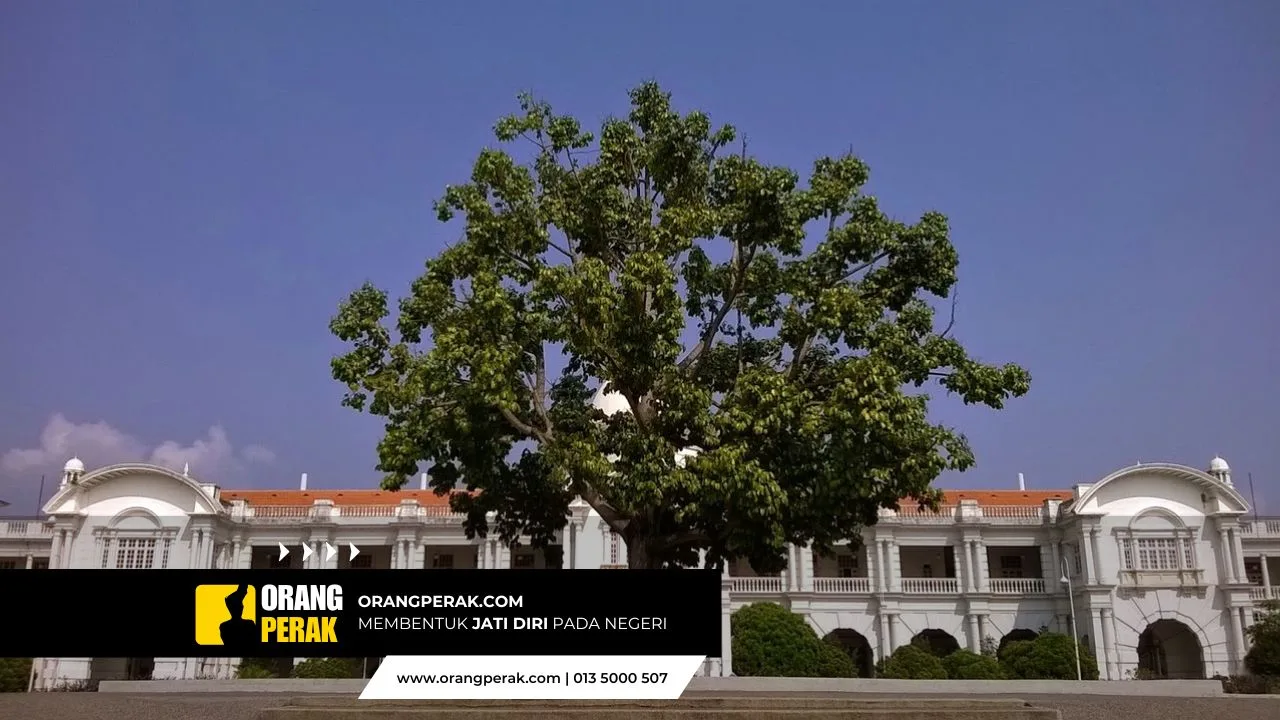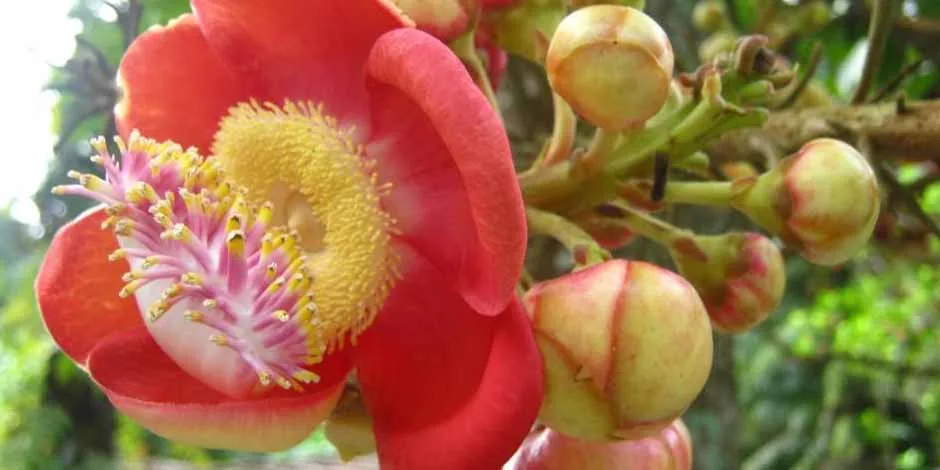
Cannonball Tree Adds Uniqueness to Taiping Lake Gardens
As natives of Perak, Taiping Lake Gardens is no stranger to us. Founded in 1880, this garden, which is the first public garden in Malaya, has many interesting attractions not found in other parks in Malaysia. This time, orangperak.com wants to share information about one of the interesting plants found at Taiping Lake Gardens: the Cannonball Tree.
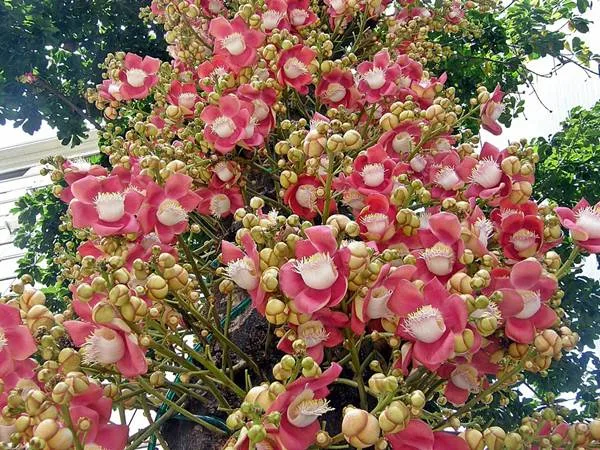
It sounds strange to hear the name of this tree, but that is the title given to the tree scientifically known as Couroupita guianensis. Once you examine its fruit, you will realize why it is called the Cannonball Tree. Physically, the fruit resembles a cannonball, and if you peel the skin slightly and toss it into the air, it will shatter upon hitting the ground, producing a loud explosion.
The cannonball tree, scientifically known as Couroupita guianensis from the Lecythidaceae family, is a tree native to the South American region. This plant is quite unique; its flowers form in large clusters on the trunk, reaching up to 3 meters in length, and it produces large, round, woody fruits with a diameter between 15 and 24 cm, while the tree itself can reach a height of up to 25 meters. As a non-native tree in Malaysia, it is only planted for research and botanical study purposes and can only be found at Taiping Lake Gardens, Penang Botanic Gardens, the Forest Research Institute Malaysia (FRIM), and the Tenom Agricultural Park in Sabah. The tree has pink, bright red, or orange flowers with a thick, waxy structure and a fragrant scent to attract insects for pollination. In its native country, bats are the primary agents that help pollinate this plant.
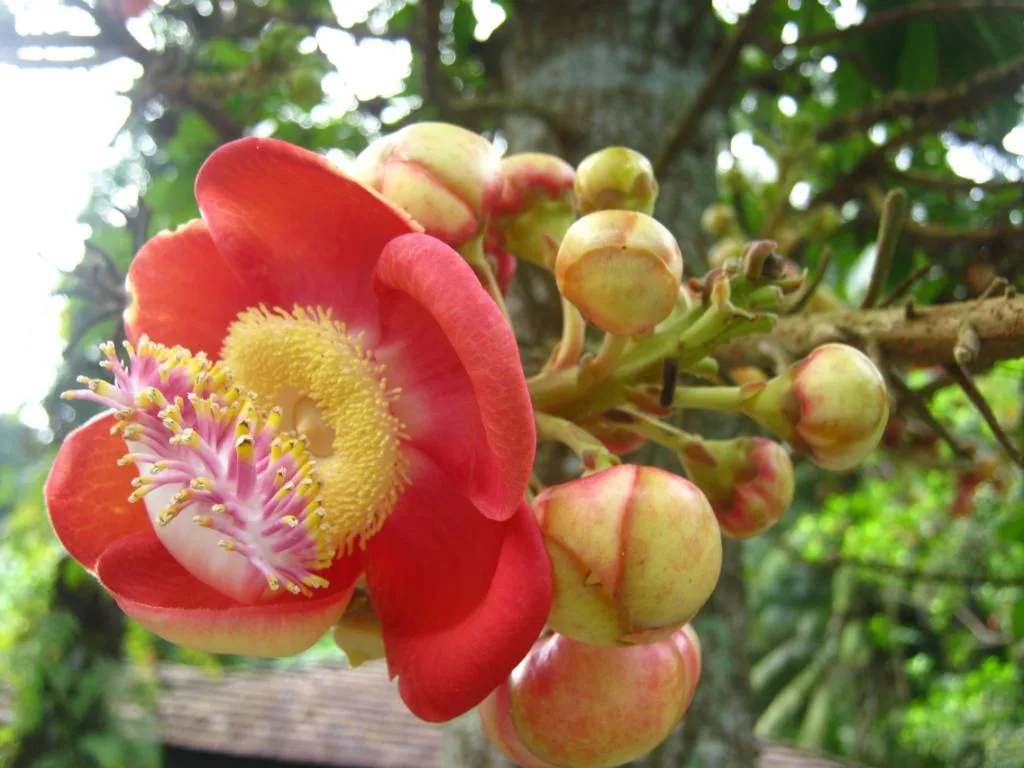
The Cannonball Tree is named as such because its brown, rusty-colored fruit is shaped like a cannonball, with a hard, round shell. The fruit takes a year to mature, and when ripe, it emits a rather unpleasant odor, unlike the fragrant scent of its flowers. Inside its hard shell, there are between 200 and 300 small seeds.
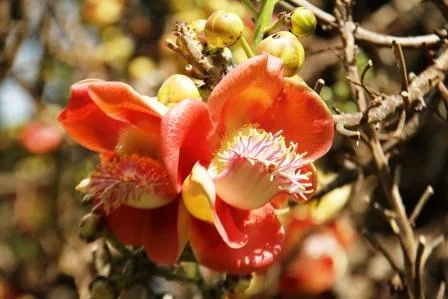
In India, this plant is known as Nagalingam and is widely used in traditional Ayurveda medicine to treat liver problems, colds, headaches, and rheumatism, a disease characterized by inflammation and pain, especially in the muscles and joints. It is also said that the leaves and bark are used to treat venomous snake bites. The cannonball tree is also associated with the final moments of Gautama Buddha's life in India. For some indigenous people in the Amazon region, the hard and thick shell of the cannonball fruit is used as a container for food, while the pulp can be used as animal feed. Furthermore, juice from its leaves is often used to treat skin diseases, while young leaves have been used to relieve toothaches. Additionally, records show that the cannonball tree was used by indigenous people in South America to treat colds and stomach aches.
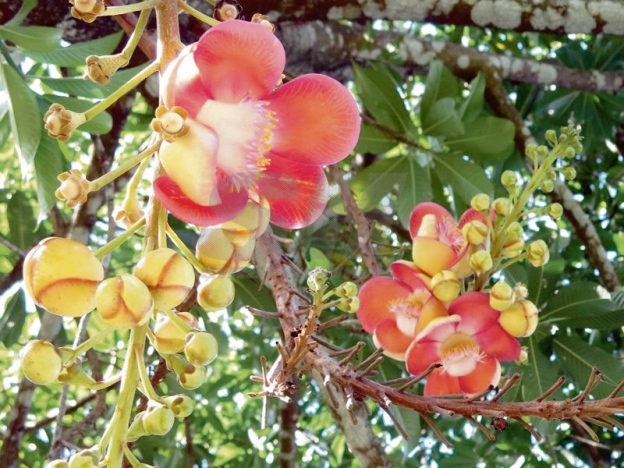
The fruit is edible when ripe, but the smell of the inside is rather unpleasant. The pulp of the cannonball fruit is believed to have a cooling effect on the body and is often made into a drink by indigenous tribes in the Amazon. Much research has been conducted on this plant, including reports stating that methanol extract from this tree inhibited the growth of HIV (human immunodeficiency virus) by 24 percent. However, this research is still in its early stages, and the results have yet to be confirmed. Nevertheless, this discovery could offer hope in the effort to find anti-HIV drugs that are less harmful to humans while effectively killing the virus. The cannonball tree has been widely planted as an ornamental plant in botanical gardens and recreational areas around the world due to its uniqueness. However, many of its medicinal secrets remain to be explored.